Indian YouTubers in China: A Journey Through Glamour, Control, and the Price of Unified Power

2-1-19.jpeg

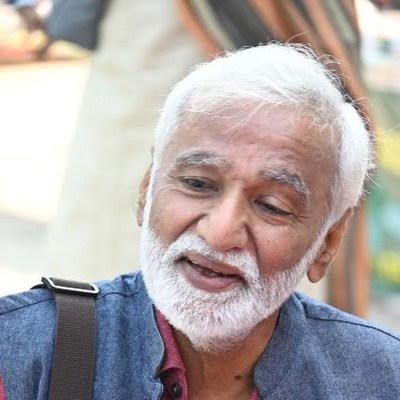
Delhi : Imagine a group of prominent Indian YouTubers-Ravish Kumar, Urmilesh Yadav, Dr. Mukesh Kumar, Ajit Anjum, Bhasha Singh, Arfa Khanum, Sakshi Joshi, and Abhisar Sharma-embarking on a high-profile trip to China. These journalists and commentators, known for their incisive critiques of power structures in India, are invited to explore the gleaming cities of Beijing and Shanghai. Their videos typically dissect governance, democracy, and social issues with sharp analysis. But what happens when their lens turns to China, a nation where the Chinese Communist Party (CCP) and the National People’s Congress (NPC) wield absolute control, with no separation of powers? This 1200-word journey explores their hypothetical experience, the risks of critical journalism in China, and the implications of a system where unified leadership concentrates all power under the CCP’s grip.

Arrival in Beijing: The Allure of Modernity

The YouTubers land in Beijing, greeted by the grandeur of the capital. The city’s skyline, with its blend of futuristic skyscrapers and historic sites like the Forbidden City, is breathtaking. They’re whisked to the Great Hall of the People, the seat of the NPC, where they’re briefed on China’s political system. The NPC, they learn, is the supreme organ of state power, electing all state officials, from the judiciary to the executive State Council, with no independent checks or balances. The CCP, as the sole ruling party, ensures that all state organs are subordinate to its vision, a concept known as ‘unified leadership.’
Ravish Kumar, known for his reflective storytelling, might begin filming, noting the efficiency of Beijing’s infrastructure—high-speed trains, spotless streets, and ubiquitous surveillance cameras. He’d likely comment on the paradox: a nation that projects modernity while tightly controlling expression. His instinct to question power would be tested here, as China’s Great Firewall blocks platforms like YouTube, and content is heavily censored.

The Risks of Critical Journalism

As the group tours Beijing, they’re invited to create content about China’s achievements—its economic growth, technological advancements, and urban development. But what happens(“What to Watch at China’s Two Sessions in 2025 | Asia Society”) if they pivot to critique the CCP or the NPC’s lack of separation of powers? The risks are stark. In China, freedom of speech and press, though constitutionally guaranteed, is heavily restricted. Citizen journalist Zhang Zhan was jailed for four years for her vlogs on Wuhan’s COVID-19 outbreak, a stark reminder of the consequences of challenging the state narrative.

Ajit Anjum, with his bold style, might want to discuss the NPC’s role in centralizing power, where the judiciary and executive are extensions of the legislature, all under CCP control. Such commentary could lead to immediate repercussions: content deletion, detention, or deportation. Foreign YouTubers like Matthew Tye and Winston Sterzel, who criticized the CCP after years in China, faced harassment and were forced to leave. The Indian YouTubers, used to India’s vibrant, if imperfect, democratic discourse, would find their voices stifled. Posting a video questioning the CCP’s grip could trigger censorship or worse—security officials might demand content removal or detain them for ‘spreading false narratives.’

Shanghai: The Glittering Facade

Next, the group heads to Shanghai, a global financial hub with dazzling lights and cutting-edge technology. They visit the Shanghai Museum and the Bund, where colonial-era buildings contrast with Pudong’s futuristic skyline. Bhasha Singh might be tempted to vlog about the city’s prosperity, but her journalistic instincts would push her to probe deeper. She might question the cost of this glamour: the displacement of residents for high-rises or the suppression of dissent to maintain order. But in Shanghai, as in Beijing, surveillance is omnipresent. Public spaces are monitored, and vloggers are often accompanied by government “fixers” who control what’s filmed.

Arfa Khanum, known for her focus on marginalized communities, might seek to explore the lives of Uyghurs or Tibetans, but access to regions like Xinjiang is tightly restricted for foreign journalists. Videos by some foreign influencers, often state-sponsored, depict Xinjiang as a harmonious region, countering allegations of human rights abuses. If Arfa attempted to investigate these claims, she’d likely face obstruction or be fed curated narratives by state media. The Australian Strategic Policy Institute has flagged Indian vloggers who, wittingly or not, amplify CCP propaganda by showcasing “shocking” and “surprising” infrastructure in Xinjiang, Beijing, and Shanghai.

The CCP’s Unified Leadership: A Thought Experiment

Back in Beijing, the YouTubers attend a seminar on China’s governance model. They learn that the NPC, under CCP guidance, elects the judiciary and executive, ensuring no branch operates independently. This unified leadership, championed by Xi Jinping, contrasts sharply with India’s separation of powers, where the judiciary, legislature, and executive check each other. Sakshi Joshi might draw parallels to India, asking: what if India’s Supreme Court and Council of Ministers were answerable solely to Parliament, controlled by one party? The thought is chilling.

To illustrate, consider a hypothetical: if India adopted China’s model, opposition leaders like Rahul Gandhi, Akhilesh Yadav, Tejashwi Yadav, MK Stalin, and Mamata Banerjee would have no independent platform. Their parties could be sidelined, their voices silenced, as all power would rest with the ruling government—say, the Modi administration. In China, dissenters face imprisonment or exile; Gao Zhi, a Chinese dissident, fled to the Netherlands after criticizing the CCP online. In India, these leaders thrive in a pluralistic system, despite its flaws. The YouTubers, used to debating Modi’s policies freely, would realize the price of China’s stability: the erasure of opposition.

The Allure and the Price of Glamour

Some YouTubers, like Abhisar Sharma, might be tempted to focus on China’s achievements—its poverty reduction, high-speed rail, or AI advancements. Indeed, China’s state media has successfully enlisted foreign influencers to promote such narratives, offering funded trips and visibility. But the group’s critical bent would likely lead them to question the cost. Beijing and Shanghai’s glamour comes with a trade-off: absolute CCP control, mass surveillance, and the suppression of dissent.

Urmilesh Yadav might reflect on the absence of independent media. In China, state-run outlets like CGTN and Global Times dominate, and foreign journalists face visa denials or expulsion. The YouTubers’ usual platforms—YouTube, Twitter—are blocked, forcing reliance on state-approved apps like WeChat or Douyin, where content is screened. Dr. Mukesh Kumar, with his academic approach, might note that China’s system prioritizes stability over liberty, a stark contrast to India’s chaotic but free democracy.

China Lovers and the Reality Check

For those who romanticize China’s progress, this trip would be a wake-up call. The YouTubers might initially be dazzled by high-speed trains and skyscrapers, but the reality of unified leadership would hit hard. The CCP’s control over the NPC ensures no checks on power, unlike India’s messy but functional democracy. Those praising China’s model might reconsider when faced with the inability to criticize without fear of retribution. The glamour of Beijing and Shanghai, built on centralized control, comes at the cost of individual freedoms—something these YouTubers, used to India’s open discourse, would find suffocating.

A Sobering Return
As the YouTubers board their flight back to India, they reflect on their journey. Ravish might draft a script about the seductive allure of China’s progress, tempered by the reality of control. Ajit and Arfa might plan exposés on the risks faced by journalists in China, drawing parallels to India’s own press freedom challenges. Sakshi and Bhasha might discuss how India’s opposition leaders, despite their struggles, operate in a system that allows dissent—unlike China’s. Abhisar, Urmilesh, and Mukesh might warn their audiences: admire China’s infrastructure, but understand the price of its unified power.

This trip, while showcasing China’s achievements, would underscore a truth for China’s admirers: the gleaming cities of Beijing and Shanghai are built on a system that brooks no challenge to the CCP’s authority. For journalists like these YouTubers, thriving in China would mean sacrificing their voice—a price too steep for those who value truth over glamour.
The Quest for Ethical Alternatives: A Consumer’s Journey Beyond ‘Made in China’

images-13.jpeg

Delhi : The fluorescent lights of the department store buzzed overhead as Maya stood in the aisle, holding a sleek, budget-friendly blender. She turned it over, scanning the label: “Made in China.” Her heart sank. She’d been here before—faced with the choice between convenience, affordability, and her growing unease about the ethical implications of her purchases. For weeks, Maya had been researching ethical alternatives to Chinese goods, driven by concerns about labor conditions, environmental impact, and geopolitical tensions. This blender, like so many other products lining the shelves, posed a dilemma: was there a better way to shop without compromising her values?

Maya’s journey began a month ago, sparked by a conversation with her friend Priya, a sustainability advocate who’d been boycotting Chinese-made products for years. “It’s not just about politics,” Priya had said over coffee, her voice earnest. “It’s about human rights, environmental degradation, and supporting systems that align with fairness.” Maya, a 32-year-old graphic designer from Seattle, had nodded, but the complexity of the issue left her head spinning. China’s dominance in global manufacturing—producing 20 to 30 percent of the world’s goods—made avoiding its products feel like an impossible task. Yet, Priya’s words stuck with her, and Maya decided to dig deeper.

Her research led her to a web of interconnected issues. Reports of forced labor in regions like Xinjiang, coupled with lax environmental regulations, raised red flags. A 2021 article from The Good Trade challenged the stigma around “Made in China,” arguing that ethical production depends on how goods are made, not just where. But Maya also found stories of sweatshops, child labor, and intellectual property theft, like the case of a U.S. company whose designs were replicated by a Chinese16 Chinese firm just miles from their factory. The more she read, the more she felt compelled to act. “I can’t keep buying into this system,” she told herself. “But what’s the alternative?”

Maya’s first stop was the internet, where she scoured forums and articles for guidance. A Reddit thread from 2021 posed the question: “Is it unethical to buy products made in China?” The responses were mixed. Some argued that boycotting Chinese goods wouldn’t solve labor issues and could harm workers reliant on those jobs. Others, like activist Sonam Wangchuk in a 2020 Outlook India interview, called for boycotts to pressure the Chinese regime on human rights and environmental violations. Maya leaned toward the latter view but recognized the challenge: China’s supply chains were so entrenched that even non-Chinese products often relied on Chinese components. A LiveMint article from 2025 highlighted how U.S. shoemaker New Balance struggled to diversify away from China despite 190% tariffs, underscoring the difficulty of escaping this reliance.

Determined to try, Maya started small. She visited a local boutique that boasted “ethically sourced” clothing. The owner, a cheerful woman named Lila, explained that her suppliers in Vietnam and India adhered to fair labor practices. “Look for certifications like SA8000 or WRAP,” Lila advised, echoing advice Maya had read on Epic Sourcing. These standards ensured fair wages and safe working conditions. Maya bought a handwoven scarf from a women’s cooperative in India, feeling a spark of satisfaction. The $45 price tag stung compared to the $15 equivalent at a big-box store, but she reminded herself that ethical choices often came at a premium. A 2017 Fast Company article had noted that consumers were willing to pay 10-15% more for ethically made goods, and Maya was starting to understand why.

Her next challenge was electronics. China’s grip on tech manufacturing was ironclad—Huawei, Lenovo, and countless others dominated the market. Maya found a website, ChinaNever, listing products made in the USA, Canada, and Europe. She ordered a laptop from a Canadian company that sourced components from Taiwan and South Korea, both of which had stronger labor protections than China. The process wasn’t seamless; shipping took weeks, and the cost was 20% higher than a comparable Chinese-made model. But Maya felt a sense of control, knowing her purchase supported better practices.

Groceries proved trickier. A People for Ethical Living article revealed that many imported fruits and vegetables from China carried illegal pesticide residues due to lax regulations. Maya switched to local farmers’ markets, where she could ask vendors directly about their practices. One Saturday, she met Javier, a farmer who grew organic apples in Washington state. “It’s not just about avoiding China,” he told her. “It’s about knowing your food’s story.” His apples cost twice as much as the supermarket’s, but their crisp flavor and Javier’s pride in his work made it worthwhile. Plus, she was supporting her local economy—a point driven home by a study cited in the article, which found that redirecting just $100 per household to local businesses could generate $10 million in economic impact.

Maya’s biggest hurdle was household goods. From blenders to furniture, China’s low costs and vast supply chains made alternatives hard to find. A Cosmo Sourcing guide from 2025 listed Vietnam, India, and Thailand as emerging manufacturing hubs with lower labor costs and fewer tariffs. Maya contacted a sourcing agent recommended by Epic Sourcing to find a Vietnamese factory with GOTS certification for organic textiles. The agent connected her with a family-owned business that paid living wages and used eco-friendly dyes. She ordered a set of bamboo bedsheets, which arrived after a month-long wait. They were soft, sustainably made, and—most importantly—aligned with her values.

Not every attempt succeeded. Maya tried sourcing a phone from South Korea, known for high-tech manufacturing, but found that even Samsung and LG relied on Chinese components. A Business Standard case study on Walmart’s sourcing dilemmas echoed her frustration: global supply chains were so intertwined with China that total avoidance was nearly impossible. “It’s like trying to untangle a spiderweb,” Maya muttered, tossing her old phone back onto the table. She settled for a refurbished model from a U.S. company, accepting that partial progress was better than none.

The deeper Maya dove, the more she realized ethical consumption wasn’t just about boycotting China—it was about transparency and accountability. A 2022 Harvard Business Review article outlined strategies for companies navigating China’s ethical risks: increased due diligence, transparency about operations, and exploring alternatives. Maya applied this to her own life, researching brands’ supply chains and asking pointed questions. She emailed one company about their labor practices and was impressed when they detailed their factory audits and Blue Sign certifications. Another brand’s vague response prompted her to look elsewhere.

Her journey wasn’t without skepticism. A Quora post from 2023 questioned whether boycotts hurt Chinese workers more than they helped, citing China’s poverty reduction from 88% in 1981 to 7.8% today. Maya wrestled with this. Was she inadvertently harming the very people she wanted to support? Yet, she reasoned, supporting ethical manufacturers in places like Vietnam or the Philippines could shift demand toward fairer systems. A Locad article from 2025 noted that countries like the Philippines were becoming viable alternatives, exporting $12.9 billion in electronics to the U.S. in 2023. By choosing these options, Maya hoped to drive systemic change.

As weeks passed, Maya’s home began to reflect her values. Her kitchen held ceramic mugs from a local potter, her closet boasted shirts from a WRAP-certified Indian factory, and her bookshelf displayed novels printed in Europe. Each purchase was a small rebellion against the “Made in China” default, but it came with trade-offs. Her budget strained under higher costs, and sourcing took time—sometimes weeks of research for a single item. Still, she felt empowered. “Every dollar is a vote,” she told Priya during a follow-up coffee date. “I’m voting for a world I believe in.”

Maya’s story isn’t unique. Across the globe, consumers are grappling with the same questions, fueled by a growing awareness of ethical consumption. A 2017 Unilever study found that 33% of consumers preferred brands with social or environmental commitments. For Maya, the journey was less about perfection and more about progress. She hadn’t fully escaped China’s manufacturing web—no one could—but she’d carved out a path that felt authentic. As she blended a smoothie with her new, ethically sourced blender from Thailand, she smiled. It wasn’t just about the smoothie. It was about knowing she’d made a choice that mattered.

Sources: People for Ethical Living, Cosmo Sourcing (2025), Locad (2025), LiveMint (2025), ChinaNever (2023), Epic Sourcing, Harvard Business Review (2022), The Good Trade (2021), Reddit (2021), Outlook India (2020), Business Standard (2018), Fast Company (2017), Quora (2023), Unilever (2017).

रायबरेली से जन्म प्रमाणपत्र फर्जीवाड़े का भयावह खुलासा

Screenshot-2025-07-31-at-1.16.12-AM.png

रायबरेली : उत्तर प्रदेश के रायबरेली जिले के सलोन क्षेत्र में एक चौंकाने वाला मामला सामने आया है, जहां एक वीडीओ (ग्राम विकास अधिकारी) विजय यादव के नेतृत्व में पिछले दो सालों में 19,184 जन्म प्रमाणपत्र फर्जी तरीके से जारी किए गए। सोशल मीडिया पर एक्स यूजर अनुपम मिश्रा ने एक समाचार पत्र की कटिंग लगाकर इस घोटोले की जानकारी दी।

रिपोर्ट में दावा किया गया है कि इनमें से 10,000 से अधिक प्रमाणपत्र केवल एक गांव नूरुद्दीन से संबंधित हैं, जहां पश्चिम बंगाल, बिहार और झारखंड से आए लोग बसे हैं, और इनमें से ज्यादातर बांग्लादेशी तथा रोहिंग्या घुसपैठियों के नाम पर हैं।

इस घोटाले की भयावहता इस बात से समझी जा सकती है कि सरकारी दस्तावेजों का दुरुपयोग राष्ट्रीय सुरक्षा के लिए गंभीर खतरा बन गया है। जन्म प्रमाणपत्र जैसे महत्वपूर्ण दस्तावेजों का फर्जीकरण न केवल प्रशासनिक व्यवस्था की कमजोरी को उजागर करता है, बल्कि देश में अवैध घुसपैठ को बढ़ावा देने का एक सुनियोजित षड्यंत्र भी प्रतीत होता है। सोशल मीडिया पर प्रतिक्रियाओं में लोगों ने इसकी तुलना देश को खोखला करने वाली ‘दीमक’ से की है, जो जनसांख्यिकीय संतुलन को बिगाड़ रही है। एक यूजर ने सुझाव दिया कि फर्जी दस्तावेज बनाने वालों की संपत्ति जब्त करने और कठोर सजा देने की जरूरत है, ताकि इस तरह की गतिविधियां रुक सकें।

स्थानीय निवासी सत्यव्रत त्रिपाठी के अनुसार, यह घटना पिछले साल की है, और जांच में पता चला कि वीडीओ विजय यादव ने अपने प्रेम प्रसंग के चलते जीशान नामक व्यक्ति को अपनी लॉगिन डिटेल्स सौंप दी थीं, जिसका फायदा उठाकर फर्जी प्रमाणपत्र बनाए गए। जीशान ने इस दौरान मकान और दुकानें भी बनवाईं, जो इस रैकेट की आर्थिक गहराई को दर्शाता है। दूसरी ओर, अमर उजाला की रिपोर्ट के अनुसार, पूरे जिले में 52,000 से अधिक जन्म प्रमाणपत्र फर्जी पाए गए, जिसमें एक दिन में 500 से ज्यादा दस्तावेज बनाए गए। यह आंकड़ा स्थिति की गंभीरता को और बढ़ा देता है।

प्रधानमंत्री नरेंद्र मोदी ने भी हाल ही में झारखंड में बांग्लादेशी और रोहिंग्या घुसपैठ को राष्ट्रीय सुरक्षा के लिए खतरा बताया था, जो इस मामले में एक समान चिंता को दर्शाता है। रायबरेली की यह घटना प्रशासनिक लापरवाही और सिस्टम की भ्रष्टाचार से जूझती तस्वीर पेश करती है। लोगों का गुस्सा इस बात पर है कि सरकारें महत्वपूर्ण दस्तावेजों को ‘दुकानों’ के भरोसे छोड़ रही हैं, जो देश विरोधी तत्वों के लिए खुला निमंत्रण बन गया है।

अब सवाल यह उठता है कि क्या इस मामले में त्वरित कार्रवाई होगी? मुख्यमंत्री योगी आदित्यनाथ और केंद्र सरकार से मांग उठ रही है कि दोषियों के खिलाफ सख्त कदम उठाए जाएं, ताकि इस तरह के फर्जीवाड़े पर लगाम लग सके। अन्यथा, यह समस्या देश के लिए एक और गंभीर संकट बन सकती है।

अवि डांडिया: कांग्रेस का विवादास्पद विदेशी चेहरा और उसकी मक्कारी

Screenshot-2025-07-31-at-1.15.13-AM.png

दिल्ली। अवि डांडिया, एक विवादास्पद व्यक्तित्व और भारतीय ओवरसीज कांग्रेस (IOC) के सोशल मीडिया प्रमुख, अपने रिकॉर्ड और मक्कारी के लिए चर्चा में हैं। उनकी नियुक्ति (सितंबर 2023) से पहले उन्होंने यूट्यूब पर आपत्तिजनक वीडियो डालकर प्रधानमंत्री नरेंद्र मोदी और भाजपा पर आधारहीन आरोप लगाए। मार्च 2019 में पुलवामा हमले के बाद उनकी मक्कारी तब सार्वजनिक हुई जब उन्होंने एक फर्जी ऑडियो क्लिप प्रसारित की, जिसमें दावा किया गया कि हमले में भाजपा नेताओं की साजिश थी। द हिंदू (4 मार्च 2019) की रिपोर्ट के अनुसार, दिल्ली पुलिस ने इस झूठे प्रचार के लिए उनके खिलाफ IPC की धारा 465 और 469 के तहत FIR दर्ज की। फिर भी, सितंबर 2023 में कांग्रेस ने उन्हें IOC का सोशल मीडिया प्रमुख बनाया, जो पार्टी की नियत पर गहरा संदेह पैदा करता है। क्या यह एक सुनियोजित कदम था, जो भारतीय राजनीति में विदेशी हस्तक्षेप को बढ़ावा देता हो?

डांडिया की भाषा शैली बेहद खराब और अपमानजनक है। हाल के X पोस्ट में, जैसे 30 जुलाई 2025 को “25% tariff lagne ke baad masjido ke bahar ek baar mujra to banta hain chalo shuru ho jao chapriyo ,” उन्होंने धार्मिक भावनाओं को ठेस पहुंचाई और “chapriyo” जैसे शब्दों से अपनी कुत्सित मानसिकता दिखाई। जवाबी टिप्पणियों में “Chup khandani chu ” जैसी गालियां उनकी अशिष्टता को उजागर करती हैं। एक राजनीतिक दल के कार्यकर्ता के लिए ऐसी भाषा निंदनीय है, जो समाज में नैतिकता और गरिमा का प्रतीक होनी चाहिए। यह उनके चरित्र की पोल खोलता है और कांग्रेस की छवि को धूमिल करता है।

उनकी मक्कारी का दूसरा पहलू उनका धन का दिखावा है। वे अक्सर अपने वीडियो और पोस्ट में अपनी कथित अमीरी और जीवनशैली का ढोल पीटते हैं, चाहे वह दान का दावा हो। लेकिन इन दावों की सत्यता संदिग्ध है, और आलोचकों ने इसे आत्म-प्रशंसा और झूठ का मिश्रण बताया है। एक राजनीतिक कार्यकर्ता के लिए धन का प्रदर्शन करना उचित नहीं, क्योंकि यह जनसेवा की भावना से दूर ले जाता है। उनकी आय का स्रोत अस्पष्ट है, जो उनके इरादों पर संदेह पैदा करता है।

कांग्रेस को ऐसे व्यक्ति को मंच देना अपनी ही नींव को कमजोर करना है। पुलवामा मामले में उनकी मक्कारी के बावजूद उनकी नियुक्ति से पार्टी की मंशा पर सवाल उठना स्वाभाविक है। डांडिया की खराब भाषा, धन का दिखावा, और विवादास्पद इतिहास किसी भी राजनीतिक दल के लिए शोभनीय नहीं, और यह कांग्रेस की विश्वसनीयता को और धूमिल कर रहा है।

scroll to top