
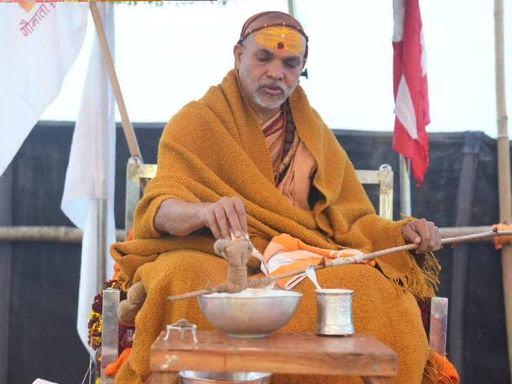
The Four Principal Peeths Established by Adi Shankaracharya
In the 8th century, Adi Shankaracharya established four peeths in the four directions of India to unify Hinduism and preserve Advaita Vedanta:
North Direction: Jyotish Peeth (Jyotirmath) — Located near Badrinath in Chamoli district, Uttarakhand. This peeth represents the spiritual heritage of North India.
West Direction: Dwarka Sharada Peeth — Located in Dwarka, Gujarat. This peeth is dedicated to Sharada (Goddess Saraswati, deity of knowledge) and provides spiritual education and service. Its current Shankaracharya is Swami Sadanand Saraswati, appointed in 2022 after the demise of Swami Swaroopanand Saraswati.
East Direction: Govardhan Peeth — Located in Puri, Odisha. It promotes the principles of Advaita Vedanta. Its current Shankaracharya is Swami Nischalanand Saraswati, appointed in 1992.
South Direction: Sringeri Sharada Peeth — Located on the banks of the Tunga River in Chikkamagaluru district, Karnataka. Also known as Sringeri Sharada Peetham. Its current Shankaracharya is Swami Bharati Tirtha, who has been in position since 1989.
These four peeths are interconnected according to Adi Shankaracharya’s Mathamnaya Mahanushasana tradition. The appointment of a Shankaracharya requires the consent and qualification approval from the other peeths.
The Root of the Jyotish Peeth Dispute
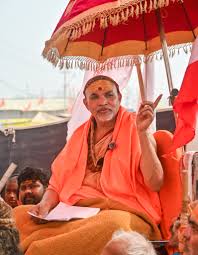
The controversy at Jyotish Peeth is decades old, but the current crisis began after the demise of Swami Swaroopanand Saraswati (who held the Shankaracharya positions of both Jyotish Peeth and Dwarka Peeth) in September 2022. Swami Avimukteshwaranand, his disciple and close associate, declared himself the Shankaracharya of Jyotish Peeth based on an alleged will. However, this declaration has been contentious because:
Swami Swaroopanand never clearly appointed a successor during his lifetime. In 2020, he refused to nominate one.
The Akhil Bharatiya Akhada Parishad and many sannyasi akhadas have called it contrary to tradition. Appointment should be through consensus and qualification, not a will.
The Shankaracharyas of the other three peeths-Swami Sadanand Saraswati (Dwarka), Swami Nischalanand Saraswati (Puri), and Swami Bharati Tirtha (Sringeri)—have not recognized it.
Pending Supreme Court Case and Orders
In the case Swami Vasudevanand Saraswati vs. Others (Case 3010/2020), the dispute over the legitimate successor to Jyotish Peeth is ongoing. In October 2022, the Supreme Court stayed the pattabhishek (coronation) of Swami Avimukteshwaranand. The court clarified that no one can be treated as Shankaracharya or given protocol at the disputed peeth until a final decision is reached. The Shankaracharya of Puri Govardhan Peeth filed an affidavit stating he did not support the appointment.
During the Magh Mela 2026, the administration issued a notice citing this very order. The notice stated that Swami Avimukteshwaranand is not considered the Shankaracharya of Jyotish Peeth and asked him to prove its legitimacy within 24 hours. Since 2022, he has never received Shankaracharya protocol at melas—he has attended as an ordinary saint.
Role of the Akhil Bharatiya Akhada Parishad
The Akhil Bharatiya Akhada Parishad is the supreme body representing the 13-14 akhadas of the sannyasi community. Its role is crucial in Shankaracharya appointments, as the akhadas are linked to Adi Shankaracharya’s tradition. In 2022, the Parishad declared Swami Avimukteshwaranand’s appointment invalid. Its president, Mahant Ravindrapuri, stated that appointment to the position must occur in the presence and with the consent of the akhadas, not through a will.
Current Situation
When his palanquin was stopped at the mela, Swami Avimukteshwaranand staged a dharna and accused the authorities of insult. However, the administration followed the Supreme Court order. The Congress and Samajwadi Party called it an “insult to a saint,” while the administration insists that following the law is mandatory.
This dispute is one of tradition versus personal claims. Swami Avimukteshwaranand describes himself as the (self-declared) Shankaracharya of both Jyotish Peeth and Dwarka Peeth, but he lacks institutional recognition. The Supreme Court’s final verdict will be decisive. Until then, questions over Jyotish Peeth’s legitimacy will persist, posing a challenge to the unity of