
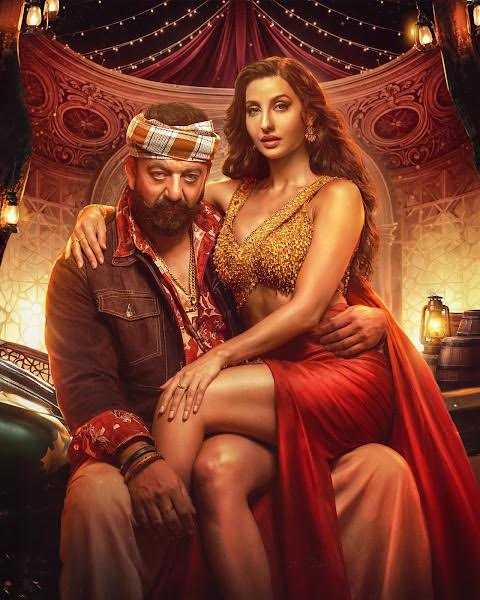
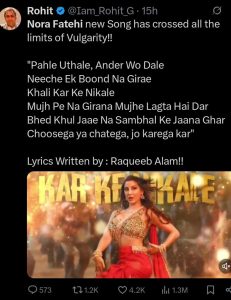
The controversial lines, including “Pehle uthale, andar woh daale / Neeche ek boond na girae / Khali karke nikale” and references like “Mujhpe na girana, mujhe lagta hai dar,” have gone viral, sparking outrage across platforms. Critics argue the lyrics are not subtle innuendos but direct, crude sexual references disguised as a party anthem. The song’s suggestive choreography, set in a dance bar sequence, has further fueled accusations of objectification and cheap sensationalism.
Social media erupted with hashtags and memes. Users compared it unfavorably to Bhojpuri or regional item numbers, with comments like “Bhojpuri songs feel classier than this” and “This is a new low for Bollywood/Kannada cinema.” Singer Armaan Malik publicly slammed the track, calling the songwriting “at its lowest level” and wishing he could “unhear” it. Many netizens questioned how such content cleared certification, asking pointedly: “Does India even have a censor board anymore?
Alleged Inspiration and Creative Choices
According to sources close to Bollywood, lyricist Raqeeb Alam drew direct inspiration from a public statement by Bihar Chief Minister Nitish Kumar. Reports suggest the writer lifted phrases almost verbatim from the CM’s speech and incorporated them into the song. While this claim remains unverified by the makers, it has added a layer of political curiosity to the scandal. The track is sung by Satyavathi Rathod (with Mangli also credited in some versions), composed by Arjun Janya, and features Nora Fatehi in a special item number.
KD: The Devil, a multilingual underworld drama directed by Prem (also known as Jogi Prem or Prems), stars Dhruva Sarja in the lead, with Sanjay Dutt, Shilpa Shetty, and others in key roles. Produced by KVN Productions and others, the film is positioned as a big-budget pan-India release set in the 1970s crime world. It is scheduled for theatrical release on April 30, 2026, across Hindi, Kannada, Tamil, Telugu, and Malayalam versions. The makers have remained silent on the backlash so far, even as the controversy has boosted the song’s visibility and streaming numbers.
Questions on Censorship and Industry Standards
The uproar has revived broader debates about content regulation in Indian cinema. The Central Board of Film Certification (CBFC), India’s official censor board, is responsible for certifying films and songs for public exhibition. Many are asking how a track with such overt sexual innuendos received clearance, especially when similar songs in the past faced cuts or legal notices. Some have demanded stricter guidelines for item numbers and music videos released ahead of films.

This is not the first time a song has courted controversy. Recent tracks like Badshah’s “Tateeree” also faced backlash for explicit content, leading to calls for accountability. Detractors argue that in the name of “bold” or “mass appeal,” the industry is pushing boundaries that disrespect cultural sensitivities, particularly during sensitive periods like Ramzan. Supporters, however, defend artistic freedom, claiming the song is meant for adult audiences and fits the film’s gritty underworld theme. They point out that viewership spikes during controversies often translate into box-office curiosity.
Public Reaction and Cultural Implications
On X (formerly Twitter) and Instagram, reactions range from outright disgust to ironic amusement. Some users threatened to boycott the film or “disown” director Prem, while others mocked the lyrics with memes. Women’s groups and cultural commentators have raised concerns about the normalization of vulgarity in mainstream entertainment, arguing it contributes to the objectification of female performers like Nora Fatehi, who is often typecast in dance numbers.
Nora Fatehi herself has not issued a detailed statement on this specific controversy as of now, though she has previously addressed trolls on other issues. The film’s team appears focused on the April 30 release, with the teaser already highlighting its high-octane action and star power.

The Bigger Picture
The KD: The Devil song controversy highlights ongoing tensions in Indian entertainment: the clash between creative liberty, commercial pressures, and societal expectations. While double-meaning lyrics have long been part of Indian cinema (especially in item songs), the shift toward more direct and graphic language has alarmed many. Whether this backlash leads to edits in the final film, a CBFC review, or simply fades as another viral storm remains to be seen.
As the film gears up for a pan-India rollout, the debate serves as a reminder that in today’s hyper-connected world, a single song can dominate discourse weeks before release. For now, “Pehle uthale, andar woh daale” has become shorthand for the limits—or lack thereof—of on-screen boldness. The industry will be watching closely to see if such controversies ultimately help or hurt a film’s prospects at the box office.