
The Magic of Ramayana and the Controversy over ‘Three Hundred Ramayanas’ (1987–2011)
In 1987, when Ramanand Sagar’s Ramayana aired on Doordarshan, the entire country was immersed in a unique spiritual enchantment. Sunday mornings echoed with the name of Ram, streets fell silent, and shops shut down. This wasn’t just a TV serial; it was a cultural awakening that united Hindus from north to south, east to west, binding them in a single thread. Lord Ram dominated every home and every tongue.
Around the same time, A.K. Ramanujan’s essay “Three Hundred Ramayanas: Five Examples and Three Thoughts on Translation” (later part of his book Many Ramayanas) came into the spotlight. It presented the Ram story not as one unified narrative but as hundreds of diverse versions—drawing from South Indian, Thai, Cambodian, and other traditions, highlighting interpretations that differed from the core Valmiki Ramayana. The same groups that had pushed for a ban on Salman Rushdie’s book over verses from the Quran were actively promoting Ramanujan’s work and its ideas about multiple Ramayanas during those days.
While the message of Ram’s unity was spreading on one side, this essay played its role in sowing division without holding back. The tipping point came in 2011 when Delhi University’s history syllabus included it, inevitably provoking opposition from an aware Indian society. It is no exaggeration to say that this was no mere coincidence but a deliberate, well-planned attempt to weaken Hindu unity.
The Ram Janmabhoomi Movement and Mandal vs. Kamandal (1990)
As the 1990s arrived, the Ram Janmabhoomi movement reached its peak. Under the leadership of the Vishva Hindu Parishad and BJP, the demand for a Ram temple intensified. L.K. Advani’s Rath Yatra created a massive wave of ‘kamandal’ (the saffron pitcher symbolizing Hindu identity). People from every class and caste united in the temple movement—this was a golden era of unprecedented Hindu solidarity.
But in August 1990, the V.P. Singh government implemented the Mandal Commission recommendations, providing 27% reservation for OBCs. Massive protests erupted across the country, with upper-caste students even resorting to self-immolation. The phrase “Mandal vs. Kamandal” became the dividing line. Many historians do not see this as coincidence: just as Hindus were coming together, igniting caste-based reservation fires seemed like an attempt to fracture society—echoing the old British “divide and rule” policy.
Integration and Challenges in the Modi Era (2014 to Present)
Over the past decade, under Prime Minister Narendra Modi’s leadership, the country has moved toward “Ek Bharat, Shreshtha Bharat” (One India, Great India). Connectivity from the Northeast to the South, patient decision-making—these are all proofs of integration efforts.
During the 2021 farmers’ protests, when some raised flags at the Red Fort, many demanded immediate strict action, but the government showed restraint. Later events in Bangladesh and Nepal—disorder in the name of “people’s movements”—suggested a larger conspiracy might have been at play behind the scenes. The three farm laws, which many farmers today acknowledge were in their favor, were repealed under political pressure.
Current Controversy: UGC Equity Regulations Amid Hindu Unity Efforts (2026)
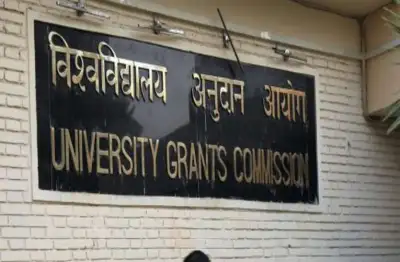
Right now, preparations for Hindu conferences are underway nationwide, and society is once again organizing itself. Precisely at this moment, in January 2026, the UGC notified the Promotion of Equity in Higher Education Institutions Regulations, 2026. These rules aim to prevent caste-based discrimination in higher education—mandating equity committees, grievance redressal mechanisms, Equal Opportunity Centres, and more.
However, many organizations and analysts accuse these regulations of being biased against the general category. There are no strong safeguards against false complaints, and the presumption often leans toward guilt for general-category individuals. This feels inspired by the spirit of the old Communal Violence Bill. Social media campaigns like #RollbackUGC are gaining traction, with claims that these rules could turn campuses into battlegrounds for caste wars.
Looking at the Chronology, the Pattern Is Clear
1987: The enchantment of Ramayana → Controversy over Three Hundred Ramayanas
1990: Ram movement at its height → Implementation of Mandal Commission
2026: Efforts toward Hindu unity → Controversy over UGC equity regulations
Every time Hindu society tries to unite under one thread, some issue is raised to attempt division—whether it’s emphasizing diversity in the Ramayana, caste-based reservations, or now new rules in the name of equality.
This does not seem like coincidence. Society now needs to awaken and identify the forces seeking to weaken unity. Prime Minister Modi has thwarted many conspiracies through patience and foresight. Hindu society must also remain united, vigilant, and counter these efforts.
Unity is our greatest strength—and no one can break it if we stay alert.
