
Delhi : Swami Chinmayananda Saraswati, affectionately known as Pujya Gurudev, was born on May 8, 1916, in Ernakulam, Kerala, as Balakrishnan Menon. Born into an aristocratic family, Balakrishnan was a sharp, rebellious, and atheistic youth. He pursued postgraduate degrees in English literature and law from Lucknow University. Active in the freedom struggle, he later became a journalist, serving as sub-editor at the National Herald. He wrote provocative articles, sometimes under the pseudonym ‘Mochi’. He viewed saffron-robed saints as unscientific and fraudulent.
In 1947, intent on exposing saints, he traveled to Rishikesh and stayed at Swami Sivananda’s Divine Life Society ashram. His plan was to write a sensational exposé. However, the simplicity of the ashram, Swami Sivananda’s compassion, humor, selfless service, and profound knowledge shattered his doubts. Gradually, his skepticism melted away. When a foreign journalist accused him of ‘black magic’, Swami Chinmayananda laughed and replied, “If it exists, it certainly does; look, I myself am a victim.”
On the auspicious day of Mahashivratri, February 25, 1949, Swami Sivananda initiated him into sannyasa, naming him Swami Chinmayananda Saraswati – ‘one who revels in the bliss of pure consciousness’. He then became a disciple of Swami Tapovan Maharaj in the Himalayas, undertaking rigorous austerities and deep Vedanta study. Inspired by the Ganga’s flow, he resolved to bring this knowledge from the Himalayas to the plains.
In December 1951, he conducted his first Jnana Yajna in Pune, attended by just a handful of listeners. His clear, logical, and humorous expositions attracted people. In 1953, devotees in Chennai established the Chinmaya Mission, dedicated to propagating Advaita Vedanta, the Bhagavad Gita, and the Upanishads. Swami Chinmayananda traveled the world for 40 years, delivering lectures in English that particularly resonated with the middle class and diaspora Indians. He authored over 95 books, including commentaries on the Gita and Upanishads. He also contributed to the founding of the Vishva Hindu Parishad.
He attained Mahasamadhi on August 3, 1993, in the United States. His legacy is the Chinmaya Mission, which today operates over 350 centers worldwide. These centers run Bala Vihar, youth programs (CHYK), Devi groups, Jnana Yajnas, spiritual retreats, and service activities. The Mission has established Chinmaya Vidyalayas, blending modern education with values. Projects include rural development through CORD, environmental conservation, and interfaith dialogue.
Currently, the global head of Chinmaya Mission is Swami Swaroopananda, who assumed the role after Swami Tejomayananda. Swami Swaroopananda meets everyone with ease, conducting Q&A sessions without censorship. Ashrams like Chinmaya Vibhooti in Pune feel like utopias – serene, filled with service and dedication.
Here, no rules are imposed; individuals transform gradually. Programs cater to all – children, youth, women, men, and families. People who spent years abroad reconnect with their roots, like one woman who relearned Gujarati after joining the ashram.
In an era where many spiritual leaders adopt corporate styles with bodyguards, Chinmaya Mission emphasizes simplicity and logic. Discussions focus on reason rather than blind traditions, appealing to Gen Z. Through yoga, worship, and Vedanta, society reconnects with its culture and heritage.
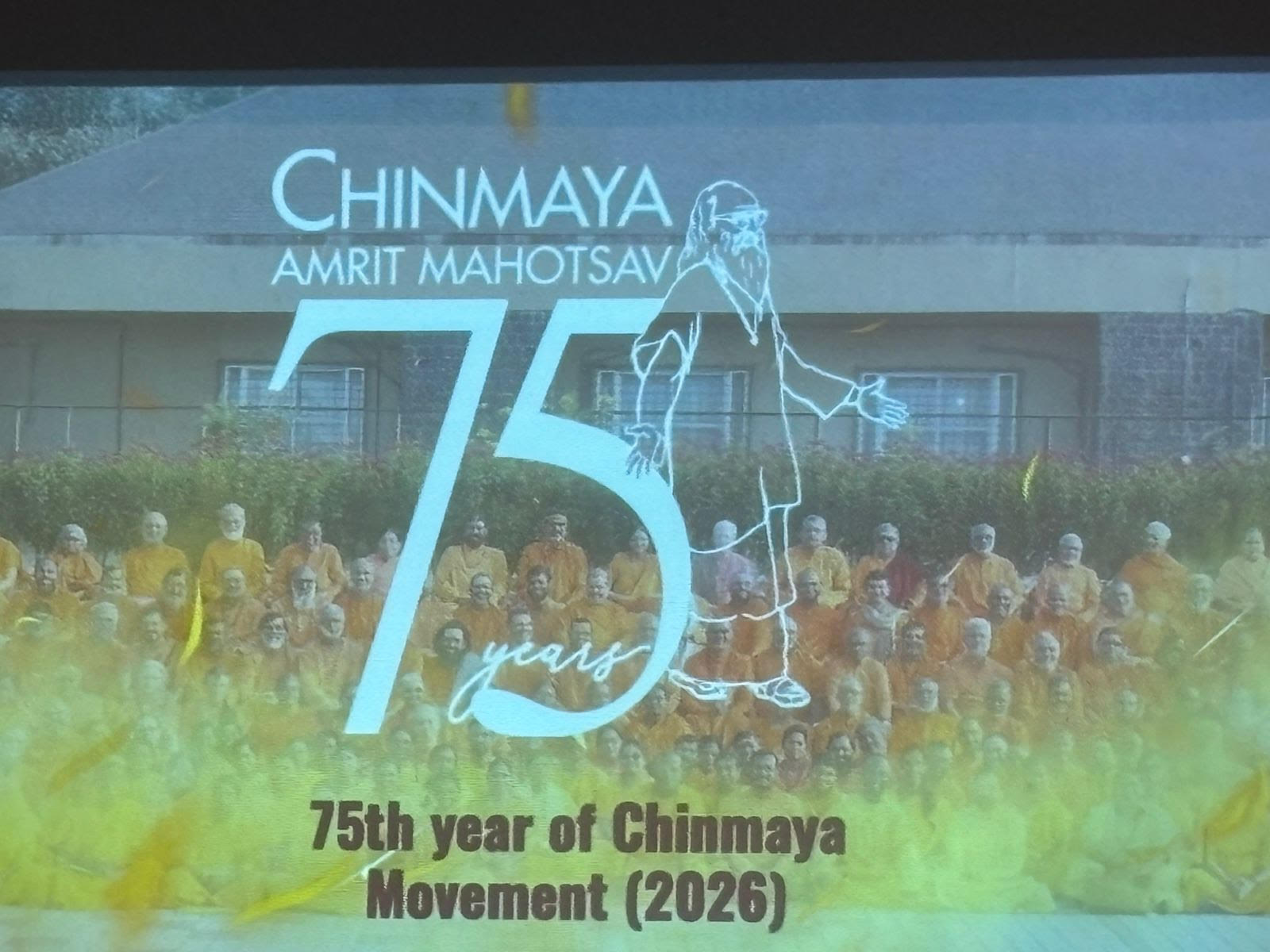
2026 is a historic year for Chinmaya Mission, marking 75 years of the Chinmaya Movement sparked by the first Jnana Yajna in 1951. Celebrated as Chinmaya Amrit Mahotsav, the main event will be held from October 23-25, 2026, at Bharat Mandapam in New Delhi. It will be a global family reunion to remember Gurudev’s vision, reflect on the Mission’s impact, and renew commitments to knowledge and service. Worldwide signature events, Gita chanting, bhajans, and yatras are underway.
Swami Chinmayananda’s story proves that a true guru does not merely win hearts but transforms them. The journey from a skeptical journalist to a world-renowned Vedanta exponent illustrates destiny’s unpredictability. Chinmaya Amrit Mahotsav is an opportunity to pass this legacy to the next generation. Millions of lives have been transformed; billions more can be – if we reconnect with our roots and spread the light of Vedanta.
