
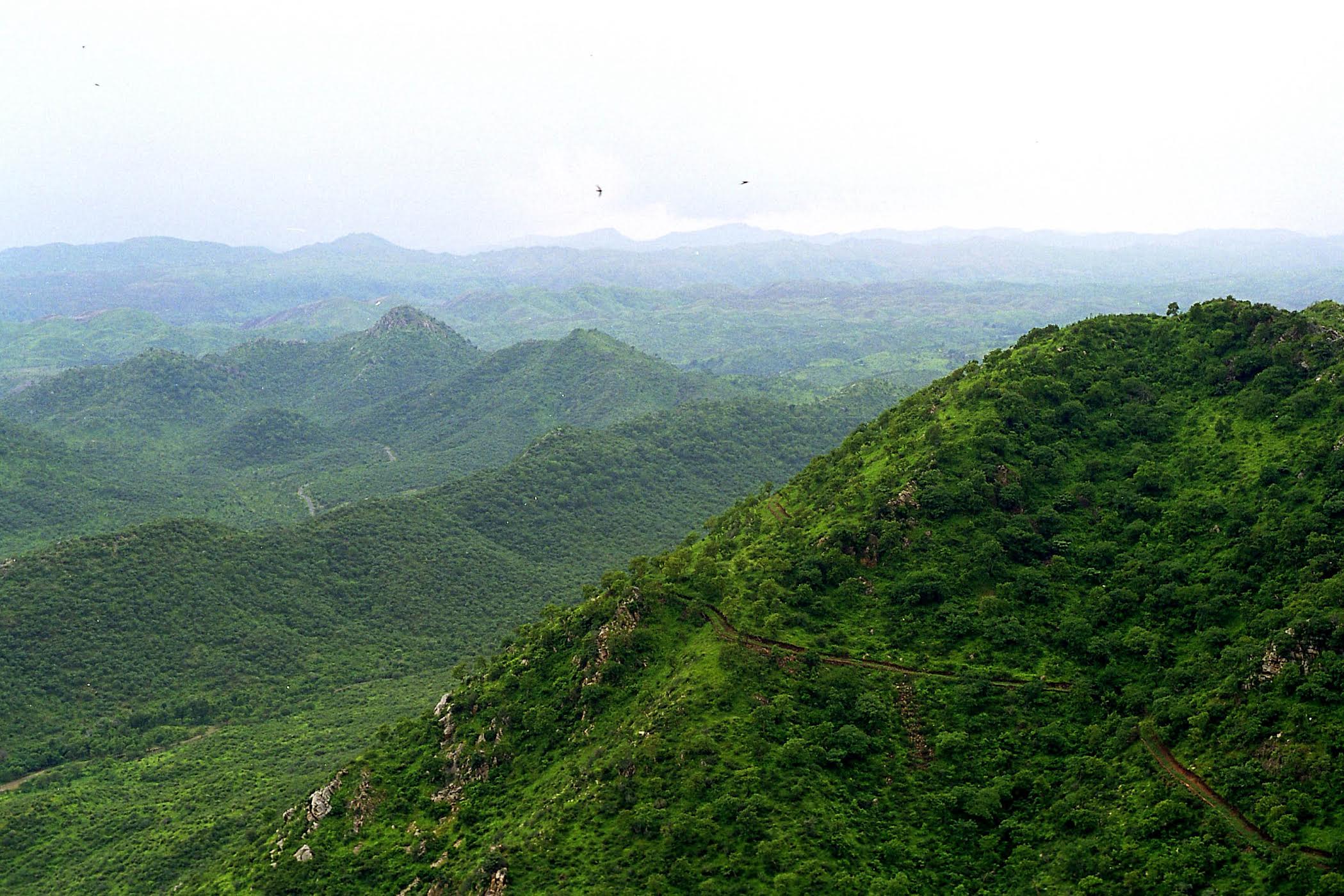
It acts as a natural barrier against the eastward advance of the Thar Desert, traps dust and pollutants, recharges groundwater aquifers, regulates local climate, and supports rich biodiversity, including over 200 bird species and mammals like leopards and hyenas. Often called the “green lungs” of the Delhi-NCR region, the Aravallis mitigate air pollution by filtering particulate matter (PM2.5 and PM10) and moderating wind-blown dust from arid zones.
However, decades of unchecked mining, urbanization, and deforestation have severely degraded this fragile ecosystem. Illegal and legal quarrying for minerals like limestone, marble, and sandstone has flattened hills, created breaches in the range, and led to soil erosion, loss of forest cover, and plummeting groundwater levels. In Haryana alone, natural forest cover is the lowest in India at 3.6%, with significant portions in low-elevation Aravalli systems. Reports from citizens’ groups, such as the People for Aravallis collective, document widespread devastation in districts like Gurugram, Nuh, and Mahendergarh, where groundwater depths reach 1,500-2,000 feet due to mining disruptions.
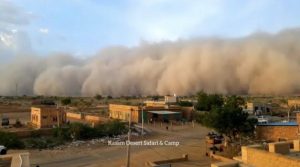
The range’s destruction has already opened over 12 gaps, allowing Thar Desert dust to infiltrate Delhi-NCR, exacerbating winter smog and pushing Air Quality Index (AQI) levels into severe categories.
This contributes to respiratory illnesses, cardiovascular diseases, and higher hospital admissions, particularly affecting children and the elderly. Without the Aravallis’ vegetation and topography to trap pollutants and retain moisture, regions like Delhi, Haryana, Punjab, and western Uttar Pradesh face intensified dust storms, erratic monsoons, prolonged heatwaves, and accelerated desertification.
A pivotal development occurred on November 20, 2025, when the Supreme Court accepted a uniform definition of the Aravalli Hills proposed by a Ministry of Environment, Forest and Climate Change (MoEFCC) committee. The ruling defines an “Aravalli Hill” as any landform in designated districts rising 100 meters or more above local relief, including its supporting slopes and enclosed base. An “Aravalli Range” comprises two or more such hills within 500 meters of each other. This elevation-based criterion aims to provide a scientifically verifiable standard, resolving inconsistencies across states.
However, critics, including ecologists like Ghazala Shahabuddin and groups like People for Aravallis, argue it excludes over 90% of the range—primarily low-lying ridges, scrub forests, and grasslands—that perform vital functions. Forest Survey of India assessments indicate only about 8.7% of mapped hillocks meet the 100-meter threshold. Environmentalists warn this could undo decades of protections, such as the 1992 MoEFCC notification and 2021 Natural Conservation Zones, opening vast tracts to mining and development. They predict irreversible damage: faster desert advancement, further groundwater depletion (with recharge potential of two million liters per hectare lost), biodiversity loss, and worsened public health crises from toxic air.
Intact Aravalli landscapes showcase dense forests and rolling hills that sustain ecosystems.
In contrast, mined areas reveal barren craters and dust-covered wastelands, highlighting irreversible flattening.
The government and some reports emphasize protective measures in the ruling. The Supreme Court paused all new mining leases until a Management Plan for Sustainable Mining (MPSM) is finalized by the Indian Council of Forestry Research and Education, including macro-level environmental impact assessments and identification of no-go zones (e.g., wildlife corridors, recharge areas). Existing mines must comply strictly with sustainability norms, and mining covers only 0.19% of the Aravalli region currently. Officials, including Environment Minister Bhupender Yadav, assert that over 90% remains protected, with prohibitions in eco-sensitive zones and a commitment to restoration via initiatives like the Aravalli Green Wall Project launched in June 2025.
Protests in Rajasthan and campaigns like #SaveAravalli reflect public alarm, with figures like former CM Ashok Gehlot calling it a potential “death warrant.” Political debates continue, with opposition accusing the redefinition of favoring mining interests, while the BJP defends it as enhancing conservation through clarity.
The Aravallis’ deterioration poses existential threats: permanent toxic air, water scarcity in stressed cities like Delhi and Gurugram, failing agriculture from dust-covered crops, extreme heat, and potential migration crises. Scientific evidence links mining to degraded land (8.2% in Haryana alone) and interconnected aquifer disruptions. As India’s shield against desertification—aligned with UN commitments—the range’s loss would amplify climate vulnerabilities for millions.
Urgent action is needed: stricter enforcement against illegal mining, holistic protections beyond elevation metrics, and accelerated afforestation. The Supreme Court’s interim safeguards offer a window, but long-term survival demands prioritizing ecological integrity over short-term extraction. Preserving the Aravallis is essential for breathable air, secure water, and resilient climates in north India.