
For a long time, Delhi’s Bhagwan Das Road has been a sacred pilgrimage site for performing and visual arts. The National School of Drama (NSD) stands there like a huge banyan tree—many institutions that came under its shade either dried up or could not create their own separate identity. But now, 85 kilometers away in Rohtak, the Dada Lakhmi Chand State University of Performing and Visual Arts (DLC SUPVA) is slowly strengthening its roots. This is not just a university; it is a new story of democratizing art in Haryana.
The bitter truth of the past and the need for a new beginning
This university came into existence in 2014 with the mantra ‘Art is the highest worship.’ But in its early years, poor administration, shortage of teachers, and lack of proper equipment kept it trapped. Students in the Film and Television department had to wait for years—many batches were affected, and there were protests. The period from 2016 to 2024 was full of disappointment and struggle for the students. But this is exactly the point from where real change begins. When an institution is at its lowest, strong leadership can lift it up.
Amit Arya: The journey from a journalist to Vice-Chancellor
The air changed in 2025 when Dr. Amit Arya became the sixth Vice-Chancellor. As an experienced journalist and media strategist, he understood that art is not just taught—it is lived, celebrated, and spread. In April 2025, the Haryana government gave SUPVA the responsibility of mentoring other state universities to start filmmaking courses. Plans for film cities in Panchkula and Gurugram began. These steps show that art is no longer limited to the campus—it is being turned into a statewide movement.
The rebirth of ‘Sarang’: The magic of partnership with NSD
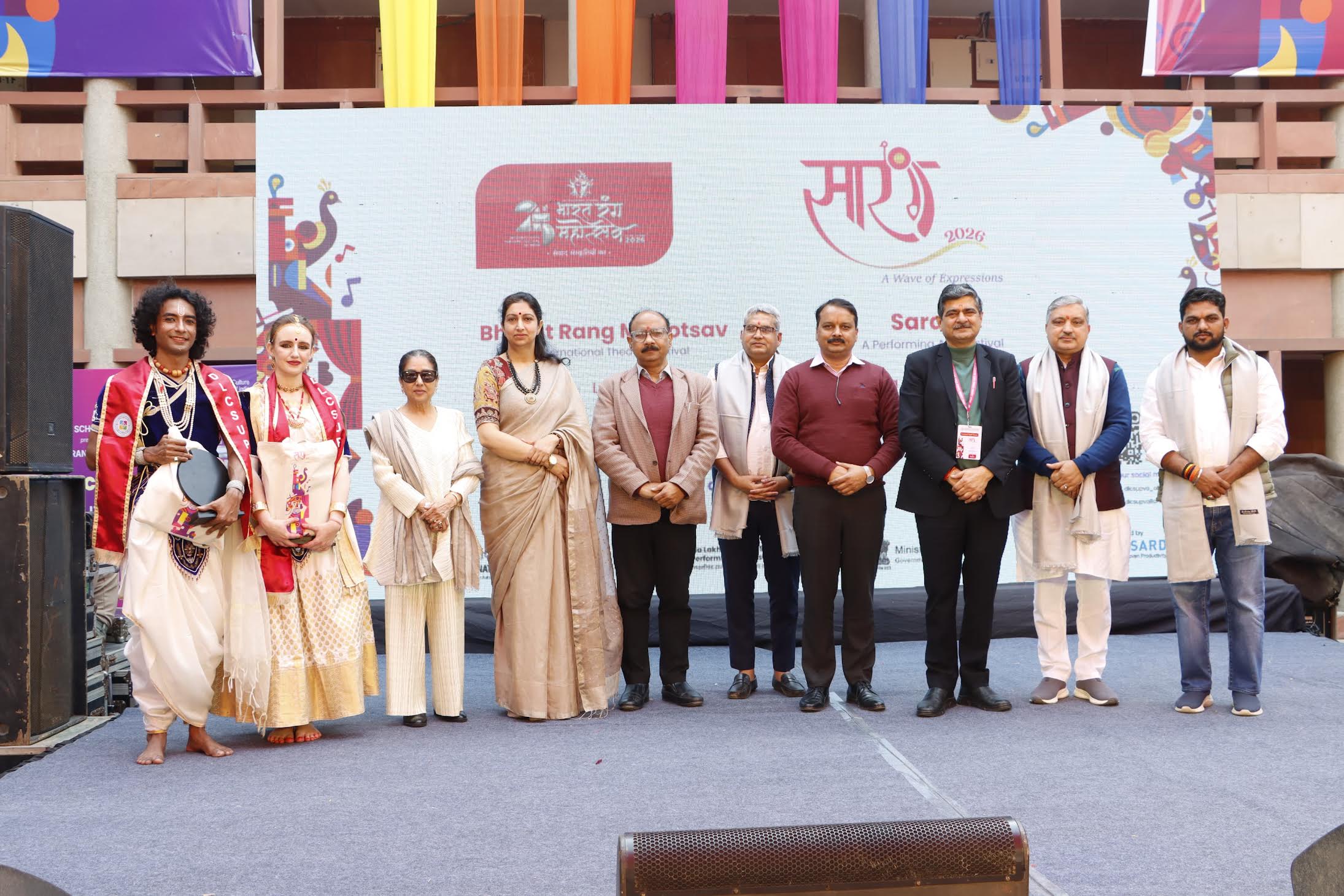
The most interesting change came when Dr. Arya revived the long-closed ‘Sarang’ festival. He linked it with the 25th edition of NSD’s Bharat Rang Mahotsav (Bharangam). The four-day festival held in February 2026 brought SUPVA onto the national stage. Chief Minister Nayab Saini sent good wishes and expressed his desire to attend future events-this is no small thing.
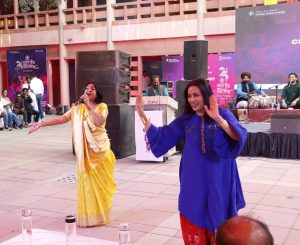
The festival included Assam’s Sattriya dance, Delhi’s Parth Hazarika group’s ‘Soul of Sattriya,’ Sudhir Rekhri’s band, and Sri Lanka’s experimental play ‘Colombo Hathe Thorana’-everything was there. But the most memorable was the closing: Padma Shri Malini Awasthi delighted the stage with Awadhi songs and said, “Coming here feels like I have reached NSD. The Vice-Chancellor has planted the seed of art and is also nurturing it.” Meghna Malik could not stop herself from dancing with Malini Awasthi. This was the magic of Malini Awasthi’s voice. In that magic, not just Meghna but the entire Gen Z group sitting in the audience was swaying. Shrivardhan Trivedi called theatre ‘complete knowledge.’ Fifty students from SUPVA presented performances like Kathak, Bharatanatyam, Bhangra, and Qawwali.
Why is this change important?
SUPVA is no longer becoming just an alternative to NSD—instead, it is becoming a complementary and democratic option. Outside Delhi-NCR, learning art is now becoming easier and more accessible for the youth of Haryana. Dr. Arya’s roadmap is clear: regular big events, mentorship, infrastructure like film cities, and student-focused improvements. This is not just the rise of one university-it is an effort to remove regional imbalance. While NSD has remained Delhi-centered, SUPVA is connecting with the soil of Haryana and giving space to talent from both rural and urban areas. In the words of Malini Awasthi, the natural acting in the songs of rural women is the real art—SUPVA is giving institutional form to this naturalness.
The road ahead: A bridge of hope
The journey of SUPVA has just begun. Challenges remain—shortage of faculty, funding, continuity. But if the leadership is strong, students are enthusiastic, and the government is supportive, this will not just be a banyan tree-it can become a new sacred fig tree under whose shade hundreds of artists can flourish.
A new morning for art is dawning in Haryana. The flame of ‘Sarang’ has been lit-now it must not be allowed to go out. This is the time for all of us to become part of this change, because art is not just entertainment-it is a medium to connect society, understand it, and make it better. SUPVA is the first strong step in that direction.
