
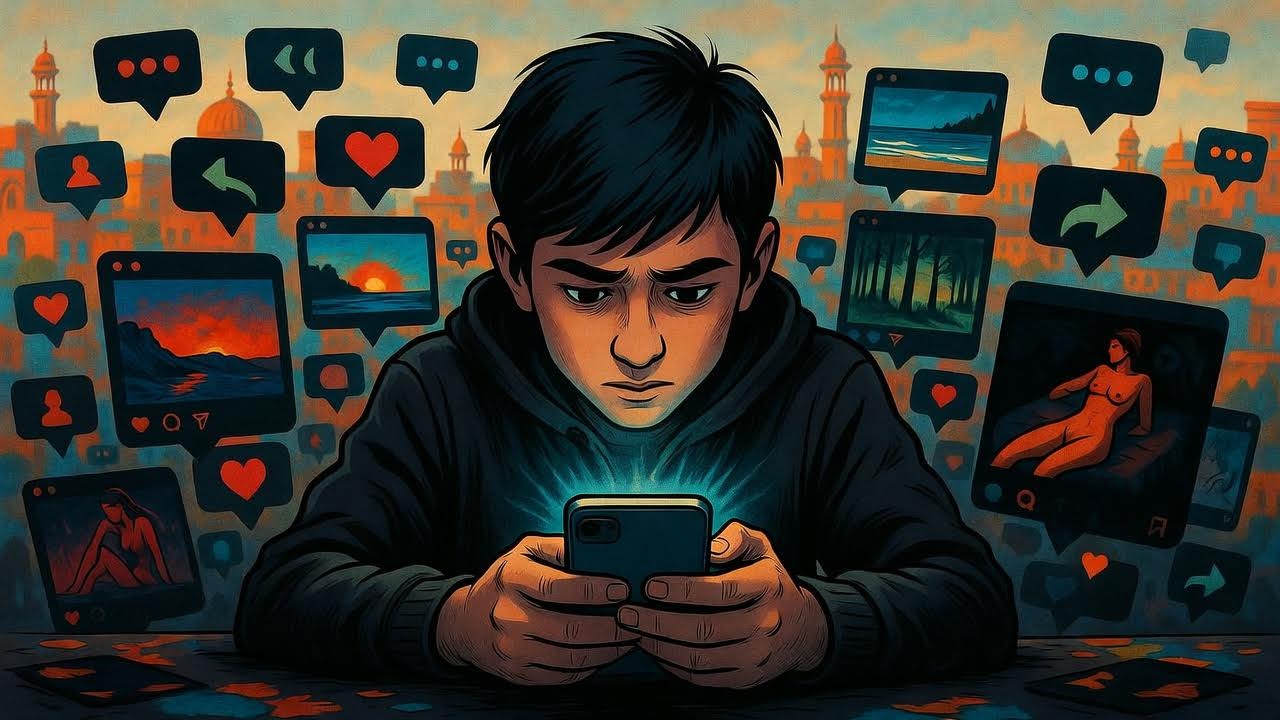
As of 2025, India has no blanket bans or age limits on mobile phone use for teenagers, unlike some countries experimenting with school smartphone restrictions or social media age gates. Smartphone ownership among rural teens aged 14-16 has surged, with over 84% of households owning one, according to recent surveys. While this digital boom empowers education and communication, it also opens floodgates to explicit material. Studies show that nine out of 10 boys in India are exposed to pornography before turning 18, often accidentally through pop-ups or shared links on social platforms.

Teenage years are a critical period of brain development, with heightened activity in reward centers and ongoing maturation of impulse control regions until the mid-20s. Neuroscientists explain that the adolescent brain is particularly vulnerable to hyper-stimulating content. Dopamine surges from viewing pornography or engaging with social media can rewire neural pathways, similar to substance addiction mechanisms. A Cambridge University study found younger viewers exhibit greater ventral striatum activity— the brain’s reward hub— in response to pornographic cues, potentially leading to compulsive behaviors.
Research from the Wave Clinic highlights how frequent pornography exposure promotes objectification, desensitization, and unrealistic expectations about sex and relationships. Adolescents may develop distorted views, seeing sex as primarily physical rather than emotional, which can strain real-life attachments. One longitudinal review notes associations with increased sexual aggression, though results are heterogeneous and causality remains debated. In India, a retrospective study of pornography users found younger individuals, often single and with early exposure, showing higher addiction severity, linked to poor coping and excessive digital engagement.
Social media amplifies these risks. Platforms like Instagram and TikTok, designed for endless scrolling, exploit dopamine loops to keep users hooked. Indian adolescents report averaging over three hours daily on social media, with problematic use rising from 7% in 2018 to 11% globally, trends mirrored here. A qualitative study of Indian teens revealed compulsive midnight scrolling disrupting sleep, fostering anxiety from likes/comments, cyberbullying, and social comparison. Excessive use correlates with depression, low self-esteem, body image issues, and loneliness.
The U.S. Surgeon General’s advisory notes teens spending over three hours daily on social media face double the risk of depression and anxiety symptoms— a threshold many Indian youth exceed. In urban India, academic pressures compound this: late-night feeds replace sleep, exacerbating mood disorders. Cyberbullying, often tied to social media, heightens isolation and suicidal ideation risks.

Experts cite neuroplasticity concerns. Pornography’s novelty triggers intense dopamine bursts, potentially eroding prefrontal cortex functions like impulse control and morality. Studies using fNIRS show hyperactive reward areas and inhibited regulatory zones in addicted viewers. For teens, this can stunt emotional growth, leading to erectile dysfunction in young men (14-35% report issues linked to porn habits) or dissatisfaction in relationships.
Positive aspects exist—social media offers connectivity, especially for marginalized youth, and some use pornography for sexual exploration. However, evidence leans toward net harms in unrestricted contexts. A Common Sense Media report found three-quarters of teens view pornography by 17, average first exposure at 12, often accidental.
In India, rising porn addiction among youth alarms behavioral experts. Clinics report increased cases of teens seeking help for compulsive viewing, impacting studies and relationships. The Madras High Court has advocated counseling over punishment for addicted minors, recognizing gadgets’ easy access to uncensored content.
Parents and educators grapple with monitoring. Many teens own smartphones privately, bypassing filters. Calls grow for digital literacy programs, comprehensive sex education, and potential regulations like social media age limits, debated globally.
Yet, blanket bans risk backlash—teens may seek alternatives, worsening distress. Balanced approaches are key: parental guidance, school awareness, and platform accountability.
Aryan recently confided in a counselor, reducing screen time and feeling better. Stories like his underscore urgency: while mobiles connect the world, unrestricted access can disconnect teens from healthy development.
Experts urge action. “Adolescents’ brains are learning machines,” notes one neurosurgeon. “Feed them positive inputs, or risk lasting distortions.”
As India hurtles toward greater digital integration, safeguarding young minds demands collective effort—from families fostering open talks to policymakers considering evidence-based safeguards.
The screen’s glow illuminates opportunities but casts long shadows. For India’s teenagers, the challenge is navigating both.
References and Key Studies Cited:
Wave Clinic (2025): Effects on teenage brain and social development.
Common Sense Media: Teen pornography exposure statistics.
PMC studies on Indian pornography addiction and social media impacts (2024-2025).
U.S. Surgeon General Advisory on Social Media and Youth Mental Health.
Various neuroimaging and longitudinal reviews on dopamine, desensitization, and mental health correlations.