राष्ट्रीय स्वयंसेवक संघ: सौ वर्षों की सेवा, समर्पण और राष्ट्र निर्माण की प्रेरणादायी गाथा

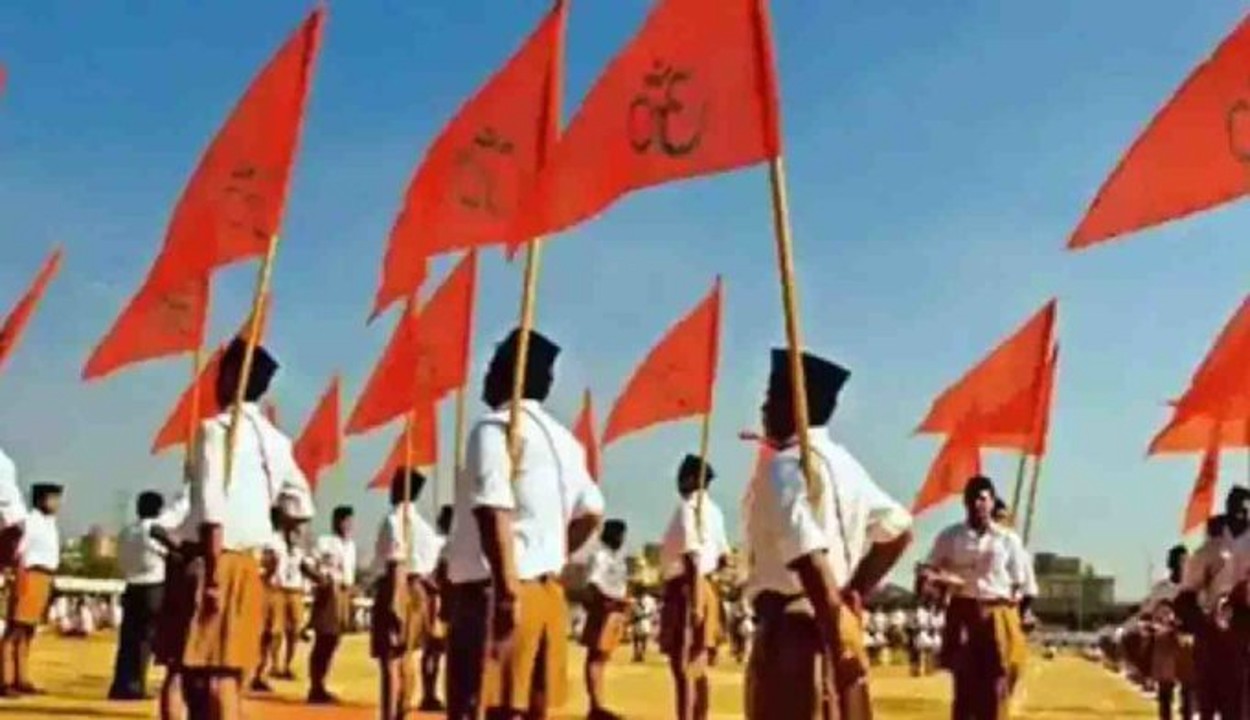
RSS-meeting-in-Ahmedabad.jpg

राष्ट्रीय स्वयंसेवक संघ (RSS) की सौ वर्षों की यात्रा एक ऐसी महागाथा है, जो राष्ट्रभक्ति, सेवा भाव, और सामाजिक समरसता की अनगिनत कहानियों से बुनी गई है। 27 सितंबर, 1925 को विजयादशमी के शुभ अवसर पर डॉ. केशव बलिराम हेडगेवार ने नागपुर में इस संगठन की नींव रखी। यह सिर्फ एक संगठन नहीं, बल्कि एक विचारधारा है, जो भारत की सांस्कृतिक चेतना को पुनर्जनन देने और समाज को संगठित कर राष्ट्र को सशक्त बनाने का स्वप्न लेकर चली। यह लेख उस प्रेरणादायी यात्रा का उत्सव है, जो ऊर्जा, उत्साह और समर्पण से भरी है।

एक बीज का वटवृक्ष बनना

1925 में, जब भारत औपनिवेशिक शासकों की बेड़ियों में जकड़ा था, डॉ. हेडगेवार ने एक छोटे से विचार को जन्म दिया। वे चाहते थे कि भारत का प्रत्येक व्यक्ति अपनी सांस्कृतिक जड़ों से जुड़े और राष्ट्र के लिए समर्पित जीवन जिए। इस सपने ने जन्म लिया ‘शाखा’ के रूप में, जो एक अनूठी व्यवस्था थी। शाखा में युवा एकत्र होकर शारीरिक व्यायाम, सूर्य नमस्कार, स्वदेशी खेल और बौद्धिक चर्चाओं के माध्यम से अनुशासन और देशभक्ति के संस्कार ग्रहण करते थे। यह छोटा सा बीज, जो नागपुर के एक अखाड़े में बोया गया, आज एक विशाल वटवृक्ष बन चुका है, जिसकी शाखाएं देश के कोने-कोने और विश्व के 80 से अधिक देशों में फैली हैं। संघ की शुरुआत पांच स्वयंसेवकों से हुई थी। आज यह विश्व का सबसे बड़ा स्वयंसेवी संगठन है, जिसमें लाखों स्वयंसेवक बिना किसी स्वार्थ के समाज की सेवा में तत्पर हैं। यह कहानी उस संकल्प की है, जो व्यक्तिगत परिश्रम से सामूहिक शक्ति में बदला और एक सदी तक अडिग रहा।

नर सेवा, नारायण सेवा: सेवा का अखंड यज्ञ

संघ का मूल मंत्र है-‘नर सेवा, नारायण सेवा’। यह विश्वास कि मानव सेवा ही ईश्वर की सच्ची भक्ति है, संघ के हर कार्य में झलकता है। चाहे प्राकृतिक आपदा हो, महामारी हो, या सामाजिक संकट-संघ के स्वयंसेवक सबसे पहले सेवा के लिए तत्पर रहते हैं। बाढ़, भूकंप, या चक्रवात जैसी आपदाओं में स्वयंसेवक बिना किसी पहचान पूछे, बिना श्रेय की अपेक्षा किए, राहत कार्यों में जुट जाते हैं।

उदाहरण के लिए, 2004 की सुनामी हो या 2020 की कोविड-19 महामारी, स्वयंसेवकों ने देश भर में भोजन, दवाइयां, और आश्रय पहुंचाने का कार्य किया। सेवा भारती जैसे अनुषांगिक संगठनों ने सुदूर गांवों में स्कूल, चिकित्सालय, और स्वरोजगार केंद्र स्थापित किए। वनवासी कल्याण आश्रम ने जनजातीय समुदायों के बीच शिक्षा और स्वास्थ्य सेवाएं पहुंचाईं, उनकी संस्कृति को संरक्षित करते हुए। ये कार्य केवल सेवा नहीं, बल्कि समाज को सशक्त बनाने का माध्यम हैं।

संघ की सेवा का दायरा केवल आपदा तक सीमित नहीं है। यह सामाजिक समरसता को बढ़ावा देता है। दलितों और पिछड़े वर्गों को मंदिरों में पुजारी प्रशिक्षण देने से लेकर, एक साथ भोजन करने की परंपरा को प्रोत्साहन देकर, संघ ने सामाजिक भेदभाव को मिटाने का प्रयास किया। महात्मा गांधी ने 1934 में संघ के शिविर का दौरा किया और वहां छुआछूत की अनुपस्थिति देखकर आश्चर्यचकित हुए। यह सेवा भाव ही वह शक्ति है, जो हर स्वयंसेवक के हृदय में बसता है।

शाखा: संस्कारों की पाठशाला

संघ की शाखा वह अनूठी प्रयोगशाला है, जहां व्यक्ति निर्माण होता है। सुबह या शाम को आयोजित होने वाली शाखाएं केवल व्यायाम या खेल का मैदान नहीं, बल्कि जीवन मूल्यों को सीखने का केंद्र हैं। यहां बच्चे, युवा, और प्रौढ़ एक साथ आकर न केवल शारीरिक और बौद्धिक विकास करते हैं, बल्कि एक-दूसरे के साथ भाईचारे का भाव विकसित करते हैं।

शाखा में गाए जाने वाले गीत, जैसे राष्ट्रगीत और स्वयंसेवक गान, युवाओं में देशभक्ति की भावना जागृत करते हैं। बौद्धिक सत्रों में राष्ट्रीय और अंतरराष्ट्रीय मुद्दों पर चर्चा होती है, जो स्वयंसेवकों को समसामयिक विषयों से जोड़ती है। यह वह स्थान है, जहां एक साधारण व्यक्ति असाधारण बनने की प्रेरणा पाता है। आज भारत में 83,000 से अधिक शाखाएं हैं, जो हर दिन लाखों लोगों को जोड़ रही हैं। यह शाखाएं केवल संगठन का विस्तार नहीं, बल्कि समाज के हर वर्ग को एक सूत्र में बांधने का माध्यम हैं।

महिलाओं की शक्ति: राष्ट्र सेविका समिति

संघ की विचारधारा केवल पुरुषों तक सीमित नहीं है। राष्ट्र सेविका समिति, जो संघ से प्रेरित है, महिलाओं को राष्ट्र निर्माण में बराबर की भागीदार बनाती है। सेविकाएं न केवल बस्तियों में जाकर शिक्षा और स्वास्थ्य सेवाएं प्रदान करती हैं, बल्कि परिवार और समाज को संस्कारित करने में भी अग्रणी भूमिका निभाती हैं।लोकमाता अहिल्यादेवी होल्कर की त्रिशताब्दी जयंती के अवसर पर 27 लाख लोगों ने भाग लिया, जो महिलाओं की शक्ति को समाज में स्थापित करने का प्रतीक था। सेविकाएं वह प्रेरणा हैं, जो समाज को दिशा देती हैं और यह सिद्ध करती हैं कि भारतीय संस्कृति में नारी शक्ति राष्ट्र की रीढ़ है।

सामाजिक समरसता: एकता का संदेश

संघ का मानना है कि समाज की एकता ही राष्ट्र की शक्ति है। सामाजिक समरसता के लिए संघ ने अनेक पहल की हैं। एक मंदिर, एक शमशान, एक जलस्रोत जैसे विचारों के माध्यम से संघ ने समाज में भेदभाव को मिटाने का प्रयास किया। स्वयंसेवक गांव-गांव जाकर लोगों को एक साथ लाते हैं, चाहे वह मकर संक्रांति पर तिल-गुड़ बांटना हो या रक्षाबंधन पर झुग्गी-झोपड़ियों में राखी बांधना।

ये छोटे-छोटे कार्य समाज में प्रेम और भाईचारे का संदेश देते हैं। संघ का यह प्रयास है कि हर व्यक्ति, चाहे वह किसी भी जाति, वर्ग, या समुदाय से हो, भारतीयता के सूत्र में बंधे। यह एकता ही वह शक्ति है, जो भारत को विश्व गुरु बनाने की दिशा में ले जा रही है।

वैश्विक मंच पर भारतीयता का परचम

संघ की विचारधारा केवल भारत तक सीमित नहीं है। हिंदू स्वयंसेवक संघ के माध्यम से यह भारतीय संस्कृति और सेवा भाव को विश्व के 80 से अधिक देशों में ले गया है। विदेशों में रहने वाले भारतीय अपनी जड़ों से जुड़ रहे हैं और विश्व को ‘वसुधैव कुटुंबकम’ का संदेश दे रहे हैं। यह संगठन सिद्ध करता है कि भारतीयता की भावना सीमाओं को पार कर सकती है, बिना अपनी जड़ें छोड़े।

शताब्दी वर्ष: आत्मचिंतन और संकल्प का अवसर

2025 में संघ अपनी स्थापना के सौ वर्ष पूरे कर रहा है। यह अवसर उत्सव का नहीं, बल्कि आत्मचिंतन और पुन: समर्पण का है। संघ ने इस वर्ष को ‘पंच परिवर्तन’ के लिए समर्पित किया है, जिसमें सामाजिक समरसता, पर्यावरण संरक्षण, स्वदेशी, परिवार प्रबोधन, और नागरिक कर्तव्यों पर जोर दिया गया है।

हिंदू सम्मेलनों का आयोजन, ग्रामीण और शहरी क्षेत्रों में शाखाओं का विस्तार, और समाज के हर वर्ग को जोड़ने की योजना इस वर्ष की विशेषता है। संघ का लक्ष्य है कि प्रत्येक गांव और बस्ती तक उसकी शाखाएं पहुंचें, ताकि भारत एक संगठित, आत्मविश्वासी, और सशक्त राष्ट्र बने।

प्रेरणा का अमृत: स्वयंसेवकों की कहानियां

संघ की सौ वर्षों की यात्रा में लाखों कहानियां हैं, जो अनकही रह गईं। एक स्वयंसेवक, जो कोविड काल में अपनी जान जोखिम में डालकर जरूरतमंदों तक भोजन पहुंचाता था, या वह युवा, जो सुदूर जनजातीय क्षेत्र में बच्चों को पढ़ाने के लिए अपना जीवन समर्पित कर देता है-ये कहानियां संघ की आत्मा हैं।

इन कहानियों में एक बात समान है-निस्वार्थ भाव। स्वयंसेवक वह है, जो बिना किसी अपेक्षा के समाज के लिए जीता है। यह भाव ही संघ को अद्वितीय बनाता है। हर स्वयंसेवक एक दीपक है, जो अपने प्रकाश से समाज को रोशन करता है।

सशक्त भारत का स्वप्न

संघ की यह यात्रा केवल अतीत की गाथा नहीं, बल्कि भविष्य का मार्गदर्शन है। यह संगठन विश्वास करता है कि भारत का हर व्यक्ति, हर समुदाय, और हर विचारधारा एक साथ मिलकर राष्ट्र निर्माण कर सकती है। संघ का सपना है एक ऐसा भारत, जहां हर व्यक्ति अपनी सांस्कृतिक जड़ों से जुड़ा हो, सामाजिक समरसता से बंधा हो, और राष्ट्र के लिए समर्पित हो।

यह कहानी उस व्यक्ति को भी प्रेरित करती है, जो संघ को नहीं जानता। यह उसे बताती है कि संघ केवल एक संगठन नहीं, बल्कि एक परिवार है, जो प्रेम, सेवा, और समर्पण से बना है। यदि किसी के मन में नफरत है, तो यह कहानी उसे प्रेम में बदल देगी, क्योंकि संघ का हर कार्य प्रेम और एकता का संदेश देता है।

संघ का संदेश: एक भारत, श्रेष्ठ भारत

राष्ट्रीय स्वयंसेवक संघ की सौ वर्षों की यात्रा एक प्रेरणादायी गाथा है, जो हमें सिखाती है कि निस्वार्थ सेवा और संगठित प्रयासों से असंभव को भी संभव बनाया जा सकता है। यह कहानी हर भारतीय के हृदय में देशभक्ति, प्रेम, और समरसता का दीप जलाती है। आइए, इस शताब्दी वर्ष में हम सब मिलकर एक सशक्त, समृद्ध, और एकजुट भारत के निर्माण में सहभागी बनें। जय हिंद

दुनिया की सबसे कठिन परीक्षा: नीरज की कहानी

UPSC-Marks-2025.webp

कुमारी अन्नपूर्णा

दिल्ली। The Economist की सहयोगी पत्रिका 1843 अपनी गहन, कथात्मक और विचारोत्तेजक लॉन्ग रीड्स (लंबे आलेखों) के लिए विश्व भर में प्रसिद्ध है। ये आलेख केवल सूचना देने तक सीमित नहीं रहते, बल्कि पाठकों को एक कहानी के माध्यम से गहरे सामाजिक, सांस्कृतिक और मानवीय मुद्दों से जोड़ते हैं। 24 जुलाई 2025 के अंक में प्रकाशित लेख, “Would You Pass the World’s Toughest Exam?”, ऐसी ही एक कहानी है, जो 23 वर्षीय नीरज कुमार के संघर्ष और भारत की सिविल सेवा परीक्षा (UPSC) की जटिलताओं को उजागर करती है।

नीरज की कहानी: एक सपने की शुरुआत

2019 की गर्मियों में, नीरज कुमार, एक 23 वर्षीय छात्र, दिल्ली से पटना की ओर एक स्लीपर ट्रेन में सवार हुए। उनकी यह यात्रा केवल एक भौतिक यात्रा नहीं थी, बल्कि भारतीय प्रशासनिक सेवा (IAS) में प्रवेश के सपने की ओर एक कदम थी। लेख के अनुसार, नीरज एक साधारण पृष्ठभूमि से आते हैं, और उनकी कहानी उन लाखों भारतीय युवाओं की आकांक्षाओं को दर्शाती है, जो UPSC की सिविल सेवा परीक्षा के माध्यम से अपने जीवन और समाज को बदलना चाहते हैं।

नीरज ने दिल्ली के मुखर्जी नगर, जो UPSC की तैयारी का केंद्र है, में अपनी पढ़ाई शुरू की। वहाँ उन्होंने दिन-रात किताबों, मॉक टेस्ट्स और कोचिंग कक्षाओं में डूबकर तैयारी की। उनकी कहानी में आर्थिक तंगी, सामाजिक दबाव और आत्म-संदेह की चुनौतियाँ भी शामिल हैं। पटना में अपने गाँव लौटने पर, नीरज ने वहाँ के बच्चों की शिक्षा की कमी को देखा, जिसने उन्हें अपने लक्ष्य के प्रति और दृढ़ किया। वे चाहते थे कि IAS बनकर वे अपने क्षेत्र में शिक्षा और विकास के लिए काम करें।

UPSC: दुनिया की सबसे कठिन परीक्षा

UPSC सिविल सेवा परीक्षा को 1843 ने दुनिया की सबसे कठिन परीक्षाओं में से एक बताया है। हर साल लगभग दस लाख उम्मीदवार इस परीक्षा में शामिल होते हैं, लेकिन केवल 0.1% से कम ही IAS, IPS या IFS जैसे पदों तक पहुँच पाते हैं। परीक्षा तीन चरणों में होती है: प्रारंभिक परीक्षा, मुख्य परीक्षा और साक्षात्कार। प्रारंभिक परीक्षा में सामान्य अध्ययन और CSAT शामिल हैं, जबकि मुख्य परीक्षा में नौ पेपर होते हैं, जिनमें निबंध, सामान्य अध्ययन और वैकल्पिक विषय शामिल हैं। साक्षात्कार उम्मीदवार के व्यक्तित्व और नैतिक दृष्टिकोण का आकलन करता है।

नीरज की तरह, अधिकांश उम्मीदवारों को इस प्रक्रिया में कई साल लग जाते हैं। असफलता का डर, आर्थिक बोझ और सामाजिक अपेक्षाएँ इस यात्रा को और कठिन बनाती हैं। फिर भी, नीरज ने अपनी दृढ़ता और परिवार के समर्थन से इस कठिन राह पर चलना जारी रखा। लेख इस बात पर जोर देता है कि UPSC केवल एक परीक्षा नहीं, बल्कि सामाजिक गतिशीलता और बदलाव का एक माध्यम है।

लॉन्ग रीड्स की शैली

The Economist के स्थापना का वर्ष 1843 है, पत्रिका अपनी कथात्मक पत्रकारिता के लिए जानी जाती है। इसके लॉन्ग रीड्स की कुछ प्रमुख विशेषताएँ हैं:
कथात्मक शैली: लेख कहानी कहने की शैली में लिखे जाते हैं, जो पाठकों को भावनात्मक रूप से बाँध लेते हैं। नीरज की कहानी में, लेखक उनकी ट्रेन यात्रा, उनके गाँव के दृश्यों और उनकी आंतरिक भावनाओं का जीवंत वर्णन करते हैं, जिससे पाठक उनकी यात्रा का हिस्सा बन जाते हैं।
गहन शोध: नीरज की कहानी में UPSC की जटिलताओं, कोचिंग उद्योग, और सामाजिक दबावों का विस्तृत विश्लेषण है, जो इसे केवल एक व्यक्तिगत कहानी से कहीं अधिक बनाता है।
मानवीय दृष्टिकोण: लॉन्ग रीड्स वैश्विक मुद्दों को व्यक्तिगत कहानियों के माध्यम से प्रस्तुत करते हैं। नीरज की कहानी भारत की सामाजिक संरचना, शिक्षा की असमानता और महत्वाकांक्षा के व्यापक मुद्दों को छूती है।
सुलभ भाषा और संरचना: भाषा परिष्कृत लेकिन सुलभ होती है, जो इसे व्यापक पाठक वर्ग के लिए आकर्षक बनाती है। नीरज की कहानी में, जटिल तथ्यों को सरल और कथात्मक ढंग से प्रस्तुत किया गया है, जिससे गैर-भारतीय पाठक भी UPSC की चुनौतियों को समझ सकें।
सामाजिक टिप्पणी: लेख अक्सर सामाजिक और सांस्कृतिक टिप्पणी करते हैं। नीरज की कहानी में, UPSC को भारत में सामाजिक गतिशीलता के एक साधन के रूप में दर्शाया गया है, जो ग्रामीण और शहरी भारत के बीच की खाई को उजागर करता है।
सामाजिक और आर्थिक संदर्भ

नीरज की कहानी भारत की सामाजिक और आर्थिक वास्तविकताओं को भी उजागर किया है। UPSC की तैयारी के लिए कोचिंग की उच्च लागत, ग्रामीण क्षेत्रों में संसाधनों की कमी, और अंग्रेजी भाषा का दबदबा जैसे मुद्दे नीरज जैसे उम्मीदवारों के लिए बड़ी चुनौतियाँ हैं। इसके बावजूद, यह परीक्षा सामाजिक उत्थान का एक अवसर प्रदान करती है, जिससे नीरज जैसे युवा अपने परिवार और समुदाय की स्थिति को बेहतर बनाने का सपना देखते हैं।

पत्रिका का लेख “Would You Pass the World’s Toughest Exam?” नीरज कुमार की कहानी के माध्यम से UPSC की कठिनाइयों और भारत की सामाजिक जटिलताओं को प्रभावी ढंग से प्रस्तुत करता है। यह लेख लॉन्ग रीड शैली का एक उत्कृष्ट उदाहरण है, जो व्यक्तिगत कहानियों को वैश्विक संदर्भों से जोड़ता है। नीरज की यात्रा-2019 में दिल्ली से पटना की ट्रेन यात्रा से शुरू होकर UPSC की तैयारी तक-न केवल उनकी दृढ़ता को दर्शाती है, बल्कि उन लाखों युवाओं की आकांक्षाओं को भी प्रतिबिंबित करती है, जो इस कठिन परीक्षा के माध्यम से अपने सपनों को साकार करना चाहते हैं।

1843 की कथात्मक शैली, गहन शोध और मानवीय दृष्टिकोण इस लेख को न केवल सूचनात्मक, बल्कि प्रेरणादायक भी बनाते हैं। यह हमें यह सोचने पर मजबूर करता है कि क्या हम दुनिया की सबसे कठिन परीक्षा पास कर सकते हैं, और यह भी कि ऐसी चुनौतियाँ हमारे समाज और व्यक्तिगत जीवन को कैसे आकार देती हैं।

The Aparajita Bill: A Critical Examination of Mamata Banerjee’s Legislative Response to Sexual Violence

PTI09_03_2024_000162A.jpg

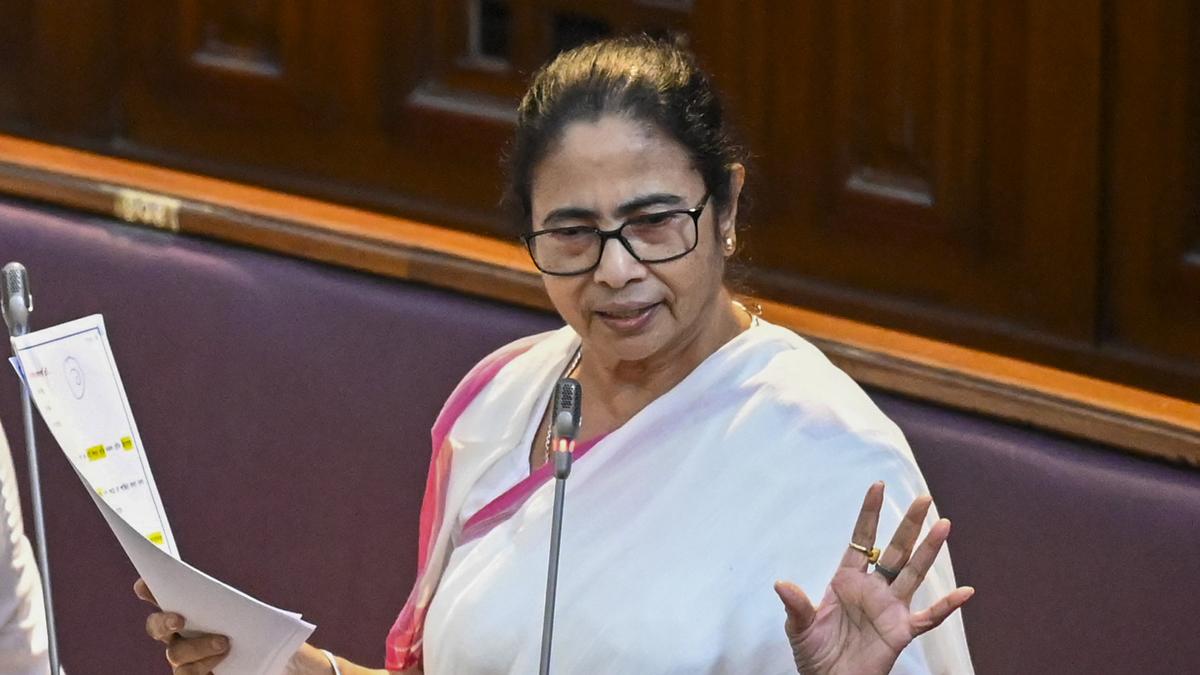
Kolkata: In September 2024, the West Bengal Legislative Assembly, under the leadership of Chief Minister Mamata Banerjee, unanimously passed the Aparajita Woman and Child (West Bengal Criminal Laws Amendment) Bill, 2024. This legislation was introduced in the wake of widespread public outrage following the brutal rape and murder of a 31-year-old trainee doctor at R.G. Kar Medical College and Hospital in Kolkata on August 9, 2024. The bill, named “Aparajita” (meaning “unconquered” in Bengali), was touted by Banerjee as a historic and model piece of legislation aimed at addressing sexual violence against women and children through stringent punishments, expedited investigations, and rapid judicial processes. However, despite its stated intent, the Aparajita Bill has faced sharp criticism from legal experts, women’s rights activists, and political opponents, who have labeled it as regressive, unconstitutional, and a politically motivated maneuver to deflect public anger. This article critically examines the bill’s provisions, its context, and the reasons behind the widespread criticism it has attracted, focusing on its legal, social, and political shortcomings.

Background and Context

The Aparajita Bill emerged as a direct response to the public outcry over the R.G. Kar incident, which exposed systemic failures in ensuring women’s safety in West Bengal. The gruesome crime, coupled with allegations of a cover-up involving the state government and hospital authorities, led to protests across Kolkata and beyond. Mamata Banerjee, facing intense scrutiny for her administration’s handling of the case, announced a special session of the West Bengal Assembly to introduce the bill. Passed on September 3, 2024, with support from both the ruling Trinamool Congress (TMC) and the opposition Bharatiya Janata Party (BJP), the bill was framed as a decisive step toward enhancing protections for women and children. It was sent to West Bengal Governor C.V. Ananda Bose and subsequently to President Droupadi Murmu for assent, as it amends provisions of central laws under the Concurrent List of the Indian Constitution.The bill’s provisions include severe penalties, such as life imprisonment without parole or the death penalty for rape convicts if the crime results in the victim’s death or leaves them in a vegetative state. It also mandates a 21-day timeline for rape investigations (down from the previous two-month deadline), establishes an Aparajita Task Force led by women officers for investigations, and sets up special courts for swift trials. Additionally, it enhances penalties for disclosing the identity of sexual violence victims and strengthens provisions under the Protection of Children from Sexual Offences (POCSO) Act. Banerjee described the bill as a “tribute” to the R.G. Kar victim, emphasizing its focus on exemplary punishment, speedy investigations, and rapid justice delivery.

Key Provisions of the Aparajita Bill

The Aparajita Bill amends several sections of the Bharatiya Nyaya Sanhita (BNS), Bharatiya Nagarik Suraksha Sanhita, and POCSO Act to introduce stricter measures. Key provisions include:

Enhanced Punishments: The bill increases the minimum punishment for rape from 10 years (as stipulated in Section 64 of the BNS) to life imprisonment for the remainder of the convict’s natural life or the death penalty, accompanied by a fine to cover victims’ medical expenses and rehabilitation costs. For cases where rape results in the victim’s death or a persistent vegetative state (Section 66 of BNS), the bill mandates the death penalty.

Time-Bound Investigations and Trials: It imposes a 21-day deadline for completing rape investigations, a significant reduction from the earlier two-month period. Special courts are to be established to ensure trials are concluded swiftly.

Aparajita Task Force: A dedicated task force, led by women officers, is proposed to handle investigations into sexual violence cases, aiming to ensure sensitivity and efficiency.

Stricter Penalties for Privacy Violations: The bill increases the punishment for publicizing the identity of sexual violence victims from a maximum of two years (under BNS) to three to five years of imprisonment.

Safety Measures: It includes provisions for installing CCTV cameras and enhancing security for women working night shifts, with the state government sanctioning Rs 120 crore for these initiatives.
While these measures appear robust on paper, the bill’s critics argue that its provisions are poorly conceived, legally flawed, and politically opportunistic, failing to address the root causes of sexual violence.

Criticisms of the Aparajita Bill

The Aparajita Bill has been met with significant opposition from various quarters, including legal experts, women’s rights activists, and political opponents. The criticisms can be broadly categorized into legal, social, and political concerns.

1. Unconstitutionality of Mandatory Death Penalty

One of the most contentious aspects of the bill is its provision for a mandatory death penalty in cases where rape results in the victim’s death or leaves them in a vegetative state. Legal experts, including retired Supreme Court Justice Asok Kumar Ganguly, have pointed out that this provision violates constitutional principles established in the 1983 Mithu vs. State of Punjab case, where the Supreme Court struck down mandatory death penalties as unconstitutional for removing judicial discretion. The Supreme Court has consistently held that mandatory death sentences infringe on the principles of fairness and proportionality, as they prevent judges from considering mitigating circumstances. Critics argue that the bill’s insistence on mandatory capital punishment is regressive, especially at a time when global legal trends are moving toward abolishing the death penalty altogether

The Union government, in its observations conveyed to West Bengal Governor C.V. Ananda Bose, labeled the proposed punishments as “excessively harsh and disproportionate,” raising constitutional concerns about their compatibility with established legal norms. In July 2025, President Droupadi Murmu returned the bill to the state government for reconsideration, citing these objections. The mandatory death penalty clause has been a focal point of criticism, with experts arguing that it undermines due process and risks exacerbating judicial errors in an already strained legal system.

2. Redundancy and Lack of Originality

Women’s rights activists and legal scholars have criticized the bill as a “copy-paste” of earlier legislation, such as Andhra Pradesh’s Disha Bill (2019) and Maharashtra’s Shakti Bill (2020), both of which remain pending presidential assent. Nisha Biswas, a prominent women’s rights activist, noted that the Aparajita Bill lacks originality and fails to address the specific needs of West Bengal’s socio-legal context. Critics argue that instead of introducing a new law, the state government should focus on implementing existing laws effectively, as the Bharatiya Nyaya Sanhita already includes stringent provisions for rape, including the death penalty in cases like the 2012 Nirbhaya case. The bill’s redundancy is seen as an attempt to create a superficial impression of action without addressing systemic issues like underfunded courts or inadequate police training.

3. Undermining Due Process

The bill’s compressed timelines for investigations (21 days) and trials have been flagged as impractical and potentially harmful to due process. Legal experts argue that rushing investigations risks incomplete evidence collection, which could lead to wrongful convictions or acquittals. The emphasis on speed over thoroughness may also overburden an already strained judicial system, particularly in West Bengal, where only six of the 17 sanctioned fast-track special courts (FTSCs) for rape and POCSO cases were operational as of June 2023. Critics point out that the state’s failure to operationalize existing FTSCs undermines its claims of commitment to swift justice, rendering the bill’s provisions more symbolic than substantive.

4. Anti-Feminist and Patronizing Framing

Women’s rights activists have strongly criticized the bill for its language and framing, which groups women and children together, implying that women, like children, are helpless and in need of protection. This protectionist approach is seen as anti-feminist, as it undermines women’s autonomy and agency. Activist Anuradha Sen remarked that the bill’s overnight drafting and lack of consultation with feminist groups or gender audits reflect a patronizing attitude, as if the government is saying, “We have fixed it for you”. The bill’s failure to address structural issues like gender sensitization in law enforcement or societal attitudes toward women further weakens its feminist credentials

5. Political Opportunism

The Aparajita Bill has been widely criticized as a political gimmick to deflect public anger over the R.G. Kar case. Opposition leaders, including BJP’s Suvendu Adhikari and CPI(M)’s Bikash Ranjan Bhattacharya, have called it a “diversionary tactic” to shift focus from the state government’s failure to prevent the crime and allegations of a cover-up involving TMC leaders. Union Minister Kiren Rijiju accused Banerjee of politicizing the trainee doctor’s death, pointing out that the state had previously failed to implement centrally sponsored schemes for fast-track courts under the Criminal Law (Amendment) Act, 2018. The bill’s introduction less than a month after the R.G. Kar incident, without adequate consultation or deliberation, reinforces perceptions of it as a reactive measure to manage public perception rather than a well-thought-out policy.

The bill’s return by President Murmu in July 2025, citing the Centre’s objections, further fueled accusations of political posturing. TMC leaders, including Kunal Ghosh, suggested that the BJP-led central government’s objections to the death penalty revealed a lack of commitment to women’s safety. However, critics argue that Banerjee’s insistence on pushing a constitutionally questionable bill was a calculated move to portray herself as a champion of women’s rights while deflecting blame onto the Centre.

6. Failure to Address Systemic Issues

The bill has been criticized for focusing on punitive measures rather than preventive strategies or systemic reforms. Legal experts and activists argue that harsher punishments alone do not deter sexual violence, as evidenced by the persistence of such crimes despite existing stringent laws. The bill does not address critical issues like inadequate training for police, lack of gender sensitization in the judiciary, or societal attitudes that perpetuate gender-based violence. For instance, West Bengal’s failure to operationalize all sanctioned FTSCs and its backlog of 48,600 rape and POCSO cases highlight systemic inefficiencies that the bill does not resolve. Critics also point to the state’s poor track record in ensuring women’s safety, citing incidents like the 2013 Kamduni rape case, where justice remains pending.

7. Risk of Misuse and Overreach

The bill’s provision to penalize unauthorized reporting of court proceedings in sexual violence cases has raised concerns about press freedom and transparency. Critics argue that this clause could be misused to suppress media coverage and public discourse, shielding the government from accountability. Similarly, the emphasis on mandatory harsh punishments risks disproportionately affecting marginalized groups, as judicial biases often lead to harsher sentences for lower-caste or economically disadvantaged defendants

Political and Social Implications

The Aparajita Bill has deepened political divisions in West Bengal. While the TMC has portrayed it as a bold step toward women’s safety, the BJP and other opposition parties have accused Banerjee of using it to deflect criticism over her administration’s failures. The bill’s return by President Murmu has further escalated tensions, with TMC leaders alleging that the BJP-led Centre is obstructing their efforts to protect women. However, the lack of consultation with stakeholders, including feminist groups and legal experts, has undermined the bill’s credibility and reinforced perceptions of it as a populist measure.

Socially, the bill has failed to address the broader cultural and systemic factors that perpetuate sexual violence. Activists argue that true reform requires investment in education, gender sensitization, and institutional accountability rather than symbolic legislation. The bill’s focus on punishment over prevention has been criticized as a missed opportunity to tackle the root causes of gender-based violence, such as patriarchal norms and inadequate support for survivors.

The Aparajita Woman and Child (West Bengal Criminal Laws Amendment) Bill, 2024, introduced by Mamata Banerjee’s government, was presented as a landmark effort to combat sexual violence in West Bengal. However, its provisions have been widely criticized as unconstitutional, redundant, and politically motivated. The mandatory death penalty violates Supreme Court precedents, while the bill’s rushed drafting and lack of originality fail to address systemic issues in the justice system. Its patronizing framing undermines women’s autonomy, and its punitive focus neglects preventive measures. Politically, the bill appears to be a reactive attempt to quell public anger over the R.G. Kar case rather than a genuine effort to reform the system.

The return of the bill by President Murmu in July 2025 underscores its legal flaws and highlights the need for a more thoughtful approach to addressing sexual violence. Rather than relying on emotionally charged but superficial solutions, West Bengal’s government must prioritize implementing existing laws, strengthening judicial infrastructure, and fostering societal change to ensure meaningful progress in women’s safety. The Aparajita Bill, in its current form, represents a missed opportunity to address these deeper issues, serving instead as a case study in the limitations of populist legislation

Reference :

Aparajita Bill: A knee-jerk reaction
https://frontline.thehindu.com/social-issues/gender/west-bengal-aparajita-bill-mamata-banerjee-trinamool-government-r-g-kar-hospital-rape-murder-abhaya-case/article68638222.ece

Women activists, lawyers flay Mamata Banerjee’s Aparajita Bill
https://www.telegraphindia.com/west-bengal/women-activists-lawyers-flay-mamata-banerjees-aparajita-bill/cid/2046539

Why opinion is sharply divided on Mamata govt’s Aparajita Bill
https://www.indiatoday.in/india-today-insight/story/why-opinion-is-sharply-divided-on-mamata-govts-aparajita-bill-2594865-2024-09-07

Bill a bid to deflect attention, says BJP after supporting it
https://timesofindia.indiatimes.com/city/kolkata/bjp-accuses-aparajita-bill-of-being-a-diversionary-tactic/articleshow/113044480.cms

*President returns West Bengal’s Aparajita Bill, flags harsh rape penalties*
https://www.newindianexpress.com/nation/2025/Jul/25/president-returns-west-bengals-aparajita-bill-flags-harsh-rape-penalties

Governor Returns Aparajita Bill To Bengal Government, Trinamool May Protest
https://www.ndtv.com/india-news/governor-returns-aparajita-bill-to-bengal-government-trinamool-may-protest-8951059

A Call for Educational Transformation from the Birthplace of Adi Shankaracharya

2-19.jpeg

Atharva Sharma

• Four-day education-focused program by Dr. Mohan Bhagwat begins in Kerala
• Four-day national meeting begins at Adi Shankara Nilayam, Kerala
• National Chintan Baithak of Shiksha Sanskriti Utthan Nyas commences
• 100 selected karyakartas from across Bharat participate in the gathering

The event is being held in the special presence of Dr. Mohanrao Bhagwat, Sarsanghchalak of Rashtriya Swayamsevak Sangh (RSS)

Kalady ( Kerala) : There must be a balance of materialism and spirituality in education. The work of the Nyas and the transformation of Bharat’s education are not separate tasks. We must focus not only on identifying problems but also on progressing with solutions. We are here to review and plan for the Nyas’s work—both programmatic and organizational—for the next five years.

This was stated by Dr. Atul Kothari, National Secretary of Shiksha Sanskriti Utthan Nyas, during his opening remarks at the inaugural session of the National Chintan Baithak held at Adi Shankara Nilayam, Kalady.

He further added that no single organization, institution, or platform can bring about transformation in the education system of Bharat alone. A united, collective effort is required.

This is the third national Chintan Baithak of the Nyas –
• The first was held in Vrindavan in 2012
• The second in Coimbatore in 2019
• And the third is now being held at the birthplace of Adi Shankaracharya in Kalady

Dr. Kothari affirmed that from its inception, the Nyas has been committed to providing an alternative in Bhartiya education. The task is so vast that events like Gyanotsav, Gyan Kumbh, and Gyan Sabha alone are not enough. We must continue working to expand and deepen this mission.

Acharya Vivittananda, head of Chinmaya Mission, Kerala region, stated: “It is our good fortune that such a vital educational brainstorming session—focused on bringing foundational changes in Bharat’s education—is being held on our campus. Our Bhartiya knowledge tradition is the foundation of our unity.
Your efforts are bringing an end to the Macaulay system. I am confident that because of your work, the state of education will change, and the Indianization of education will be realized throughout the country.”

Dr. Pankaj Mittal, Chairperson of Shiksha Sanskriti Utthan Nyas, in her address during the inaugural session, said: “Since its inception, the Nyas has strived to rejuvenate Bhartiya education by blending traditional knowledge systems with modern-day needs, offering a meaningful alternative to the current system.
In Bharat, the aim of education was never limited to livelihood—it was a path toward becoming a complete human being. That is the direction in which we must take our education system.”

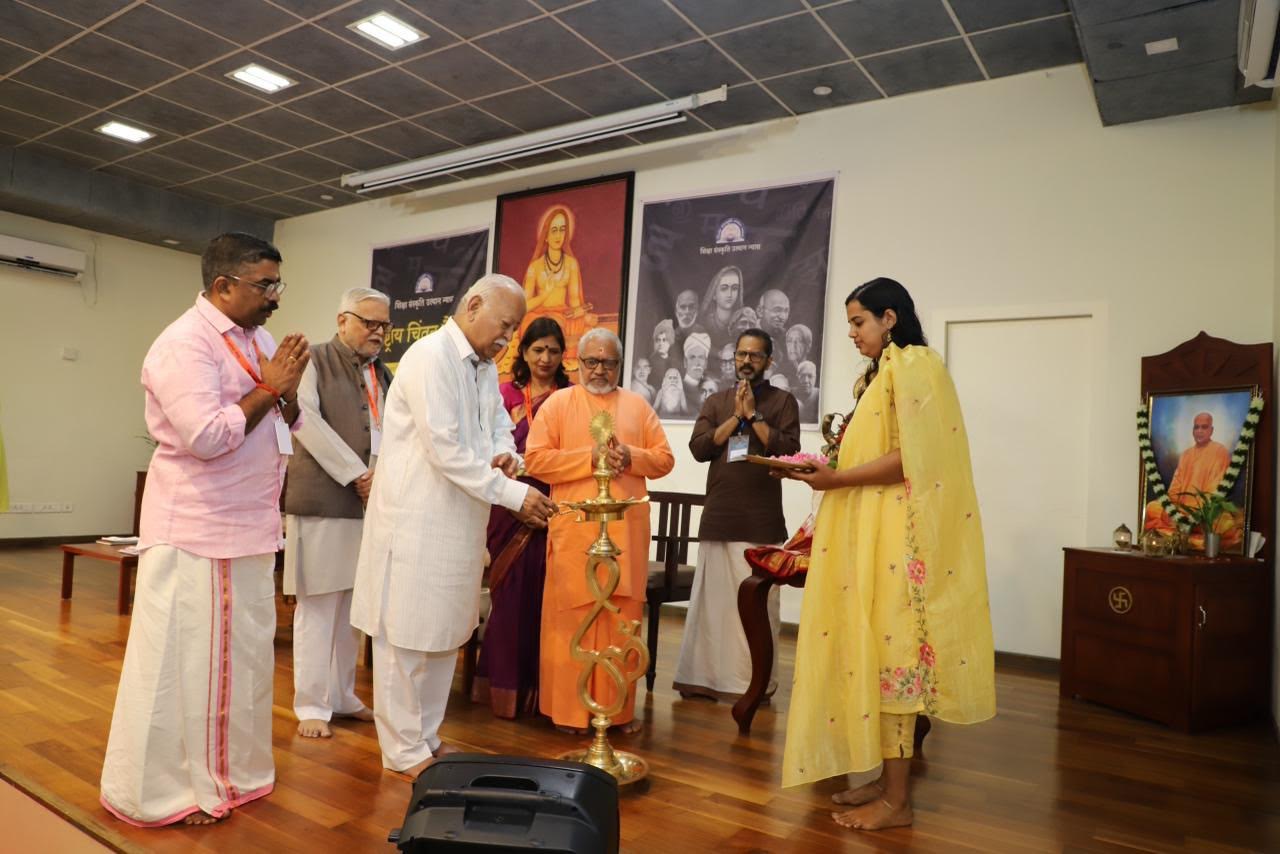
Sharing details of the inaugural session, Atharva Sharma, National Media Head of the Nyas, stated that the National Chintan Baithak was formally inaugurated by P.Pu. Dr. Mohan Bhagwat, Sarsanghchalak of the Rashtriya Swayamsewak Sangh.
Also present on the occasion were Swami Vivittananda of Chinmaya Mission, Dr. Pankaj Mittal (Chairperson of the Nyas), A. Vinod (Convenor, Nyas), and Shri Sudarshan from Chinmaya Mission.
The session was conducted by Shri Sanjay Swami, Co-Convenor of the Nyas.

In the second session of the first day, Dr. Atul Kothari reflected on the journey of the Nyas and stated: “When distortions in education became evident, a nationwide ‘Shiksha Bachao Andolan’ was launched. It was after that effort that Shiksha Sanskriti Utthan Nyas was formed to offer a constructive alternative. Initially, the Nyas focused on six core areas. Today, it works across 11 Vishay, 3 Aayam, 3 Karya Vibhag, and 2 Abhiyan. Our approach is not just to deliver speeches but to enter the system and bring change from within.”

Dr. Kothari reiterated that over the years, Shiksha Sanskriti Utthan Nyas has been continuously working in the field of education to awaken the soul of Bharat through its nation-centric efforts. This meeting is a powerful continuation of that journey.

The Nyas believes that grassroots change in education is the primary responsibility of society. For this, joint efforts of society and government are essential. Those directly involved in the education sector have a key role to play, only then can foundational changes be made in the system.This ongoing work is part of a nationwide campaign and movement. Making education a national priority is imperative.

scroll to top