Dr. Shivani Katara
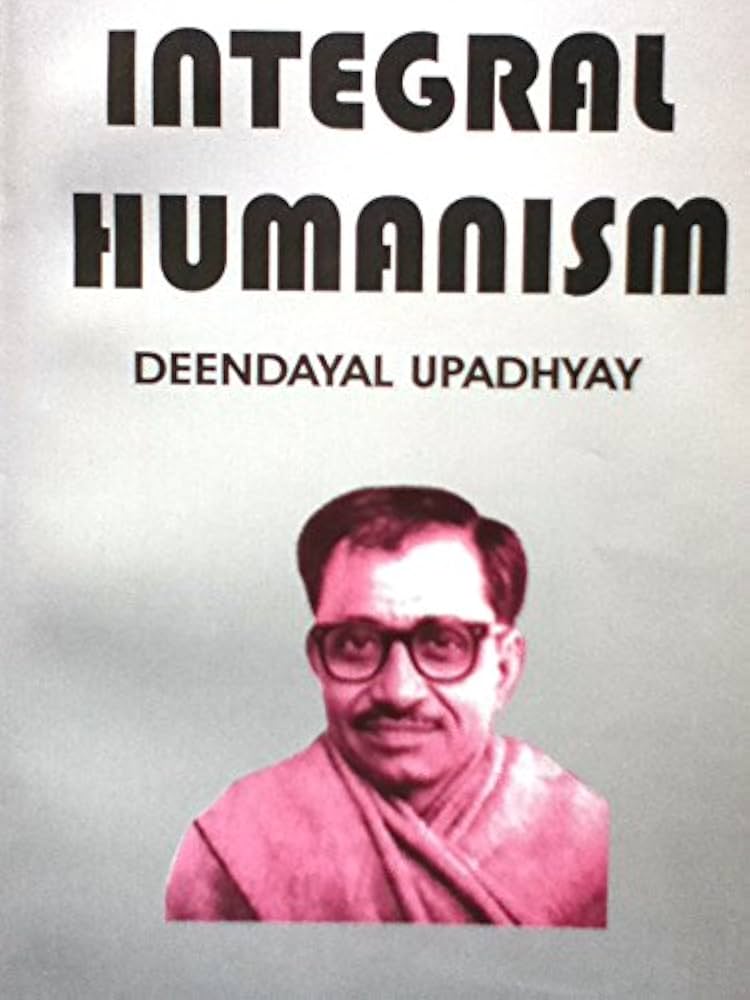
Delhi : The contemporary world appears illuminated by the radiant glow of science and globalization, yet beneath this brilliance lie deepening lines of imbalance and discontent. In such times, Pandit Deendayal Upadhyaya’s philosophy of Integral Humanism stands as a beacon of hope and direction. This philosophy is not a relic of the past but a vision for the future. As Deendayalji observed: “The fundamental character of Indian culture is that it perceives life as a holistic and integrated entity.” Rooted in this worldview, his Integral Humanism emphasizes that a human being is not merely a physical body, but an integrated unity of mind, intellect, and soul.
In the modern era, this perspective is particularly relevant. Contemporary society often reduces human identity to that of a consumer. Both capitalism and communism, in their extreme forms, have failed—capitalism giving rise to inequality and exploitation, and communism suffocating individual freedom. Consequently, the blind pursuit of production and consumption has marginalized spiritual needs. India’s rapidly expanding mall culture and e-commerce are telling examples: while they have enhanced material consumption, they have simultaneously diminished family interaction and deeper human dialogue. Deendayalji captured this truth when he remarked: “Human nature embodies both tendencies—on one hand anger and greed, and on the other love and sacrifice.” Development, therefore, is meaningful only when it maintains equilibrium between material and spiritual aspirations.
Pt. Deendayal Upadhyaya envisioned an economy for India that was neither the unequal structure of Western capitalism nor the rigidity of communism, but rather one shaped by its own culture and social needs. His Swadeshi socio-economic model reflected this vision—where swadeshi nurtures self-reliance and social sensitivity ensures that development reaches the last person. He stated unequivocally: “The objective of our economy should be the fulfillment of human and societal needs, not merely profit-making.” At a time when globalization has intensified consumerism and inequality, this model appears more urgent than ever.
This is why the idea of inclusive and balanced development is gradually moving to the center of contemporary political discourse. Yet policy alone cannot suffice; what is equally essential is a political philosophy that regards the individual and society not as adversaries but as complements. Integral Humanism provides precisely such a framework, wherein personal advancement and collective progress are inseparably linked. As Atal Bihari Vajpayee echoed: “Empowering the individual is empowering the nation.” True empowerment, however, requires the alignment of political integrity, economic opportunity, and social equity—this is the essence of Integral Humanism. Its relevance can be seen in the stories of women in Uttar Pradesh and Bihar, who, through micro-credit and skill training, achieved self-reliance, thereby embodying the harmony of politics, economy, and society.
On the global stage, where terrorism, cultural fragmentation, and moral vacuity loom large, the significance of this philosophy deepens further. Deendayalji observed: “Freedom is meaningful only when it becomes a medium for the expression of our culture.” Freedom, thus, is not confined to political or economic independence, but also encompasses the preservation of cultural dignity. A nation’s independence is meaningful only when it safeguards its identity while engaging with the world community. The lesson here is clear: India must not blindly imitate Western models but adapt modernity to its own traditions. Today, India projects values such as Yoga, Ayurveda, and social harmony onto the global stage—demonstrating that freedom extends beyond political sovereignty to become the universal expression of culture.
At a time when humanity faces unprecedented ecological crises, Deendayalji’s thought shines like a guiding flame. He observed: “The seed embodies unity even as it manifests as root, stem, branches, leaves, flowers, and fruits.” This metaphor reminds us that nature and human life share a common root. Delhi’s polluted skies warn us that development is sustainable only when it harmonizes economy, society, and environment. As Prime Minister Narendra Modi has affirmed: “India’s progress determines the destiny of one-sixth of humanity.” Thus, every developmental step taken by India influences global standards and shapes the collective destiny of humanity. Efforts such as the cleaning of the Ganga and nationwide tree-plantation drives illustrate the truth that protecting nature is, in essence, protecting the soul of humanity – emphasizing balance and restraint of Integral Humanism.
From a social standpoint too, this philosophy is timely. Deendayal Upadhyaya’s vision of Antyodaya was not merely an economic doctrine but a beacon of human compassion—development remains incomplete until it reaches society’s farthest margins. He emphasized that poverty is not simply material deprivation but an obstacle to the balanced growth of body, mind, intellect, and soul. In this light, the Multidimensional Poverty Index (MPI) expands the definition of poverty beyond income, incorporating education, health, nutrition, and dignity. While the MPI provides scientific data and comparative analysis for policymakers, Integral Humanism deepens its moral, cultural, and spiritual grounding. This convergence expands the scope of Antyodaya beyond food and shelter to include education, healthcare, sanitation, digital access, and environmental security. When an unknown volunteer imparts literacy to a poor child, or when a solar lamp brightens a dark village hut for the first time, Antyodaya transcends policy to become a living embodiment of compassion and duty. It is this vision that represents the true essence of inclusive and sustainable development today.
Thus, Pandit Deendayal Upadhyaya Ji’s Integral Humanism continues to shine like a lamp of progress—radiant and indispensable. It is not merely India’s cultural inheritance but a universal philosophy for the upliftment of all humanity.
(The author holds a Ph.D. from the Delhi School of Economics and is actively engaged in social work)