Expose: Ruchika Sharma’s Historical Narratives and the Leftist Agenda in Indian Historiography

3-2-8.png

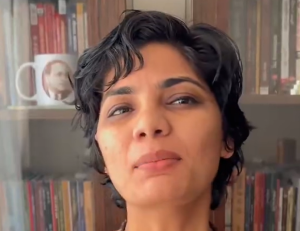
The rise of Ruchika Sharma, a self-proclaimed historian and PhD candidate in history at Jawaharlal Nehru University (JNU), has sparked significant controversy due to her provocative claims and interpretations of Indian history. Operating under the X handle @tishasaroyan, Sharma has gained attention through her YouTube channel and social media presence, where she presents herself as an authority on Indian history. However, her assertions—ranging from denying the destruction of Nalanda University by Bakhtiyar Khilji to promoting the Aryan-Dravidian theory and comparing Chhatrapati Shivaji Maharaj to Mughal rulers—have drawn sharp criticism for their alleged inaccuracies, selective narratives, and perceived bias against Indian traditions and Hindu culture. This article critically examines Sharma’s claims, situates them within the broader context of leftist historiography in India, and explores the implications of her work on public discourse. It also addresses the user’s concerns about the motives of “leftist Brahmin historians” and their impact on Indian historical narratives.

Ruchika Sharma’s Controversial Claims

Ruchika Sharma has made several contentious statements that have fueled debates on X and other platforms. Among the most inflammatory are her claims about the destruction of Nalanda University. Sharma has suggested that Nalanda was not destroyed by Bakhtiyar Khilji, a 13th-century Turkic invader, but rather by Brahmins, a claim that contradicts established historical accounts. Posts on X, such as those by @Starboy2079 and @MumukshuSavitri

, highlight this assertion, accusing Sharma of distorting history to malign Hindu culture. Traditional sources, including Persian chronicles and archaeological evidence, confirm that Nalanda was sacked by Khilji’s forces around 1200 CE, resulting in the destruction of its libraries and the massacre of monks. Sharma’s alternative narrative lacks credible primary sources and appears to rely on speculative reinterpretations, raising questions about her academic rigor.

Another provocative claim is Sharma’s alleged assertion that Brahmins originated in Iran and were responsible for creating the caste system. This aligns with the now-discredited Aryan Invasion Theory (AIT), which posits that Indo-Aryans migrated into India from Central Asia, bringing with them Vedic culture and social hierarchies. Recent genetic studies, such as those published in Cell and Science in 2019, have debunked the invasion narrative, suggesting instead a complex interplay of indigenous and migratory populations without evidence of a violent incursion. Sharma’s persistence in promoting this theory, as noted in her X posts from July 17, 2025, ignores these findings and perpetuates a colonial-era framework that divides Indian society into “Aryan” and “Dravidian” categories. Her claim about Brahmins creating the caste system also contradicts the nuanced views of Dr. B.R. Ambedkar, who argued that caste evolved through complex social and economic processes, not as a Brahmin imposition.

Sharma’s alleged comparison of Chhatrapati Shivaji Maharaj, a revered Maratha warrior-king, to Mughal emperors like Akbar is particularly inflammatory. Posts on X, such as those by

@tishasaroyan, suggest she claimed Shivaji attacked and looted the king of Karnataka, a statement lacking historical evidence. Shivaji’s campaigns were primarily defensive, aimed at establishing Swarajya (self-rule) against Mughal and other external aggressions. Comparing him to Akbar, who is recorded to have massacred thousands during the siege of Chittor in 1568, is seen by critics as an attempt to equate a Hindu icon with Mughal invaders, thereby diminishing his legacy. Sharma’s alleged defense of Mughal policies, such as the jizya tax, as economic measures rather than religious impositions further fuels accusations of appeasement and historical revisionism.

The Leftist Historiographical Tradition

Sharma’s work appears to align with a broader tradition of leftist historiography in India, often associated with historians like Romila Thapar, Irfan Habib, R.S. Sharma, Mridula Mukherjee, D.N. Jha, and others. This school, centered around institutions like JNU and Aligarh Muslim University, has been criticized for its Marxist lens, which emphasizes class struggle and often downplays the cultural and religious achievements of indigenous Indian civilizations. The user’s reference to these historians as “criminals” reflects a sentiment among critics that their narratives have systematically undermined Indian pride by focusing on Muslim rulers while marginalizing the contributions of Hindu, OBC, and other non-elite dynasties.

This historiographical approach, rooted in the works of Nurul Hasan and others, gained prominence in post-independence India, particularly through the Indian Council of Historical Research (ICHR) and NCERT textbooks. Critics argue that it selectively highlights Mughal and colonial periods while neglecting the histories of dynasties like the Palas, Rashtrakutas, Vijayanagara, and others listed by the user. For instance, the Pala dynasty, which ruled much of North India during the 8th–12th centuries, fostered Buddhist learning and resisted external invasions, yet receives minimal attention in standard curricula. Similarly, the contributions of OBC or middle-caste dynasties like the Mauryas, Guptas, and Kakatiyas are often overshadowed by narratives of Muslim rule.

The user’s question about the “guilt” of leftist Brahmin historians points to a perceived paradox: why do some Brahmin scholars, like Ruchika Sharma, critique their own community? This may stem from a combination of ideological commitment to Marxist or secular frameworks, which prioritize critique of traditional hierarchies, and a desire to align with global academic trends that emphasize subaltern perspectives. However, this approach often ignores the complexities of Indian society, where caste dynamics were fluid and regional, and kings from diverse backgrounds, as the user notes, played significant roles. The contrast with Kashi Prasad Jaiswal, a nationalist historian who celebrated India’s indigenous traditions, underscores the divergence between these approaches.

The Impact of Sharma’s Narratives

Sharma’s claims, disseminated through YouTube and X, have significant implications for public discourse. By challenging established historical facts, such as the destruction of Nalanda, she risks eroding trust in academic institutions. Her reliance on social media platforms amplifies her reach but also exposes her to scrutiny, as seen in X posts accusing her of fabricating history. For instance, @MumukshuSavitri’s thread on January 22, 2025, critiques Sharma’s peer-reviewed paper, alleging it lacks academic integrity. This reflects a broader tension between traditional scholarship and the rise of “YouTube historians” who prioritize sensationalism over evidence.

The user’s concern about leftist historians creating “self-doubt” among Indian youth is a critical point. NCERT textbooks, influenced by the Thapar-Habib school, often emphasize Mughal contributions while downplaying the achievements of indigenous dynasties. This has led to a perception that Indian history is one of defeat and subjugation, rather than resilience and cultural richness. Sharma’s narratives, by reinforcing these themes, may exacerbate feelings of alienation among young Indians, particularly when they glorify Mughal policies or question the legitimacy of Hindu cultural symbols.

Critiquing Sharma’s Methodology

A closer examination of Sharma’s methodology reveals several flaws. Her claim about Nalanda lacks primary source evidence and contradicts accounts by contemporary historians like Minhaj-i-Siraj, who documented Khilji’s raids. Her reliance on the Aryan-Dravidian framework ignores genetic and archaeological data, such as the Rakhigarhi excavations, which suggest continuity in Indian populations. Her alleged comments on Shivaji and the Mughals appear to cherry-pick facts to fit a narrative that aligns with leftist critiques of Hindu nationalism, rather than engaging with the broader context of 17th-century India.

Moreover, Sharma’s public persona on X and YouTube suggests a performative approach to history, where provocative statements generate attention and monetization. This contrasts with the rigorous scholarship of figures like Jaiswal, who grounded their work in primary sources and epigraphy. Sharma’s failure to engage with counterarguments, as seen in her dismissal of critics on X, further undermines her credibility.

The user’s frustration with leftist historians reflects a deeper cultural debate about Indian identity. The Thapar-Habib school’s emphasis on secularism and subaltern narratives has been accused of sidelining the contributions of OBC and middle-caste dynasties, which constitute a significant part of India’s historical legacy. The user’s list of dynasties—Nanda, Maurya, Pala, Gurjar, and others—highlights the diversity of India’s ruling classes, challenging the leftist focus on elite or foreign rulers. By marginalizing these stories, leftist historiography risks alienating communities whose ancestors played pivotal roles in shaping India.

Sharma’s alleged defense of Mughal policies, such as jizya, and her minimization of Akbar’s violence in Chittor further fuel accusations of appeasement. Jizya, a tax imposed on non-Muslims, was inherently discriminatory, and Akbar’s massacre of 30,000 people at Chittor is a well-documented atrocity. Defending these as economic or minor actions ignores their human cost and reinforces perceptions of bias.

Ruchika Sharma’s rise as a self-proclaimed historian exemplifies the challenges posed by populist scholarship in the digital age. Her claims about Nalanda, the Aryan-Dravidian theory, and Shivaji Maharaj lack historical grounding and align with a leftist historiographical tradition that critics argue distorts India’s past. While her right to express controversial views is undeniable, her failure to engage with evidence and her provocative rhetoric risk deepening cultural divides. The Indian government need not deport her, as suggested by the user, but her work warrants rigorous scrutiny to ensure historical narratives reflect truth rather than ideology. By exposing the flaws in Sharma’s approach, we can advocate for a more inclusive historiography that celebrates the contributions of all Indian communities, from the Palas to the Vijayanagara, and fosters pride in the nation’s diverse heritage.

 

The Great Khalifa-Rathore Kerfuffle: A Satirical Saga of Social Media Shenanigans

3-15.png

In the ever-churning cauldron of social media, where trends bubble up faster than a pressure cooker on a reality show, a peculiar storm brewed in 2024 that left netizens gasping, giggling, and googling. The epicenter?

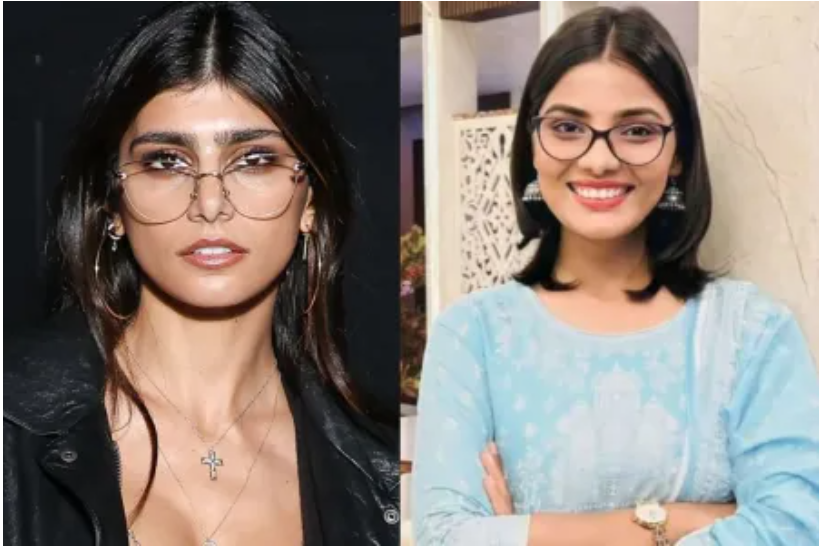
A comparison so audacious it could make a Bollywood plot blush: Bhojpuri folk singer and social media firebrand Neha Singh Rathore was likened to none other than Mia Khalifa, the former adult film star turned cultural lightning rod. Buckle up, dear reader, as we dive into this spicy saga with a generous dollop of satire, a pinch of wit, and a whole lot of “Ka Ba?”—Neha’s signature catchphrase.

Who Is Mia Khalifa, Anyway?

For those who’ve been living under a rock or in a Wi-Fi dead zone, Mia Khalifa is a Lebanese-American media personality who skyrocketed to infamy in the mid-2010s as an adult film actress, albeit briefly. Her stint in the industry—shorter than a TikTok video—catapulted her into a global phenomenon, not for her acting chops but for the cultural and political firestorms her work ignited. Since leaving the adult industry, Khalifa has reinvented herself as a sports commentator, social media influencer, and occasional provocateur, with an Instagram feed hotter than a Delhi summer and a knack for staying relevant. She’s the kind of figure who can trend for anything from a tweet about football to a throwback photo that sends the internet into a frenzy. In short, she’s a one-woman meme factory, loved, loathed, and always trending.


The Neha Singh Rathore Conundrum

Neha Singh Rathore, the Bhojpuri folk singer known for her sharp political satire, has stirred controversy with songs like “Bihar Mein Ka Ba?” and “UP Mein Ka Ba?”, which critics claim echo the Congress party’s narrative, leading to accusations of her being a paid propagandist. Some draw parallels to the historical Bhat community in Bihar—wandering bards who sang praises or critiques for money—implying Neha’s work is similarly transactional.

The Comparison That Lit the Internet on Fire

So, how did these two wildly different women end up in the same viral tweet? In March 2024, amid a political brouhaha involving Bollywood actress and BJP candidate Kangana Ranaut, Neha found herself targeted by what she alleged was the BJP’s IT cell. Social media posts surfaced, juxtaposing Neha’s photos with Mia Khalifa’s, with captions snarkily suggesting a resemblance. The implication? A crude attempt to smear Neha by associating her with Khalifa’s controversial past. Neha, never one to mince words, fired back on X, tagging Prime Minister Narendra Modi himself: “Your family members are calling me a porn star… Am I not a daughter of this country?”

Neha should also tell whether the women in the Red light Area who are forced to live there and have sex for money, are they not the daughters of India? Shouldn’t they be given Indian citizenship and the facilities they get as a citizen?

It is not at all right to compare Neha with Mia Khalifa but it is not logical to link the comparison with Mia Khalifa to being the daughter of the country. If Neha has to go and sing and dance on the Congress stages, then she must have had some compulsion. For this, it is not right to compare her with Mia Khalifa.

The Satirical Spin

Imagine the absurdity: a BJP IT cell meeting where someone pitches, “Let’s take down Neha by comparing her to Mia Khalifa!” The room nods, thinking it’s genius, oblivious to the fact that they’ve just handed Neha a megaphone. Neha, ever the maestro, turned the trollfest into a rallying cry, accusing the BJP of double standards. While the media fawned over Kangana Ranaut’s honor after a Congress leader’s sexist remark, Neha’s humiliation was met with silence. “Is only Kangana the daughter of the nation?” she quipped, exposing the selective outrage with the precision of a satirical sniper.

The internet, predictably, had a field day. Memes proliferated, with Neha’s “Ka Ba?” morphing into “Mia Ka Ba?” Some users hailed her as a feminist icon; others doubled down on the trolling. Meanwhile, Mia Khalifa, blissfully unaware in her Los Angeles penthouse, probably sipped her coffee, wondering why her name was trending in Uttar Pradesh. The whole episode was a masterclass in how not to run a smear campaign—less a political takedown, more a comedic own goal.

The Bigger Picture

Neha Singh Rathore, a folk singer known for her politically charged Bhojpuri songs, has stirred controversy with her social media posts following the Pahalgam terror attack, leading to an FIR for sedition and inciting communal tensions. Her rapid rise, fueled by songs like UP Mein Ka Ba and Bihar Mein Ka Ba, resonates with audiences for addressing social issues, but her alleged alignment with the Congress ecosystem raises questions about impartiality. Critics argue her posts, which reportedly targeted a specific faith community, exploit sensitive issues for political gain, especially given their viral spread in Pakistan. Her defiance, seen in her video challenging the government’s response to the attack, underscores her role as a provocateur. Support from figures like Kapil Sibal and alleged ties to Congress events suggest a strategic backing that amplifies her influence. While her music critiques governance, her selective targeting and political affiliations blur the line between activism and partisanship. This dynamic highlights a broader issue: can artists remain impartial when embedded in political ecosystems? Neha’s case reflects the tension between free expression and responsible commentary in a polarized climate.

This Ruchika Sharma Is Not a Historian: From Influencer to Self-Styled Scholar

3-11.jpeg

Delhi : Ruchika Sharma, known on Instagram as

@ruchikasharma23


, has undergone a notable transformation from a social media influencer to a figure presenting herself as a historian, sparking debates about her credibility and role in academic discussions. With a significant following on platforms like Instagram and YouTube, Sharma initially gained attention through content focused on history, culture, and heritage, often presented in an accessible, engaging format. Her posts blend visually appealing storytelling with historical narratives, resonating with a young, digitally-savvy audience. However, her shift from influencer to self-proclaimed historian has drawn both admiration and skepticism, particularly in light of criticisms questioning her academic credentials and scholarly rigor.

Sharma, reportedly pursuing a Ph.D. in history from Jawaharlal Nehru University (JNU), has leveraged her academic background to position herself as an authority on Indian history. Her content often explores themes like medieval Indian history, challenging mainstream narratives, and critiquing what she terms “WhatsApp history”—popular but unverified historical claims circulated online. Her peer-reviewed paper in the Journal of Archaeological Studies in India and columns in outlets like The Indian Express signal an attempt to establish scholarly legitimacy. Supporters, as seen in posts on X, praise her for delivering sharp, fact-based responses in debates, suggesting she brings fresh perspectives to historical discourse.

Yet, her detractors, as evident in X posts, question her qualifications, labeling her an influencer influenced by controversial historians like Audrey Truschke, whose work on Indian history has polarized audiences. Critics argue that Sharma’s lack of formal recognition as a historian and her social media-driven approach undermine her credibility in academic settings like debate panels. They point to specific claims, such as her alleged assertion that Nalanda University was destroyed by Hindus rather than Bakhtiyar Khilji, as evidence of revisionist tendencies lacking robust evidence. Others accuse her of parroting narratives that downplay historical traumas, aligning with a particular ideological camp.

Sharma’s “new avatar” reflects a broader trend where digital platforms blur the lines between influencer and expert. Her ability to engage large audiences makes her a potent voice, but it also invites scrutiny over whether her work prioritizes accessibility over academic depth. As she navigates this transition, Sharma’s challenge lies in balancing her influencer appeal with the rigorous demands of historical scholarship, ensuring her contributions are seen as credible rather than performative. Whether she can bridge this gap will determine her place in both academic and public spheres.

The Irony of ‘Godi Media’: A Reflection on Indian Journalism’s Chequered Past

3-13.png

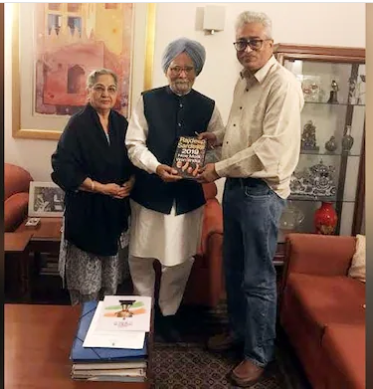
Delhi : The term “Godi Media,” coined by veteran journalist Ravish Kumar, has become a popular epithet to describe media outlets perceived as overly aligned with the ruling Bharatiya Janata Party (BJP) government since 2014. Literally translating to “lapdog media,” it suggests a media that prioritizes loyalty to power over journalistic integrity. However, as we scrutinize the contemporary media landscape, it is worth revisiting a not-so-distant era when some of India’s most prominent journalists were embroiled in controversies that raised serious questions about their own independence and ethics. Drawing from insights shared by senior journalist Manoj Maniyanil on social media, this article revisits three pivotal incidents between 2008 and 2011 that expose the hypocrisy of those who today champion the cause against ‘Godi Media.’


The Suppressed Sting of 2008: The Cash-for-Votes Scandal

On July 22, 2008, the Indian Parliament was abuzz with a no-confidence motion against the United Progressive Alliance (UPA) government, led by Prime Minister Manmohan Singh, over the controversial Indo-US nuclear deal. The deal, signed between Singh and US President George W. Bush, was hailed as a landmark for India’s energy needs but faced fierce opposition from the Left and the BJP, who labeled it a compromise of India’s strategic autonomy. As the nation awaited the confidence vote, a major news channel teased a sensational sting operation, promising to expose how MPs were allegedly bought to secure votes for the UPA. Promos aired throughout the day, building anticipation. Yet, as the clock ticked past the scheduled broadcast time, the sting never aired. The story was effectively “murdered,” as Manoj Maniyanil notes in his posts.

The channel in question was CNN-IBN, then led by editor-in-chief Rajdeep Sardesai. According to Maniyanil, the decision to suppress the sting operation, which allegedly revealed a “cash-for-votes” scandal, shielded the UPA government from potentially damning scrutiny. This incident raises uncomfortable questions: Why was such a critical exposé buried? Was it a case of editorial caution, or did external pressures influence the decision? Today, Sardesai is among those who critique media houses for selective reporting, yet his role in this episode suggests a selective memory when it comes to journalistic accountability

The Niira Radia Tapes: Lobbying in the Corridors of Power

Fast forward to 2010, when the Niira Radia tapes scandal rocked the Indian media. The leaked telephone conversations, recorded by the Income Tax Department in 2008–09, revealed political lobbyist Niira Radia engaging with senior journalists, politicians, and corporate figures. Among those implicated were prominent journalists like Barkha Dutt, then with NDTV, and Prabhu Chawla, former editor of India Today. The tapes suggested that some journalists were not merely reporting news but actively lobbying for corporate interests, including influencing the appointment of A. Raja as Telecom Minister in the UPA cabinet—a decision linked to the infamous 2G spectrum scam.

On November 30, 2010, Barkha Dutt appeared on NDTV to address the controversy, flanked by a panel of senior journalists. She admitted to an “error of judgment” in her conversations with Radia but denied any wrongdoing, insisting she never lobbied for Raja, whom she claimed she had consistently criticized in her reporting. Prabhu Chawla, similarly entangled, faced less public scrutiny but was also implicated in casual discussions with Radia. Rajdeep Sardesai, writing in the Hindustan Times, lamented that the “robust Indian tradition of adversarial journalism has been mortgaged at the altar of cozy networks.” Yet, the irony is stark: journalists who were part of such networks now position themselves as moral arbiters, calling out media houses for biased reporting while sidestepping their own past

Manmohan Singh’s Editor’s Meet: A Tame Narrative

On June 29, 2011, amidst a slew of scams—2G, Commonwealth, and coal—Prime Minister Manmohan Singh met with a select group of editors for a two-hour discussion. At the time, the UPA government was under fire, and public outrage was mounting over corruption. Yet, the headline that emerged from this meeting was tame: Singh expressed his willingness to come under the purview of the Lokpal, an anti-corruption ombudsman proposed to address systemic graft. This carefully curated narrative deflected attention from the government’s failures and focused on a reformist gesture. The editors present, some of whom are vocal critics of “Godi Media” today, appeared complicit in amplifying this distraction rather than pressing Singh on the scams plaguing his government.

The Hypocrisy of the “Godi Media” Critique

The term “Godi Media” gained traction in 2018, popularized by Ravish Kumar to describe media outlets perceived as subservient to the BJP government. Rajdeep Sardesai himself has used the term “lapdog media” to critique the current media landscape, stating, “A large section of the Indian media has become a lap dog, not a watchdog.” Yet, the incidents of 2008–2011 reveal that journalistic compromises are not a new phenomenon, nor are they exclusive to one political regime. The suppression of the cash-for-votes sting, the lobbying exposed by the Radia tapes, and the sanitized coverage of Singh’s editor’s meet suggest that cozy relationships between journalists and power structures predate the Modi era.

Manoj Maniyanil’s social media posts serve as a reminder that those who decry “Godi Media” today were, in some cases, beneficiaries of the UPA’s patronage. Rajdeep Sardesai, Barkha Dutt, and others received prestigious awards like the Padma Shri during the UPA’s tenure, raising questions about whether such honors were tied to their alignment with the government. Moreover, the accusation that NDTV, where Dutt and Kumar worked, was ‘born and brought up in the lap of UPA PM Dr. Manmohan Singh’ further complicates the narrative of journalistic purity.

A Call for Introspection

The irony is inescapable: journalists who once navigated murky ethical waters now lecture others on media ethics. Rajdeep Sardesai’s suspension from India Today in 2021 for spreading misinformation about a farmer’s death during the Republic Day protests highlights that lapses in judgment persist. Similarly, Barkha Dutt’s defense of her actions in the Radia tapes scandal as a mere “error of judgment” underscores a reluctance to fully confront past mistakes.

As we debate “Godi Media” today, we must ask: Which era of journalism are we glorifying? The one where stings were suppressed to protect a government? Or where journalists played power brokers? The Indian media’s credibility crisis is not new—it is a legacy of compromises that spans regimes. To move forward, journalists must embrace introspection over selective outrage, ensuring that the watchdog doesn’t become a lapdog, regardless of who holds power.

scroll to top