Bengaluru Model’s Privacy Violated: The Alarming Rise of Non-Consensual Filming

202004asia_india_citizenship_main.jpg.webp

Bengaluru : In a disturbing case that has sparked outrage across Bengaluru, a young model’s privacy was blatantly violated when a private video of her, filmed without her consent on the bustling MG Road, was uploaded to Instagram. This incident, part of a troubling pattern of digital voyeurism in the city, underscores the urgent need for social media influencers, YouTubers, and Instagrammers to respect consent and privacy laws. The perpetrator’s actions not only infringed on the victim’s rights but also highlighted the ethical and legal boundaries that content creators must adhere to in the digital age.

The incident came to light when a Bengaluru woman, a model by profession, discovered a video of herself posted on Instagram by an account named “Dilbar Jaani-67.” The video, filmed covertly on MG Road, one of Bengaluru’s busiest streets, captured her without her knowledge or permission. The clip, labeled as part of “Bangalore Night Life,” was one of over a dozen similar videos uploaded by the account, many featuring women filmed from behind in public spaces like Brigade Road, Church Street, Koramangala, and Indiranagar. These videos, often set to provocative music, were designed to attract followers and engagement, exploiting unsuspecting women for online clout.

The accused, identified as 19-year-old Dilavar Hussain MD, a food delivery worker from Manipur, was arrested by Bengaluru’s Ashoknagar police on July 24, 2025, following a suo-motu case initiated after their social media monitoring cell flagged the account. Hussain admitted to filming and uploading 14 such videos over three months, with the sole intention of boosting his Instagram following. He was charged under Section 67 of the Information Technology Act, which addresses the transmission of obscene material in electronic form. Despite police efforts, removing the content from Instagram has proven challenging due to the platform’s internal policies, raising concerns about the accountability of social media giants in curbing such violations.

This case is not an isolated one. Bengaluru has seen a disturbing rise in similar incidents, with perpetrators exploiting public spaces to secretly film women for online content. Earlier in July, 26-year-old Gurudeep Singh was arrested for running an Instagram account, “IndianWalk,” which posted non-consensual videos of women walking on Church Street and other areas, falsely claiming to showcase “street fashion.” Another case involved an Instagram page, “Bangalore Metro Clicks,” which targeted women on Bengaluru’s metro trains. These incidents reveal a pattern of digital harassment where perpetrators prioritize online popularity over basic human dignity.

Filming and posting videos of individuals without their consent is not only morally reprehensible but also illegal under Indian law. The Indian Penal Code and the Information Technology Act explicitly protect individuals’ privacy, making such actions punishable offenses. Consent is a cornerstone of ethical content creation, and the failure to obtain it violates personal autonomy and exposes victims to harassment, as seen in the Bengaluru model’s case, where she received vulgar messages from strangers after the video went viral. This highlights the real-world consequences of such actions, beyond mere legal repercussions.

YouTubers and Instagrammers must recognize that public spaces are not free-for-all filming zones. The pursuit of followers, likes, and views cannot justify exploiting unsuspecting individuals. Content creators have a responsibility to uphold ethical standards, seeking explicit permission before featuring anyone in their videos. The Bengaluru case serves as a stark reminder that ignorance of these laws does not excuse accountability. Social media platforms, too, must strengthen their mechanisms to swiftly remove non-consensual content and cooperate with law enforcement to protect victims.

The outrage sparked by this incident has ignited a broader conversation about privacy in the digital era. Women in Bengaluru, and across India, are increasingly vocal about their right to move freely in public without fear of being recorded or objectified online. As the city grapples with these recurring violations, it’s a wake-up call for content creators to prioritize ethics over engagement and for authorities to enforce stricter surveillance of digital platforms. The Bengaluru model’s ordeal is not just a personal violation but a societal issue demanding collective action to ensure safety and respect in both physical and virtual spaces.
Rahul and Priyanka Gandhi’s Raksha Bandhan Posts Spark Curiosity in 2025

2-16.png

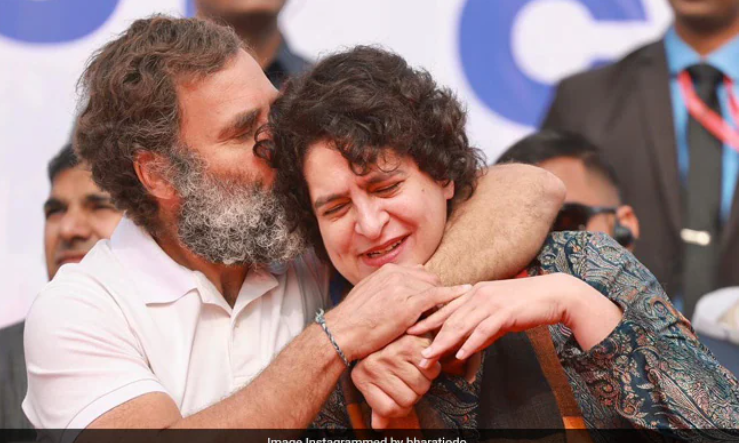
New Delhi : As India celebrates Raksha Bandhan, the festival honoring the sacred bond between siblings, Congress leaders Rahul Gandhi and Priyanka Gandhi Vadra once again captured public attention with their heartfelt social media posts. However, the absence of images showing Priyanka tying a rakhi to Rahul has fueled speculation and debate, continuing a pattern observed in recent years.

In 2024, Priyanka shared a poignant message on X, likening the brother-sister relationship to a “flowerbed” flourishing with “respect, love, and mutual understanding.” Accompanied by nostalgic childhood photos with Rahul, her post resonated widely, emphasizing their enduring bond. Rahul reciprocated with a post celebrating the “unbreakable love” between siblings, sharing a warm photo of the duo. Yet, no images of Priyanka tying a rakhi to Rahul surfaced, leaving some to wonder about the ritual’s execution amidst their public personas.

This trend mirrors 2023, when Priyanka posted throwback pictures on Instagram, evoking nostalgia but again without visuals of the rakhi-tying ceremony. Rahul’s message that year also focused on sibling love but lacked evidence of the traditional ritual. A 2022 report noted Priyanka’s inability to tie a rakhi to Rahul due to unspecified reasons-possibly travel or scheduling conflicts-prompting her to express her wishes online instead.

Today, on Raksha Bandhan 2025, social media is abuzz with anticipation. Posts on X highlight the siblings’ bond, with some users praising Rahul’s habit of keeping his rakhi on until it breaks naturally. However, others, like
@iAnkurSingh

and

@THEANYSENA
, have questioned whether Priyanka ties a rakhi at all, pointing to a photo from a Wayanad event mistaken for a Raksha Bandhan moment, stirring controversy.
As of now, no images of Priyanka tying a rakhi to Rahul have emerged in 2025, consistent with previous years. While their emotional posts continue to inspire, the absence of the traditional rakhi-tying ritual remains a point of intrigue, possibly reflecting the demands of their public lives or a private approach to the festival

Stronger Laws But Justice Awaits: Bihar Meet Urges Time-Bound Action Against Child Trafficking

2-3-4.jpeg

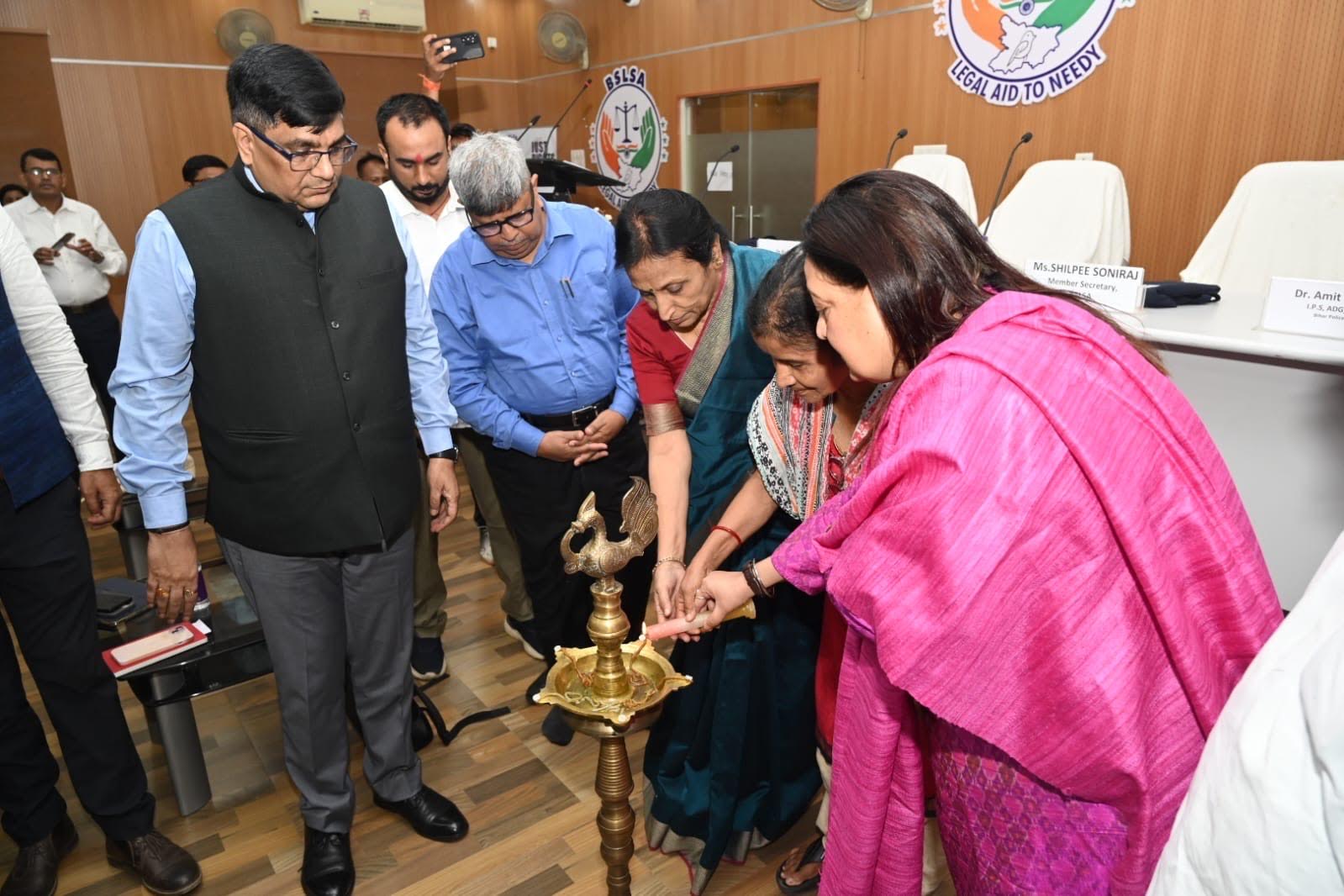
Delhi : The glaring gap between rescue and prosecution is a major hurdle in effectively tackling crimes against children, and often child victims fall through these gaps and are gripped by child labour, trafficking, marriage and abuse. This discussion took centre stage at the State Level Consultation on ‘Human Trafficking in India: Strengthening Convergence and Prevention Mechanisms’, held in Patna today. The consultation, organized by Just Rights for Children in collaboration with Bihar State Legal Services Authority, brought together key stakeholders to address the urgent need for stronger convergence, accountability, and prevention strategies in combating child trafficking and other crimes against children.

Just Rights for Children is the country’s largest network of over 250 NGOs working in 418 districts across the country. The JRC network alone rescued 56,242 trafficked children between 1st April 2024 and 30th April 2025 and initiated over 38,353 legal actions against perpetrators in the country.
In Bihar, 35 partner NGOs of the network work in 38 districts for child protection and child rights and rescued over 4991 children from child labour and trafficking, and stopped/prevented 21,485 child marriages since 2023. Formal action was initiated in 6510 cases.

Emphasising on the importance of community participation to combat crimes against children, Hulesh Manjhi, Member, State Commission for Protection of Child Rights, said, “We, as a society, should report any abuse against children. So many vulnerable children are often abused and exploited in front of us and yet, we fail to acknowledge them. This needs to stop because saving children is everyone’s collective responsibility.”

Speaking at the consultation, Shilpee Soniraj, Member Secretary of the Bihar State Legal Services Authority, emphasized the need for a sensitive and victim-centered approach in trafficking cases. “We must be extremely sensitive while addressing cases of human trafficking. The need of the hour is not just justice, but just rehabilitation too, to ensure that children who have been wronged receive the justice and care they truly deserve.”

Dr. Amit Kumar Jain, ADG, Weaker Sections, Bihar Police, acknowledged the need for stronger coordination across sectors to combat trafficking effectively. “We are still far behind in achieving the sustainable development goals, and coordinated efforts are essential to move forward. At present, most of our operations are triggered by information provided by NGOs. While this support is invaluable, we need everyone in the ecosystem to step up and contribute to the flow of timely and actionable information.”

Lauding India’s legal framework against trafficking, Ravi Kant, National Convenor of Just Rights for Children, said that India now has some of the strongest anti-trafficking laws in the world. “The Government of India has strengthened the trafficking laws in the country and added significant provisions and procedures under the Bharatiya Nyay Sanhita. Now, to ensure that these laws are effectively implemented, we need coordinated action by all stakeholders at every level. Trafficking is an organised crime, and we must treat it as such. Time-bound trials, prompt action in cases of missing children, capacity building of all stakeholders, and stronger prosecution mechanisms are essential if we want to stay ahead of traffickers and effectively combat child trafficking.”

Other officials who were present included Vijay Kumar, Joint Labour Commissioner, Labour Department, Government of Bihar; Nisha Jha, Former Chairperson, SCPCR, Bihar; Anupama, Registrar, BSLSA; K.D. Mishra, Sr. Advocate; Sudha Vergese, Social Activist, Padma Shri Awardee; Ankita Kashyap, State Program Manager, Women and Child Development Corporation, Government of Bihar; Vatsal verma, Advocate, Patna High Court; Sunil Jha, Former Advisor to Social Welfare Department, Government of Bihar; Dhirendra, Sr DSP, EOU and Cyber Crime, Bihar Police along with JRC NGO partners in the day-long consultation aligned with the World Day against Trafficking in Persons.

During the consultation, the officials reviewed the current legal and policy framework related to human trafficking in India, called for convergence between law enforcement agencies, judiciary, government departments, and civil society for bridging the gaps in enforcement, victim support, and inter-agency coordination; and advocated for a time-bound action plan towards elimination of child trafficking. Notably, human trafficking remains the third largest crime in the world after drug trafficking and arms smuggling, and with children being vulnerable and without agency or voice are often trapped by the traffickers and lured into various kinds of exploitative businesses.

Gautami Kapoor’s Bold Parenting Revelation Sparks Controversy

2-15.png

Mumbai – Actress Gautami Kapoor has stirred a significant controversy with her recent revelation on a talk show, where she disclosed considering gifting her daughter, Sia, a sex toy for her 16th birthday. Kapoor’s intention, she explained, was to encourage open exploration and break from traditional parenting norms, aiming to ensure her daughter experienced life’s pleasures.

The statement has led to an uproar, with many questioning the appropriateness of such a gift for a minor. Kapoor recounted that her daughter initially reacted with shock, scolding her and calling her “mad.” However, she claims that Sia, now 19, appreciates the thought behind the gesture, reflecting a shift in perspective over time.
This revelation comes amidst Kapoor’s ongoing public feud with Ekta Kapoor, adding to her media presence. The controversy taps into broader societal debates about sex education, parental boundaries, and the role of celebrities in shaping cultural norms. While some applaud Kapoor’s progressive approach, others view it as an overstep, highlighting the tension between modern parenting and traditional values.

Kapoor’s comments have sparked discussions on social media and among parenting experts, with opinions divided on the appropriateness of her approach. The incident underscores the evolving nature of parenting in the digital age, where personal anecdotes from public figures often influence public discourse.

As the debate continues, Kapoor’s revelation serves as a catalyst for examining the fine line between empowerment and appropriateness in parenting, especially in conservative societies.

scroll to top