The Narrative of Anti-National Forces: An Analysis of a Divisive Ideology

Screenshot-2025-08-06-at-4.36.07-PM.png

Delhi : In a vibrant and diverse democracy like India, the interplay of ideologies and political narratives has shaped the nation’s discourse for centuries. While some ideologies strive to foster unity, cultural pride, and progress, others subtly work to undermine these very principles for their own gain. This article seeks to dissect a particular ideology that can be identified as anti-national in its essence, one that cloaks itself in the garb of progressivism, equality, and social justice but pursues agendas that weaken the nation’s unity, cultural heritage, and sovereignty. Without naming specific entities, this piece aims to lay bare the strategies, tactics, and consequences of this ideology, enabling readers to recognize these forces and their impact. The goal is to create a reference point for understanding and countering these anti-national forces in a way that resonates with clarity and conviction.

Identifying the Anti-National Forces

Anti-national forces are those that, on the surface, champion causes like inclusivity, secularism, and upliftment of marginalized groups, but their actions and policies reveal a deeper intent to fragment society and erode national interests. These forces thrive on creating divisions—whether based on religion, caste, region, language, or economic status. They present themselves as defenders of the downtrodden, but their true objective often revolves around consolidating power, influence, and ideological dominance.

The hallmark of these forces is their ability to manipulate public perception through carefully crafted narratives. They avoid direct confrontation with their adversaries, opting instead for vague, emotionally charged terms that vilify their opponents without explicitly naming them. This allows them to sidestep accountability while sowing seeds of distrust and division. Their rhetoric is designed to appeal to emotions rather than reason, often bypassing facts to create a sense of urgency or moral superiority.

The Power of Wordplay and Propaganda

One of the most potent weapons in the arsenal of these forces is their mastery of language. They create terms and phrases that appear innocuous but carry a heavy emotional and ideological weight. For instance, they use labels like “communal forces” to demonize groups or ideologies that prioritize cultural unity or national pride. These terms are deliberately ambiguous, allowing the forces to apply them broadly to anyone who opposes their agenda. By doing so, they shift the focus from substantive debate to character assassination, painting their adversaries as threats to societal harmony.

Similarly, they coined terms like “lapdog media” to discredit journalists or media outlets that challenge their narrative or align with policies that strengthen national interests. Rather than engaging with the arguments of these journalists, they resort to derogatory labels that imply bias or servitude, thereby undermining their credibility without addressing the substance of their reporting. This tactic not only deflects criticism but also creates a chilling effect, discouraging open discourse and fostering fear of legal or social repercussions among those who dare to question the dominant narrative.

This wordplay is not accidental; it is a calculated strategy to control the narrative. By framing their opponents as threats to society, these forces create a polarized environment where dissent is equated with disloyalty. This allows them to rally their supporters under the guise of protecting democracy or social justice, while their real aim is to suppress alternative viewpoints and maintain their grip on power.

Strategies Against National Interests

The anti-national forces employ a range of strategies that undermine India’s unity, security, and progress. One of their primary tactics is to amplify issues that deepen societal fault lines. They focus on grievances—real or manufactured—related to religion, caste, or regional identity, portraying certain groups as perpetually oppressed. While claiming to advocate for these groups, their actions often exacerbate tensions, pitting one community against another. Instead of promoting reconciliation or unity, they thrive on perpetuating a sense of victimhood, which keeps society divided and distracted from broader national goals.

In the realm of policy, these forces often oppose initiatives that are critical to India’s development. Whether it’s infrastructure projects, economic reforms, or efforts to enhance national security, they frame their opposition in terms of protecting the environment, human rights, or marginalized communities. However, their objections rarely withstand scrutiny, as they are often rooted in ideological dogma rather than evidence. For example, they may block development projects by raising concerns about displacement or ecological damage, but their solutions seldom address the needs of the nation as a whole. This selective outrage serves to stall progress and weaken India’s position on the global stage.

Moreover, these forces have a troubling tendency to align with external actors whose interests are at odds with India’s. They often receive support—ideological, financial, or otherwise—from foreign entities that seek to destabilize the country. This collaboration manifests in the form of skewed narratives in international media, where India is portrayed as intolerant, regressive, or chaotic. Such portrayals are amplified by these forces to create a sense of global condemnation, which they use to pressure domestic institutions and sow doubt among citizens about their nation’s values and governance.

Cultural and Historical Assault

A defining characteristic of these anti-national forces is their systematic attack on India’s cultural and historical heritage. They dismiss the nation’s ancient traditions, philosophies, and values as outdated or superstitious, while promoting ideologies that are alien to India’s ethos. By doing so, they seek to disconnect the populace, particularly the youth, from their roots, creating a generation that is skeptical of its own heritage.

This assault often takes the form of rewriting history to glorify figures or events that align with their ideology, while vilifying those who embody India’s civilizational ethos. National heroes who fought for independence or cultural revival are portrayed as flawed or divisive, while those with questionable contributions are elevated as icons. This selective historiography distorts the past, eroding the pride and unity that come from a shared historical narrative.

Additionally, these forces exploit regional and linguistic diversity to foster division. They pit one region against another, one language against another, creating a sense of rivalry rather than unity. By emphasizing differences over commonalities, they weaken the fabric of national identity, making it easier to manipulate public opinion for their own ends.

Targeting the Youth and Ideological Influence

The youth are a primary target for these forces, as they represent the future of the nation. By infiltrating educational institutions, social media, and cultural platforms, these forces seek to shape young minds in ways that align with their agenda. They promote narratives that paint India’s history and traditions as oppressive, encouraging a sense of alienation among the youth. This is achieved through subtle changes in curricula, selective storytelling, and the amplification of divisive issues on digital platforms.

On social media, these forces leverage trending hashtags, memes, and viral campaigns to spread their ideology. They create echo chambers where their narratives are reinforced, drowning out alternative perspectives. The result is a generation that is increasingly disconnected from its cultural moorings and susceptible to anti-national propaganda. By framing dissent as rebellion against injustice, they appeal to the idealism of the youth, channeling their energy into causes that ultimately harm the nation.

The Role of External Funding and NGOs

A critical aspect of these forces’ operations is their reliance on external funding and networks. Non-governmental organizations (NGOs), often backed by foreign entities, play a significant role in advancing their agenda. These organizations operate under the guise of promoting human rights, environmental protection, or social justice, but their activities frequently align with the interests of foreign powers that seek to curb India’s growth. They fund protests, legal challenges, and media campaigns that amplify anti-national narratives, creating a veneer of legitimacy while undermining India’s sovereignty.

These NGOs often work in tandem with international media outlets to craft a negative image of India. Reports of alleged human rights abuses, religious intolerance, or social unrest are exaggerated or taken out of context to paint India as a failing state. This not only tarnishes India’s global reputation but also fuels domestic unrest, as these forces use such narratives to justify their opposition to national policies.

Countering the Anti-National Narrative

To combat these forces, society must adopt a multi-pronged approach rooted in awareness, unity, and action. First, citizens must learn to recognize the manipulative tactics of these forces, particularly their use of vague and emotionally charged language. Critical thinking and fact-based discourse must be prioritized to dismantle their narratives.

Second, strengthening cultural and historical pride is essential. Educational reforms should focus on presenting a balanced and accurate view of India’s past, celebrating its achievements while acknowledging its challenges. This will foster a sense of unity and resilience among the youth, making them less susceptible to divisive ideologies.

Third, national interests must take precedence over partisan agendas. Policies that promote economic growth, security, and social cohesion should be supported, and opposition to such policies should be scrutinized for its motives. Civil society, media, and institutions must work together to expose the external connections of these forces and hold them accountable.

Finally, the power of collective action cannot be overstated. Grassroots movements, informed citizenry, and a vibrant media ecosystem can counter the influence of anti-national forces. By promoting unity and constructive dialogue, society can reclaim the narrative and steer it toward progress and patriotism.

Anti-national forces operate under the guise of progressivism and justice but pursue agendas that weaken India’s unity, culture, and sovereignty. Through clever wordplay, divisive policies, and external alliances, they seek to fragment society and undermine national interests. Their attacks on cultural heritage, manipulation of the youth, and opposition to development reveal their true intent. By fostering awareness, strengthening cultural pride, and prioritizing national interests, society can counter these forces effectively. This article serves as a reference to understand and challenge the ideology of anti-national forces, empowering citizens to safeguard India’s unity and progress.
The Evolution of the RSS and Its Pracharaks: A Decade of Transformation (2014–2025)

RSS-flag-696x392-1.avif

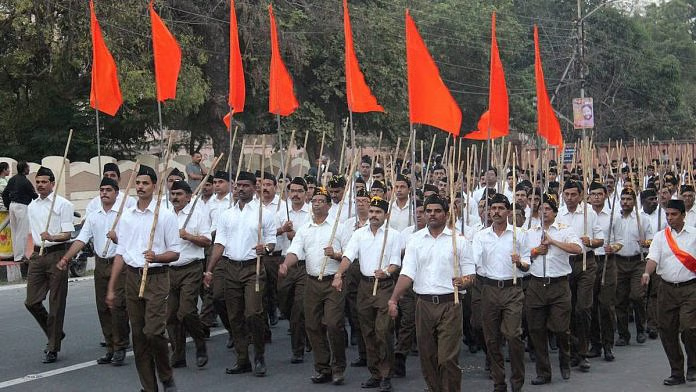
Delhi :The Rashtriya Swayamsevak Sangh (RSS), founded in 1925 by Dr. Keshav Baliram Hedgewar, has been a cornerstone of India’s socio-cultural landscape, promoting the ideology of Hindutva and fostering national unity through its grassroots network. The RSS’s pracharaks—full-time volunteers dedicated to spreading its doctrine—have historically been the lifeblood of the organization, known for their accessibility and deep community engagement. Over the last eleven years (2014–2025), coinciding with the Bharatiya Janata Party’s (BJP) rise to power at the center, the RSS and its pracharaks have undergone significant transformations. This article examines these changes, exploring how the organization’s reach, operational strategies, and societal perceptions have evolved while maintaining a balanced perspective on its achievements and challenges.

Growth in Scale and Reach

The RSS has seen remarkable growth in its organizational footprint since 2014. In 2014, the RSS operated approximately 43,000 shakhas (daily gatherings) with 14 lakh swayamsevaks (volunteers) and 3,000 pracharaks. By 2019, the organization reported a doubling of its shakhas and membership, with around 50,000 daily shakhas and 10,000 IT-focused weekly meetings for urban professionals. This expansion reflects the RSS’s ability to adapt to modern lifestyles, particularly among youth and professionals, by introducing flexible formats like night shakhas and online engagement through campaigns like “Join RSS.” Between 2017 and 2021, over 1 lakh people annually expressed interest in joining the RSS, with 19,048 new members added in the first quarter of 2021 alone.

The pracharaks, traditionally known for their ascetic lifestyle and direct community interaction, have played a pivotal role in this expansion. Their accessibility—described as being available to anyone, anytime, for discussions of joys and sorrows—has been a hallmark of their community integration. However, the increased scale of operations has necessitated a shift. While pracharaks remain central, the organization has leveraged technology to amplify their reach. Digital platforms, such as the Vishwa Samvad Kendra for media outreach, have enabled pracharaks to engage with a broader audience, including the global Hindu diaspora. This digital pivot has been particularly effective in urban areas, where lifestyle changes have reduced attendance at traditional shakhas.

Adaptation to Modern Contexts

The last eleven years have seen the RSS adapt its methods to align with contemporary societal needs. The organization’s centenary in 2025 has been a focal point for introspection and strategic planning. The RSS announced plans to reorganize its 40-plus affiliate organizations to suit the digital age and evolving socio-economic contexts, a process that began in 2022 and is set to conclude by 2025. This restructuring includes modernizing the structure, scope, and responsibilities of affiliates like Seva Bharti, Vishwa Hindu Parishad, and Akhil Bharatiya Vidyarthi Parishad, ensuring relevance in a rapidly changing India.

For pracharaks, this modernization has meant embracing new tools and roles. While their traditional role involved direct, personal outreach, many now coordinate large-scale campaigns, such as the “Har gaon, Har basti-ghar-ghar” (every village, every locality, home-to-home) initiative planned for 2025–2026. These campaigns aim to distribute Sangh literature and foster unity through Hindu Sammelans, reflecting a blend of traditional grassroots engagement with structured, large-scale outreach. Additionally, pracharaks have been instrumental in relief efforts during natural calamities, such as the Uttarakhand floods, enhancing their image as community service providers.

The RSS’s uniform change from khaki shorts to full-length trousers in 2016 symbolizes this adaptation. The shift, driven by a desire to appeal to youth wary of the traditional attire, was a pragmatic move to maintain relevance without altering core ideological commitments. Pracharaks, as the public face of the RSS, have had to embody this balance between tradition and modernity, maintaining their ascetic ethos while navigating a more visible, scrutinized role in a digital age.

Relationship with the BJP and Political Influence

The RSS and BJP, while distinct entities, share a symbiotic relationship, with the RSS serving as the ideological mentor to the BJP. The BJP’s rise to power in 2014, under the leadership of former pracharak Narendra Modi, marked a turning point for the RSS. The organization’s influence on national policy became more pronounced, as seen in its role in mobilizing support for the BJP during the 2014 elections. High-profile interactions, such as Modi’s attendance at an RSS conclave in 2015, underscored this alignment, with the RSS shifting from a behind-the-scenes moral force to a more visible influencer.

For pracharaks, this political alignment has brought both opportunities and challenges. Their traditional role as apolitical community organizers has been complicated by perceptions of proximity to power. While the RSS maintains that pracharaks are forbidden from joining political parties, their involvement in coordinating with BJP leaders during events like the Akhil Bharatiya Samanvay Baithak has blurred these lines. This has led to increased media scrutiny and public debate about the RSS’s role in governance, with some viewing pracharaks as political operatives rather than cultural missionaries.

However, the RSS has navigated these perceptions carefully, emphasizing its focus on social cohesion and cultural revival. For instance, its support for a caste census in 2024, while cautioning against its use as a political tool, reflects a nuanced approach to engaging with contemporary issues without overtly aligning with partisan agendas. Pracharaks have been key in communicating this stance, maintaining their role as trusted community figures while addressing sensitive socio-political topics.
Challenges and Criticisms

The RSS’s growth and visibility have not been without challenges. Allegations of involvement in violent incidents, such as the 2003–2008 terror attacks linked to individuals associated with the RSS, have cast a shadow over its image. A 2022 affidavit by former pracharak Yashwant Shinde, claiming training for covert operations, further fueled controversy, though these claims remain contentious and lack conclusive evidence. The RSS has consistently denied such allegations, emphasizing its commitment to non-violence and social service.

Pracharaks, as the organization’s public face, often bear the brunt of these criticisms. Their increased visibility, especially in urban areas and on digital platforms, has made them targets for both admiration and critique. The shift from being “unknown” figures who organically gained popularity to being scrutinized public representatives has required pracharaks to adapt to a more polarized societal context. Lifestyle changes, particularly among urban youth, have also posed challenges, with fewer attending daily shakhas due to demanding schedules, prompting pracharaks to innovate with weekly or digital engagements.

Social Service and Global Outreach

One of the most significant transformations in the RSS’s work has been its emphasis on social service. Over the past decade, pracharaks have spearheaded initiatives under banners like Seva Bharti, running over two lakh service projects, including schools for underprivileged children and tribal communities. The RSS’s role in disaster relief, such as during the Orissa cyclone and Uttarakhand floods, has bolstered its reputation as a service-oriented organization. These efforts have allowed pracharaks to maintain their traditional role as community confidants while addressing modern societal needs.

Globally, the RSS’s influence has grown through affiliates like the Hindu Swayamsevak Sangh (HSS), particularly in the US, UK, and Australia. Pracharaks stationed abroad have adapted to diaspora contexts, organizing family-based shakhas and promoting Hindu culture through initiatives like Sewa International. The HSS’s training camps in the US, Trinidad, and Kenya reflect the RSS’s ambition to create a global cadre of pracharaks, extending their reach beyond India’s borders.

Balancing Tradition and Transformation

The last eleven years have been a period of significant evolution for the RSS and its pracharaks. From expanding their organizational reach to embracing digital tools, modernizing their image, and navigating a complex political landscape, pracharaks have remained central to the RSS’s mission of fostering a united Hindu society. While challenges like public scrutiny and allegations of political overreach persist, the RSS’s focus on social service and cultural revival has strengthened its societal impact. As the organization approaches its centenary in 2025, pracharaks will continue to play a pivotal role in balancing tradition with the demands of a modern, interconnected world, ensuring the RSS remains a dynamic force in India’s socio-cultural fabric.

कब तक झुनझुने से दिल बहलाते रहेंगे

Taj_Mahal_Agra_India.jpg

आगरा । इतिहासकार बताते हैं कि मुगल बादशाह शाह जहां ने यमुना नदी में जल प्रवाह, पानी की क्वालिटी और क्वांटिटी राउंड the year, देखकर ही इस स्थल का ताज महल निर्माण के लिए चयन किया था। ऐसे में पानी का संचय कैसे इमारत के लिए खतरा हो सकता है?
______________________________
आगरा की यमुना नदी, जो कभी ताजमहल के सौंदर्य का आभूषण थी, आज साल के आठ महीने एक बदबूदार नाले में तब्दील हो जाती है। ताज के नीचे सूखी नदी की धारा और उसमें तैरता कचरा न केवल पर्यटकों को निराश करता है, बल्कि शहर की ऐतिहासिक धरोहर और लाखों निवासियों के भविष्य को खतरे में डाल रहा है। नगला पैमा रबर चेक डैम परियोजना, जो चार दशकों से फाइलों में अटकी पड़ी है, इस संकट का समाधान हो सकती है। लेकिन सवाल वही है—क्या सरकार की सुस्ती और नौकरशाही का टालमटोल इसे हकीकत बनने देगा?

ताजमहल की नींव पर मंडराता खतरा

ताजमहल की नींव साल की लकड़ी पर टिकी है, जो स्थायी नमी के बिना कमजोर पड़ रही है। विशेषज्ञों ने चेतावनी दी है कि यमुना में जल प्रवाह की कमी से नींव में दरारें और क्षरण का खतरा बढ़ रहा है। बृज खंडेलवाल ने अपने एक लेख में लिखा, “The Taj Mahal was built with the assurance of the Yamuna’s perennial flow. Today, its dry bed is a betrayal of Shah Jahan’s vision.” (The Pioneer, 2023)। अगर यमुना में पानी नहीं लौटा, तो यह विश्व धरोहर अपनी चमक के साथ-साथ अपनी नींव भी खो सकती है।

रबर चेक डैम: आगरा की उम्मीद

नगला पैमा में प्रस्तावित रबर चेक डैम सिर्फ एक बांध नहीं, बल्कि आगरा की जीवनरेखा है। यह परियोजना तीन प्रमुख समस्याओं का समाधान कर सकती है:

डैम से यमुना में सालभर जल प्रवाह सुनिश्चित होगा, जो ताज की नींव को नमी प्रदान करेगा। 3.5 लाख क्यूसेक जल संग्रहण क्षमता वाला यह डैम शहर के लिए वैकल्पिक जल स्रोत बन सकता है, जिससे भूजल स्तर सुधरेगा और गर्मियों में पानी की किल्लत खत्म होगी। साफ यमुना और ताज का प्रतिबिंब पर्यटकों को आकर्षित करेगा। नौकायन और अन्य जल-आधारित गतिविधियां स्थानीय अर्थव्यवस्था को बढ़ावा देंगी। इस विषय पर खंडेलवाल ने लिखा, “A flowing Yamuna can transform Agra into a tourism powerhouse, with boating and scenic views enhancing the Taj’s allure.” (Hindustan Times, 2024)।

चार दशकों का टालमटोल
1986 से शुरू हुई इस परियोजना की कहानी सरकारी उदासीनता और नौकरशाही की भूलभुलैया का जीता-जागता सबूत है।
1986: तत्कालीन मुख्यमंत्री एन.डी. तिवारी ने मनोहरपुर में बैराज का शिलान्यास किया।
1993: केंद्रीय जल आयोग ने 134.8 करोड़ रुपये स्वीकृत किए, जो उपयोग न होने पर वापस चले गए।
2016: सपा सरकार ने रबर डैम का प्रस्ताव बनाया, अधिकारियों को विदेश भेजा, लेकिन कोई प्रगति नहीं हुई।
2017: योगी सरकार ने नगला पैमा में शिलान्यास किया।
2022: नीरी ने सशर्त पर्यावरणीय मंजूरी दी।
2025: 60 करोड़ रुपये का बजट स्वीकृत हुआ, लेकिन संसद में हाल ही में बताया गया कि अभी और अध्ययन बाकी हैं।
चार दशकों में कई सरकारें बदलीं, शिलान्यास हुए, फाइलें घूमीं, लेकिन डैम का निर्माण आज भी अधर में है। खंडेलवाल ने इसे “a monument to bureaucratic inertia” करार दिया (The Statesman, 2022)।

क्यों अटक रहा है प्रोजेक्ट?

नौकरशाही का जाल: केंद्रीय जल आयोग, अंतरदेशीय जलमार्ग प्राधिकरण और भारतीय पुरातत्व सर्वेक्षण ने मंजूरी दे दी, लेकिन टीटीजेड, पर्यावरण मंत्रालय और राष्ट्रीय स्वच्छ गंगा मिशन से अंतिम हरी झंडी का इंतजार है।

नीतिगत भ्रम: बैराज से रबर डैम तक बार-बार बदलते प्रस्तावों ने प्रक्रिया को जटिल बनाया।

पर्यावरणीय आशंकाएं: कुछ विशेषज्ञों का मानना है कि डैम से नदी में स्थायी जल प्रवाह ताज की नींव पर दबाव डाल सकता है। हालांकि, नीरी ने इन चिंताओं को शर्तों के साथ खारिज किया है।

2025: अब और देरी क्यों?

जब डिटेल प्रोजेक्ट रिपोर्ट, पर्यावरण मूल्यांकन, बजट और तकनीकी मंजूरी सब तैयार हैं, तो देरी का कारण क्या है? क्या यह राजनीतिक इच्छाशक्ति की कमी है? केंद्र और राज्य के बीच समन्वय की नाकामी? या फिर भारत के बुनियादी ढांचा प्रोजेक्ट्स को दशकों तक लटकाने वाली वही पुरानी जड़ता?
स्थानीय निवासी, इतिहासकार, पर्यटन व्यवसायी और जल कार्यकर्ता इस प्रोजेक्ट के लिए बेचैन हैं। हर गर्मी में जब नल सूखते हैं और यमुना की दुर्गंध पर्यटकों को भगाती है, यह सवाल गूंजता है—क्या रबर डैम का सपना 2025 में हकीकत बनेगा?

आवाज उठाने का समय

नगला पैमा रबर चेक डैम अब और अध्ययनों की मोहताज नहीं। यह ताजमहल की सुरक्षा, आगरा की जल आपूर्ति और पर्यटन अर्थव्यवस्था का आधार है। सरकार को चाहिए कि नौकरशाही के जाल को काटकर तत्काल कार्रवाई करे। जैसा कि खंडेलवाल ने लिखा, “The Yamuna is not just a river; it is Agra’s lifeline. Delay in the dam is a delay in the city’s future.” (The Indian Express, 2025)।

अब समय है फैसले का, न कि बहानों का। अगर यह परियोजना अब भी फाइलों में दबकर दम तोड़ती है, तो यह न केवल आगरा की हार होगी, बल्कि भारत की सांस्कृतिक धरोहर का भी अपमान होगा।

गौरवपूर्ण धरोहर: गोवर्धन पर्वत को विश्व विरासत का दर्जा दिलाने की मुहिम

0521_goverdhan_puja.jpg

मथुरा: गोवर्धन केवल मिट्टी का टीला नहीं, बल्कि एक जीवित देवता हैं — जिन्हें श्रीकृष्ण ने इंद्र के क्रोध से ब्रजवासियों को बचाने के लिए उठाया था। सात दिनों तक यह पर्वत करुणा की छतरी बनकर गायों, संतों, ऋषियों और ग्रामीणों को आश्रय देता रहा। आज भी यह पर्वत श्रद्धा की साँसें लेता है — 21 किलोमीटर की परिक्रमा पथ पर नंगे पाँव चलने वाले श्रद्धालु गीत, आँसू और प्रार्थनाओं के साथ अपनी भक्ति समर्पित करते हैं। यहाँ हर पत्थर पूजनीय है, हर मोड़ पर प्रेम और आस्था की कहानी है। यह कोई बीते युग की स्मृति नहीं, बल्कि भारतीय आध्यात्मिक, सांस्कृतिक और पारिस्थितिकीय विरासत का एक जीवंत मंदिर है।

फिर भी, यह स्थल अब तक यूनेस्को जैसे वैश्विक संस्थानों द्वारा मान्यता प्राप्त नहीं है। समय आ गया है कि दुनिया गोवर्धन को केवल धार्मिक स्थल ही नहीं, बल्कि प्रकृति, श्रद्धा और समुदाय के सामंजस्य का वैश्विक प्रतीक माने। गोवर्धन की रक्षा करना, उन सनातन मूल्यों की रक्षा करना है, जो श्रीकृष्ण ने इसी छाया में सिखाए थे।

कुछ साल पहले अमेरिका की यूनिवर्सिटी ऑफ इलिनॉय, अर्बाना-शैंपेन के लैंडस्केप आर्किटेक्चर विभाग की प्रोफेसर अमिता सिन्हा और उनकी टीम ने गोवर्धन पर्वत के संरक्षण की योजना पर काम किया था। उन्होंने कहा था, “यह एक अद्वितीय धार्मिक स्थल है, जिसे हर साल एक करोड़ से अधिक लोग दर्शन के लिए आते हैं। लेकिन इसकी पारिस्थितिकी संकट में है — जल स्रोत सूख चुके हैं, और हरियाली लगभग समाप्त हो चुकी है।”

टीम ने गोवर्धन का जलग्रहण मानचित्र तैयार किया, वनस्पतियों का सर्वे किया, प्राचीन संरचनाओं और तीर्थ व्यवस्थाओं का अध्ययन किया, और तीर्थयात्रियों व स्थानीय श्रद्धालुओं से साक्षात्कार किए। यह अध्ययन ब्रज फाउंडेशन और विश्वविद्यालय को सौंपा गया था। उत्तर प्रदेश सरकार को यूनेस्को में इसे विश्व धरोहर स्थल के रूप में नामित करने की पहल करनी थी, लेकिन यह प्रस्ताव ठंडे बस्ते में चला गया।

बाद में ब्रज मंडल हेरिटेज कंजर्वेशन सोसाइटी ने राज्य सरकार के संबंधित विभागों से इस मांग को उठाया, लेकिन सरकार की ओर से कोई खास उत्साह नहीं दिखा। अब एक बार फिर, धरोहर संरक्षकों ने योगी सरकार से आग्रह किया है कि यूनेस्को को एक नया प्रस्ताव भेजा जाए, ताकि गोवर्धन को विश्व धरोहर का दर्जा मिल सके।

यह पर्वत न केवल भूगर्भीय संरचना है, बल्कि श्रीकृष्ण की दिव्य लीलाओं का साक्षात प्रमाण है। भागवत पुराण में वर्णित कथा — जब श्रीकृष्ण ने इस पर्वत को उठाकर ब्रजवासियों को प्रलयंकारी वर्षा से बचाया — आज भी लोगों के दिलों में जीवित है। दिन-रात चलने वाली परिक्रमा इस स्थल की आध्यात्मिक महत्ता को और गहराई देती है।

गोवर्धन पर्वत पर अनेकों प्राचीन मंदिर, पवित्र वन, और कुंड (जैसे राधा कुंड, श्याम कुंड) स्थित हैं। यहाँ गोवर्धन पूजा जैसे उत्सव लाखों श्रद्धालुओं को आकर्षित करते हैं, जिससे यह स्थल भारतीय लोक परंपराओं और अमूर्त धरोहर का जीवंत केंद्र बना हुआ है।

लेकिन यह पर्वत अब गंभीर पारिस्थितिक संकट का सामना कर रहा है। तीर्थयात्रियों की भारी भीड़, अवैध निर्माण, वनों की कटाई, और प्रदूषण इसके नाजुक पारिस्थितिक तंत्र को खतरे में डाल रहे हैं। पवित्र वन लुप्त हो रहे हैं, कुंडों में गाद भर रही है, और भू-संरचना पर भारी दबाव है। यदि शीघ्र कोई ठोस हस्तक्षेप नहीं हुआ, तो यह अमूल्य धरोहर अपनी प्राकृतिक और सांस्कृतिक अखंडता खो सकती है।

यूनेस्को की विश्व धरोहर मान्यता गोवर्धन पर्वत को वैश्विक पहचान और संरक्षण के लिए ठोस ढाँचा देगी। यह स्थल कई यूनेस्को मानकों पर खरा उतरता है —
इसके मंदिर और परंपराएँ मानवीय रचनात्मक प्रतिभा का उदाहरण हैं (मानदंड i),

यह कृष्ण-भक्ति की जीवंत परंपरा का प्रमाण है (मानदंड iii),

और यह एक ऐसा सांस्कृतिक और पारिस्थितिक परिदृश्य है, जो मानव और प्रकृति की सह-अस्तित्व की मिसाल है (मानदंड v)।

यूनेस्को का दर्जा इसे अंतरराष्ट्रीय मदद, तकनीकी सहयोग और सतत पर्यटन रणनीतियाँ दिला सकता है, जैसा शांति निकेतन और होयसला मंदिरों के मामलों में देखा गया। यह राज्य और स्थानीय प्रशासन को संरक्षण को विकास योजनाओं में शामिल करने को बाध्य करेगा और ज़िम्मेदार पर्यटन को बढ़ावा देगा, जिससे पर्यावरणीय क्षति को कम किया जा सकेगा और स्थानीय समुदायों को भी सशक्त किया जा सकेगा।

हाल ही में रिवर कनेक्ट अभियान के सदस्यों ने भारत सरकार से मांग की कि संस्कृति मंत्रालय और भारतीय पुरातत्व सर्वेक्षण विभाग के माध्यम से गोवर्धन पर्वत को यूनेस्को की टेंटेटिव सूची में शामिल करने का प्रस्ताव भेजा जाए।

वृंदावन के धरोहर प्रेमियों ने स्थानीय समुदायों, पर्यावरणविदों और श्रद्धालुओं से अपील की कि वे पर्यावरण के अनुकूल परिक्रमा मार्ग, पवित्र वनों का पुनः रोपण, और कुंडों के जीर्णोद्धार जैसे उपायों को अपनाएँ।

जगन्नाथ पोद्दार ने कहा, “यूनेस्को की मदद से इन प्रयासों को बल मिलेगा, जिससे गोवर्धन पर्वत एक सजीव तीर्थ और जैव विविधता का केंद्र बना रहेगा।”

पर्यावरणविद् डॉ. देवाशीष भट्टाचार्य ने कहा, “गोवर्धन केवल एक पर्वत नहीं है — यह आस्था, सहिष्णुता और प्रकृति से जुड़ाव का प्रतीक है। इसे विश्व धरोहर स्थल के रूप में मान्यता देना इसकी पारिस्थितिक नाज़ुकता की रक्षा करेगा और कृष्ण की कथाओं को युगों तक जीवंत रखेगा। आइए हम सब मिलकर इस विरासत की रक्षा में योगदान दें, जो पूरी मानवता की धरोहर है।”

वर्तमान में गोवर्धन गंभीर पारिस्थितिक क्षरण का सामना कर रहा है। यहाँ की पारंपरिक वनस्पति लुप्त हो रही है, जल स्रोत प्रदूषण और अतिक्रमण के शिकार हैं, और तीर्थयात्रियों की भीड़ से मिट्टी का कटाव और भू-संरचना पर दबाव बढ़ता जा रहा है।

धरोहर संरक्षण समूह के डॉ. मुकुल पंड्या ने कहा, “हर साल 1 करोड़ से अधिक श्रद्धालु आते हैं, विशेषकर मुढिया पूनौ, गोवर्धन पूजा जैसे अवसरों पर। 21 किमी लंबी परिक्रमा के कारण कचरा, मिट्टी की कठोरता और पारिस्थितिक नुकसान लगातार बढ़ रहा है। अगर समय रहते प्रयास हुए, तो गोवर्धन पवित्रता और प्रकृति के संरक्षण का वैश्विक उदाहरण बन सकता है।”

scroll to top