स्वतंत्रता संघर्ष में जेल गई : सामाजिक जागरण केलिये कन्या पाठशाला आरंभ की

images-1-1.jpeg

दुर्गा बाई देशमुख ऐसी स्वतंत्रता संग्राम सेनानी थीं जो अंग्रेजों से भारत मुक्ति के संघर्ष में जेल गई और स्वदेशी की चेतना जगाने अपने स्तर पर कन्या पाठशाला आरंभ की । भाग लेने और जेल जाने के साथ 

दुर्गाबाई देशमुख के जीवन का वृतांत अंग्रैजों के उस कुप्रचार का खंडन है जिसमें कहा जाता है कि अंग्रेजों के आने के पहले भारत में स्त्री शिक्षा नहीं थी । यह ठीक है कि सल्तनतकाल में अनेक बदलाव दिखे पर निजी स्तर पर अनेक महापुरुषों ने परंपराएँ अक्षुण्य रखीं। इन्हीं परंपराओं में इतिहास प्रसिद्ध लोकमाता अहिल्याबाई ने बचपन में शिक्षा ली थी और इसी धारा से स्वतंत्रता संग्राम सेनानी दुर्गाबाई देशमुख ने शिक्षा प्राप्त की । उनका जन्म 15 जुलाई 1909 को आन्ध्रप्रेश के काॅकीनाड़ा क्षेत्र के अंतर्गत राजामुंद्री में हुआ था। पिता रामाराव भी स्वतंत्रता संग्राम सेनानी थे । जब वे दस वर्ष की थीं तब पिता का निधन हो गया । उनकी माता कृष्णावेनम्मा स्वतंत्रता संग्राम भी स्वतंत्रता संग्राम से जुड़ीं थीं। माता काँग्रेस की सचिव भी बनी । कृष्णावेनम्मा स्वदेशी का प्रचार करतीं थीं । उनके साथ बालिका दुर्गा भी घर घर जाती । परिवार में शिक्षा का वातावरण था । माता अंग्रेजी के साथ संस्कृत और तेलगू भाषा जानती थीं। घर के वातावरण के रहते दुर्गाबाई देशमुख ने भी निजी स्तर पर संस्कृत, तेलगू और हिन्दी की शिक्षा लेने लगीं । माँ की प्रेरणा से दुर्गाबाई आसपास की बालिकाओं को पढ़ाने का कार्य किया और आगे चलकर स्वदेशी और स्वभाषा आधारित लड़कियों की पाठशाला आरंभ की । गांधीजी ने उनके इस कार्य की सार्वजनिक प्रशंसा की और अनुकरणीय बताया ।

बच्चियों को शिक्षित करने के साथ उन्होंने स्वतंत्रता संग्राम में भी भाग लिया। 1930 में आरंभ हुये नमक सत्याग्रह में 25 मई 1930 को गिरफ्तार हुईं। उन्हें एक वर्ष की सजा हुई। जेल से लौटकर पुनः सक्रिय हुई और फिर गिरफ्तार करलीं गई। इस बार तीन वर्ष का कारावास हुआ। दुर्गाबाई ने जेल में अंग्रेजी सीखी। जेल से लौटकर उन्होने बीए पास किया और वकालत पढ़ने मद्रास चलीं गई। मद्रास विश्वविद्यालय से पहले एम.ए. किया फिर वकालत पास की। वे पढ़ने में बहुत मेधावी थीं। उन्होनें प्रत्येक परीक्षा प्रथम श्रेणी में उत्तीर्ण की और पदक प्राप्त किये। 1942 में वकालत आरंभ की। वे हत्या के मुक़दमे में बहस करने वाली भारत की पहली महिला वकील कहलाईं। दुर्गाबाई 1946 में संविधान परिषद् की सदस्य बनीं। स्वतंत्रता के 1948 में उन्होंने आन्ध्र एजुकेशन सोसायटी की स्थापना की जो स्थानीय बच्चों को तेलगू एवं स्थानीय शिक्षा संचालन के लिये थी। 1952 में उनका विवाह तत्कालीन वित्तमंत्री मंत्री चिंतामणि देशमुख से हुआ। दुर्गाबाई देशमुख महिलाओं से संबंधित अनेक संस्थाओं की सदस्य रहीं। योजना आयोग द्वारा प्रकाशित ‘भारत समाज सेवा विश्वकोश’ उन्हीं की देखरेख में तैयार हुआ। वे 1953 में केन्द्रीय ‘सोशल वेलफेयर बोर्ड’ की पहली अध्यक्ष बनीं। स्वतंत्रता के बाद उनका पूरा ध्यान स्वदेशी और स्त्री शिक्षा पर रहा। उन्होने सरकार से स्त्री शिक्षा को प्राथमिकता देने तथा केन्द्र एवं राज्यों में पृथक शिक्षा विभाग बनाने का सुझाव दिया था। इसके अतिरिक्त सहशिक्षा के स्तर को व्यवस्थित करने, विश्वविद्यालय अनुदान आयोग में स्त्री शिक्षा के लिए अतिरिक्त बजट राशि तथा लड़कियों के लिए निशुल्क शिक्षा का प्रावधान करने का सुझाव दिया था । 

1962 में उन्होंने गरीबों की सेवा के लिये एक नर्सिंग होम स्थापित किया जो अब दुर्गाबाई देशमुख हॉस्पिटल के नाम से जाना जाता है। भारत सरकार ने उन्हें पद्मभूषण से सम्मानित किया गया। अस्वस्थता के चलते 9 मई 1981 को श्रीकाकुलम जिले के नरसनपेटा में उनका निधन हुआ । उनकी स्मृति में विशाखापट्टनम स्थित आंध्र विश्वविद्यालय ने अपने महिला अध्ययन विभाग का नाम डॉ दुर्गाबाई देशमुख महिला अध्ययन केंद्र रखा है।

The Truth Behind the ‘Pantsless Party’ Rumor: Unraveling a Hollywood Myth

3-2-1.png

Nidhi Chandra

In the glitzy world of Hollywood, where red carpets and high-profile events dominate headlines, celebrity gossip often takes on a life of its own. One particularly intriguing rumor that circulated in film magazines worldwide was the claim that a certain actress attended a high-profile party without wearing pants. The story, shrouded in scandal and speculation, captivated tabloid readers and sparked debates about fashion, fame, and the truth behind sensational headlines. But what is the reality behind this infamous tale? Was it a bold fashion statement, a wardrobe malfunction, or simply a fabricated story designed to sell magazines? In this article, we delve into the origins of the rumor, examine the cultural context, and uncover the truth behind the “pantsless party” narrative.

The Genesis of the Rumor

The rumor in question likely stems from a period in the late 2010s to mid-2020s when the “no-pants” fashion trend began gaining traction among celebrities. This trend, characterized by wearing oversized blazers, bodysuits, or long tops without traditional trousers, became a staple at fashion-forward events. Celebrities like Hailey Bieber, Kendall Jenner, and Taraji P. Henson were photographed in such outfits, sparking headlines about their daring choices. For instance, at the 2025 Met Gala, stars like Sabrina Carpenter and BLACKPINK’s Lisa embraced pantsless looks, pairing sheer tights or bodysuits with bold accessories, as reported by The New York Times and Pinkvilla. These appearances fueled media frenzy, with some outlets exaggerating the trend into scandalous narratives about celebrities appearing “near-naked” or “without pants” at parties.

The specific story about an actress attending a party without pants seems to have been amplified by the broader cultural fascination with this trend. Film magazines, known for their sensationalist headlines, likely latched onto a single event—perhaps a red carpet appearance or an after-party—where an actress wore a minimalist outfit that could be misconstrued as “pantsless.” The lack of specificity about the actress’s identity in the rumor suggests it may have been a composite story, blending multiple celebrities’ fashion choices into a single, juicy narrative. Without a named individual, the rumor took on a mythical quality, allowing readers to project their assumptions onto any number of A-list stars.

The Cultural Context

To understand the plausibility of the rumor, we must consider the cultural and fashion context of the time. The no-pants trend, as seen in events like Paris Fashion Week and the Met Gala, was not about nudity but about redefining femininity and power through fashion. Actresses and models like Anya Taylor-Joy, who wore a Dior bodysuit with a chain-link skirt at Paris Fashion Week in January 2025, or Scarlett Johansson, who hosted SNL in a sheer black skirt in May 2025, used these looks to make bold statements. These outfits, while revealing, were carefully curated by stylists and designers to push boundaries while maintaining an air of sophistication.

The trend was also a response to evolving societal norms. In the post-#MeToo era, many actresses sought to reclaim agency over their image, using fashion to challenge traditional expectations of modesty. By choosing outfits that emphasized confidence and individuality, they sparked conversations about empowerment—though tabloids often reduced these choices to mere shock value. The “pantsless” rumor likely emerged from this tension between artistic expression and media sensationalism, with magazines amplifying the trend into something more scandalous than it was.

Examining the Evidence: Fact or Fiction?

To determine the truth behind the rumor, we must look at the evidence—or lack thereof. The search results provided offer numerous examples of celebrities embracing pantsless looks, but none point to a specific incident where an actress attended a party entirely without pants in a way that suggested scandal. Instead, the references describe deliberate fashion choices:

·         Taraji P. Henson at the 2025 Met Gala explained that she ditched pants to showcase her gym efforts, a decision rooted in confidence rather than carelessness.

·         Kendall Jenner went pantsless in a blue blazer dress at a Venice event, a look described as chic and intentional.

·         Charlize Theron wore a fishnet catsuit at The Old Guard 2 premiere in June 2025, flashing her undergarments as part of a Givenchy design.

·         Cate Blanchett attended the Serpentine Gallery Summer Party in June 2025 in a seashell-covered corset top, paired with pants, but her bold look could have been misconstrued in less detailed reports.

These instances suggest that the “pantsless party” rumor may have been an exaggeration of such fashion choices. No credible report confirms an actress attending a party in a state of undress that would imply a wardrobe malfunction or inappropriate behavior. Instead, the trend was about high fashion, with designers like Dior, Viktor & Rolf, and Givenchy crafting outfits that played with transparency and minimalism.

The Role of Media Sensationalism

Film magazines and tabloids thrive on attention-grabbing headlines, and the “pantsless party” rumor fits their playbook perfectly. By framing a celebrity’s fashion choice as scandalous, these outlets could attract readers eager for gossip. The lack of a specific actress’s name in the rumor allowed it to persist as a vague, tantalizing story that could be applied to anyone from Jennifer Aniston to Kylie Jenner. This ambiguity is a classic tabloid tactic, ensuring the story remains evergreen without requiring verifiable details.

Moreover, the media’s focus on female celebrities’ bodies has long been a point of contention. The no-pants trend, while empowering for some, was often portrayed as provocative or reckless, overshadowing the artistic intent. For example, when Camila Cabello performed in a corset and hot pants in Dublin, the Daily Mail described it as “jaw-dropping” and “raunchy,” emphasizing spectacle over substance. Such language likely contributed to the rumor’s spread, as readers conflated bold fashion with scandalous behavior.

The Truth: A Fashion Statement, Not a Scandal

After examining the evidence, the most likely truth is that the “pantsless party” rumor was a distortion of the no-pants fashion trend. No single incident matches the description of an actress attending a party without pants in a way that suggests impropriety. Instead, the rumor appears to be a composite of various high-profile appearances where actresses wore minimalist outfits designed to make a statement. These looks, while daring, were intentional and aligned with the fashion zeitgeist of the time.

The rumor’s persistence can be attributed to the media’s tendency to sensationalize women’s fashion choices, turning empowerment into scandal. By focusing on the absence of pants, magazines ignored the context—designer outfits, red carpet events, and cultural shifts—that made these looks significant. The truth, then, is not about a single actress’s misstep but about a broader movement in fashion that challenged norms and sparked debate.

The Impact on Celebrity Culture

The “pantsless party” rumor, while likely exaggerated, highlights the scrutiny celebrities face. Actresses like Taraji P. Henson and Scarlett Johansson used fashion to express confidence, yet their choices were often reduced to gossip fodder. This reflects a broader issue in celebrity culture: the tension between personal agency and public perception. As Kathy Bates and Cristin Milioti discussed in a 2025 Hollywood Reporter roundtable, actresses often navigate roles and public images that don’t reflect their true experiences, a sentiment that extends to how their fashion is perceived.

The rumor also underscores the power of anonymity in gossip. By not naming the actress, the story could persist without being debunked, allowing magazines to capitalize on curiosity without accountability. This tactic ensures that such rumors remain part of Hollywood’s mythology, even when the truth is far less scandalous.

The tale of an actress attending a party without pants is a classic example of Hollywood gossip run amok. Rooted in the real trend of pantsless fashion, the rumor was likely amplified by tabloids eager to sell magazines. While celebrities like Hailey Bieber, Charlize Theron, and Taraji P. Henson embraced bold, minimalist looks, there is no evidence of an incident that matches the rumor’s scandalous tone. Instead, the story reflects a cultural moment where fashion became a battleground for empowerment and scrutiny. By understanding the context and examining the evidence, we can see the “pantsless party” for what it truly was: not a scandal, but a testament to the evolving role of women in Hollywood’s spotlight.

The Controversy Over Nitin Gadkari’s Historical Narrative: A Fact-Check on Chhatrapati

3-1-1.png

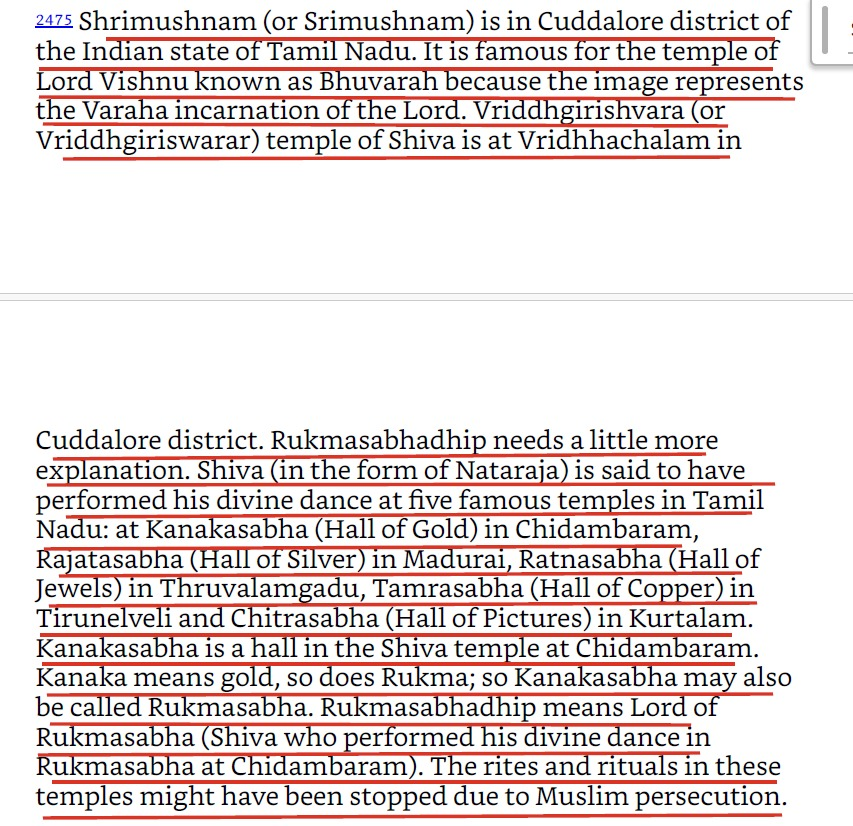
Shivaji Maharaj In recent days, Union Minister Nitin Gadkari’s statement that Chhatrapati Shivaji Maharaj was the ‘greatest secular king in Indian history’ has ignited a fierce debate, raising questions about the accuracy of historical narratives propagated by public figures. Gadkari’s assertion that Shivaji never destroyed any mosque or insulted any woman has been met with skepticism and outright rejection by historians and social media users alike. This controversy not only challenges the minister’s understanding of  history but also highlights the broader issue of how historical figures are interpreted and misrepresented in contemporary political discourse.

The backlash against Gadkari’s statement is rooted in a demand for historical accuracy and nuance, especially when such claims are made by influential figures in government. Critics argue that Gadkari’s portrayal of Shivaji as a secular icon oversimplifies a complex historical figure whose actions were deeply intertwined with the religious and cultural dynamics of his time. The minister’s comments, intended perhaps to align with the political narrative of “Sabka Vishwas” (trust of all), have instead sparked a reevaluation of Shivaji’s legacy through the lens of historical evidence.

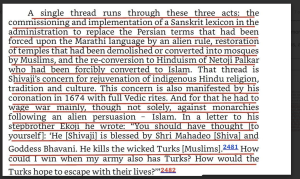
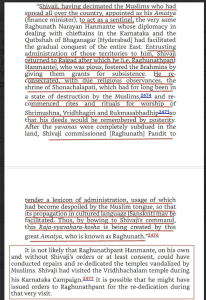
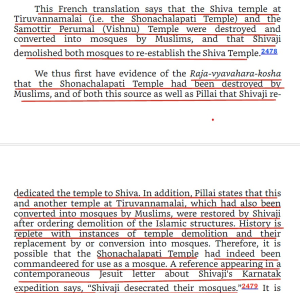
Historical records, including the detailed account in Gajanan Bhaskar Mehendale’s “Shivaji His Life and Times,” published by Param Mitra Publications in 2011, provide a different perspective. Mehendale describes Shivaji not merely as a visionary but as a ‘relentless force of Hindu resurgence,’ who systematically worked to erase traces of Muslim desecration and destruction. One of the most contentious points is Mehendale’s documentation that Shivaji demolished mosques at Tiruvannamalai and Samottir Perumal to restore the original temples dedicated to Shiva and Vishnu, respectively. This action, undertaken to undo centuries of erasure, directly contradicts Gadkari’s claim that Shivaji never destroyed any mosque.

Furthermore, Mehendale’s work highlights Shivaji’s efforts to revive Hindu traditions and sacred Vedic rites, particularly during his coronation. The restoration of Sanskrit as the official language in place of Persian, and the reinstatement of long-suppressed Hindu rituals at temples in Shrimushnam, Vriddhachalam, and Chidambaram in present-day Tamil Nadu, are cited as evidence of a deliberate policy to counter Islamic influence. These actions, while undoubtedly significant in the context of Hindu revivalism, do not align with the image of a secular king who treated all religions equally.

The complexity of Shivaji’s relationship with Islam and Muslims is further elucidated in historical analyses, such as those by The Print. The article notes that Shivaji’s empire extended from present-day Pakistan to Tamil Nadu, yet his policies were not devoid of religious undertones. For instance, the restoration of temples in Maharashtra during his reign was part of a broader strategy to preserve and promote Hindu culture and religion. This strategy included actions that could be interpreted as antagonistic towards Islamic structures and practices, challenging the notion of Shivaji as a purely secular figure.

The narrative of Shivaji as a secular king is part of a broader political discourse in India, where historical figures are often reinterpreted to fit contemporary political agendas. This trend has been evident in recent years, with political leaders invoking historical figures to garner support or justify policies. However, such reinterpretations can lead to a distortion of history, as seen in Gadkari’s statement. The minister’s comments reflect a tendency to whitewash historical complexities to present a unified, palatable narrative that aligns with current political objectives.

The backlash against Gadkari’s statement is not just about historical accuracy but also about the responsibility of public figures to be well-informed before making such claims. Social media users and historians have pointed out that being a minister does not grant the right to peddle false narratives. The demand for evidence-based historical discourse is growing, and there is a call for a more balanced approach to teaching and remembering history in India. This controversy underscores the importance of public figures being cautious and accurate in their historical assertions, as their statements can significantly influence public opinion and historical understanding.

Moreover, the debate touches on the broader issue of how history is taught and remembered in India. The educational curriculum, public discourse, and political rhetoric all play a role in shaping historical narratives. The tendency to simplify complex historical figures like Shivaji into icons of secularism or religious revivalism can lead to a loss of nuance and a misrepresentation of their legacy. Historians argue for a more comprehensive understanding that acknowledges both the achievements and the controversies surrounding such figures.

In conclusion, Nitin Gadkari’s statement on Chhatrapati Shivaji Maharaj has sparked a necessary reevaluation of historical narratives. While Shivaji’s legacy as a warrior king and a symbol of Maratha pride is undeniable, portraying him as the “greatest secular king” without acknowledging the religious and cultural dynamics of his actions is a simplification that does not hold up under scrutiny. The controversy serves as a reminder of the importance of historical accuracy and the responsibility of public figures to engage with history in a nuanced and informed manner. As India continues to navigate its complex historical landscape, the demand for a balanced and evidence-based approach to historical narratives will only grow stronger.

Bullet Points

The controversy surrounding Union Minister Nitin Gadkari’s statement about Chhatrapati Shivaji Maharaj being the “greatest secular king in Indian history” has sparked a broader debate on the accuracy of historical narratives propagated by public figures.
Gadkari’s claim that Shivaji never destroyed any mosque or insulted any woman has been challenged by historians and social media users, leading to questions about the minister’s understanding of history and his role in shaping public perception.
Historical records, including the work of Gajanan Bhaskar Mehendale in “Shivaji His Life and Times,” suggest that Shivaji was indeed involved in actions that could be interpreted as part of a Hindu resurgence, including the demolition of mosques at Tiruvannamalai and Samottir Perumal to restore original temples.


Mehendale’s book details Shivaji’s efforts to revive Hindu traditions and sacred Vedic rites, indicating a deliberate policy to counter Islamic influence, which contradicts the notion of Shivaji as a purely secular figure.
The restoration of temples in present-day Maharashtra during Shivaji’s reign, as documented in various historical accounts, further supports the view that his actions were aimed at preserving and promoting Hindu culture and religion.
The complexity of Shivaji’s relationship with Islam and Muslims is highlighted in historical analyses, such as those by The Print, which note that while Shivaji’s empire extended from Pakistan to Tamil Nadu, his policies were not devoid of religious undertones.
The narrative of Shivaji as a secular king is part of a broader political discourse in India, where historical figures are often reinterpreted to fit contemporary political agendas, a trend that has been evident in recent years.
The backlash against Gadkari’s statement reflects a growing demand for accuracy and nuance in historical discussions, especially when made by influential figures in government.
The debate also touches on the broader issue of how history is taught and remembered in India, with calls for a more balanced and evidence-based approach to historical narratives.
This controversy underscores the importance of public figures being well-informed before making historical claims, as their statements can significantly influence public opinion and historical understanding.

The Controversy Surrounding Ajit Anjum and Bihar Police’s Response

3.png

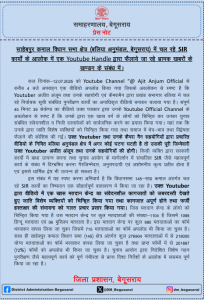
Patna : The recent developments involving YouTuber Ajit Anjum in Begusarai have sparked a significant debate about the role of digital influencers in shaping public opinion and the limits of free expression in India. An FIR has been lodged against Anjum, accusing him of obstructing government work through his YouTube channel, where he has been actively supporting the Mahagathbandhan in Bihar. This case has drawn attention not only for its political implications but also for the potential legal consequences that Anjum might face, including the possibility of imprisonment.

The FIR against Anjum was registered on July 12, 2025, by the Begusarai police, following allegations that his content disrupted official proceedings. This move came shortly after Tejashwi Yadav, a prominent political figure, stepped into the fray, signaling the political undertones of the case. Anjum’s role as a YouTuber has come under scrutiny, with critics arguing that his commentary has crossed the line from journalism to interference in administrative functions. The comparison with the case of Manish Kashyap, another YouTuber, is inevitable. Kashyap’s arrest saw the public disclosure of his bank details by the Bihar Police, revealing transactions amounting to Rs 42 lakh across four accounts. This precedent raises questions about whether the police will adopt a similar approach with Anjum, potentially exposing his financial records to public scrutiny.

The legal framework under which Anjum has been charged includes provisions of the Bharatiya Nyaya Sanhita (BNS) and the Representation of the People Act, 1951, as indicated in the FIR document. These laws are designed to maintain order and prevent the misuse of media platforms to incite unrest or hinder governmental processes. If convicted, Anjum could face imprisonment, a scenario that would depend on the evidence presented and the judicial process. The Bihar Police’s past actions, such as the swift arrest and public shaming of Kashyap, suggest they are not hesitant to take stringent measures against influencers perceived as threats to public order.

The involvement of Tejashwi Yadav adds a layer of complexity. His decision to support Anjum indicates a strategic political move, possibly to rally his base or counter the narrative pushed by rival factions. However, this also places the police in a delicate position, balancing political pressures with legal obligations. The question of whether the Bihar Police will have the courage to jail Anjum, as they did with Kashyap, hinges on their ability to act impartially. Public disclosure of Anjum’s bank details, as seen in Kashyap’s case, would be a bold step, potentially deterring other influencers but also risking accusations of overreach.

The broader context involves the growing influence of YouTubers in shaping political discourse, often labeled as “godi media” by critics when their content aligns with certain agendas. Anjum’s past support for Kashyap’s arrest, which was endorsed by Yadav, now ironically places him in a similar predicament. This flip-flop highlights the opportunistic nature of digital influencers, who switch narratives based on convenience. The public in Bihar is keenly observing this “godi godi” game, where allegiances shift, and legal actions become tools in political battles.

Should Anjum be jailed, the implications would be far-reaching. His incarceration could set a precedent for regulating online content, sending a message to other YouTubers about the consequences of overstepping legal boundaries. However, it might also escalate tensions, with his supporters potentially viewing it as a suppression of free speech. The police would need to ensure a transparent investigation to avoid perceptions of bias, especially given the political backing Anjum enjoys.

In conclusion, the case against Ajit Anjum is a test of the Bihar Police’s resolve and the judiciary’s independence. While the legal process must take its course, the public’s gaze is fixed on whether the police will replicate their approach with Kashyap or succumb to political pressures. The outcome will likely influence the dynamics of digital influence in Bihar’s political landscape, underscoring the need for a balanced approach to media accountability.

scroll to top