Jaipur Literature Festival: Controversies, Gossip, and Literary Prestige

jlf_crowd_480.jpg

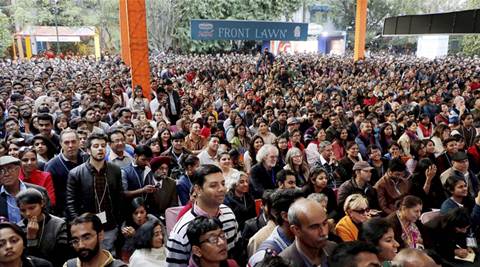
The Jaipur Literature Festival (JLF), often dubbed the “greatest literary show on Earth,” has become a cultural juggernaut since its inception in 2006. Co-founded by Namita Gokhale and William Dalrymple, the festival held annually in Jaipur, Rajasthan, has grown from a modest gathering of 18 writers to a global phenomenon attracting over 300 speakers and thousands of attendees. While JLF is celebrated for its vibrant celebration of literature, its rise to fame has been equally fueled by controversies and gossip, earning it a reputation that some might playfully suggest aligns more with a “Jaipur Gossip Festival.” Yet, under Namita Gokhale’s stewardship, JLF has carved a unique space among the world’s literary festivals, drawing an elite crowd and fostering intellectual discourse. This article explores how controversies have shaped JLF’s identity, examines the role of gossip in its allure, and celebrates Gokhale’s contributions to its global standing.

The Birth of JLF: A Vision for Literary Dialogue

The Jaipur Literature Festival began as a small literary segment within the Jaipur Heritage International Festival, launched by Faith and John Singh in 2006. Inspired by events like the Edinburgh Festivals, Namita Gokhale and William Dalrymple envisioned a platform to bring together Indian and international writers, fostering dialogue across languages, cultures, and genres. The inaugural event, held at the Diggi Palace, featured 18 writers, including Hari Kunzru, Shobhaa De, and Gokhale herself, with a modest crowd of about 100 attendees, some of whom, as Dalrymple humorously noted, “appeared to be tourists who had simply got lost.”

Gokhale, an award-winning author of 23 works, including the cult classic Paro: Dreams of Passion (1984), brought a deep passion for storytelling and inclusivity to JLF. Her vision was to create a space where Indian literature, particularly in regional languages, could stand shoulder-to-shoulder with global voices. This commitment to diversity—evident in sessions conducted in Hindi, Bengali, Tamil, Rajasthani, and more—has been a cornerstone of JLF’s appeal.

Controversies: The Fuel of Fame

While JLF’s literary offerings are its heart, controversies have often been its megaphone. The festival’s open and inclusive ethos, which encourages free speech and diverse perspectives, has frequently sparked debates that transcend the literary realm, drawing media attention and public scrutiny. These controversies have not only amplified JLF’s visibility but also cemented its reputation as a platform unafraid to tackle contentious issues.

One of the most notable controversies occurred in 2012, when Salman Rushdie was scheduled to attend JLF. His presence reignited debates over his controversial novel The Satanic Verses, leading to protests by religious groups and political pressure. Ultimately, Rushdie’s session was canceled, and he expressed disappointment at India’s failure to protect free expression, stating, “Religious extremists can prevent free expression of ideas at a literary festival, in which the politicians are too, let’s say, in bed with those groups…for narrow electoral reasons.” The incident sparked global headlines, highlighting JLF’s role as a battleground for free speech and censorship.

In 2013, sociologist Ashis Nandy stirred another storm with remarks at JLF about corruption among Dalits, tribals, and OBCs. His comments were perceived as offensive, leading to a criminal case and demands for action. While Dalit-Bahujan scholar Kancha Ilaiah took a conciliatory stance, suggesting Nandy’s remarks were a “bad statement with good intentions,” the controversy kept JLF in the spotlight. Police even asked organizers, including Gokhale and Dalrymple, to remain in Jaipur until the investigation concluded.

These incidents, among others, have fueled perceptions of JLF as a hotbed of controversy. Critics argue that the festival’s high-profile nature and elite guest list make it a magnet for polarizing figures and debates. Yet, Gokhale and Dalrymple have defended JLF’s commitment to open dialogue, with Gokhale stating in 2013, “The message is clear. Don’t reject someone without hearing them.” This willingness to engage with contentious issues has distinguished JLF from more sanitized literary festivals, contributing to its global allure.

The Gossip Factor: A “Jaipur Gossip Festival”?

The playful moniker “Jaipur Gossip Festival” captures another facet of JLF’s identity: its ability to generate buzz through the mingling of literary luminaries, celebrities, politicians, and socialites. The festival’s vibrant atmosphere, set against the backdrop of Jaipur’s historic charm, creates a fertile ground for gossip—both literary and social. From whispered rivalries between authors to sightings of Bollywood stars and political heavyweights, JLF’s social scene is as much a draw as its intellectual offerings.

Namita Gokhale’s novel Jaipur Journals (2020) brilliantly satirizes this aspect of the festival. Set at JLF (though not explicitly named), the novel features characters like Rudrani Rana, an elderly spinster who sends cruel anonymous notes, and Raju Srivastava, a cat burglar turned bestselling poet. Gokhale’s sharp wit skewers the pretensions of the “glittery set” that throngs JLF, from self-important authors to name-dropping socialites. The book’s depiction of festival regulars—some based on real figures like Shashi Tharoor and Javed Akhtar—adds a layer of insider gossip that delights readers familiar with JLF’s ecosystem.

This gossip-driven allure is not merely frivolous. It reflects JLF’s unique ability to blend high culture with popular appeal. The festival’s free admission (with some ticketed events like the Jaipur Music Stage) ensures a diverse crowd, from students to literary elites, creating a melting pot where ideas and egos collide. Social events, like cocktail parties hosted by figures like Tarang Arora of Amrapali Jewels, further amplify JLF’s reputation as a place to see and be seen. Arora noted a “30% spurt” in business during JLF, underscoring the festival’s economic and social impact on Jaipur.

Namita Gokhale: The Architect of JLF’s Success

At the heart of JLF’s rise is Namita Gokhale, whose multifaceted role as author, publisher, and festival director has been instrumental in shaping its identity. Gokhale’s literary credentials—spanning novels, short stories, mythology, and Himalayan studies—lend her curatorial choices authenticity and depth. Her commitment to inclusivity is evident in JLF’s multilingual sessions and its emphasis on amplifying marginalized voices, particularly women’s and regional language writers.

Gokhale’s vision extends beyond Jaipur. She has been a driving force behind JLF’s international editions in the United States, the United Kingdom, Canada, Australia, the Maldives, and Spain, transforming the festival into a global brand. Her ability to balance literary rigor with accessibility has made JLF a platform where Nobel laureates like J.M. Coetzee and Orhan Pamuk share the stage with emerging Indian authors.

Her leadership during challenging times, such as the COVID-19 pandemic, further highlights her resilience. When the world shut down in 2020, Gokhale spearheaded JLF’s pivot to a digital platform with the “Brave New World” series, garnering over 4.5 million views and reaching 21 million people. The 2022 hybrid edition, held at Hotel Clarks Amer after years at Diggi Palace, was a testament to her adaptability.

Gokhale’s personal touch is also evident in her advocacy for literary community. She has spoken of the “sense of community and shared energies” in live literary events, a principle that informs JLF’s inclusive ethos. Her efforts have inspired over 60 literary festivals across India, as noted by Sanjoy Roy, Managing Director of Teamwork Arts, JLF’s production company.

JLF’s Place Among Global Literary Festivals

Despite its controversies and gossip-laden reputation, JLF’s literary credentials are undeniable. Recognized as Asia’s largest and most prestigious literature festival, it attracts over 300 speakers annually, including Nobel laureates, Booker Prize winners, and global thinkers. The 2025 edition, held from January 30 to February 3 at Hotel Clarks Amer, featured luminaries like André Aciman, Jenny Erpenbeck, and Geetanjali Shree, alongside discussions on topics from Gandhi’s legacy to economic ideas shaping the future.

JLF’s global reputation is enhanced by its commitment to free speech and cultural exchange. Unlike many literary festivals, it resists “echo chambers,” as Gokhale notes, showcasing diverse voices, especially young and regional ones. The Jaipur BookMark (JBM), JLF’s B2B networking platform, further strengthens its influence by connecting publishers, authors, and agents worldwide.

Compared to festivals like the Edinburgh International Book Festival or the Hay Festival, JLF stands out for its scale, accessibility, and cultural vibrancy. Its free sessions and multilingual focus democratize literature, while its controversies and star-studded guest list ensure media coverage that rivals global counterparts. However, critics argue that JLF’s elite crowd and occasional sensationalism risk overshadowing its literary mission, a tension Gokhale navigates with finesse.

A Literary Carnival with a Gossip Twist

The Jaipur Literature Festival is a paradox—a celebration of ideas and a cauldron of controversies, a haven for book lovers and a stage for gossip. Its rise to global prominence owes much to Namita Gokhale’s vision, which has transformed a modest gathering into a cultural landmark. While controversies like the Rushdie and Nandy episodes have thrust JLF into the spotlight, they also underscore its commitment to free expression. The gossip, satirized in Gokhale’s own Jaipur Journals, adds a layer of allure that draws diverse crowds, from students to celebrities.

As JLF continues to evolve, its ability to balance literary depth with popular appeal will define its legacy. For now, it remains a festival where words spark debates, egos clash, and stories unfold—proving that, whether called the Jaipur Literature Festival or the ‘Jaipur Gossip Festival,’ it is an unparalleled celebration of the human experience. Congratulations to Namita Gokhale for crafting a literary phenomenon that, controversies and all, has earned its place among the world’s great festivals.
From UPA’s Silence to NDA’s Strike: India Redraws the Line of Dignity

vikram-misri-media-briefing.avif

Was religious harmony a valid reason to avoid justice – or a political excuse to appease a particular vote bank? This question lies at the heart of the 2008 post-Mumbai attack discourse. In the aftermath of India’s most horrific terror attack in 2008, where 166 innocent civilians were slaughtered on Indian soil by Pakistani terrorists, the UPA-led government led by then Prime Minister Dr. Manmohan Singh chose not to retaliate militarily. As revealed in former U.S. President Barack Obama’s memoir “A Promised Land”, then Prime Minister Dr. Manmohan Singh had resisted calls to retaliate against Pakistan after the attack, but his restraint had cost him politically. He feared that anti-Muslim sentiment could strengthen the influence of India’s main opposition party — the Bhartiya Janta Party. But what was paraded as mature restraint was, in hindsight, a calculated retreat — a political gambit where perception triumphed over justice, and the blood of innocents became collateral in a larger game of vote-bank arithmetic.

The Congress-led UPA government of that time, under the de facto leadership of Sonia Gandhi, bore the ultimate responsibility for this inaction. It wasn’t merely a lapse in military response — it was a calculated posture of avoidance, driven by a desire to maintain a secular image, even if it came at the cost of national dignity and deterrence. The silence of the Congress regime after 26/11 was not strength in restraint; it was weakness disguised as secular sensitivity, aimed at pleasing a particular segment of the electorate.

While this reasoning may have seemed ethically complicated in retrospect, it was troubling to observe prioritizing political optics and social factors over security and justice. The silence, or rather the delay, regarding these considerations from 2008 still resonates with the citizens who desired more resolve.

Contrast this with the actions taken by the Narendra Modi-led NDA government over the past decade, culminating in the recent, bold Operation Sindoor. The current administration has displayed an evolving and assertive national security doctrine that no longer sees terrorism as merely a law-and-order problem but treats it as an undeclared war on the Indian state.

In 2016, India launched surgical strikes across the Line of Control in response to the Uri attack. In 2019, following the deadly Pulwama suicide bombing, India carried out air strikes on Balakot — deep inside Pakistani territory, signaling a departure from conventional restraint. These actions demonstrated India’s capacity and willingness to respond proportionately but firmly to provocation.

But what happened on May 7, 2025, marks a significant escalation in scope, strategy, and symbolism. Operation Sindoor, launched at 1:40 AM, was not a knee-jerk response but a calibrated and coordinated military operation aimed at dismantling multiple terror hubs across Pakistan and Pakistan-administered Kashmir. It was India’s response to the Pahalgam massacre, where 26 civilians, including a Nepali national, were killed in a brutal terror assault.

Using Rafale fighter jets equipped with SCALP cruise missiles and precision bombs, the Indian Air Force executed a 23-minute offensive hitting key terror infrastructures in Bahawalpur, Muridke, Tehra Kalan, Kotli, and Muzaffarabad regions long known to host operatives of Lashkar-e-Taiba and Jaish-e-Mohammed. The strikes reportedly neutralized several terrorists in under 24 hours.

Unlike the ambiguity that followed past governments’ dealings with Pakistan, the Modigovernment’s message is unambiguous: Indian blood will not be spilt without consequence. The action was swift, the target clear, and the timing strategic.

Geopolitically too, India today stands on far stronger footing. With stronger defence procurement (including Rafales, drones, missile systems), increased alignment with global powers through forums and a firmer grip on cyber and satellite intelligence, India’s retaliatory capacity is no longer symbolic — it is demonstrably operational.

Furthermore, India’s ability to manage international perception has matured. While in 2008 the fear of global condemnation held back policy decisions, today, countries like Israel and strategic analysts across the world have acknowledged India’s right to self-defence. France, while urging restraint, also recognized India’s security concerns. The shift is not merely military, but moral and strategic.

Critics may argue that retaliation risks escalation. But the bigger risk is appeasement — a policy that failed to prevent subsequent attacks after Mumbai. Justice delayed was not only justice denied in 2008; it was justice deflected.

In Operation Sindoor, India has not merely avenged a single attack but has articulated a new standard: the cost of terrorism will be extracted, decisively and unapologetically. This is not warmongering; it is strategic deterrence in a region where ambiguity is often exploited.

As the smoke clears over Muzaffarabad and Bahawalpur, what remains clear is this: India’s threshold for tolerance has shifted. From silence in 2008 to the sound of precision strikes in 2025, the message is clear and irreversible. National security is not a narrative to be managed but a duty to be delivered — and delivered it has been.

जो कहा वो किया – आपरेशन सिंदूर

operation-sinddor.jpg

अप्रैल 22, 2025 पहलगाम में 26-निहत्थे निर्दोष हिन्दुओं की धर्म पूछकर हत्या से पूरा देश आहत था। दुःख और क्रोध दोनों चरम पर थे। गृहमंत्री अमित शाह समाचार मिलते ही घटनास्थल पर पहुँच गए। प्रधानमंत्री अपनी विदेश यात्रा संक्षिप्त कर स्वदेश लौटे। अगले ही दिन मधुबनी रैली में घोषणा की, इस बार ऐसा दंड मिलेगा जिसकी उन्होंने कल्पना भी नहीं की होगी, इस संकल्प को उन्होंने अपने मन की बात कार्यक्रम में दोहराया। गृहमुंत्री अमित शाह ने प्रधानमंत्री के संकल्प को बल देते हुए कहा, “हम एक – एक आतंकी को चुन- चुन कर मारेंगे“ और अंत में रक्षामंत्री राजनाथ सिंह ने कहा था कि ये मेरा उत्तरदायित्व है कि देशवासी जो कुछ चाहते हैं वह सब कुछ मोदी सरकार में होकर रहेगा। इन वक्तव्यों के पीछे सरकार और सेना के सभी संकल्पबद्ध राष्ट्रभक्त सामरिक और रणनीतिक तैयारियां कर रहे थे।

पहलगाम की आतंकी घटना के पश्चात प्रधानमंत्री नरेंद्र मोदी ने सेना को सही समय, सही स्थान और सही लक्ष्य चुन कर सटीक वार करने की छूट दे दी थी। भारतीय सेना ने 6-7 मई 2025 की मध्यरात्रि को अपने पराक्रम का प्रदर्शन करके हर भारतीय का मस्तक गर्व से ऊंचा कर दिया। आज हर भारतीय नागरिक अपनी सेना के साहस को प्रणाम कर रहा है और सेना के साथ खड़ा है। जैसे ही ऑपरेशन सिंदूर के सफलतापूर्वक लांच होने की सूचना आई रक्षामंत्री राजनाथ सिंह ने सोशल मीडिया पर लिखा “भारत माता की जय“ और उसके बाद भारत ही नहीं अपितु पूरे विश्व में ऑपरेशन सिंदूर ट्रेंड करने लगा। भारत पाक सीमा तथा पीओके पर 9 आतंकी ठिकानों के तबाह होते ही देश के अनेक हिस्सों में उत्सव का वातावरण बन गया।
लम्बे विचार विमर्श और तैयारियों, कूटनीतिक पक्ष को साधने के साथ सटीक रणनीति का उपयोग करते हुए “आपरेशन सिंदूर“ के माध्यम से भारतीय सेना ने पक्के सबूतों के साथ पाकिस्तान और गुलाम जम्मू -कश्मीर में स्थित आतंकी ठिकानों पर हमलाकर उन्हें तबाह कर दिया। भारत ने पंजाब प्रांत के बहालवपुर जैश -ए -मोहम्मद के संस्थापक मसूद अजहर के ठिकाने पर जोरदार मिसाइल अटैक किसा जिससे मसूद अजहर के परिवार के 14 सदस्यों के मारे जाने की खबर आ रही है। पाकिस्तानी सेना के चीन में बने एचक्यू -9 एयर डिफेंस सिस्टम को चकमा देते हुए भारतीय सेना ने 9 आतंकी ठिकानों को ध्वस्त करके भारत के सभी दुश्मनों को साफ संदेश दिया है कि अगर कोई उसे छेडे़गा तो वह अब घर में घुसकर मारेगा। यह नया भारत है।

प्रधानमंत्री नरेंद्र मोदी की सरकार देश के दुश्मनों को उसी भाषा में जवाब दे रही है जो भाषा वो समझते हैं । भारत को परमाणु हमले की धमकी देने वाले फिलहाल किसी बिल में छुपे हैं और अपने देशवसियों को कुछ बता पाने की स्थिति में ही नहीं रह गये हैं। जिन आतंकियों ने पहलगाम में निर्दोषों की हत्याएं करते समय उनकी पत्नियों या परिजनों से कहा था कि हम तुमको नहीं मारेंगे, जाओ मोदी को जाकर बता दो उनको प्रधानमंत्री मोदी ने बता दिया है कि वो सुन चुके हैं । उत्तर इतना तगड़ा और सधा हुआ दिया है कि आज पाकिस्तानी सत्ता प्रतिष्ठन, सेना व वहां की खुफिया एजेंसी आईएसआई हैरान हैं।
आपरेशन सिंदूर“ को मोदी सरकार में अब तक हुई स्ट्राइक्स में सबसे अलग माना जा रहा है। “आपरेशन सिंदूर“ प्रधानमंत्री मोदी के उत्कृष्ट नेतृत्व का श्रेष्ठ उदाहरण है। यह आपरेशन बिना किसी दोष का अद्भुत प्रस्तुतीकरण रहा जिसमेंआतंकी ठिकानों और आतंकवादियों को छोड़कर किसी भी निर्दोष नागरिक या पाक सेना के जवान को नुकसान नहीं पहुंचा और भारतीय सेना अपनी कार्यवाही को पूरा करके सकुशल घर वापस आ गई।

अब पाकिस्तान को यह समझ में नहीं आ रहा है कि वह पूरे घटनाक्रम पर क्या प्रतिक्रिया व्यक्त करे हालांकि पाक प्रधानमंत्री शाहबाज शरीफ की लंबी आपात बैठक के बाद पाक का बयान आया है कि उसे भारत पर जवाबी कार्यवाही करने का अधिकार प्राप्त है। पहलगाम घटना के बाद से पाकिस्तानी सेना एलओसी पर लगातार फायरिंग कर रही है जिसका भारतीय सेना भी पूरी बहादुरी के साथ लगातार जवाब दे रही है। भारत पाकिस्तान को लगातार चेतावनी दे रहा है कि एलओसी पर फायरिंग बंद करो नहीं तो इसके गंभीर परिणाम भुगतने के लिए तैयार रहो।

आतंकी ठिकानों पर हमले से आतंकी संगठनों की जड़ें हिलीं -भारत ने ऑपरेशन सिंदूर के अंतर्गत पाकिस्तान और पीओके में 9 आतंकी ठिकानो को तबाह कर दिया है। इसमें कम से कम 120 आतंकवादियों के मारे जाने की संभावना व्यक्त की जा रही है। यह संख्या बढ़ भी सकती है। पाकिस्तान केवल 26 लोगों के ही मारे जाने का दावा कर रहा है। माना जा रहा है कि इस हमले में सबसे अधिक नुकसान जैश -ए- मोहम्मद के संस्थापक मसूद अजहर को हुआ है और उसके परिवार के 14 सदस्यों को मार गिराया गया है।

जिन 9 ठिकानों को निशाना बनाया गया, उनमें बहावलपुर का मरकज सुभान अल्लाह यह जैश -ए -मोहम्मद का प्रशिक्षण केंद्र है।14 फरवरी 2019 को पुलवामा में हुए हमले में इस केंद्र की मुख्य भूमिका रही है। यहां जैश – ऐ- मोहम्मद के सरगना मालना मसूद अजहर अपने परिवार तथा सहयोगियों के साथ रहता था और आतंकियों को प्रशिक्षित कर उन्हें भारत भेजता था। दूसरा -सबसे बड़ा हमला पंजाब के मुरिदके स्थित मरकजा तैयबा पर हुआ – यह लश्कर ए तैयबा का मुख्य प्रशिक्षण केंद्र है यहां आतंकियों को हर प्रकार से प्रशिक्षित किया जाता है। यहां पर हर वर्ष एक हजार छात्रों की भर्ती की जाती है ओसामा बिन लादेन ने यहां एक मस्जिद व गेस्ट हाउस के निर्माण में आर्थिक मदद की थी व 26/11के मुंबई हमलावरों को प्रशिक्षित किया गया था। इसमें अजमल कसाब भी शामिल था।(पंजाब, पाकिस्तान) के नरावेल जिले में सरजाल तेहर कलां के शकरगढ़ में स्थित यह जैश- ए- मोहम्मद का लांचिग पैड है । यह एक प्राथमिक स्वास्थ्य केंद्र मे संचालित होता है यहसीमासे लगभग 6 किमी दूर है और यहां पर सुरंग निर्माण ड्रोन आदि का संचालन सिखाया जाता है ।

इसी प्रकार सियालकोट का महमूना जोया सेंटर इसका इस्तेमाल हिजबुल मुजाहिदीन करता है। बरनाला का मरकज अहले हदीस यह भी लश्कर को सेंटर है। कोटली का मरकज अब्बास भी एक मुख्य आतंकी केंद्र है जहां पर बड़े आतंकी सरगना घुसपैठ की योजना बनाते हैं और उन्हें सीमा पार कराने में मदद तक करते हैं। मुजफ्फराबाद का शावाई नाल्लाह कैंप भी एक बहुत बड़ा आतंकी शिविर केंद्र है । मुज़फ्फराबाद में लाल किले के सामने स्थित यह जैश -ए मोहम्मद का मुख्य केंद्र है यहां पर पाकिस्तानी सेना के रेंजर आतंकियो को प्रशिक्षण देते हैं। इन सभी केंद्रों पर किसी भी समय में 100 से 600 आतंकी रहते हैं।

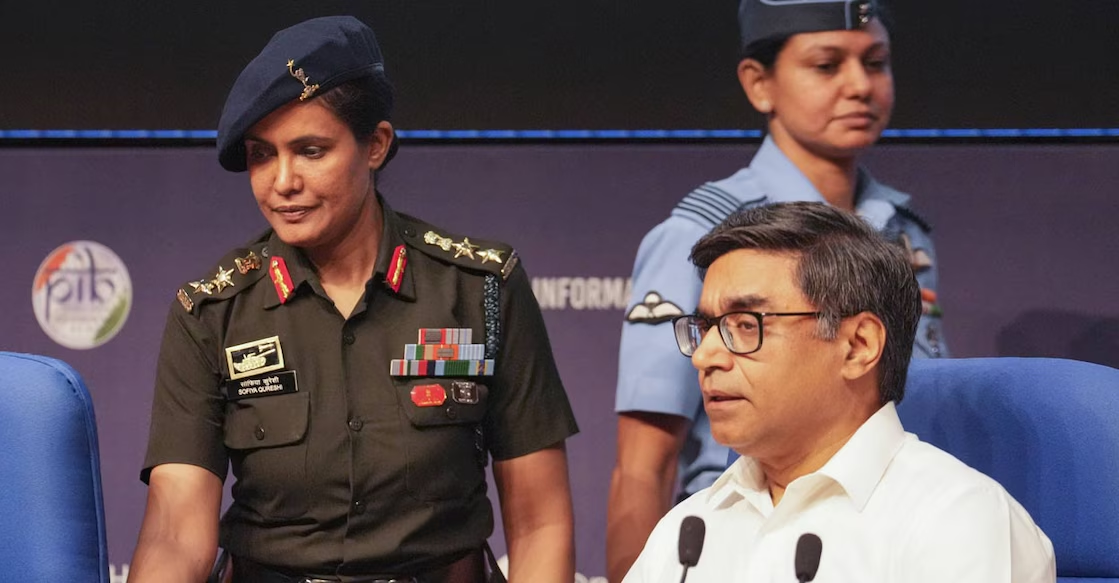
आज यह सभी प्रशिक्षण केंद्र व लॉचिंग पैड ध्वस्त हो चके हैं और पाकिस्तान में हाहाकर मचा हुआ है। भारतीय सेना का बदला पूरा हो जाने के बाद भारतीय सेना के इतिहास में पहली बार दो महिला अधिकारियों ने पूरे घटनाक्रम का पत्रकार वार्ता में विधिवत वीडियो जारी किया और ऑपरेशन सिन्दूर की पूरी जानकारी दी।

पूर्वाग्रह वाली पत्रकारिता के बीच पत्रकारिता का भविष्य

i43ddqw9-rendered.avif

दिल्ली : आज के दौर में पत्रकारिता एक जटिल और चुनौतीपूर्ण क्षेत्र बन चुकी है। सूचना के असीमित प्रवाह और डिजिटल प्लेटफॉर्म्स के विस्तार ने जहां एक ओर पत्रकारिता को व्यापक पहुंच दी है, वहीं दूसरी ओर पूर्वाग्रह और पक्षपात ने इसके मूल स्वरूप को धूमिल किया है। हर समाचार माध्यम, चाहे वह पारंपरिक हो या डिजिटल, अपने स्वर और पक्ष को लेकर चर्चा में रहता है। ऐसे में सवाल उठता है कि पूर्वाग्रह से ग्रस्त इस माहौल में पत्रकारिता कैसे बचेगी और अपनी विश्वसनीयता कैसे कायम रखेगी?

पत्रकारिता का मूल उद्देश्य है तथ्यों को निष्पक्ष और पारदर्शी तरीके से जनता तक पहुंचाना। लेकिन वर्तमान में कई समाचार संगठन व्यावसायिक हितों, राजनीतिक दबावों और वैचारिक झुकाव के चलते इस उद्देश्य से भटक गए हैं। कुछ चैनल और अखबार खुले तौर पर किसी राजनीतिक दल या विचारधारा का समर्थन करते हैं, जिससे उनकी खबरें तथ्यों से अधिक राय बन जाती हैं। सोशल मीडिया ने इस समस्या को और बढ़ाया है, जहां सनसनीखेज हेडलाइंस और आधे-अधूरे तथ्य वायरल हो जाते हैं। ऐसे में पाठक और दर्शक भ्रमित होकर सत्य को समझने में असमर्थ हो जाते हैं।

पत्रकारिता को बचाने के लिए सबसे पहले इसकी नींव को मजबूत करना होगा। पत्रकारों को अपनी नैतिकता और निष्पक्षता पर अडिग रहना होगा। इसका मतलब है कि खबरों को प्रस्तुत करते समय व्यक्तिगत या संगठनात्मक पूर्वाग्रह को दरकिनार करना। तथ्यों की जांच (फैक्ट-चेकिंग) और स्रोतों की विश्वसनीयता सुनिश्चित करना पत्रकारिता का आधार होना चाहिए। इसके लिए स्वतंत्र फैक्ट-चेकिंग संस्थानों और ओपन-सोर्स डेटा का उपयोग बढ़ाना होगा। साथ ही, पत्रकारों को प्रशिक्षण देना जरूरी है ताकि वे जटिल मुद्दों को संतुलित और गहराई से समझ सकें।

दूसरा, पत्रकारिता को जनता के साथ फिर से जुड़ना होगा। आज जनता का एक बड़ा हिस्सा समाचार माध्यमों पर भरोसा नहीं करता। इसे पुनर्जनन के लिए पारदर्शिता जरूरी है। समाचार संगठनों को यह स्पष्ट करना चाहिए कि उनकी खबरें कैसे तैयार होती हैं, स्रोत कौन हैं, और क्या प्रक्रिया अपनाई जाती है। साथ ही, जनता की भागीदारी बढ़ाने के लिए इंटरैक्टिव प्लेटफॉर्म बनाए जा सकते हैं, जहां लोग अपनी राय और सुझाव दे सकें। यह न केवल विश्वसनीयता बढ़ाएगा, बल्कि पत्रकारिता को अधिक समावेशी भी बनाएगा।

तीसरा, तकनीक का सही उपयोग पत्रकारिता को नया जीवन दे सकता है। आर्टिफिशियल इंटेलिजेंस और डेटा एनालिटिक्स का उपयोग करके समाचार संगठन पूर्वाग्रह को कम कर सकते हैं। उदाहरण के लिए, एआई आधारित टूल्स खबरों में पक्षपातपूर्ण भाषा का पता लगा सकते हैं। साथ ही, ब्लॉकचेन तकनीक का उपयोग करके समाचारों की प्रामाणिकता को सुनिश्चित किया जा सकता है। हालांकि, तकनीक का उपयोग सावधानी से करना होगा ताकि यह पत्रकारिता की स्वतंत्रता को प्रभावित न करे।

अंत में, पत्रकारिता को बचाने के लिए समाज की भी जिम्मेदारी है। पाठकों और दर्शकों को चाहिए कि वे समाचारों को आलोचनात्मक दृष्टिकोण से देखें। अलग-अलग स्रोतों से जानकारी लेना, तथ्यों की जांच करना और सनसनीखेज खबरों से बचना जरूरी है। पत्रकारिता तभी जीवित रहेगी जब जनता इसे जवाबदेह बनाए रखे।

पूर्वाग्रह वाली पत्रकारिता के बीच पत्रकारिता का भविष्य चुनौतीपूर्ण है, लेकिन असंभव नहीं। निष्पक्षता, पारदर्शिता, तकनीक का सही उपयोग और जनता की जागरूकता मिलकर इसे बचा सकती है। पत्रकारिता समाज का दर्पण है, और इसे साफ रखना हम सभी की जिम्मेदारी है।

scroll to top