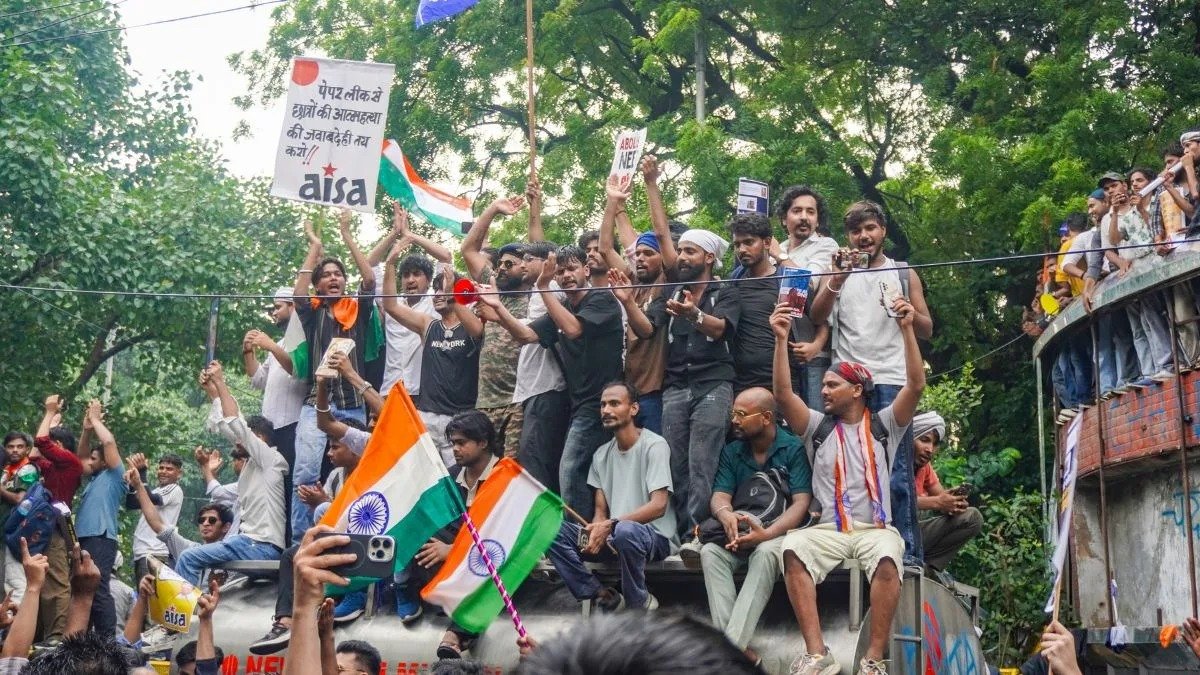
पत्रकारिता का संकट और आशा की किरण

2.jpeg

दिल्ली। आज पत्रकारिता की परिभाषा धुंधली पड़ती जा रही है। यह बताना कठिन होता जा रहा है कि असली पत्रकारिता क्या है, और इससे भी अधिक मुश्किल यह तय करना कि पत्रकारिता कर कौन रहा है। जब ये दोनों सवाल किसी हद तक सुलझ जाते हैं, तो सबसे बड़ा प्रश्न उठता है—पत्रकारिता कैसे की जाए और किस संस्थान के साथ?

दिल्ली जैसे शहर में दुनियादारी सीखते हुए इन सवालों के जवाब मिलते हैं, लेकिन अक्सर वे खुद को धोखा देने वाले साबित होते हैं। अच्छे पत्रकारों की कमी नहीं है। वे बिलासपुर, रांची, बांदा, बस्तर और विदर्भ में मौजूद हैं। ये लोग अपनी कमियों के साथ अच्छाई को संभाले हुए हैं, लेकिन उनकी कमियों में ‘दलाली’ नहीं है—न आर्थिक, न वैचारिक। वैचारिक प्रतिबद्धता और वैचारिक दलाली दो अलग चीजें हैं। दलाल विचार छोड़कर व्यक्ति के पीछे भागता है, जबकि प्रतिबद्ध पत्रकार सिद्धांत पर अडिग रहता है।

यह मर्सिया नहीं, बल्कि वास्तविकता का आकलन है। माखनलाल चतुर्वेदी राष्ट्रीय पत्रकारिता विश्वविद्यालय में आशुतोष गुप्ता ने छात्रों से खुलकर कहा था कि जो समाज बदलने आए हैं, वे घर लौट जाएं। पत्रकारिता एक पेशा है, जैसे डॉक्टरी, इंजीनियरिंग या वकालत। यहां दुनिया बदलने का रोमांस छोड़कर व्यावहारिक धंधा करना पड़ता है। प्राध्यापक पुष्पेन्द्र पाल सिंह ने ‘हंस’ पत्रिका में इस घटना का विस्तार से वर्णन किया था। आशुतोष में ईमानदारी थी; उन्होंने स्पष्ट कह दिया। कई पत्रकारों में यह साहस नहीं होता। बाद में आशुतोष को लगा कि राजनीति अधिक मुनाफे वाला धंधा है, लेकिन वे वहां भी सफल नहीं हुए और वापस पत्रकारिता में लौट आए।

ऐसी ही एक मिसाल अल्मोड़ा के शमशेर सिंह बिष्ठ की है। जनसत्ता में काम करते हुए जब उन पर विज्ञापन लाने का दबाव पड़ा, तो उन्होंने वरिष्ठ पत्रकार रामबहादुर राय से पूछा-यदि विज्ञापन पत्रकार लाएगा, तो जिसका विज्ञापन लिया, उसकी खबर कैसे निष्पक्ष लिखी जाएगी? विज्ञापन का पैसा लिया, तो खबर भी विज्ञापन वाली ही करनी पड़ेगी न?

आज की पत्रकारिता की सबसे बड़ी चुनौती यही है। विज्ञापनदाता ही वेतन का स्रोत है, और खबरें भी उसी के अनुकूल लिखनी पड़ती हैं। यदि कोई संस्थान जनता की तरफ देखकर ईमानदारी से पत्रकारिता करने की कोशिश करता है, तो दाल-रोटी के लिए कमर झुकाए जनता कंधा न झटके तो क्या करे? बाजार के दबाव में संस्थान झुकते हैं, और पत्रकार मजबूर हो जाते हैं।

फिर भी, निराशा का यह दौर पत्रकारिता के लिए सबसे अच्छा समय भी है। अच्छी, ईमानदार पत्रकारिता अब दुर्लभ हो गई है। जरा-सी भी संभावना दिखे, समाज उसे हाथों-हाथ लेने को तैयार है। जो पत्रकार बिना दलाली के, बिना समझौते के सच को सामने रखेगा, उसकी सफलता की गुंजाइश बहुत अधिक है। ग्रामीण इलाकों से लेकर शहरों तक, लोग निष्पक्ष आवाज की तलाश में हैं।

पत्रकारिता को बचाना अब व्यक्तिगत साहस और सामूहिक जिम्मेदारी का सवाल है। यदि कुछ लोग पुरानी प्रतिबद्धता को जिंदा रखें, तो यह पेशा फिर से समाज का दर्पण बन सकता है। समय चुनौतीपूर्ण है, लेकिन अवसरों से भरा हुआ भी। ईमानदारी अब सबसे बड़ा पूंजी है।

The Crisis in Journalism and a Ray of Hope

Journalism-1.jpg

These days, it’s getting harder to clearly define what real journalism is. It’s tough to explain what true journalism means, and even tougher to figure out who is actually practicing it. Once you somehow sort out those two questions, the biggest one remains: How should journalism be done, and with which organization?

While living in a big city like Delhi and learning how the world works, I found answers to these questions. But often, those answers end up fooling no one but myself.

There is no shortage of good journalists. They exist in places like Bilaspur, Ranchi, Banda, Bastar, and Vidarbha. These people hold on to their goodness despite their flaws, but one thing is missing from their flaws: no ‘brokerage’—neither financial nor ideological. Committing to an ideology is completely different from being an ideological broker. A broker abandons principles and runs after a person, while a committed journalist stays firm on his beliefs.

This is not a sad song of mourning—it’s just facing the reality. At Makhanlal Chaturvedi National University of Journalism, Ashutosh Gupta once spoke openly to students: “If you came here thinking you will change society, go back home. Journalism is just a job, like being a doctor, engineer, or lawyer. Drop the dream of changing the world and treat it as a practical profession.” Professor Pushpendra Pal Singh wrote about this incident in detail in the magazine ‘Hans’. Ashutosh was honest—he said it straight. Many journalists don’t have that courage. Later, Ashutosh thought politics would bring more money, but he couldn’t succeed there either and came back to journalism.

Another strong example is Shamsher Singh Bisht from Almora. While working at Jansatta, when pressure came to bring in advertisements, he asked senior journalist Ram Bahadur Rai: “If the journalist himself brings the advertisement, how can he write an honest story about that advertiser? Once you take their money, won’t the news have to favor them too?”

This is the biggest challenge for journalism today. The advertiser pays the salaries, so the news often has to bend toward them. If any media house tries to do honest work while looking toward the people, what can it do if the common people—who already bend their backs for daily bread—refuse to support it? Under market pressure, organizations bend, and journalists feel helpless.

Even so, this time of disappointment is actually the best time for journalism. Honest and good journalism has become very rare now. If even a little bit of real quality shows up, society is ready to welcome it with open arms. Any journalist who puts truth forward without brokerage or compromise has a very high chance of success. From villages to cities, people are searching for an unbiased voice.

Saving journalism is now a matter of personal courage and shared responsibility. If a few people keep the old commitment alive, this profession can once again become society’s true mirror. The times are full of challenges, but they are also full of opportunities. Honesty is now the biggest strength.

Airports Authority of India Signs Landmark Agreement with Airport Council International (ACI)-ICAO to train more than 115 Airport Professionals for AMPAP

ANI-20260130135111.jpg.webp

Hyderabad, 29th January 2026: In a major step towards strengthening India’s global aviation leadership, the Airports Authority of India (AAI) has signed a landmark agreement with the Airports Council International (ACI) to implement the prestigious Airports Management Professional Accreditation Program (AMPAP) in India.

Delhi : This strategic collaboration marks a defining moment in India’s nation-building journey and reinforces the country’s commitment to world-class aviation governance, leadership, and competence building.

Globally, over 1,400 aviation professionals across 120 countries have earned the coveted International Aviation Professional (IAP) designation. With 173 IAPs already from India, the country is steadily emerging as a key contributor to global aviation leadership. The AAI–ACI partnership will significantly accelerate this momentum.

Under the agreement, AAI will facilitate AMPAP training for more than 115 additional aviation professionals over the next five years, creating a strong pipeline of globally deployable, future-ready aviation leaders. On successful completion of the programme, participants will earn the internationally recognised IAP salutation, a mark of excellence in airport leadership and management.

The initiative will empower professionals with advanced competencies in airport economics, sustainability, safety, resilience, innovation, and strategic leadership—capabilities that are critical as India’s aviation sector undergoes unprecedented expansion.

The agreement was formally exchanged between Shri Vipin Kumar, Chairman, Airports Authority of India, and Mr. Gurjit Gill, Director – Global, Airports Council International & ICAO, in the august presence of Shri Kinjarapu Rammohan Naidu, Hon’ble Minister of Civil Aviation, Shri Samir Kumar Sinha, Secretary, Ministry of Civil Aviation and other senior dignitaries during Wings India 2026 at skyline theatre, Begumpet Airport on 29thJanuary 2026. The initiative has been enabled under the visionary and reform-oriented leadership of Hon’ble Minister of Civil Aviation, Shri Kinjarapu Rammohan Naidu, whose focus on institutional competence building and global benchmarking continues to transform India’s aviation ecosystem.

On this occasion, AAI reaffirmed its commitment to developing human capital as a core pillar of aviation growth, noting that globally aligned leadership is essential to sustaining India’s rapid airport infrastructure expansion and operational excellence.

This collaboration positions India not only as one of the world’s fastest-growing aviation markets, but also as a trusted global hub for aviation knowledge, leadership, and best practices—contributing meaningfully to the national vision of Viksit Bharat 2047 and reinforcing India’s role in shaping the future of global aviation.

Is the RSS Fulfilling Gandhi’s ‘Last Wish’?

Rssflag.jpg

Ashish Kumar Anshu

Delhi : On January 27, 1948, Mahatma Gandhi expressed his wish to dissolve the Congress and turn it into a ‘Lok Sevak Sangh’ (People’s Service Organization). Is the RSS today making that idea a reality?

Do you know that at the time of building independent India, Mahatma Gandhi had a dream that remains unfulfilled even today? On January 27, 1948—just three days before his death—he wrote in a note that the Indian National Congress had completed its purpose. It should now be dissolved as a political organization and transformed into a ‘Lok Sevak Sangh’—an organization that stays away from the race for power and focuses on public service, social and economic freedom, and moral upliftment. Gandhi clearly said that the Congress “must be kept out of unhealthy competition with political parties and communal bodies. For these and other similar reasons, the A.I.C.C. resolves to disband the existing Congress organization and flower into a Lok Sevak Sangh under the following rules with power to alter them as occasion may demand.” He presented this as his ‘Last Will and Testament,’ which was published in Harijan on February 2, 1948.

After his assassination on January 30, 1948, this wish was ignored. The Congress took hold of power and turned Gandhi’s dream into political ambition.

Today, when we remember Gandhi’s last message, one question arises: Can any organization bring his idea of Lok Sevak Sangh to life on the ground? When we look at the work of the Rashtriya Swayamsevak Sangh (RSS), it seems to match Gandhi’s dream in many ways.

The RSS is a non-political, volunteer-based organization. It emphasizes discipline, service to the nation, education, health, rural development, and disaster relief. During the COVID-19 pandemic, RSS volunteers provided food, oxygen, and medical help to millions of people without expecting any political gain. Their work in natural disasters, cleanliness drives, promoting social harmony, and building patriotism among the youth—all these efforts connect to Gandhi’s idea of separating Congress from power and making it a service-focused social organization.

Gandhi described the Lok Sevak Sangh as volunteer-based, village-centered, and rooted in moral values. The RSS’s branches (shakhas), service activities, and organizational structure show a practical form of this in action. There have been ideological differences between Gandhi and the RSS—especially on non-violence, protection of minorities, and inclusivity—but if we look at his last note in its original form, an organization like the RSS appears close to his dream of power-free service. While the Congress ignored Gandhi’s wish and chose family-centered politics, the RSS chose to stay away from power and follow the path of public service.

On the other hand, the Congress’s journey has been completely opposite to Gandhi’s dream. After independence, the Congress set aside internal democracy and ethics in its hunger for power. After Gandhi’s assassination, there were no serious investigations into the lapses in his security. There was an attack on him on January 20, 1948, yet why was security so weak on January 30? Neither the media nor the Congress spoke about this. There were also attacks and massacres on Chitpavan Brahmins in Maharashtra, but the Congress government faced no questions. By putting all the blame for Gandhi’s murder on the RSS, the media freed the Congress government (in power at the center then) from all responsibility.

During Congress rule, a large part of the media stayed under the protection of those in power. Even during the Emergency (1975-77) with censorship, pro-Congress journalists faced no harm. In the Niira Radia tapes scandal, big journalists’ names came up, but no action was taken. In the 1984 Sikh massacre, the Congress was in government, but the media did not ask tough questions of party leaders. In the Bofors scandal too, many journalists tried to suppress it. Journalists like Rajiv Shukla admitted that when they criticized Rajiv Gandhi, he praised them—because it made a Congress journalist look neutral, increased their credibility, and the party never doubted their loyalty to Congress. Examples like Supriya Shrinate also show this system, where political connections easily got good journalism jobs.

After 2014, many journalists insist on seeing themselves in the role of ‘opposition.’ They say the media should stand against those in power. But from the time of Congress governments until now, these journalists have not raised any questions about Mahatma Gandhi’s last wish or the lapses in his security. Yet they want to be seen as neutral!

For decades, a strong wall of opposition was built against the BJP. The media itself created the image of the BJP as a communal party of Bania-Brahmins across the country. On the other hand, the media followed a policy of ‘controlled criticism’ toward the Congress. That is why criticism of Sonia Gandhi in the media was always mild. Remember how Xavier Moro’s book The Red Sari was banned in India, but the media kept the news completely silent.

Today, a big question stands before the whole country: Has Mahatma Gandhi’s dream been lost somewhere in the greed for power by political parties? Or can some organization still keep that dream alive through the path of public service?

The work of the RSS definitely shows a possibility in this direction. In such times, the Congress will have to do serious self-reflection: Is it really the true successor of Mahatma Gandhi, or is it a political party that ignored his dreams?

scroll to top