HINDUSTAN TIMES SHAMELESSLY PUBLISHES BLATANT CHINESE PROPAGANDA FOR MONEY. MY LETTER TO HT EDITOR:

2-16.jpeg

Dear Mr. Sukumar Ranganathan,

I am a journalist (75) and Tibetologist. Since my childhood and over 55 years of active journalism I’ve loved and respected Hindustan Times as aregular reader. But HT has given me a shock today which I don’t expect from such a respectable and financially stable organisation.

In today’s (10 Sep 2025) the HINDUSTAN TIMES has published a 2-page advertorial of CHINA- DAILY which is pure propaganda of the Chinese Communist Party. The most shameful part of this is a feature on TIBET which, you and I both know, is illegally occupied by China since 1951.

Through this feature the Chinese government is not only trying to tell that Tibetans are happy and enjoying ‘picnics’ under Chinese rule, but by using Tibet’s new Chinese name of XIZANG it is trying to wipe out from world’s memory that there was ever a country called TIBET.

During my 53 year long study of Tibet as a journalist I’ve quietly (legally every time) travelled at my own risk through all five Chinese provinces (where broken Tibet resides today) just to see and photograph how Tibetan people are coping with their colonial masters. In a sentence I will say that despite all restrictions and tortures the Tibetans have not accepted Chinese ownership of Tibet.

I did not not expect HINDUSTAN TIMES to sell its space to spread Chinese lies and manufactured narratives. This is immoral as well as unprofessional.

Sir, please ask your advertising and marketing teams not to stoop so low and offer HT’s sacred space to Chinese propaganda for some money.

With best wishes and regards

Vijay Kranti

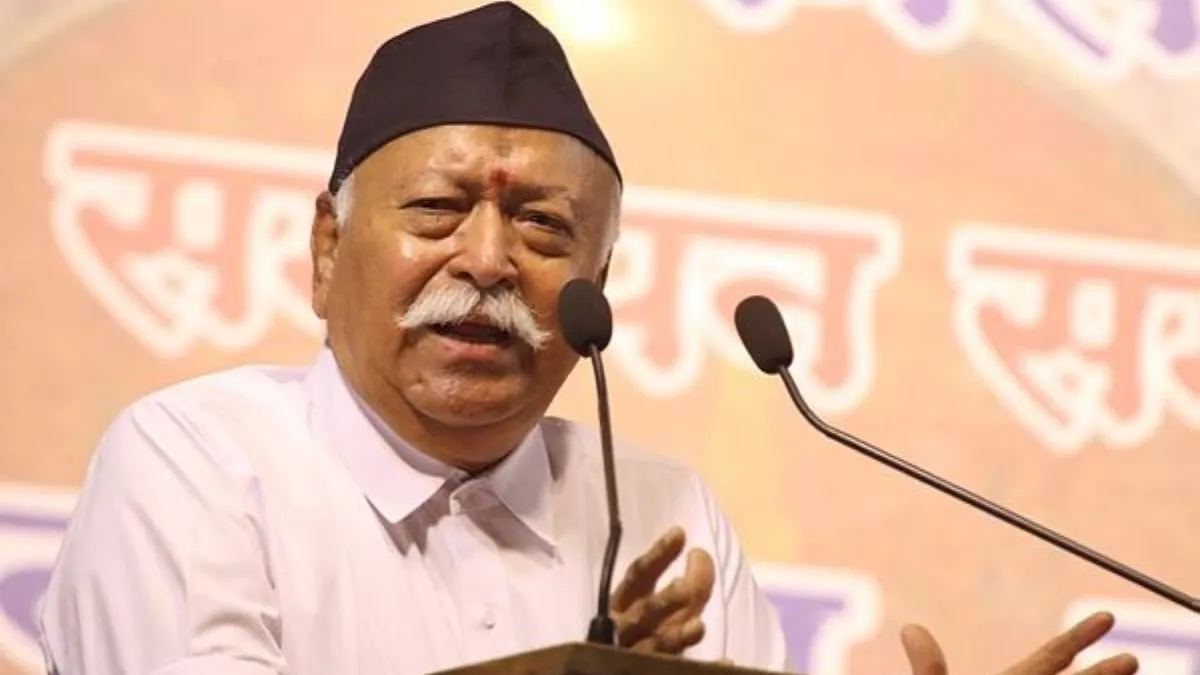
Bhagwat proposes but will Muslims dispose?

RSS-Chief-Mohan-Bhagwat.jpg.webp

Vinod Kumar Shukla

Delhi : Consistent attempts have been made to intimidate activists and supporters of the Rashtriya Swayamsevak Sangh (RSS), which is completing 100 years of its formation this Vijayadashami i.e. October 2, 2025, for its purported boycott of Quit India Movement in 1942. Second Sarsanghchalak of the RSS M S Golwalkar is questioned on the issue. People have started quoting present Sarsanghchalak Mohan Bhagwat for his comment that there is no need to search for Shivlinga everywhere. All such cases in point are simply to tell RSS Swayamsevakthat there is a moral threshold for them fixed by their chiefs that they are not supposed to cross which means what Bhagwat said on the issue of temples was the last word. The RSS workers abide by them too. In the case of Mohan Bhagwat, the message was that RSS workers must stop contesting cases of repurposed temples after the SC decision on Ram Temple.

Let’s try to analyse issues raised here one by one? Did the RSS stop its workers from joining the Quit India movement? No, on the contrary RSS participation in the Quit India movement proved to be the proverbial last straw for the British rulers. In August that year, in Chimur and Ashti, RSS cadre dominated processions led by the Congress. They faced severest repression and some of them were sentenced life term while some others were even hanged.

There are various confidential reports of intelligence agencies preserved in national archives naming several RSS activists who were arrested for participating in Quit India movement and were sentenced jail terms by the British. They were brutally tortured by the British police. Around a dozen Swayamsevak were shot dead by police. Nagar Pramukh of Ramtek near Nagpur, Ramakant Deshpande was sentenced to death for participating in Quit India movement, however, he was later released. Swayamsevak participated throughout the country in the freedom movement. They sustained injuries in police firing and lathi charge. The RSS made its presence felt throughout the country in such agitations. So, this is wrong to say that RSS Swayamsevak did not participate in the Quit India movement rather the instruction was that RSS as an organisation would not participate but its workers were allowed to join Quit India agitation. The then RSS chief Golwalkar did not allow the organisation to participate in the Quit India movement simply because he wanted to avoid giving the British government an excuse to ban the RSS. He wanted to remain focused for the cause that the RSS was formed for.

The second thing is after Bhagwat’s assertion that Hindus must not look for Shivlinga everywhere was portrayed as to shun their claim over repurposed sites like Kashi Vishwanath and Eidgah at Katra Keshavdev in Mathura. The RSS workers were sulking when they were reminded of Bhagwat’s statement. However, such statements are selectively used. The claim that there are many books suggesting the number of repurposed structures around 40000 in India. The idea of the RSS has always been clear that it would not join or initiate any movement as the case of Ram Janmabhoomi has been. Bhagwat’s recent assertion that the RSS workers can join Kashi and Mathura movement has two meanings: One the RSS is not going to start any movement for Kashi and Mathura as it did in the case of Ram Janmabhoomi in Ayodhya; Second its workers are free to participate in the liberation movement of Kashi and Mathura on personal capacity. Two meanings can also be drawn out of it that as the RSS is accused of boycotting Quit India by the Congress and others and by terming it pro-British, not participating in Kashi and Mathura movement may be termed as compromising the cause of Hindus for Muslims in future interpretations. This is an absolutely laughable argument by all counts. There is a parallel between Quit India assertion and Kashi and Mathura but since the RSS doesn’t respond to every criticism rather swallow everything down its throat and let go every onslaught on the organisation and moves on with its stated objective.

The other aspect of Mohan Bhagwat allowing Swayamsevak to participate in the liberation movement of Kashi and Mathura is that there are some plans to negotiate these issues with Muslims. Apparently, Mohan Bhagwat’s meetings with Imams in September 2022 and July 2025 from across the country may be seen as an attempt to reach some kind of amicable solutions on the vexed issue between Hindus and Muslims. However, his meetings with Jamiat Ulama e Hind chief Arshad Madni in 2019 and July 2025 did not break any ice with him towards reaching out a consensus rather his visceral hatred for the RSS and tirade continued when he held RSS responsible for the Assam government’s decision of evicting illegal encroachments in Assam. The RSS attempt to placate radical Sunni organisation proved futile and the organisation always wanted to solve the issue the way it wanted and negotiations always failed for forcing only Hindus to compromise. People can recall that Jamiat Ulama e Hind promised that it would accept Ram Temple decision but after the verdict they retracted and went up to filing review petition.

This is the same strategy that Muslims adopted in the pre-partition era to demand or negotiate for more than what they deserved. Here in this case the rigidity of Muslims and flexibility of Hindus making the RSS chief to come up with a proposal for Muslims to hand over just two sacred places belonging to the community – Kashi Vishwanath and Katra Keshavdev sunning their claim over around 40,000 other repurposed temples including Harihar Temple in Sambhal, Saraswati Temple in Dhar, Atala Devi temple in Jaunpur and 27 Hindu and Jain temples in the Qutub Minar premises besides many other across the country.

This may prove to be a watershed movement in Hindu-Muslim relations not only in India but globally as there is not a single example where any such compromise has been worked out. Moreover, Ram Temple is the only example where the other community has been able to reclaim its place of worship by legal means but the community and its leaders have still not accepted the Supreme Court judgment. Taking the matter even further when the demand for freeing Ram Janmabhoomi started, Hindu religious groups demanded for three temples – Ayodhya, Kashi and Mathura. So much so that BJP leader Lal Krishna Advani made an offer that if Muslims agree to the shifting of the Babri mosque in Ayodhya, he would persuade the VHP to renounce claims to the Krishna Janmabhoomi Temple at Mathura and the Vishvanatha Temple at Varanasi.

But the offer was not honoured by Muslims, so the Hindus started legal battles to claim all repurposed Hindu temples that Sita Ram Goyal lists in his book – ‘Hindu Temples What Happened to Them’ that claims to be around 2000. However, various other sources claim it to be as many as 40,000. Forget about handing over three Hindu temples, the community is not ready to let the character of these structures be ascertained on court orders. The case of Krishna Janmabhoomi is such that it doesn’t come under Places of Worship Act 1995 whose constitutionality is challenged. But the matter is unnecessarily taken to one court to another to linger the matter. For Hindu litigants this is certainly not a good example of peace and brotherhood. Attempts are being made to drag the matter as much as possible mocking the judicial system in India.

The way surveys allowed by the court on November 24, 2024 were deliberately disrupted by the mob which was assisted by outsiders as the judicial committee tells in its report. The only solution to the problem seems to be to accept the offer made by RSS chief because if the community misses the opportunity, it would only lead to tension, violence and enmity between Hindu-Muslim which in the past witnessed loss of lives as well. The RSS chief conceded that Swayamsevak wanted these three temples despite his statement that Hindus must stop looking for Shivling everywhere and he was forced to revisit his decision. If the matter goes to court and Hindus get any other temple with the help of court, no one will be able to stop them from claiming all disputed temples. Muslim will forfeit the right to negotiate later on. So, the ball is in the court of Muslims to let peace and fraternity be the order of the day in the country.

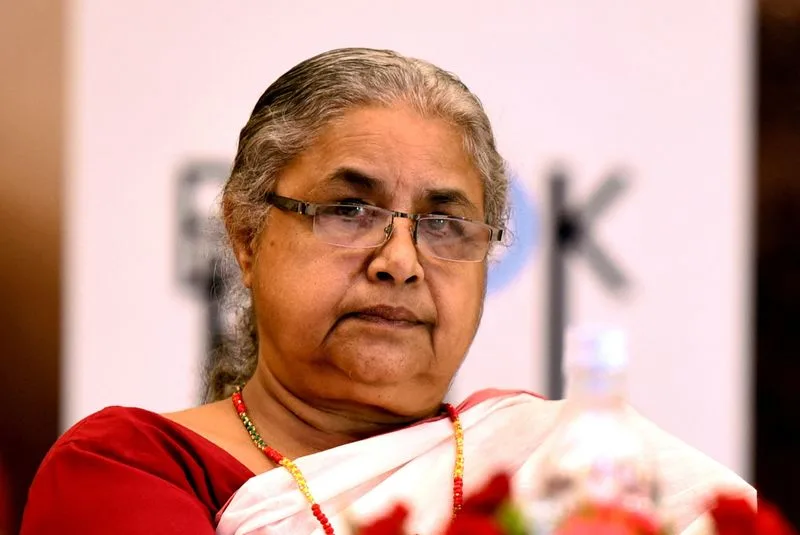
Nepal looks forward with interim premier Sushila Karki

0cd0cd3ba249b18890e2488a06959db1.webp

Nava Thakuria

Kathmandu: Nepal, sandwiched between India and Tibet (China), has returned to normalcy after two days of political unrest, where the young people hit the streets of Kathmandu and other important urban localities with various demands including accountability to the government. The Himalayan nation with over 30 million Nepali people remained under the control of the government armed forces and an interim regime got shaped in the evening hours of l2 September 2025. Nepal’s first woman chief justice of the Supreme Court, Sushila Karki was sworn in as the interim Prime Minister, where President Ramchandra Paudel administered the oath in the presence of many dignitaries. An alumna of Banaras Hindu University in India, Ms Sushila gets the primary responsibility to conduct national elections within six months.

Earlier, President Paudel and Nepali Army chief General Ashok Raj Sigdel appealed to the citizens to ignore all kinds of misleading and false information amid the turmoil. Announcing the acceptance of Prime Minister KP Sharma Oli’s resignation, the octogenarian head of the state expected everyone’s support to amicably resolve the crisis. Meanwhile, Rajyalaxmi Chitrakar, wife of ex-premier Jhalanath Khanal, who was widely rumoured as burnt alive, is currently recovering in the hospital. The media reports suggested that the protesters set their residence in Kathmandu on fire while she was inside. Rajyalaxmi was even reported succumbing to her burn injuries.

Many ministers in the Oli-government resigned and left the country fearing the heat of angry agitators. However, the ousted premier is understood to be inside Nepal. Nepal’s legendary Communist leader and former premier Puspa Kamal Dahal (Prachanda) also continues to be in Kathmandu. Meanwhile, the country’s interior minister Ramesh Lekhak resigned on 8 September accepting moral responsibility for 19 unarmed people, mostly youth agitators, killed in police firing. They came out against the government’s sweeping ban on a number of social media platforms like facebook, instagram, whatsapp, youtube, snapchat, pinterest, reddit, linkedin, twitter(x), etc.

Initially peaceful in nature, the demonstration soon turned violent, following which the police resorted to brutal crackdown leaving over one hundred injured. The police actions flared up the situation and the next day thousands hit the streets of Kathmandu along with Pokhara, Biratnagar, Bharatpur, Butwal, Birgunj, etc. Later the agitating young Nepalis added more demands to prevent corruption in high places and deliver better governance in the south Asian country. The unprecedented crisis broke out on 9 September as hundreds of thousands of demonstrators gathered in public places and started ransacking government buildings including the Parliament, Supreme Court, ministers’ office & residences as well as many political party offices.

Taking advantage of the situation, anti-social elements even helped a large number of jail-inmates to escape. Finally the Army was deployed and the situation came under control. The two-day violence snatched away the lives of over 50 people with over a thousand injured. The armed forces imposed nationwide restrictions on public movements particularly during the night hours. Some unpleasant visuals surfaced from the birthplace of Lord Buddha, where it was seen some angry dissenters physically abused a number of individuals including deputy premier Bishnu Prasad Paudel, foreign minister Arzu Rana Deuba, former premier Sher Bahadur Deuba along with his wife, etc.

The aggressive protesters even did not spare the media houses, as many targeted mainstream media groups like Kantipur (which publishes The Kathmandu Post, Nepalese daily Kantipur and nurtures Kantipur news channel) and Annapurna Media Network. Moreover, Kantipur television scribe Shyam Shrestha, Naya Patrika photojournalist Dipendra Dhungana, Nepal Press photographer Umesh Karki, Desh Sanchar photojournalist Barsha Shaha and independent media worker Shambhu Dangal were injured while covering the turmoil. Two visiting Indian journalists also faced intimidation, while reporting from the ground, during the turmoil.

Septuagenarian Oli, who led the Communist Party of Nepal (Unified Marxist-Leninist) government (with support from Nepali Congress), came to power for the fourth time upholding proximity to Beijing and very often he used to make anti-India statements. However, Indian Prime Minister Narendra Modi expressed his concern over turmoil in the northern neighbor with no delay. Terming the violence in Nepal as heart-rending, Modi condoled the demise of many young people in the conflict. Soon after Ms Sushila’s elevation, the saffron leader commented that India remains fully committed to the peace, progress, and prosperity of the people of Nepal.

JLF Colorado 2025: Bridging Borders Through Literature and Ideas in the Heart of the Rockies

2-15.jpeg

Boulder, Colorado – As the crisp autumn air settles over the foothills of the Rocky Mountains, Boulder is poised to once again become a global hub for literary discourse. The 11th edition of the Jaipur Literature Festival (JLF) Colorado, set for September 13–14, 2025, promises to weave together the threads of stories, culture, and innovation from around the world. Produced by the renowned Teamwork Arts and presented in association with the Boulder Public Library and the City of Boulder, this sister festival to the iconic Jaipur Literature Festival in India continues its tradition of fostering inclusive conversations. With generous support from the Junta de Castilla y León as the Region Partner, JLF Colorado 2025 will feature an eclectic lineup of sessions that delve into queerness, mathematics, feminism, and the art of displacement, drawing writers, thinkers, and changemakers to the Boulder Public Library.

The Jaipur Literature Festival, often hailed as the “greatest literary show on Earth,” originated in 2006 in the vibrant Pink City of Jaipur, Rajasthan, India. Co-founded by acclaimed authors Namita Gokhale and historian William Dalrymple, the inaugural event was a modest affair, attracting just about 100 attendees to the historic Diggi Palace. What began as an experiment in celebrating books and ideas has since blossomed into a cultural phenomenon, drawing over 500,000 visitors annually to its five-day extravaganza. Organized by Teamwork Arts in partnership with the Jaipur Virasat Foundation, JLF Jaipur has grown exponentially, shifting venues in 2025 to the more expansive Hotel Clarks Amer to accommodate its scale. The festival’s democratic ethos—no entry fees for general attendance—has made it accessible to all, turning it into a melting pot of over 25 languages, 20 countries, and diverse voices from Nobel laureates to emerging poets.
At its core, JLF Jaipur embodies the power of words to transcend boundaries. Sessions span literature, poetry, music, politics, environment, film, theatre, history, and culture, often sparking heated debates and profound reflections. Past editions have featured luminaries like Salman Rushdie, Oprah Winfrey, the Dalai Lama, and Booker Prize winners such as Kiran Desai. The 2018 festival alone boasted over 380 participants representing 20 international and 15 Indian languages, while the 2024 edition reached 35 million viewers through its digital platform amid the COVID-19 challenges. Controversies have not been absent— in 2012, authors like Hari Kunzru read from Salman Rushdie’s banned The Satanic Verses, leading to police involvement—but these moments underscore JLF’s commitment to free expression. As Dalrymple noted in a 2020 reflection, the festival has made literature “aspirational,” pulling books from dusty shelves into public squares and inspiring a new generation of readers across South Asia and beyond.

Teamwork Arts, the powerhouse behind JLF, has been crafting cultural experiences for over 30 years. Founded as India’s pioneering arts company, it produces more than 33 festivals in 45 cities across 19 countries, blending performing arts, visual arts, literature, and knowledge-sharing. Under Managing Director Sanjoy K. Roy, Teamwork has taken Indian talents global while importing international voices to India. From the Mahindra Kabira Festival in Varanasi to the Voices of Faith in London, their portfolio emphasizes empathy, innovation, and heritage. JLF’s international editions, including those in the US, UK, Spain, the Maldives, Australia, and the Middle East, seamlessly merge South Asia’s multilingual traditions with local essences. In the US alone, JLF graces five cities: New York, Houston, Boulder (Colorado), Seattle, and North Carolina. These offshoots, born from the mothership’s indomitable spirit, adapted resiliently during the pandemic with virtual formats like “JLF Brave New World,” amassing millions of views.
JLF Colorado, launched in 2015, captures this essence in Boulder’s progressive, community-oriented setting. Hosted at the Boulder Public Library (1001 Arapahoe Ave.), the free, open-to-all event has become a staple since its inception, blending the Rockies’ natural beauty with intellectual fervor. Pre-registration is encouraged via Eventbrite to manage crowds, but walk-ins are welcome for one or all sessions. Morning music performances set an invigorating tone, often featuring Indian classical influences, while afternoons buzz with panel discussions, book signings, and provocative dialogues. Over the years, it has hosted over 50 speakers per edition, exploring themes like gender equity, migration, spirituality, and peacebuilding. Partnerships with local entities—the Boulder Arts Commission, National Endowment for the Arts, and Community Foundation of Boulder County—ensure its sustainability, while donations from “Friends of the Festival” support production costs.

This year’s 11th edition builds on that legacy, promising a “vibrant meeting ground where Boulder’s dynamic spirit converges with the world’s literary and cultural voices,” as Roy stated in the announcement. The festival’s highlighted sessions showcase its interdisciplinary flair. Kicking off the intellectual feast is Great Black Hope, where writer and critic Rob Franklin engages with academic Pardis Mahdavi on his debut novel. This gripping narrative weaves queerness, race, class, and grief against the pulsating backdrop of New York City’s nightlife, offering a raw exploration of identity in urban America. Franklin’s work, praised for its unflinching honesty, resonates with contemporary discussions on intersectionality, making it a timely addition to JLF’s roster of diverse narratives.
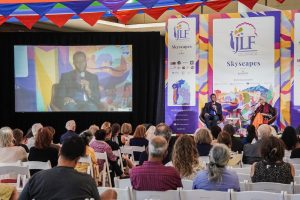
Delving into the intersections of science and creativity, Blueprints: How Mathematics Shapes Creativity features Oxford mathematician Marcus du Sautoy in conversation with Roy himself. Du Sautoy, a celebrated communicator of complex ideas, unpacks how mathematical concepts like symmetry, fractals, and prime numbers have fueled literary, musical, and artistic innovations. Conversely, he argues, creative pursuits can illuminate mathematical mysteries. Drawing from his book The Creativity Code, du Sautoy’s session promises to bridge the often-perceived divide between “left-brain” logic and “right-brain” imagination, inspiring attendees— from STEM enthusiasts to artists—to see patterns in everyday life. This dialogue echoes JLF’s broader mission to democratize knowledge, much like how the main Jaipur festival has hosted sessions on artificial intelligence and speculative fiction.

Gender and evolution take center stage in Ideas of Eve: Evolutionary Feminism, where researcher Cat Bohannon joins academic and novelist Sonora Jha, moderated by historian Patricia Limerick. Bohannon, author of the bestselling Eve: How the Female Body Drove 200 Million Years of Human Evolution, challenges traditional narratives by centering women’s voices and bodies in cultural and scientific histories. Jha, known for her incisive novels on identity and power, adds a literary lens, while Limerick, a pioneer in Western American history, grounds the discussion in regional contexts. Together, they examine how evolutionary insights reshape gender politics in literature, fostering a conversation on resilience and reinvention. This session aligns with JLF’s emphasis on inclusivity, reflecting themes from past editions like banned books and patriarchy.

Rounding out the marquee lineup is Pulitzer Prize-winning novelist Andrew Sean Greer, in conversation with Arsen Kashkashian on Less Is Lost: The Art of Being Out of Place. The sequel to Greer’s 2017 Pulitzer-winning Less, this humorous yet poignant tale follows protagonist Arthur Less on a cross-country American odyssey, grappling with loss, love, and displacement. Greer’s wit and empathy have earned him comparisons to Kafka and Kerouac, and his session will explore the universal discomfort of feeling “out of place” in an increasingly transient world. Kashkashian, a seasoned literary curator, will draw out Greer’s insights on writing through personal and global upheavals.

Beyond these highlights, JLF Colorado 2025 will feature additional sessions on peacebuilding with speakers from Nigeria, Kenya, and Ethiopia; body-mind health; and banned books, ensuring a broad spectrum of topics. Live music every morning, book stalls, and networking opportunities will create an immersive atmosphere, embodying Roy’s vision: “JLF Colorado fosters dialogue that bridges differences, celebrates diversity, and inspires audiences to reflect, connect, and imagine new possibilities.” The Boulder Public Library’s commitment to community and inclusivity amplifies this, transforming the venue into a “global stage” nestled in Colorado’s progressive landscape.

The recent 18th edition of JLF Jaipur in January 2025 was a triumph, captivating on-ground and online audiences with stellar speakers and reaffirming literature’s enduring power. As the caravan of ideas travels onward, JLF USA editions like Colorado continue this legacy, adapting to local vibes while honoring South Asian roots. In Houston, New York, Seattle, and North Carolina, similar events in association with consulates, Asia Society, and museums ignite passions for literature, geopolitics, art, and music. Through virtual innovations during COVID, JLF reached millions, proving its adaptability—from Art Matters empowering Indian artists to Be Inspired fast-tracking scientific narratives.

Teamwork Arts’ broader oeuvre underscores JLF’s impact. Their 2024 additions, like the Jaigarh Heritage Festival celebrating Jaipur’s regal past and Voices of Faith promoting empathy, highlight a holistic approach to culture. With over 2,000 speakers hosted globally and a digital footprint exceeding 35 million views in 2024, Teamwork has made JLF a beacon for changemakers. Roy, an arts entrepreneur honored with degrees from institutions like the University of York, emphasizes collective understanding in a fractured world.

As Boulder gears up for September 13–14, JLF Colorado 2025 invites all to partake in this feast of ideas. Whether you’re a voracious reader, aspiring writer, or curious thinker, the festival offers free entry to sessions that challenge, entertain, and unite. In an era of division, events like JLF remind us that stories are bridges—across borders, backgrounds, and beliefs. For tickets and full programs, visit jlflitfest.org/colorado. The 2026 JLF Jaipur, from January 15–19, awaits, but for now, Colorado’s edition promises to light the path.

scroll to top