

The Rise of Reels and the Concerning Trend of Oversexualized Content Among Indian Instagram Influencers

2-4-5.png

Delhi: In the wake of TikTok’s ban in India in 2020, Instagram Reels has emerged as the dominant platform for short-form video content, captivating millions with its creative potential. Young women, in particular, have embraced Reels to showcase their talents, from dance and fashion to lifestyle and comedy. However, a troubling trend has surfaced: an increasing number of influencers, particularly young women, are resorting to posting videos in minimal clothing or with suggestive themes to garner likes, views, and followers. This phenomenon, while boosting engagement metrics, raises serious concerns about the normalization of sexualized content and its impact on societal perceptions of relationships, especially among impressionable teenagers. As this trend grows, so does the need for a critical examination of its implications and stricter regulation to protect vulnerable audiences.The Allure of Reels and the Race for AttentionInstagram Reels, with its algorithm favoring high-engagement content, has become a powerful tool for aspiring influencers in India, where the platform boasts over 300 million users. The format’s short, visually appealing videos allow creators to reach vast audiences quickly. However, the pressure to stand out in a crowded digital space has led some influencers to adopt provocative strategies.

Videos featuring minimal clothing, suggestive dances, or content that pushes cultural boundaries have proven to attract significant attention, often going viral with millions of views. For instance, a reel by a fashion influencer showcasing an outfit from a local market can amass millions of views when paired with revealing attire, as seen in posts garnering up to 19.6 million views and 1 million engagements.While freedom of expression is a cornerstone of social media, the reliance on such content raises ethical questions. Influencers like Kajal Pandey and Sofia Ansari, known for their bold and sometimes controversial posts, have faced backlash for crossing the line into vulgarity. Critics argue that their content, which often includes explicit references to relationships or body exposure, prioritizes shock value over substance, potentially normalizing oversexualization for younger audiences.The Impact on Teenagers and Societal NormsTeenagers, who form a significant portion of Instagram’s user base in India, are particularly vulnerable to the influence of such content. With 726 young adults surveyed in a 2022 study, researchers found a significant correlation between Instagram use and issues like social comparison, colorism, and mental health challenges. The exposure to sexualized content can exacerbate these issues, fostering unrealistic standards of beauty and relationships. For impressionable teens, the constant stream of provocative reels may create pressure to emulate similar behaviors to gain social validation, potentially distorting their understanding of healthy relationships.


 

The portrayal of relationships in these reels often emphasizes superficial or sexualized dynamics, sidelining values like trust, respect, and emotional connection. For example, content creators like the “Santoor Mom,” who produce reels with inappropriate themes alongside family members, have been criticized for exploiting sacred familial bonds for views. Such actions not only erode cultural values but also send confusing messages to young audiences about what constitutes acceptable behavior in relationships.

Moreover, the lack of clear legal guidelines on what constitutes “obscene” content in India complicates the issue. While Indian courts rely on vague definitions of obscenity, social media platforms like Instagram have been slow to regulate suggestive content effectively. A notable case in Sambhal, Uttar Pradesh, saw influencers Mehak, Pari, Hina, and Jarrar Alam arrested in July 2025 for posting reels with “obscene language, abuses, and gestures.” The public outcry and subsequent police action highlight growing societal concern over such content, yet the absence of a robust legal framework leaves platforms and creators in a gray area.The Role of Social Media Platforms and RegulationThe responsibility to curb this trend lies not only with influencers but also with Instagram and regulatory bodies. In March 2024, the Ministry of Information and Broadcasting blocked 18 OTT platforms and 57 associated social media accounts for obscene content, signaling a push for stricter oversight. However, no clear guidelines have been established for social media influencers, leaving platforms to self-regulate. Instagram’s community guidelines prohibit explicit content, but enforcement is inconsistent, allowing suggestive reels to proliferate. The case of “Babydoll Archi,” an AI-generated Instagram account using a real woman’s likeness for erotic content, underscores the platform’s challenges in policing fake or harmful profiles.Social media platforms must adopt proactive measures, such as improved content moderation algorithms and stricter penalties for accounts that repeatedly violate guidelines. Additionally, the Indian government could introduce clearer regulations defining acceptable content, balancing freedom of expression with the need to protect young users. Establishing a legal framework would empower platforms to remove objectionable content swiftly and deter influencers from chasing views through provocative means.A Call for Responsible Content CreationInfluencers, as role models for millions, have a social responsibility to create content that uplifts rather than exploits.


While some argue that bold content challenges conservative norms and fosters open conversations about topics like women’s health or relationships, the line between empowerment and vulgarity is often blurred. Influencers like Seema Anand, who uses her platform to educate about sexual wellness while maintaining respect for cultural sensitivities, demonstrate that meaningful content can engage without resorting to shock tactics.Teenagers, parents, and educators also have a role to play. Media literacy programs in schools can equip young people to critically evaluate the content they consume, distinguishing between entertainment and harmful stereotypes. Parents should engage in open dialogues with their children about the realities of social media, emphasizing the importance of healthy relationships built on mutual respect rather than superficial appeal.

 

The rise of Instagram Reels in India has unleashed unprecedented creative opportunities but also exposed a darker side of influencer culture. The trend of posting sexualized content to chase likes and views risks normalizing harmful perceptions of relationships, particularly among teenagers. While influencers like Kajal Pandey and Sofia Ansari push boundaries, their approach often prioritizes attention over responsibility, prompting backlash and legal action. As society grapples with these challenges, a collective effort is needed—stricter platform regulations, clearer legal guidelines, and responsible content creation—to ensure that social media fosters positive values rather than exploiting vulnerabilities. For the sake of India’s youth, it’s time to rethink the pursuit of viral fame and prioritize content that educates, inspires, and respects the cultural fabric of the nation.
The “Vote Chor” Controversy: A Conspiracy to Undermine India’s Electoral Integrity?

2-33.jpeg

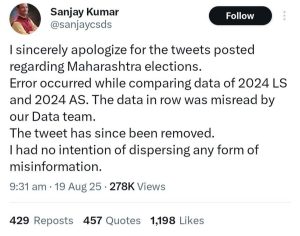
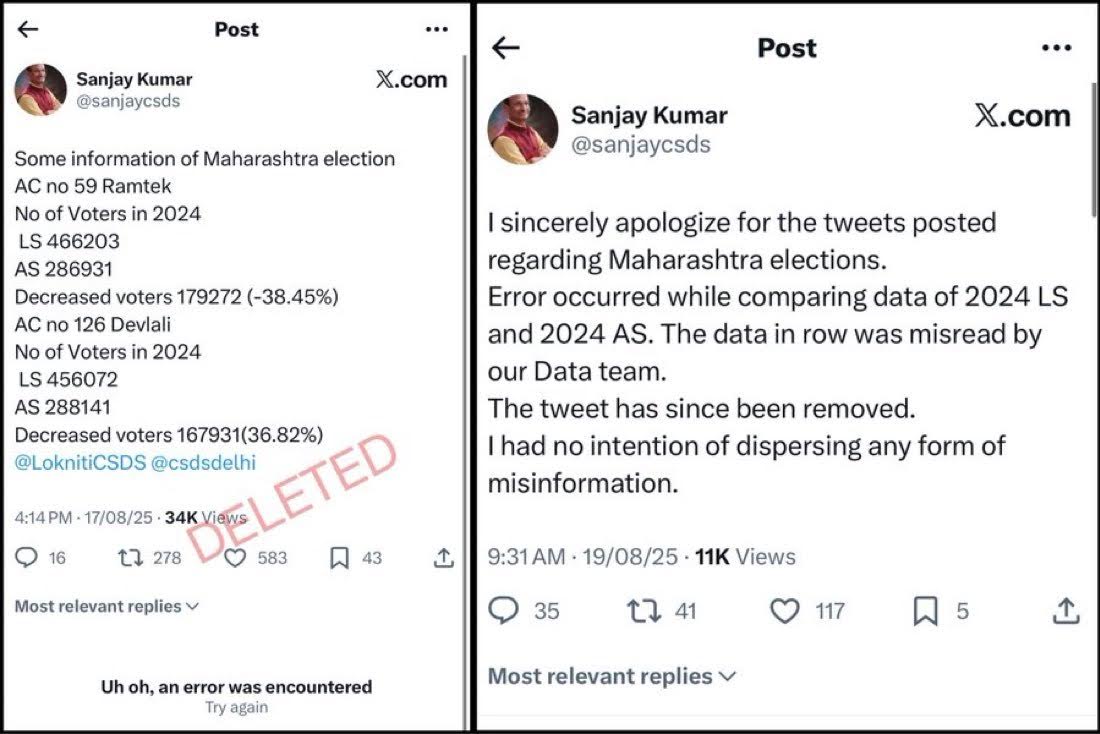
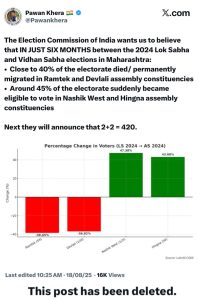
In recent weeks, India’s political landscape has been rocked by allegations of electoral malpractice, with opposition leaders, including Congress’s Rahul Gandhi and election analyst Sanjay Kumar, accusing the Election Commission of India (ECI) of manipulating voter lists and enabling “vote theft.” These claims, amplified by slogans like “vote chor” in Parliament premises, have sparked a fierce debate about the credibility of one of India’s most revered constitutional institutions. The ECI, led by Chief Election Commissioner Gyanesh Kumar, has categorically dismissed these allegations as baseless, demanding proof or a public apology within seven days. The absence of evidence and the subsequent deletion of related posts by figures like Congress spokesperson Pawan Khera raise critical questions: Is this a genuine mistake or a calculated conspiracy to erode public trust in the ECI? Should those involved face legal consequences for tarnishing a constitutional body’s reputation?
The controversy began when Rahul Gandhi and other opposition leaders alleged that the ECI was complicit in “vote theft” through fraudulent voter lists, particularly in the context of recent elections. Sanjay Kumar, an election analyst, echoed these claims, lending apparent credibility to the accusations. However, the ECI’s swift rebuttal, backed by Chief Election Commissioner Gyanesh Kumar’s demand for an affidavit or apology, has exposed the fragility of these allegations. Posts on X reveal the intensity of the backlash, with users decrying the opposition’s claims as “baseless” and accusing them of undermining India’s democracy after electoral defeats. The deletion of a tweet by Pawan Khera further fuels suspicion, suggesting an acknowledgment of error—or perhaps a strategic retreat. Meanwhile, Congress leader Supriya Shrinate’s silence and the continued “vote chor” sloganeering by others in the opposition signal a refusal to back down, raising concerns about their motives.

The ECI is the backbone of India’s democratic process, ensuring free and fair elections in a nation of over 1.4 billion people. Tarnishing its credibility without evidence is not a trivial matter. The opposition’s allegations risk sowing distrust among voters, potentially destabilizing the democratic framework. The question arises: who is responsible for this erosion of trust? Is it a spontaneous mistake born of political frustration, or a deliberate attempt to weaken a constitutional institution? The coordinated nature of the accusations, coupled with the lack of substantiation, points to the latter. Sanjay Kumar’s role as an analyst adds a layer of complexity—his expertise should demand rigorous evidence, yet his claims appear to align suspiciously with the opposition’s narrative. This raises the possibility of a orchestrated effort to challenge the ECI’s legitimacy, perhaps as a tactic to rally supporters after electoral setbacks.

The demand for accountability is justified. First, commit a scandal; then, issue an apology—this pattern has become all too common in Indian politics. But apologies alone cannot undo the damage caused by reckless allegations. The opposition’s “vote chor” rhetoric is being weaponized to question the integrity of the electoral process, and the absence of concrete evidence suggests a deeper agenda. Booking Rahul Gandhi and Sanjay Kumar for defamation or incitement could serve as a deterrent, signaling that constitutional institutions are not punching bags for political point-scoring. The ECI’s call for proof is a litmus test: if the opposition cannot substantiate their claims, they must face consequences for their actions. Supriya Shrinate’s silence and Pawan Khera’s deleted tweet only deepen the perception of guilt or backtracking, further eroding their credibility.

However, we must also consider the broader context. Political rhetoric often thrives on hyperbole, especially in a polarized environment. The opposition may argue that their allegations stem from genuine concerns about electoral transparency. Yet, without evidence, such claims are irresponsible at best and malicious at worst. The ECI has maintained its independence through decades of complex elections, and undermining it without cause threatens the democratic fabric. If this is indeed a conspiracy, its aim appears clear: to create distrust in the ECI and destabilize public confidence in governance.

In conclusion, the “vote chor” controversy is not a mere mistake but a dangerous precedent. Rahul Gandhi, Sanjay Kumar, and their allies must either provide irrefutable evidence or issue unequivocal apologies. Legal action may be warranted to protect the ECI’s sanctity. The opposition’s actions risk long-term damage to India’s democratic institutions, and the responsibility lies squarely with those who wield accusations as weapons without proof. The nation deserves better than slogans that sow division—democracy demands accountability, not conspiracies.

Ensures responsible use of technology, strengthens consumer protection and national security

images-7.jpeg

Delhi : Over the past 11 years, digital technologies have brought a major change in our lives. Digital India, Digital Public Infrastructure, UPI payment system, 5G connectivity, and the semiconductor ecosystem have together given a new identity to our country.

Under the visionary leadership of Prime Minister Shri Narendra Modi, the use of technology across sectors has delivered immense benefits to citizens. At the same time, new risks have emerged, especially in the digital space.

It is therefore equally important to ensure that society is protected from potential harms of technology misuse. With this thought process, the Government has brought forward the Promotion and Regulation of Online Gaming Bill, 2025.

This Bill encourages e-sports and online social games while prohibiting harmful online money gaming services, advertisements, and financial transactions related to them. Bill also outlaws all online Betting and Gambling (Satta and Jua) activities – from Online Fantasy Sports to Online Gambling (like Poker, Rummy and other Card games) and Online Lotteries.This is to protect our youth from predatory online Real Money Gaming apps – that manipulate them through misleading ‘monetary return promises’ into compulsive and addictive playing, that leaves entire families in financial distress.

The Government believes that the harms of addiction, financial losses, and even extreme consequences such as suicides associated with online money gaming can be prevented by prohibition of such activities. Additionally, online money gaming platforms are often misused for financial fraud, money laundering, terror financing and messaging activities that compromise national security.

Furthermore, this aligns the national laws for thedigital domain with the existing lawsfor corresponding activities in the physical world, wherein betting and gambling are restricted or punishable– such as in the Bharatiya Nyaya Sanhita, 2023 as well as various State government legislations.

For the promotion of e-sports, the Ministry of Youth Affairs & Sportswill establish a dedicated framework. For online social games, the Ministry of Electronics & IT (MeitY) and the Ministry of Information & Broadcasting (MIB) will extend support to online games that foster educational &cultural values, skill development and social engagement.

Thus, the Bill seeks to encourage the positive aspects of technology while protecting society from the adverse impacts of online money games.

Key Provisions of the Promotion and Regulation of Online Gaming Bill, 2025

Promotion and Recognition of e-ports

e-sports recognised as a legitimate form of competitive sport in India.
Ministry of Sports to frame guidelines and standards for conduct of e-sports events.
Establishment of training academies, research centres, and technology platforms for advancement of e-sports.
Incentive schemes, awareness campaigns and integration of e-sports into broader sports policy initiatives.

Promotion of Social and Educational Games

Central Government empowered to recognise, categorise, and register online social games.
Facilitation of platforms for development and distribution of safe, age-appropriate social and educational games.
Awareness programmes on the positive role of social games in recreation, skill-development and digital literacy.
Support for cultural and educational gaming content aligned with Indian values.

Prohibition of Harmful Online Money Games

Complete ban on offering, operating, or facilitating online money games, irrespective of whether based on skill, chance, or both.
Ban on advertising and promotion of money games across all forms of media.
Ban on financial transactions linked to online money games; banks and payment systems barred from processing such payments.
Empowerment to block access to unlawful gaming platforms under the Information Technology Act, 2000.

Establishment of an Online Gaming Authority

Central Government to establish a national-level Authorityor designate any existing Authority or Authorities or any agencyfor oversight.
Functions include:
Categorisation and registration of online games.
Determination of whether a game qualifies as a money game.
Handling complaints and grievances related to online games.
Authority to issue guidelines, orders, and codes of practice to ensure compliance.

Offences and Penalties

Offering or facilitating online money gaming: Imprisonment up to 3 years and/or fine up to ₹1 crore.
Advertising money games: Imprisonment up to 2 years and/or fine up to ₹50 lakh.
Financial transactions related to money games: Imprisonment up to 3 years and/or fine up to ₹1 crore.
Repeat offences attract enhanced penalties, including imprisonment of 3–5 years and fines up to ₹2 crore.
Offences under key sections to be cognizable and non-bailable.

Corporate and Institutional Liability

Companies and their officers held liable for offences under the Act, unless they prove due diligence.
Independent directors or non-executive directors not involved in decision-making are protected.

Powers of Investigation and Enforcement

Central Government may authorise officers to investigate, search, and seize digital or physical property linked to offences.
Officers empowered to enter, search, and arrest without warrant in certain cases of suspected offences.
Provisions of the Bharatiya Nagarik Suraksha Sanhita, 2023 apply to investigations under the Act.

Rule-Making Powers and Delegated Legislation

Central Government empowered to make rules for:
Promotion of e-sports and social gaming.
Recognition, Categorisation and registration of online games.
Powers and functioning of the Authority.
any other matter required or permitted to be prescribed under this Act.

Positive Impacts of the Bill

Boost to Creative Economy: Enhances India’s role in global gaming exports, employment and innovation.
Empowering Youth: Encourages constructive participation through e-sports and skill-based digital games.
Safe Digital Environment: Protects families from predatory online money gaming practices.
Global Leadership: Positions India as a leader in responsible gaming innovation and digital policy-making.
The Promotion and Regulation of Online Gaming Bill, 2025 strikes a balanced path—encouraging innovation and youth engagement through safe and positive online gaming, while firmly prohibiting harmful online money games.

It reflects the Government’s commitment to a safe, secure, and innovation-driven Digital India that boosts creativity, safeguards citizens, and strengthens national security.

संजय सिंह की अमर्यादित भाषा पर विवाद, आम आदमी पार्टी की साख पर सवाल

2-32.jpeg

नई दिल्ली: आम आदमी पार्टी (आप) के नेता और राज्यसभा सांसद संजय सिंह एक बार फिर अपनी विवादास्पद टिप्पणियों को लेकर चर्चा में हैं। उन्होंने एक सार्वजनिक मंच पर चुनाव आयोग जैसी संवैधानिक संस्था के प्रति अपमानजनक रवैये को दर्शाया। संजय ने कहा कि मुख्य चुनाव आयुक्त का नाम ज्ञानेश नहीं अज्ञानेश कुमार होना चाहिए। संजय यहां रूके नहीं, उन्हें यह भी कहा कि ज्ञानेश कुमार मुर्ख हैं या वे जानबुझकर मुर्ख बन रहे हैं।

उनके संबंध में यह भी कहा जाता है कि शुरुआती दिनों में वे सिनेमा हॉल में टिकट ब्लैक करने जैसे कार्यों में लिप्त थे। आज एक संवैधानिक संस्था के बारे में ऐसे व्यक्ति से अमर्यादित भाषा सुनना देश के लिए दुर्भाग्यपूर्ण माना जा रहा है।

संजय सिंह को आम आदमी पार्टी की खोज के रूप में जाना जाता है, लेकिन उनके इस व्यवहार ने पार्टी की छवि को धूमिल करने का काम किया है। राजनीतिक विश्लेषकों का मानना है कि अगर पार्टी में ऐसे ही नेता बने रहे, तो धीरे-धीरे पार्टी का पतन निश्चित है। जिसकी शुरुबात दिल्ली से हो चुकी है।

राज्यसभा में संजय की स्थिति पहले से ही कमजोर मानी जा रही है, और आने वाले समय में उनके लिए अपनी सीट बचाना मुश्किल हो सकता है। कई लोग यह भी अनुमान लगा रहे हैं कि क्या संजय सिंह राहुल गांधी की चापलूसी करके किसी जुगाड़ से फिर राज्यसभा में जगह बनाने की कोशिश कर रहे हैं, क्योंकि चुनाव जीतना उनके लिए असंभव-सा प्रतीत होता है।

संजय सिंह की यह टिप्पणी उस समय सामने आई है, जब आप पहले ही कई आंतरिक और बाहरी चुनौतियों से जूझ रही है। पार्टी के समर्थकों का कहना है कि यह उनके व्यक्तिगत विचार हैं, लेकिन आलोचकों का तर्क है कि एक सांसद के रूप में उनकी जिम्मेदारी है कि वे अपनी भाषा पर नियंत्रण रखें।

इस घटना ने एक बार फिर यह सवाल खड़ा कर दिया है कि क्या आप जैसी पार्टी, जो स्वच्छ राजनीति का दावा करती है, अपने नेताओं के व्यवहार को नियंत्रित करने में नाकाम हो रही है।

संजय सिंह के समर्थक उनकी बेबाकी को उनकी ताकत बताते हैं, लेकिन विपक्षी दल इसे उनकी अराजकता और अपरिपक्वता का प्रतीक मान रहे हैं।

scroll to top