दिल्ली में दुर्गा पूजा विसर्जन की समस्या का समाधान

unnamed-10.jpg

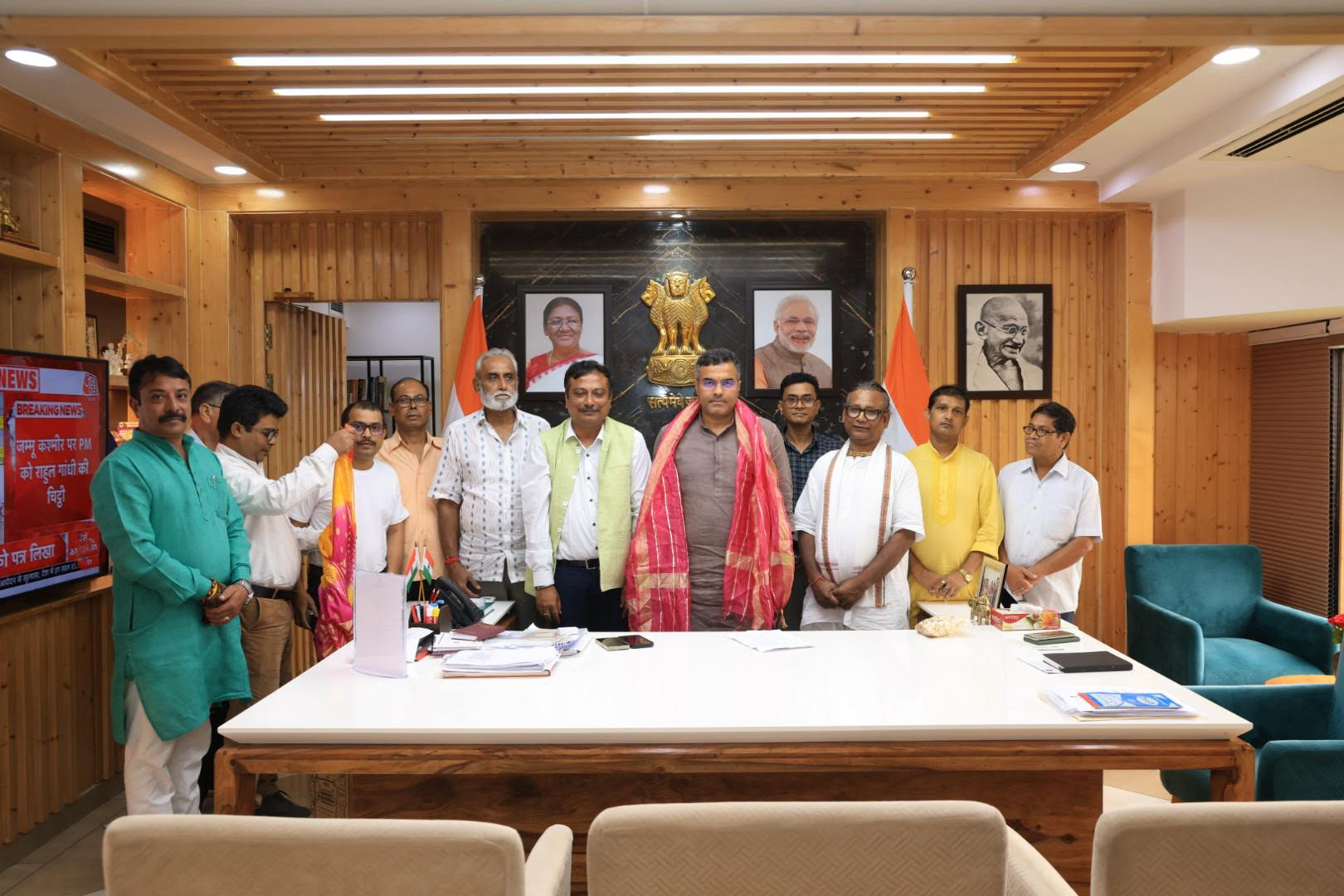
नई दिल्ली:  दिल्ली के बंगाली समाज ने दुर्गा पूजा विसर्जन से संबंधित समस्याओं को लेकर माननीय कैबिनेट मंत्री (PWD, विधायी मामले और जल)  साहिब सिंह वर्मा से मुलाकात की। भारतीय जनता पार्टी (बंगाली प्रकोष्ठ, दिल्ली प्रदेश) के सहसंयोजक अरुण मुखर्जी के नेतृत्व में एक शिष्टमंडल ने मंत्री जी को विसर्जन के दौरान आने वाली परेशानियों से अवगत कराया।

बंगाली समाज ने बताया कि विसर्जन की प्रक्रिया में लंबे समय से व्यवधान उत्पन्न हो रहे हैं, जो 27 साल पुरानी मांग का हिस्सा है। इस पर त्वरित कार्रवाई करते हुए मंत्री श्री साहिब सिंह वर्मा ने आश्वासन दिया कि आईटीओ के पास स्थित घाट पर माता दुर्गा की मूर्ति का विसर्जन सुनिश्चित किया जाएगा। उन्होंने कहा कि सरकार इस दिशा में सभी आवश्यक कदम उठाएगी।

इस मुलाकात में बंगाली समाज ने इस पहल के लिए मंत्री जी का हार्दिक आभार व्यक्त किया। अरुण मुखर्जी ने कहा, “यह बंगाली समाज के लिए एक ऐतिहासिक उपलब्धि है। हम माननीय मंत्री प्रवेश वर्मा  के प्रति आभारी हैं, जिनके प्रयासों से यह मांग पूरी हुई।” इस आश्वासन से दिल्ली के बंगाली समुदाय में उत्साह का माहौल है।

पटना के पारस अस्पताल में मिश्रा हत्याकांड पर रिपोर्ट: बिहार में कानून और व्यवस्था की बिगड़ती स्थिति का प्रतिबिंब

3-1-9.png

17 जुलाई, 2025 को गुरुवार के दिन, पटना के पारस अस्पताल में एक भयावह घटना घटी, जहां कुख्यात गैंगस्टर चंदन मिश्रा को दिनदहाड़े निर्ममता से गोली मार दी गई। अपराध के सीसीटीवी फुटेज में एक परिचित चेहरा सामने आया: तौसीफ बादशाह, एक उभरता हुआ अपराधी जिसके इस साहसी कृत्य ने एक बार फिर बिहार की बिगड़ती कानून और व्यवस्था की स्थिति को उजागर किया है। एक प्रतिष्ठित अस्पताल में इस तरह की जघन्य हत्या, जो बेशर्म आत्मविश्वास के साथ अंजाम दी गई, बिहार में एक खतरनाक प्रवृत्ति की पुनरावृत्ति को दर्शाती है—अपराधियों का महिमामंडन, जो 1990 के दशक के कुख्यात “जंगलराज” की याद दिलाता है। यह रिपोर्ट मिश्रा हत्याकांड के विवरण, नीतीश कुमार सरकार और बिहार पुलिस की विफलताओं की आलोचना, और सोशल मीडिया द्वारा प्रेरित अपराधी महिमामंडन के सामाजिक प्रभाव की जांच करती है।

मिश्रा हत्याकांड: कानून प्रवर्तन के लिए एक साहसी चुनौती

चंदन मिश्रा, जो मेडिकल पैरोल पर था, की हत्या पारस अस्पताल के आईसीयू में एक सुनियोजित ऑपरेशन था। तौसीफ बादशाह के नेतृत्व में पांच हमलावरों ने सुबह 7:00 से7:30 बजे के बीच दूसरी मंजिल के कमरा नंबर 209 में घुसकर मिश्रा पर कई राउंड गोलियां चलाईं और फिर आसानी से फरार हो गए। सीसीटीवी फुटेज में तौसीफ का बिना ढंका चेहरा दिखाई दिया, जिसमें कोई डर या हिचकिचाहट नहीं थी, जो एक सावधानीपूर्वक आयोजित अपराध की ओर इशारा करता है, जिसे समर्थकों के नेटवर्क ने समर्थन दिया। पटना के केंद्र में हुई इस घटना ने अपराधियों की हिम्मत को उजागर किया, जो बिना किसी डर के काम करते हैं और राज्य के प्रशासनिक और सुरक्षा तंत्र को चुनौती देते हैं।

यह तथ्य कि इतना बड़ा अपराध एक प्रतिष्ठित अस्पताल में हो सकता है, सुरक्षा में गंभीर खामियों को उजागर करता है। सशस्त्र हमलावर अस्पताल की सुरक्षा को भेदकर हत्या कर कैसे भाग निकले? पारस अस्पताल में प्रभावी सुरक्षा उपायों की अनुपस्थिति और पुलिस का त्वरित हस्तक्षेप न कर पाना बिहार की कानून प्रवर्तन प्रणाली में प्रणालीगत कमियों को दर्शाता है।

तौसीफ बादशाह: अपराधी महिमामंडन का नया चेहरा

शेखपुरा जिले का निवासी तौसीफ बादशाह बिहार के आपराधिक अंडरवर्ल्ड में एक कुख्यात चेहरा बनकर उभरा है। हत्या, उगाही, और आर्म्स एक्ट के उल्लंघन जैसे मामलों में उसका रिकॉर्ड है, और उसका गिरोह पश्चिम और मध्य बिहार के जिलों जैसे पटना, नालंदा, जहानाबाद, और नवादा में सक्रिय है। तौसीफ का आपराधिक साम्राज्य जमीन कब्जा, ठेकेदारी विवाद, और सुपारी हत्याओं पर फलता-फूलता है, जिसे सोशल मीडिया पर बढ़ती मौजूदगी से बल मिलता है जो उसके कृत्यों का महिमामंडन करती है। फेसबुक और व्हाट्सएप जैसे मंचों पर उसके समर्थक उसे “बादशाह” या “रियल हीरो” कहकर संबोधित करते हैं, जो 1990 के दशक में उत्तर प्रदेश के गैंगस्टर श्रीप्रकाश शुक्ल के महिमामंडन की याद दिलाता है।

अपराधियों का यह रोमांटिकरण बिहार के लिए नया नहीं है। 1990 के दशक में, मोहम्मद शहाबुद्दीन जैसे आंकड़ों को “बाहुबली” के रूप में उत्सव मनाया जाता था, उनके आपराधिक कारनामों को तापमान पत्रिका और इंडिया मोस्ट वांटेड जैसे टीवी शो के माध्यम से ग्लैमराइज़ किया जाता था। आज, मिश्रा की हत्या का तौसीफ द्वारा बिना मास्क के अंजाम देना, जिसे वीडियो में कैद किया गया और ऑनलाइन व्यापक रूप से प्रसारित किया गया, इस खतरनाक प्रवृत्ति को दर्शाता है। सोशल मीडिया इस महिमामंडन को बढ़ावा देता है, जिसमें पोस्टर, स्टोरी, और वीडियो गैंगस्टरों को मर्दाना प्रतीक के रूप में चित्रित करते हैं, जिससे ध्यान उनकी क्रूरता से हटकर उनकी कथित करिश्मा पर केंद्रित हो जाता है। यह घटना समाज के मूल्यों को और अधिक कमजोर करती है और युवाओं को इन आंकड़ों की नकल करने के लिए प्रेरित करती है।

सोशल मीडिया की अपराध को ग्लैमराइज़ करने में भूमिका

तौसीफ बादशाह की छवियों और वीडियो का सोशल मीडिया मंचों पर तेजी से फैलना एक परेशान करने वाली प्रवृत्ति को उजागर करता है: गैंग संस्कृति का ग्लैमराइज़ेशन। जिस तरह वेब सीरीज रंगबाज ने श्रीप्रकाश शुक्ल को सनसनीखेज बनाया, उसी तरह तौसीफ के कारनामों को “गैंगस्टर कंटेंट” के रूप में पैक किया जा रहा है, जो उन अनुयायियों को आकर्षित करता है जो उसके साहस की प्रशंसा करते हैं। यह डिजिटल महिमामंडन एक दुष्चक्र बनाता है, जो अपराधियों को प्रोत्साहित करता है और समाज को हिंसा के प्रति असंवेदनशील बनाता है। विशेष रूप से बिहार के सामाजिक-आर्थिक रूप से कमजोर क्षेत्रों में युवा तेजी से त्वरित धन और शक्ति के आकर्षण की ओर खींचे जा रहे हैं, जैसा कि आपराधिक गिरोहों में शामिल होने वाले युवाओं की बढ़ती संख्या से स्पष्ट है।

इस प्रवृत्ति को रोकने में राज्य की विफलता चिंताजनक है। हालांकि सूचना प्रौद्योगिकी अधिनियम हानिकारक ऑनलाइन सामग्री को नियंत्रित करने के लिए तंत्र प्रदान करता है, बिहार में इसका प्रवर्तन अप्रभावी रहा है, जैसा कि 2019 में मुख्यमंत्री नीतीश कुमार द्वारा प्रधानमंत्री को लिखे पत्र में उल्लेख किया गया था। ऐसी सामग्री को होस्ट करने वाले मंचों के खिलाफ कार्रवाई की कमी अपराधियों को अपनी “ब्रांड” बनाने की अनुमति देती है, जिससे कानून प्रवर्तन के प्रयास और कमजोर हो जाते हैं।

नीतीश कुमार सरकार और बिहार पुलिस की आलोचना

मिश्रा हत्याकांड एक अलग-थलग घटना नहीं है, बल्कि अपराध में व्यापक उछाल का हिस्सा है जिसने नीतीश कुमार की “सुशासन बाबू” छवि को धूमिल किया है। जुलाई 2025 में ही, पटना में 50 से अधिक हत्याओं की खबरें आईं, जिनमें व्यवसायी गोपाल खेमका और बीजेपी नेता सुरेंद्र केवट जैसे हाई-प्रोफाइल मामले शामिल हैं। इन घटनाओं के साथ-साथ रोजाना होने वाली गोलीबारी और डकैती की खबरें “जंगलराज” के आरोपों को फिर से हवा दे रही हैं।

सरकार की निष्क्रियता

गृह विभाग को संभालने वाले नीतीश कुमार पर बढ़ते अपराध संकट से अलग-थलग रहने की आलोचना की जा रही है। समीक्षा बैठकों का आयोजन करने और अपराधियों को न छोड़ने के दावों के बावجود, उनकी सरकार ठोस परिणाम देने में विफल रही है। राजनीतिक सहयोगी जैसे चिराग पासवान और विपक्षी नेता जैसे तेजस्वी यादव ने अपराध को नियंत्रित करने में सरकार की अक्षमता की सार्वजनिक रूप से निंदा की है। केंद्रीय मंत्री और एनडीए सहयोगी पासवान ने बिहार की कानून और व्यवस्था को “गंभीर चिंता” बताया, यह कहते हुए कि अपराधी अब खुले तौर पर प्रशासन को चुनौती दे रहे हैं।

विपक्ष, विशेष रूप से आरजेडी, पर दोष मढ़ने की सरकार की प्रवृत्ति एक कमजोर बचाव है। केंद्रीय मंत्री जीतन राम मांझी का दावा कि आरजेडी अपराधों को एनडीए की छवि खराब करने के लिए आयोजित करता है, निराधार है और सरकार की कानून और व्यवस्था बनाए रखने की जिम्मेदारी से ध्यान हटाता है। ऐसी बयानबाजी केवल जनता के अविश्वास को और गहरा करती है।

यदि नीतीश कुमार वास्तव में अस्वस्थ हैं या प्रभावी ढंग से शासन करने में असमर्थ हैं, जैसा कि अनुमान लगाया जा रहा है, तो उन्हें पद छोड़ने पर विचार करना चाहिए। उपमुख्यमंत्री सम्राट चौधरी या जेडीयू नेता संजय झा जैसे सक्षम उत्तराधिकारी की नियुक्ति प्रशासन में विश्वास बहाल कर सकती है। वैकल्पिक रूप से, बिहार में राष्ट्रपति शासन की सिफारिश, हालांकि कठोर कदम है, बढ़ती अराजकता को संबोधित करने और जनता का विश्वास बहाल करने के लिए आवश्यक हो सकता है।

पुलिस की अक्षमता

हत्याकांड के बाद तौसीफ बादशाह और उसके सहयोगियों को पकड़ने में बिहार पुलिस की विफलता गहरी प्रणालीगत समस्याओं को दर्शाती है। अतिरिक्त पुलिस महानिदेशक, कुंदन कृष्णन ने अपराध में वृद्धि को मौसमी कारकों और व्यक्तिगत विवादों के लिए जिम्मेदार ठहराया, जिसे तेजस्वी यादव ने “बेतुका” और पुलिस बल के लिए मनोबल गिराने वाला बताया। ऐसे बयान जनता का विश्वास कमजोर करते हैं और संगठित अपराध से निपटने में पुलिस की अक्षमता को उजागर करते हैं।

तौसीफ जैसे अपराधियों को राजनीतिक संरक्षण के आरोप विश्वास को और कमजोर करते हैं। मिश्रा हत्याकांड का निष्पादन आंतरिक मिलीभगत की ओर इशारा करता है, क्योंकि हमलावरों ने अस्पताल की सुरक्षा को आसानी से भेद लिया। पुलिस को इन अपराधों को सुगम बनाने वाले “प्रबंधकों” की जांच करनी चाहिए, जिसमें प्रशासनिक या राजनीतिक हस्तियों से संभावित संबंध शामिल हैं, ताकि इन नेटवर्क को ध्वस्त किया जा सके।

सामाजिक प्रभाव और सुधार की आवश्यकता

तौसीफ बादशाह जैसे अपराधियों का महिमामंडन बिहार के युवाओं पर नकारात्मक प्रभाव डाल रहा है। सोशल मीडिया द्वारा प्रचारित गैंगस्टर संस्कृति का आकर्षण हिंसा को सामान्य करता है और कमजोर युवाओं को अपराध की ओर खींचता है। यह प्रवृत्ति राज्य के सामाजिक ताने-बाने और आर्थिक प्रगति को खतरे में डालती है, क्योंकि भय और असुरक्षा निवेश और विकास को हतोत्साहित करती है।

इस संकट को संबोधित करने के लिए, सरकार और पुलिस को बहुआयामी दृष्टिकोण अपनाना होगा:

1.      कानून प्रवर्तन को मजबूत करना: पुलिस की उपस्थिति बढ़ाना, प्रशिक्षण में सुधार करना, और अपराधियों के खिलाफ त्वरित कार्रवाई सुनिश्चित करना। संगठित अपराध और साइबर-सक्षम महिमामंडन से निपटने के लिए विशेष इकाइयों की स्थापना महत्वपूर्ण है।

2.      सोशल मीडिया का नियमन: आपराधिक सामग्री को होस्ट करने वाले मंचों पर सख्त नियम लागू करना, केंद्रीय अधिकारियों के साथ सहयोग करके आईटी अधिनियम के तहत महिमामंडन को रोकना।

3.      समुदाय की भागीदारी: गैंगस्टर संस्कृति के आकर्षण का मुकाबला करने के लिए जागरूकता अभियान शुरू करना, युवाओं के लिए शिक्षा और रोजगार के अवसरों पर जोर देना।

4.      पारदर्शी शासन: राजनीतिक संरक्षण के आरोपों को निष्पक्ष जांच के माध्यम से संबोधित करना और जिम्मेदार अधिकारियों को जवाबदेह ठहराना।

पारस अस्पताल में मिश्रा हत्याकांड बिहार की अराजकता में डूबने की कड़वी याद दिलाता है, जहां तौसीफ बादशाह जैसे अपराधी बिना डर के काम करते हैं और हीरो के रूप में महिमामंडित किए जाते हैं। नीतीश कुमार सरकार की इस प्रवृत्ति को रोकने में विफलता, पुलिस की अक्षमता के साथ, ने जनता का मोहभंग कर दिया है। यदि मुख्यमंत्री इस संकट को संबोधित करने में असमर्थ हैं, तो उन्हें एक सक्षम उत्तराधिकारी के लिए रास्ता बनाना चाहिए या राष्ट्रपति शासन की सिफारिश करनी चाहिए ताकि व्यवस्था बहाल हो सके। बिहार 1990 के दशक के “जंगलराज” में वापस नहीं जा सकता, जहां अपराधी उत्सव का विषय थे और कानून केवल एक सुझाव था। आपराधिक नेटवर्क को ध्वस्त करने, सोशल मीडिया को नियंत्रित करने, और शासन में विश्वास बहाल करने के लिए निर्णायक कार्रवाई की आवश्यकता है, ताकि राज्य का युवा और भविष्य ग्लैमराइज़्ड अपराध के आकर्षण का शिकार न हो।

The Puja Khedkar Case: A Deep Dive into Delhi Police Investigation and Bail Controversy

3-17.png

Pune : The case of Puja Khedkar, a former Indian Administrative Service (IAS) probationer, has sparked widespread debate and scrutiny across India, raising critical questions about the integrity of the civil services examination process, the misuse of reservation policies, and the effectiveness of investigative mechanisms. The controversy, which gained significant traction following a YouTube video (https://youtu.be/1s1tBSkrK2M), highlights allegations of fraud, forgery, and systemic manipulation by Khedkar to secure her IAS position. The Delhi Police’s investigation into these allegations, coupled with the Supreme Court’s decision to grant her anticipatory bail, has ignited serious concerns about accountability, transparency, and the potential influence of powerful lobbies. This article delves into the details of the case, the Delhi Police’s investigation, the bail controversy, and the broader implications for India’s reservation system and public trust in governance.

Background of the Puja Khedkar Case

Puja Khedkar, a 2023-batch IAS officer, was selected through the Union Public Service Commission (UPSC) Civil Services Examination (CSE) 2022, securing an All-India Rank of 821. Her selection, however, came under scrutiny due to allegations that she misrepresented facts to avail benefits under the Other Backward Classes (OBC) non-creamy layer and Persons with Benchmark Disabilities (PwBD) quotas. These benefits allegedly allowed her to exceed the permissible number of attempts to clear the highly competitive examination. The UPSC, in response, canceled her provisional candidature on July 31, 2024, and permanently debarred her from future examinations, citing violations of the CSE-2022 rules.

The controversy first came to light in June 2024 when Khedkar, during her probationary training at the Pune Collectorate, allegedly demanded perks beyond her entitlement, including a separate office, official car, and unauthorized use of a beacon on her private vehicle. These actions prompted the Pune District Collector to report her conduct to the Maharashtra Chief Secretary, leading to her transfer to Washim and eventual recall to the Lal Bahadur Shastri National Academy of Administration (LBSNAA) in Mussoorie.

Further investigations revealed that Khedkar had allegedly submitted forged certificates, including a disability certificate claiming an “old ACL tear with left knee instability” and multiple claims of disabilities such as low vision and mental illness. Additionally, she was accused of changing her name and her parents’ names to circumvent UPSC’s attempt limits, a practice that raised red flags about the verification processes within the commission.

Delhi Police Investigation: Critical Questions and Concerns

The Delhi Police Crime Branch took over the investigation following a First Information Report (FIR) filed by the UPSC on July 19, 2024. The FIR charged Khedkar with forgery, cheating, violations of the Information Technology Act, and the Rights of Persons with Disabilities Act. The investigation aimed to uncover the extent of her alleged fraudulent activities, including the authenticity of her certificates and the possibility of a broader conspiracy involving influential figures.

However, the Delhi Police’s handling of the investigation has raised several serious questions:

1.      Delayed Questioning and Lack of Evidence: Despite the gravity of the allegations, the Delhi Police faced criticism for not summoning Khedkar for questioning until April 2025, despite her interim protection from arrest granted in August 2024. The Supreme Court, in a hearing on April 21, 2025, questioned why the police had not called her earlier, given her expressed willingness to cooperate. The lack of concrete evidence presented by the police during multiple court hearings further fueled doubts about the investigation’s efficiency.

2.      Scope of Investigation: The Delhi Police were directed by the Patiala House Court and the Delhi High Court to widen the scope of their probe to investigate other potential misuses of OBC and disability quotas by UPSC candidates. However, there has been little public disclosure on the progress of this broader investigation, raising concerns about whether the police are adequately equipped to handle such a complex case involving systemic issues.

3.      Allegations of Influence and Bias: The Delhi High Court, in its December 23, 2024, ruling, noted the high-ranking positions of Khedkar’s parents and the possibility of collusion with “unknown powerful persons” to procure fraudulent certificates. This raised questions about whether the Delhi Police’s investigation was sufficiently independent or if it was influenced by external pressures, given the Khedkar family’s reported wealth and connections.

4.      Custodial Interrogation Necessity: The Delhi Police repeatedly argued for Khedkar’s custodial interrogation to uncover a “larger scam,” but the Supreme Court questioned the necessity of such measures, noting that Khedkar was not a “drug lord or terrorist” and that the evidence was primarily documentary. The insistence on custody without substantial progress in the investigation led to skepticism about the police’s motives and strategy.

On May 2, 2025, Khedkar appeared before the Delhi Police Crime Branch for an eight-hour questioning session, as directed by the Supreme Court. She maintained that she had not submitted forged documents and claimed to have followed all procedures, including a gazette notification for her name change. However, the lack of transparency regarding the outcomes of this session has left the public questioning the investigation’s thoroughness.

The Bail Controversy: A Question of Judicial Discretion

The Supreme Court’s decision on May 21, 2025, to grant anticipatory bail to Khedkar marked a significant turning point in the case, but it also sparked controversy. The bench, comprising Justices B.V. Nagarathna and Satish Chandra Sharma, argued that Khedkar’s alleged offenses, while serious, did not warrant denying bail, as she had not committed a “grave crime” like murder or drug trafficking. The court also noted that she had lost her IAS position and was unlikely to secure employment elsewhere, suggesting that further punitive measures were unnecessary.

This decision overturned the Delhi High Court’s December 23, 2024, ruling, which had denied Khedkar anticipatory bail, citing her actions as a “classic example of fraud” against the UPSC and society. The High Court emphasized the need for custodial interrogation to uncover a potential conspiracy and argued that granting bail could hinder the investigation.

The Supreme Court’s ruling raised several critical questions:

1.      Judicial Leniency vs. Public Interest: Critics argue that granting anticipatory bail to Khedkar undermines public trust in the judicial system, particularly given the UPSC’s assertion that her actions constituted an “unprecedented fraud.” The decision to grant bail, despite evidence of document forgery and systemic manipulation, has led to debates about whether the judiciary prioritized individual rights over public interest.

2.      Inconsistent Judicial Standards: The contrast between the Delhi High Court’s strict stance and the Supreme Court’s lenient approach highlights inconsistencies in judicial reasoning. While the High Court viewed Khedkar’s actions as a betrayal of societal trust, the Supreme Court downplayed the severity of her offenses, raising questions about the criteria used to assess bail in cases of white-collar crime.

3.      Impact on Investigation: The Delhi Police and UPSC argued that Khedkar’s non-cooperation and potential to tamper with evidence justified denying bail. The Supreme Court’s rejection of these claims, coupled with its directive for Khedkar to cooperate, has left the investigation in limbo, with no clear resolution on how the police will proceed.

Broader Implications for the Reservation System

The Puja Khedkar case has exposed significant vulnerabilities in India’s reservation system, designed to provide equitable opportunities for marginalized groups. By allegedly exploiting OBC and disability quotas, Khedkar deprived deserving candidates of their rightful opportunities, undermining the principles of fairness and equality. The case has prompted calls for stricter verification mechanisms to prevent misuse, with civil society organizations and policymakers advocating for reforms to ensure the system’s integrity.

The UPSC has acknowledged its failure to detect Khedkar’s multiple attempts due to her name changes and is reportedly strengthening its standard operating procedures (SOPs) to prevent similar incidents. However, the case highlights deeper systemic issues, including inadequate verification of certificates and the potential for influential individuals to manipulate the system.

Public Reaction and Media Scrutiny

The case has generated significant public outrage, fueled by media coverage and social media discussions. The YouTube video (https://youtu.be/1s1tBSkrK2M) and related reports have kept the controversy in the spotlight, with many questioning how such a fraud went undetected for so long. Khedkar’s claim that she was targeted for filing a sexual harassment complaint against a senior official has added another layer of complexity, though this has been overshadowed by the fraud allegations.

The Puja Khedkar case is a stark reminder of the challenges facing India’s civil services examination and reservation system. The Delhi Police’s investigation, marred by delays and a lack of transparency, has raised serious questions about its ability to address complex cases of fraud. The Supreme Court’s decision to grant anticipatory bail, while legally grounded, has sparked debate about judicial leniency and its impact on public trust. As the investigation continues, the case underscores the urgent need for systemic reforms to restore confidence in the UPSC and ensure that affirmative action policies serve their intended purpose. The nation awaits answers, not only about Khedkar’s actions but also about the broader mechanisms that allowed such a controversy to unfold

Dangerous Social Media Trends: The Risks of the Door-Kicking and UrbanEx Challenges

social-media.jpg

In the age of social media, viral challenges have become a cultural phenomenon, often driven by the pursuit of likes, shares, and fleeting online fame. However, two recent trends—the “door-kicking challenge” and “UrbanEx” (urban exploration)—have raised alarms among law enforcement, parents, and community leaders due to their dangerous and illegal nature. These trends, primarily popular among teenagers, have led to arrests, property damage, and significant safety concerns, sparking debates about the influence of social media and the urgent need for better regulation and parental oversight. This article explores the origins, consequences, and broader implications of these risky challenges.

The Door-Kicking Challenge: A Dangerous Prank

The door-kicking challenge involves individuals, often teens, forcefully kicking the front doors of homes or businesses, filming the act, and posting it on platforms like TikTok for social media clout. Described as a modern twist on the classic “ding-dong ditch” prank, this trend has far more serious consequences. Unlike its harmless predecessor, the door-kicking challenge often results in property damage, with reports of broken doorframes and repair costs reaching hundreds or even thousands of dollars. For instance, in Petaluma, California, police reported damages of hundreds of dollars to a home’s doorway in 2021, and in Van Buren Township, Michigan, a 2025 incident caused over $1,000 in damage to a door and frame.

The challenge, which has seen a resurgence in the summer of 2025, has prompted warnings from police departments across the United States. In Byesville, Ohio, authorities investigated four incidents in a single night, noting that suspects kick doors and flee without entering homes. However, the potential for escalation is high. In states with “stand-your-ground” laws, homeowners may perceive the aggressive act as an attempted break-in, leading to potentially deadly confrontations. Titania Jordan, Chief Parent Officer at Bark Technologies, warned, “Children aren’t thinking, ‘Is this safe?’ They’re thinking, ‘I want validation,’ and children are going to get killed.”

Law enforcement has emphasized the legal ramifications, with participants facing charges such as vandalism, trespassing, or even felony malicious destruction of property. In Florida, two teens were arrested in 2024 and charged with burglary after kicking doors in their neighborhood, highlighting the serious consequences of what some dismiss as a prank.

UrbanEx: Trespassing for Social Media Fame

Parallel to the door-kicking challenge is the “UrbanEx” trend, where participants explore abandoned buildings—such as old schools, churches, or stadiums—and share their adventures online. While some defend UrbanEx as a way to highlight neglected historical structures, the trend often involves illegal trespassing, leading to arrests and safety risks. A notable case occurred in Houston, Texas, in 2025, when three 18-year-old men were arrested for trespassing in the Houston Astrodome, closed since 2009. Security footage captured them entering the venue at midnight and fleeing over a fence.

UrbanEx poses physical dangers as well, as abandoned buildings may have unstable structures, hazardous materials, or other risks. In 2024, Guillermo Leflore, known as “Urbex Tarzan” on TikTok, was arrested for trespassing in steam tunnels, having previously attempted to climb the Milwaukee Art Museum. These incidents underscore the trend’s potential for harm, both to participants and to the properties they invade.

The Role of Social Media and the Quest for Validation

Both challenges are fueled by the algorithms of platforms like TikTok, which reward content that elicits strong reactions. “This sort of content is going to get likes, comments, and shares,” Jordan explained, noting that the pursuit of “clout” drives teens to emulate dangerous behaviors without considering the consequences. Ari Lightman, a professor at Carnegie Mellon University, likened these trends to “truth-or-dare on steroids,” amplified by the potential to reach thousands of viewers instantly.

The accessibility of social media to children under 13, who are legally prohibited from using many platforms, exacerbates the issue. Jordan highlighted that young participants often lack the empathy or foresight to understand the impact of their actions, such as the fear and trauma inflicted on homeowners or the risks of exploring hazardous locations.

Calls for Regulation and Parental Responsibility

Law enforcement and experts are urging parents to monitor their children’s online activity and discuss the risks of participating in such trends. Police departments, from Montgomery County, Maryland, to Spokane, Washington, have issued public advisories, emphasizing that these pranks can lead to criminal charges and endanger lives. Suggestions include joining groups like “Parenting in a Tech World” on Facebook to stay informed about trending challenges and fostering open conversations about family values and peer pressure.

The resurgence of these trends has also reignited debates about social media regulation. Critics argue that platforms must do more to curb dangerous content, such as by improving content moderation or limiting the visibility of harmful challenges. However, the rapid spread of trends like door-kicking and UrbanEx highlights the challenges of regulating user-generated content in real time.

The door-kicking and UrbanEx challenges exemplify the darker side of social media’s influence, where the quest for viral fame can lead to illegal and dangerous behavior. With arrests, property damage, and the risk of deadly confrontations, these trends underscore the need for greater awareness, parental oversight, and platform accountability. As police and experts continue to warn, the responsibility lies with families, communities, and social media companies to ensure that the pursuit of online validation does not come at the cost of safety or lives.

scroll to top