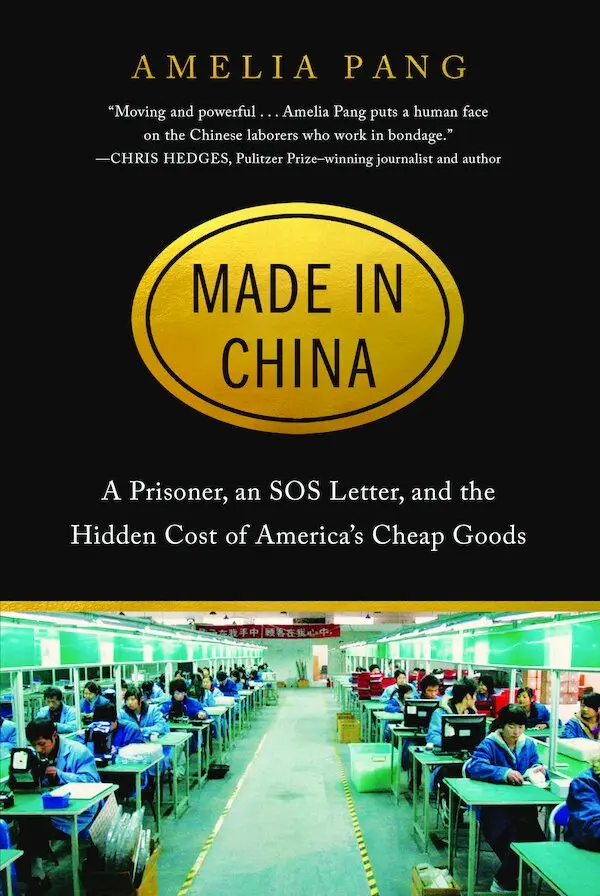
The Quest for Ethical Alternatives: A Consumer’s Journey Beyond ‘Made in China’

images-13.jpeg

Delhi : The fluorescent lights of the department store buzzed overhead as Maya stood in the aisle, holding a sleek, budget-friendly blender. She turned it over, scanning the label: “Made in China.” Her heart sank. She’d been here before—faced with the choice between convenience, affordability, and her growing unease about the ethical implications of her purchases. For weeks, Maya had been researching ethical alternatives to Chinese goods, driven by concerns about labor conditions, environmental impact, and geopolitical tensions. This blender, like so many other products lining the shelves, posed a dilemma: was there a better way to shop without compromising her values?

Maya’s journey began a month ago, sparked by a conversation with her friend Priya, a sustainability advocate who’d been boycotting Chinese-made products for years. “It’s not just about politics,” Priya had said over coffee, her voice earnest. “It’s about human rights, environmental degradation, and supporting systems that align with fairness.” Maya, a 32-year-old graphic designer from Seattle, had nodded, but the complexity of the issue left her head spinning. China’s dominance in global manufacturing—producing 20 to 30 percent of the world’s goods—made avoiding its products feel like an impossible task. Yet, Priya’s words stuck with her, and Maya decided to dig deeper.

Her research led her to a web of interconnected issues. Reports of forced labor in regions like Xinjiang, coupled with lax environmental regulations, raised red flags. A 2021 article from The Good Trade challenged the stigma around “Made in China,” arguing that ethical production depends on how goods are made, not just where. But Maya also found stories of sweatshops, child labor, and intellectual property theft, like the case of a U.S. company whose designs were replicated by a Chinese16 Chinese firm just miles from their factory. The more she read, the more she felt compelled to act. “I can’t keep buying into this system,” she told herself. “But what’s the alternative?”

Maya’s first stop was the internet, where she scoured forums and articles for guidance. A Reddit thread from 2021 posed the question: “Is it unethical to buy products made in China?” The responses were mixed. Some argued that boycotting Chinese goods wouldn’t solve labor issues and could harm workers reliant on those jobs. Others, like activist Sonam Wangchuk in a 2020 Outlook India interview, called for boycotts to pressure the Chinese regime on human rights and environmental violations. Maya leaned toward the latter view but recognized the challenge: China’s supply chains were so entrenched that even non-Chinese products often relied on Chinese components. A LiveMint article from 2025 highlighted how U.S. shoemaker New Balance struggled to diversify away from China despite 190% tariffs, underscoring the difficulty of escaping this reliance.

Determined to try, Maya started small. She visited a local boutique that boasted “ethically sourced” clothing. The owner, a cheerful woman named Lila, explained that her suppliers in Vietnam and India adhered to fair labor practices. “Look for certifications like SA8000 or WRAP,” Lila advised, echoing advice Maya had read on Epic Sourcing. These standards ensured fair wages and safe working conditions. Maya bought a handwoven scarf from a women’s cooperative in India, feeling a spark of satisfaction. The $45 price tag stung compared to the $15 equivalent at a big-box store, but she reminded herself that ethical choices often came at a premium. A 2017 Fast Company article had noted that consumers were willing to pay 10-15% more for ethically made goods, and Maya was starting to understand why.

Her next challenge was electronics. China’s grip on tech manufacturing was ironclad—Huawei, Lenovo, and countless others dominated the market. Maya found a website, ChinaNever, listing products made in the USA, Canada, and Europe. She ordered a laptop from a Canadian company that sourced components from Taiwan and South Korea, both of which had stronger labor protections than China. The process wasn’t seamless; shipping took weeks, and the cost was 20% higher than a comparable Chinese-made model. But Maya felt a sense of control, knowing her purchase supported better practices.

Groceries proved trickier. A People for Ethical Living article revealed that many imported fruits and vegetables from China carried illegal pesticide residues due to lax regulations. Maya switched to local farmers’ markets, where she could ask vendors directly about their practices. One Saturday, she met Javier, a farmer who grew organic apples in Washington state. “It’s not just about avoiding China,” he told her. “It’s about knowing your food’s story.” His apples cost twice as much as the supermarket’s, but their crisp flavor and Javier’s pride in his work made it worthwhile. Plus, she was supporting her local economy—a point driven home by a study cited in the article, which found that redirecting just $100 per household to local businesses could generate $10 million in economic impact.

Maya’s biggest hurdle was household goods. From blenders to furniture, China’s low costs and vast supply chains made alternatives hard to find. A Cosmo Sourcing guide from 2025 listed Vietnam, India, and Thailand as emerging manufacturing hubs with lower labor costs and fewer tariffs. Maya contacted a sourcing agent recommended by Epic Sourcing to find a Vietnamese factory with GOTS certification for organic textiles. The agent connected her with a family-owned business that paid living wages and used eco-friendly dyes. She ordered a set of bamboo bedsheets, which arrived after a month-long wait. They were soft, sustainably made, and—most importantly—aligned with her values.

Not every attempt succeeded. Maya tried sourcing a phone from South Korea, known for high-tech manufacturing, but found that even Samsung and LG relied on Chinese components. A Business Standard case study on Walmart’s sourcing dilemmas echoed her frustration: global supply chains were so intertwined with China that total avoidance was nearly impossible. “It’s like trying to untangle a spiderweb,” Maya muttered, tossing her old phone back onto the table. She settled for a refurbished model from a U.S. company, accepting that partial progress was better than none.

The deeper Maya dove, the more she realized ethical consumption wasn’t just about boycotting China—it was about transparency and accountability. A 2022 Harvard Business Review article outlined strategies for companies navigating China’s ethical risks: increased due diligence, transparency about operations, and exploring alternatives. Maya applied this to her own life, researching brands’ supply chains and asking pointed questions. She emailed one company about their labor practices and was impressed when they detailed their factory audits and Blue Sign certifications. Another brand’s vague response prompted her to look elsewhere.

Her journey wasn’t without skepticism. A Quora post from 2023 questioned whether boycotts hurt Chinese workers more than they helped, citing China’s poverty reduction from 88% in 1981 to 7.8% today. Maya wrestled with this. Was she inadvertently harming the very people she wanted to support? Yet, she reasoned, supporting ethical manufacturers in places like Vietnam or the Philippines could shift demand toward fairer systems. A Locad article from 2025 noted that countries like the Philippines were becoming viable alternatives, exporting $12.9 billion in electronics to the U.S. in 2023. By choosing these options, Maya hoped to drive systemic change.

As weeks passed, Maya’s home began to reflect her values. Her kitchen held ceramic mugs from a local potter, her closet boasted shirts from a WRAP-certified Indian factory, and her bookshelf displayed novels printed in Europe. Each purchase was a small rebellion against the “Made in China” default, but it came with trade-offs. Her budget strained under higher costs, and sourcing took time—sometimes weeks of research for a single item. Still, she felt empowered. “Every dollar is a vote,” she told Priya during a follow-up coffee date. “I’m voting for a world I believe in.”

Maya’s story isn’t unique. Across the globe, consumers are grappling with the same questions, fueled by a growing awareness of ethical consumption. A 2017 Unilever study found that 33% of consumers preferred brands with social or environmental commitments. For Maya, the journey was less about perfection and more about progress. She hadn’t fully escaped China’s manufacturing web—no one could—but she’d carved out a path that felt authentic. As she blended a smoothie with her new, ethically sourced blender from Thailand, she smiled. It wasn’t just about the smoothie. It was about knowing she’d made a choice that mattered.

Sources: People for Ethical Living, Cosmo Sourcing (2025), Locad (2025), LiveMint (2025), ChinaNever (2023), Epic Sourcing, Harvard Business Review (2022), The Good Trade (2021), Reddit (2021), Outlook India (2020), Business Standard (2018), Fast Company (2017), Quora (2023), Unilever (2017).

रायबरेली से जन्म प्रमाणपत्र फर्जीवाड़े का भयावह खुलासा

Screenshot-2025-07-31-at-1.16.12-AM.png

रायबरेली : उत्तर प्रदेश के रायबरेली जिले के सलोन क्षेत्र में एक चौंकाने वाला मामला सामने आया है, जहां एक वीडीओ (ग्राम विकास अधिकारी) विजय यादव के नेतृत्व में पिछले दो सालों में 19,184 जन्म प्रमाणपत्र फर्जी तरीके से जारी किए गए। सोशल मीडिया पर एक्स यूजर अनुपम मिश्रा ने एक समाचार पत्र की कटिंग लगाकर इस घोटोले की जानकारी दी।

रिपोर्ट में दावा किया गया है कि इनमें से 10,000 से अधिक प्रमाणपत्र केवल एक गांव नूरुद्दीन से संबंधित हैं, जहां पश्चिम बंगाल, बिहार और झारखंड से आए लोग बसे हैं, और इनमें से ज्यादातर बांग्लादेशी तथा रोहिंग्या घुसपैठियों के नाम पर हैं।

इस घोटाले की भयावहता इस बात से समझी जा सकती है कि सरकारी दस्तावेजों का दुरुपयोग राष्ट्रीय सुरक्षा के लिए गंभीर खतरा बन गया है। जन्म प्रमाणपत्र जैसे महत्वपूर्ण दस्तावेजों का फर्जीकरण न केवल प्रशासनिक व्यवस्था की कमजोरी को उजागर करता है, बल्कि देश में अवैध घुसपैठ को बढ़ावा देने का एक सुनियोजित षड्यंत्र भी प्रतीत होता है। सोशल मीडिया पर प्रतिक्रियाओं में लोगों ने इसकी तुलना देश को खोखला करने वाली ‘दीमक’ से की है, जो जनसांख्यिकीय संतुलन को बिगाड़ रही है। एक यूजर ने सुझाव दिया कि फर्जी दस्तावेज बनाने वालों की संपत्ति जब्त करने और कठोर सजा देने की जरूरत है, ताकि इस तरह की गतिविधियां रुक सकें।

स्थानीय निवासी सत्यव्रत त्रिपाठी के अनुसार, यह घटना पिछले साल की है, और जांच में पता चला कि वीडीओ विजय यादव ने अपने प्रेम प्रसंग के चलते जीशान नामक व्यक्ति को अपनी लॉगिन डिटेल्स सौंप दी थीं, जिसका फायदा उठाकर फर्जी प्रमाणपत्र बनाए गए। जीशान ने इस दौरान मकान और दुकानें भी बनवाईं, जो इस रैकेट की आर्थिक गहराई को दर्शाता है। दूसरी ओर, अमर उजाला की रिपोर्ट के अनुसार, पूरे जिले में 52,000 से अधिक जन्म प्रमाणपत्र फर्जी पाए गए, जिसमें एक दिन में 500 से ज्यादा दस्तावेज बनाए गए। यह आंकड़ा स्थिति की गंभीरता को और बढ़ा देता है।

प्रधानमंत्री नरेंद्र मोदी ने भी हाल ही में झारखंड में बांग्लादेशी और रोहिंग्या घुसपैठ को राष्ट्रीय सुरक्षा के लिए खतरा बताया था, जो इस मामले में एक समान चिंता को दर्शाता है। रायबरेली की यह घटना प्रशासनिक लापरवाही और सिस्टम की भ्रष्टाचार से जूझती तस्वीर पेश करती है। लोगों का गुस्सा इस बात पर है कि सरकारें महत्वपूर्ण दस्तावेजों को ‘दुकानों’ के भरोसे छोड़ रही हैं, जो देश विरोधी तत्वों के लिए खुला निमंत्रण बन गया है।

अब सवाल यह उठता है कि क्या इस मामले में त्वरित कार्रवाई होगी? मुख्यमंत्री योगी आदित्यनाथ और केंद्र सरकार से मांग उठ रही है कि दोषियों के खिलाफ सख्त कदम उठाए जाएं, ताकि इस तरह के फर्जीवाड़े पर लगाम लग सके। अन्यथा, यह समस्या देश के लिए एक और गंभीर संकट बन सकती है।

अवि डांडिया: कांग्रेस का विवादास्पद विदेशी चेहरा और उसकी मक्कारी

Screenshot-2025-07-31-at-1.15.13-AM.png

दिल्ली। अवि डांडिया, एक विवादास्पद व्यक्तित्व और भारतीय ओवरसीज कांग्रेस (IOC) के सोशल मीडिया प्रमुख, अपने रिकॉर्ड और मक्कारी के लिए चर्चा में हैं। उनकी नियुक्ति (सितंबर 2023) से पहले उन्होंने यूट्यूब पर आपत्तिजनक वीडियो डालकर प्रधानमंत्री नरेंद्र मोदी और भाजपा पर आधारहीन आरोप लगाए। मार्च 2019 में पुलवामा हमले के बाद उनकी मक्कारी तब सार्वजनिक हुई जब उन्होंने एक फर्जी ऑडियो क्लिप प्रसारित की, जिसमें दावा किया गया कि हमले में भाजपा नेताओं की साजिश थी। द हिंदू (4 मार्च 2019) की रिपोर्ट के अनुसार, दिल्ली पुलिस ने इस झूठे प्रचार के लिए उनके खिलाफ IPC की धारा 465 और 469 के तहत FIR दर्ज की। फिर भी, सितंबर 2023 में कांग्रेस ने उन्हें IOC का सोशल मीडिया प्रमुख बनाया, जो पार्टी की नियत पर गहरा संदेह पैदा करता है। क्या यह एक सुनियोजित कदम था, जो भारतीय राजनीति में विदेशी हस्तक्षेप को बढ़ावा देता हो?

डांडिया की भाषा शैली बेहद खराब और अपमानजनक है। हाल के X पोस्ट में, जैसे 30 जुलाई 2025 को “25% tariff lagne ke baad masjido ke bahar ek baar mujra to banta hain chalo shuru ho jao chapriyo ,” उन्होंने धार्मिक भावनाओं को ठेस पहुंचाई और “chapriyo” जैसे शब्दों से अपनी कुत्सित मानसिकता दिखाई। जवाबी टिप्पणियों में “Chup khandani chu ” जैसी गालियां उनकी अशिष्टता को उजागर करती हैं। एक राजनीतिक दल के कार्यकर्ता के लिए ऐसी भाषा निंदनीय है, जो समाज में नैतिकता और गरिमा का प्रतीक होनी चाहिए। यह उनके चरित्र की पोल खोलता है और कांग्रेस की छवि को धूमिल करता है।

उनकी मक्कारी का दूसरा पहलू उनका धन का दिखावा है। वे अक्सर अपने वीडियो और पोस्ट में अपनी कथित अमीरी और जीवनशैली का ढोल पीटते हैं, चाहे वह दान का दावा हो। लेकिन इन दावों की सत्यता संदिग्ध है, और आलोचकों ने इसे आत्म-प्रशंसा और झूठ का मिश्रण बताया है। एक राजनीतिक कार्यकर्ता के लिए धन का प्रदर्शन करना उचित नहीं, क्योंकि यह जनसेवा की भावना से दूर ले जाता है। उनकी आय का स्रोत अस्पष्ट है, जो उनके इरादों पर संदेह पैदा करता है।

कांग्रेस को ऐसे व्यक्ति को मंच देना अपनी ही नींव को कमजोर करना है। पुलवामा मामले में उनकी मक्कारी के बावजूद उनकी नियुक्ति से पार्टी की मंशा पर सवाल उठना स्वाभाविक है। डांडिया की खराब भाषा, धन का दिखावा, और विवादास्पद इतिहास किसी भी राजनीतिक दल के लिए शोभनीय नहीं, और यह कांग्रेस की विश्वसनीयता को और धूमिल कर रहा है।

The Hidden Cost of ‘Made in China’: A Tale of Exploitation and Reflection

Hilgers2-articleLarge.jpg.webp

Delhi : In a bustling market in New Delhi, Priya, a young entrepreneur, sifted through a pile of affordable electronics and clothing, all stamped with the familiar label: “Made in China.” The prices were unbeatable—smartphones for a fraction of what they’d cost elsewhere, trendy clothes that rivaled high-end brands, and gadgets that promised cutting-edge technology at a bargain. “This is why China is winning,” she thought, echoing the sentiments of many in India who admired China’s economic prowess. But as she held a sleek phone in her hand, a question lingered: How could something so sophisticated be so cheap? The answer, buried beneath the shiny packaging, was a story of exploitation that would challenge her admiration for China’s success.

Across the border, in a sprawling factory in Shenzhen, China, 23-year-old Wei trudged through another 12-hour shift at an electronics assembly line. His hands moved mechanically, attaching components to circuit boards under harsh fluorescent lights. The air was thick with the smell of solder and chemicals, and the constant hum of machinery drowned out any chance of conversation. Wei was one of millions of Chinese workers fueling the global supply chain, producing the cheap goods that filled markets like Priya’s in India. But at what cost?

The Backbone of China’s Economic Miracle

China’s rise as the “world’s factory” is no accident. Its ability to produce vast quantities of affordable goods—electronics, textiles, toys, and more—has made it a global economic powerhouse. In 2023, China accounted for nearly 30% of global manufacturing output, exporting $3.6 trillion worth of goods. This success, however, rests on the backs of its workers, many of whom face grueling conditions that belie the country’s glossy image of progress.

Reports from organizations like China Labor Watch (CLW) and the International Labour Organization (ILO) paint a stark picture. Workers in China’s manufacturing hubs, such as the Pearl River Delta and Yangtze River Delta, often endure long hours, low wages, and unsafe conditions. A 2023 CLW report highlighted that workers in electronics factories faced “low basic salaries, excessive overtime, illegal use of student interns, hiring discrimination, and deception from labor brokers.” Many work 12- to 14-hour shifts, six or seven days a week, often without adequate breaks or overtime pay, in violation of China’s own labor laws, which stipulate a maximum of 8 hours per day and 44 hours per week.

Wei’s story is emblematic. A migrant from rural Hunan, he moved to Shenzhen seeking a better life. Instead, he found himself trapped in a cycle of exploitation. His monthly wage of 2,500 yuan (about $350 USD) barely covered his rent and food, forcing him to live in a cramped dormitory with eight others. Overtime was mandatory, and refusing it could cost him his job. “We are like oxen and horses,” Wei said, echoing a viral phrase used by Chinese workers on social media to describe their plight.

The Dark Side of Cheap Goods

The affordability of Chinese goods is directly tied to this labor model. Low wages and lax enforcement of labor laws allow manufacturers to keep production costs down, enabling companies like Shein, Temu, and global giants like Apple and Samsung to offer products at prices that dominate markets worldwide. For example, a 2024 report by the Business and Human Rights Resource Centre revealed that 83 major brands were implicated in supply chains linked to forced labor in Xinjiang, where Uyghur workers are coerced into factories under state-sponsored programs. These programs, often disguised as “poverty alleviation” or “vocational training,” involve transferring ethnic minorities to factories across China, where they face surveillance, restricted movement, and ideological indoctrination.

The use of forced labor is not limited to Xinjiang. Across China, factories rely on “dispatch labor” (workers hired through agencies) and student interns, who are often coerced into working long hours under the guise of educational programs. A 2020 U.S. Department of Labor report identified goods like textiles, electronics, and garments as being produced with forced labor, with supply chains extending to countries like Vietnam, where Chinese cotton is processed. This systemic exploitation ensures that the cost of production remains low, but it comes at a human cost that is rarely acknowledged by consumers marveling at bargain prices.

Back in Delhi, Priya’s friend Arjun, a labor rights activist, challenged her admiration for China’s economic model. “You’re praising their efficiency, but do you know what’s behind it?” he asked. He shared a report from China Labour Bulletin (CLB), which documented over 1,000 worker protests in 2023 alone, driven by unpaid wages, factory closures, and lack of severance pay. “These workers are treated as disposable. Is that the kind of progress we want to emulate?”

China’s Labor Laws: On Paper vs. Reality

China’s labor laws, on paper, appear robust. The Labor Contract Law of 2007 mandates written contracts, limits working hours, and ensures social insurance and severance pay. However, enforcement is weak. Local governments, keen on attracting investment, often turn a blind eye to violations to keep factories operational. The All-China Federation of Trade Unions (ACFTU), the country’s only legal union, is government-controlled and prioritizes stability over worker advocacy. As a result, workers have little recourse to address grievances, and independent labor organizations face harassment or closure.

The lack of enforcement is compounded by cultural and systemic factors. The “wolf culture” in Chinese workplaces—characterized by intense pressure to conform and work overtime—discourages workers from speaking out. For migrant workers like Wei, the hukou system, which ties social benefits to one’s place of origin, further limits access to healthcare, education, and legal protections in urban areas. This creates a vulnerable workforce, easily exploited by employers and brokers.

The Ethical Question: Are Workers Less Than Human?

The exploitation of Chinese workers raises a profound ethical question: Are workers being treated as less than human? The answer lies in the conditions they endure. Reports describe workers subjected to dehumanizing practices—forced overtime, wage theft, hazardous environments, and even detention in dormitories. In Xinjiang, Uyghur workers face additional layers of oppression, including mass surveillance and forced cultural assimilation. These practices reduce workers to mere tools of production, their well-being sacrificed for profit.

This dehumanization is not accidental but systemic, driven by a global demand for cheap goods. Multinational corporations, while claiming to uphold labor standards, often benefit from lax oversight in China’s supply chains. For instance, a 2024 investigation by The Bureau of Investigative Journalism linked over 100 global brands to factories using forced labor, with products reaching markets as far as India. Consumers, including those in India, indirectly perpetuate this cycle by prioritizing low prices over ethical considerations.

Priya was shaken by Arjun’s revelations. She began to see the phone in her hand not as a triumph of innovation but as a product of human suffering. “If we keep buying these goods, are we complicit?” she asked. Arjun nodded. “We can’t change the system overnight, but we can start by asking questions and demanding transparency.”

Lessons for India

For Indians who admire China’s economic ascent, the reality of its labor practices serves as a cautionary tale. India, with its own aspirations to become a manufacturing hub, faces similar pressures to attract investment by keeping labor costs low. However, replicating China’s model risks repeating its mistakes. India’s labor laws, while imperfect, offer protections like the right to unionize and a stronger framework for collective bargaining. Yet, enforcement remains a challenge, and informal workers—over 90% of India’s workforce—often lack basic protections.

China’s experience highlights the need for India to prioritize worker rights as it expands manufacturing. Strengthening labor inspections, supporting independent unions, and ensuring transparency in supply chains can prevent the kind of exploitation seen in China. Moreover, Indian consumers can play a role by supporting ethical brands and advocating for fair trade practices. As Arjun told Priya, “We don’t have to choose between development and dignity. We can demand both.”

Resistance and Hope

Despite the grim reality, Chinese workers are not passive victims. Strikes and protests have surged, with workers using social media to document abuses and demand justice. Organizations like CLB and CLW amplify these voices, pushing for reform despite government crackdowns. In the electronics sector, workers have organized collective bargaining efforts, as seen in the 2014 Yue Yuen strike in Dongguan, where thousands demanded better wages and conditions. These acts of resistance show that workers are reclaiming their humanity, refusing to be reduced to “oxen and horses.”

For Wei, hope came in the form of a small labor NGO that helped him file a complaint against his employer for unpaid wages. Though the process was slow, it gave him a sense of agency. “I want to work, but I also want to be treated like a person,” he said. His story, and those of millions like him, is a reminder that behind every “Made in China” label is a human being deserving of respect.

A Call to Action

Back in Delhi, Priya decided to act. She began researching ethical alternatives to Chinese goods, supporting Indian brands that prioritized fair labor practices. She also shared her findings with friends, sparking conversations about the true cost of cheap products. “We can’t ignore this anymore,” she told Arjun. “If we want a better future, we have to start valuing workers—here and in China.”

The story of China’s workers is a wake-up call for India and the world. The cheap goods that flood global markets come at a steep human cost, one that challenges us to rethink our priorities. Do we want a world where workers are treated as less than human, their labor exploited for profit? Or do we strive for a system that balances economic progress with dignity? The choice lies not just with governments and corporations but with consumers like Priya, whose decisions can shape a more just future.

Resource :

https://www.tandfonline.com/doi/full/10.1080/14747731.2016.1207934#d1e191

https://www.dol.gov/agencies/ilab/against-their-will-the-situation-in-xinjiang

https://www.law.berkeley.edu/article/working-conditions-the-persistence-of-problems-in-chinas-factories/

https://www.tandfonline.com/doi/full/10.1080/14747731.2016.1207934

Home

Labor Conditions in China’s Consumer Electronics Sector 

The hidden human costs linked to global supply chains in China

https://www.govinfo.gov/content/pkg/CHRG-112jhrg76387/html/CHRG-112jhrg76387.htm

https://www.rfa.org/english/news/china/workers-labor-rights-wages-oxen-horses-10022024163703.html

Labor Rights in China

scroll to top