Delhi : Imagine a group of prominent Indian YouTubers-Ravish Kumar, Urmilesh Yadav, Dr. Mukesh Kumar, Ajit Anjum, Bhasha Singh, Arfa Khanum, Sakshi Joshi, and Abhisar Sharma-embarking on a high-profile trip to China. These journalists and commentators, known for their incisive critiques of power structures in India, are invited to explore the gleaming cities of Beijing and Shanghai. Their videos typically dissect governance, democracy, and social issues with sharp analysis. But what happens when their lens turns to China, a nation where the Chinese Communist Party (CCP) and the National People’s Congress (NPC) wield absolute control, with no separation of powers? This 1200-word journey explores their hypothetical experience, the risks of critical journalism in China, and the implications of a system where unified leadership concentrates all power under the CCP’s grip.
Arrival in Beijing: The Allure of Modernity
The YouTubers land in Beijing, greeted by the grandeur of the capital. The city’s skyline, with its blend of futuristic skyscrapers and historic sites like the Forbidden City, is breathtaking. They’re whisked to the Great Hall of the People, the seat of the NPC, where they’re briefed on China’s political system. The NPC, they learn, is the supreme organ of state power, electing all state officials, from the judiciary to the executive State Council, with no independent checks or balances. The CCP, as the sole ruling party, ensures that all state organs are subordinate to its vision, a concept known as ‘unified leadership.’
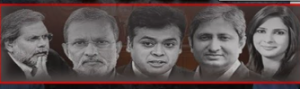
Ravish Kumar, known for his reflective storytelling, might begin filming, noting the efficiency of Beijing’s infrastructure—high-speed trains, spotless streets, and ubiquitous surveillance cameras. He’d likely comment on the paradox: a nation that projects modernity while tightly controlling expression. His instinct to question power would be tested here, as China’s Great Firewall blocks platforms like YouTube, and content is heavily censored.
The Risks of Critical Journalism
As the group tours Beijing, they’re invited to create content about China’s achievements—its economic growth, technological advancements, and urban development. But what happens(“What to Watch at China’s Two Sessions in 2025 | Asia Society”) if they pivot to critique the CCP or the NPC’s lack of separation of powers? The risks are stark. In China, freedom of speech and press, though constitutionally guaranteed, is heavily restricted. Citizen journalist Zhang Zhan was jailed for four years for her vlogs on Wuhan’s COVID-19 outbreak, a stark reminder of the consequences of challenging the state narrative.
Ajit Anjum, with his bold style, might want to discuss the NPC’s role in centralizing power, where the judiciary and executive are extensions of the legislature, all under CCP control. Such commentary could lead to immediate repercussions: content deletion, detention, or deportation. Foreign YouTubers like Matthew Tye and Winston Sterzel, who criticized the CCP after years in China, faced harassment and were forced to leave. The Indian YouTubers, used to India’s vibrant, if imperfect, democratic discourse, would find their voices stifled. Posting a video questioning the CCP’s grip could trigger censorship or worse—security officials might demand content removal or detain them for ‘spreading false narratives.’
Shanghai: The Glittering Facade
Next, the group heads to Shanghai, a global financial hub with dazzling lights and cutting-edge technology. They visit the Shanghai Museum and the Bund, where colonial-era buildings contrast with Pudong’s futuristic skyline. Bhasha Singh might be tempted to vlog about the city’s prosperity, but her journalistic instincts would push her to probe deeper. She might question the cost of this glamour: the displacement of residents for high-rises or the suppression of dissent to maintain order. But in Shanghai, as in Beijing, surveillance is omnipresent. Public spaces are monitored, and vloggers are often accompanied by government “fixers” who control what’s filmed.

Arfa Khanum, known for her focus on marginalized communities, might seek to explore the lives of Uyghurs or Tibetans, but access to regions like Xinjiang is tightly restricted for foreign journalists. Videos by some foreign influencers, often state-sponsored, depict Xinjiang as a harmonious region, countering allegations of human rights abuses. If Arfa attempted to investigate these claims, she’d likely face obstruction or be fed curated narratives by state media. The Australian Strategic Policy Institute has flagged Indian vloggers who, wittingly or not, amplify CCP propaganda by showcasing “shocking” and “surprising” infrastructure in Xinjiang, Beijing, and Shanghai.
The CCP’s Unified Leadership: A Thought Experiment
Back in Beijing, the YouTubers attend a seminar on China’s governance model. They learn that the NPC, under CCP guidance, elects the judiciary and executive, ensuring no branch operates independently. This unified leadership, championed by Xi Jinping, contrasts sharply with India’s separation of powers, where the judiciary, legislature, and executive check each other. Sakshi Joshi might draw parallels to India, asking: what if India’s Supreme Court and Council of Ministers were answerable solely to Parliament, controlled by one party? The thought is chilling.
To illustrate, consider a hypothetical: if India adopted China’s model, opposition leaders like Rahul Gandhi, Akhilesh Yadav, Tejashwi Yadav, MK Stalin, and Mamata Banerjee would have no independent platform. Their parties could be sidelined, their voices silenced, as all power would rest with the ruling government—say, the Modi administration. In China, dissenters face imprisonment or exile; Gao Zhi, a Chinese dissident, fled to the Netherlands after criticizing the CCP online. In India, these leaders thrive in a pluralistic system, despite its flaws. The YouTubers, used to debating Modi’s policies freely, would realize the price of China’s stability: the erasure of opposition.
The Allure and the Price of Glamour
Some YouTubers, like Abhisar Sharma, might be tempted to focus on China’s achievements—its poverty reduction, high-speed rail, or AI advancements. Indeed, China’s state media has successfully enlisted foreign influencers to promote such narratives, offering funded trips and visibility. But the group’s critical bent would likely lead them to question the cost. Beijing and Shanghai’s glamour comes with a trade-off: absolute CCP control, mass surveillance, and the suppression of dissent.
Urmilesh Yadav might reflect on the absence of independent media. In China, state-run outlets like CGTN and Global Times dominate, and foreign journalists face visa denials or expulsion. The YouTubers’ usual platforms—YouTube, Twitter—are blocked, forcing reliance on state-approved apps like WeChat or Douyin, where content is screened. Dr. Mukesh Kumar, with his academic approach, might note that China’s system prioritizes stability over liberty, a stark contrast to India’s chaotic but free democracy.
China Lovers and the Reality Check
For those who romanticize China’s progress, this trip would be a wake-up call. The YouTubers might initially be dazzled by high-speed trains and skyscrapers, but the reality of unified leadership would hit hard. The CCP’s control over the NPC ensures no checks on power, unlike India’s messy but functional democracy. Those praising China’s model might reconsider when faced with the inability to criticize without fear of retribution. The glamour of Beijing and Shanghai, built on centralized control, comes at the cost of individual freedoms—something these YouTubers, used to India’s open discourse, would find suffocating.
A Sobering Return
As the YouTubers board their flight back to India, they reflect on their journey. Ravish might draft a script about the seductive allure of China’s progress, tempered by the reality of control. Ajit and Arfa might plan exposés on the risks faced by journalists in China, drawing parallels to India’s own press freedom challenges. Sakshi and Bhasha might discuss how India’s opposition leaders, despite their struggles, operate in a system that allows dissent—unlike China’s. Abhisar, Urmilesh, and Mukesh might warn their audiences: admire China’s infrastructure, but understand the price of its unified power.
This trip, while showcasing China’s achievements, would underscore a truth for China’s admirers: the gleaming cities of Beijing and Shanghai are built on a system that brooks no challenge to the CCP’s authority. For journalists like these YouTubers, thriving in China would mean sacrificing their voice—a price too steep for those who value truth over glamour.