The Responsibility of Historians and the Case of Ashok Kumar Pandey

3-1.jpeg

The title of “historian” carries a profound weight, imbued with the responsibility to uncover, interpret, and present the past with rigor, objectivity, and intellectual honesty. Historians are entrusted with shaping collective memory, informing public discourse, and providing insights that withstand scrutiny. However, when individuals like Ashok Kumar Pandey, who proclaim themselves historians, engage in activities that blur the lines between scholarship and political advocacy, it raises critical questions about the integrity of the profession. This article examines whether calling Pandey a historian undermines the discipline’s sanctity, particularly in light of his self-promotion, political affiliations, and public conduct.

The Role and Responsibility of a Historian

Historians are not mere storytellers; they are scholars who navigate complex archives, primary sources, and competing narratives to construct evidence-based accounts of the past. Their work demands methodological precision, critical analysis, and a commitment to minimizing bias. As Eric Hobsbawm noted, historians must “seek the truth, however inconvenient,” resisting the temptation to serve ideological agendas. This responsibility is amplified in polarized societies, where historical narratives are often weaponized to justify political positions.

A historian’s credibility hinges on their ability to maintain intellectual independence. While personal beliefs inevitably shape perspectives, the discipline requires transparency about sources, acknowledgment of uncertainties, and openness to critique. When historians align overtly with political entities or prioritize self-promotion over scholarship, they risk eroding public trust in the profession. This brings us to the case of Ashok Kumar Pandey, whose self-identification as a historian invites scrutiny.

Ashok Kumar Pandey: Background and Self-Proclaimed Historicity

Ashok Kumar Pandey, born in 1975 in Uttar Pradesh, is an author, poet, and commentator known for works like Kashmirnama, Kashmir aur Kashmiri Pandit, and Usne Gandhi ko Kyon Mara. With an MA in Economics from Gorakhpur University, Pandey lacks formal training in history, a point that does not inherently disqualify him but raises questions about his methodological grounding. His books, while popular in Hindi literary circles, have been criticized for selective narration, particularly in their treatment of sensitive topics like the Kashmiri Pandit exodus. For instance, his critique of The Kashmir Files as a “propaganda film” emphasizes the persecution of Muslims while downplaying the Pandit experience, a choice that aligns with certain political narratives.

Pandey’s public persona extends beyond authorship. As the managing editor of The Credible History, a platform claiming to offer “authentic” historical accounts, he positions himself as a public intellectual. His YouTube channel and social media presence amplify this image, blending historical commentary with contemporary political critique. However, his frequent public appearances with Congress leaders and his vocal support for their positions have fueled accusations of partisanship. A post on X described him as a “wretched radical ideologue masquerading as a neutral historian,” reflecting a sentiment that his political engagements undermine his scholarly claims.

The Charge of Brokerage: Political Affiliations and Historical Integrity

The term “brokerage” implies acting as an intermediary for personal or political gain, a charge leveled against Pandey due to his visible association with Congress leaders. Photographs of him “holding court” with politicians, shared on social media, create a perception of alignment rather than independence. While historians are not barred from political engagement, such overt affiliations risk compromising their objectivity. When Pandey critiques right-wing narratives—such as those surrounding Nathuram Godse or the Kashmir issue—his arguments are often framed in ways that echo Congress’s secular rhetoric, raising questions about whether his historical interpretations serve a political agenda.

This perception is compounded by Pandey’s self-promotion as a historian. Unlike trained historians who undergo peer review and academic scrutiny, Pandey’s credentials rest largely on his publications and media presence. His books, while commercially successful, are not universally regarded as rigorous historical works. Critics argue that his Marxist leanings, openly acknowledged in interviews, color his analyses, leading to selective portrayals that prioritize ideological consistency over balanced inquiry. For example, his dismissal of The Kashmir Files as “mostly inaccurate” focuses on its right-wing bias but sidesteps similar critiques of left-leaning narratives, a double standard that weakens his scholarly credibility.

The Mockery of Historical Responsibility

Calling Pandey a historian risks making a mockery of the profession when his conduct prioritizes publicity and political alignment over scholarly rigor. Historians bear the burden of presenting evidence that withstands cross-examination, yet Pandey’s work often leans on emotive storytelling rather than exhaustive research. His engagement with complex issues like the Gandhi assassination or Kashmiri Pandit displacement tends to simplify narratives in ways that align with his ideological stance, a practice that contravenes the historian’s duty to embrace complexity.

Moreover, his public behavior—sharing images with political figures and framing himself as a spokesperson for “credible history”—suggests a performative approach to the role. True historians derive authority from their work’s quality, not from media visibility or political endorsements. Pandey’s blending of poetry, activism, and history further muddies the waters, as it conflates creative expression with the disciplined inquiry history demands. This blurring of roles diminishes the profession’s gravitas, inviting skepticism about whether self-proclaimed historians respect the responsibility their title entails.

Counterarguments: The Democratization of History

To be fair, Pandey’s defenders might argue that history should not be confined to academic elites. His accessible writing and media presence democratize historical knowledge, reaching audiences beyond scholarly circles. In a country where Hindi-language scholarship is often undervalued, Pandey’s contributions fill a gap, offering narratives that challenge dominant right-wing interpretations. His focus on marginalized voices, such as Kashmiri Muslims or Gandhi’s legacy, could be seen as a corrective to majoritarian biases.

The Broader Implications

The case of Ashok Kumar Pandey underscores a larger crisis in historical scholarship: the tension between accessibility and rigor, activism and objectivity. In an era of social media and polarized discourse, self-proclaimed historians can amass influence without the checks of academic peer review. While this democratizes knowledge, it also risks diluting the discipline’s standards. When individuals like Pandey prioritize political alignment and self-promotion, they contribute to a culture where history becomes a tool for advocacy rather than truth-seeking.

This is not to say Pandey’s work lacks value. His books spark debate and engage lay readers, a commendable achievement. However, the title of historian demands more than popularity—it requires a commitment to evidence, nuance, and intellectual independence. By intertwining his historical claims with political brokerage, Pandey undermines the very responsibility he claims to uphold.

Labeling Ashok Kumar Pandey a historian does not inherently mock the profession, but his conduct—marked by self-promotion, selective narration, and political affiliations—raises legitimate concerns. Historians must navigate the past with humility and rigor, resisting the allure of ideology or fame. While Pandey’s contributions to public discourse are notable, his approach often prioritizes advocacy over scholarship, inviting accusations of brokerage. The responsibility of being a historian is too profound to be claimed lightly; it demands a dedication to truth that transcends personal or political agendas. Until Pandey aligns his work more closely with these principles, his claim to the title will remain contentious, serving as a cautionary tale for the discipline.
The Ethics of Misrepresenting BJP and RSS Representatives on Sandeep Chaudhary’s Show

3.jpeg

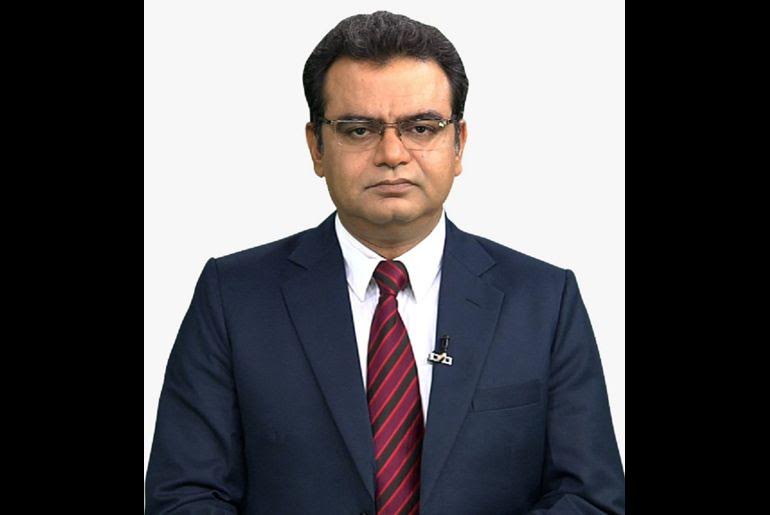
In the polarized landscape of Indian media, where news channels often double as battlegrounds for political narratives, the ethical responsibilities of journalists and broadcasters are under constant scrutiny. A particularly contentious issue has emerged around ABP News’ popular show hosted by Sandeep Chaudhary, where the absence of official Bharatiya Janata Party (BJP) spokespersons has raised questions about the practice of inviting individuals labeled as “representatives” of the BJP or Rashtriya Swayamsevak Sangh (RSS) without formal affiliation. This practice, often perceived as a workaround to fill airtime or fuel debates, poses serious ethical dilemmas about misrepresentation, journalistic integrity, and the impact on public discourse.

The BJP’s reported boycott of Sandeep Chaudhary’s show, as noted in posts on X, stems from perceptions that the anchor’s hard-hitting style and critical stance damage the party’s image. This absence creates a vacuum in debates, especially on a show known for its confrontational format, “Seedha Sawal,” where political representatives face tough questions on issues like elections, governance, and security. To address this gap, the show sometimes invites individuals described as BJP or RSS “representatives,” even if they lack official designation from these organizations. This practice raises a fundamental ethical question: Is it justifiable to present someone as a spokesperson for a political or ideological group without their explicit endorsement?

From a journalistic standpoint, accuracy and transparency are non-negotiable. Labeling an individual as a representative of the BJP or RSS, when they are merely sympathizers or loosely affiliated, risks misleading viewers. The BJP and RSS are structured organizations with designated spokespersons tasked with articulating official positions. Inviting someone outside this framework—say, a political analyst or a local leader with ideological leanings—without clarifying their unofficial status, blurs the line between fact and assumption. This can distort the public’s understanding of the party’s stance, especially on contentious issues like the Pahalgam terror attack or Delhi elections, frequently discussed on Chaudhary’s show.

Moreover, this practice undermines the principles of fairness and balance. If the show’s format thrives on grilling representatives from all sides, substituting a non-official voice for the BJP while pitting them against official spokespersons from rival parties, such as the Aam Aadmi Party or Congress, creates an uneven playing field. The stand-in may lack the authority or knowledge to defend the party’s policies, leading to a skewed debate that serves sensationalism over substance. This not only compromises the show’s credibility but also risks alienating viewers who value informed discourse over theatrical confrontations.

The ethical implications extend to the broader media ecosystem. By framing debates around unofficial representatives, the show may inadvertently amplify polarizing narratives, reinforcing perceptions of bias. Some viewers already believe Chaudhary’s show targets the BJP, a sentiment that could intensify if the audience feels misled about who speaks for the party. This erodes trust in media as a whole, at a time when public skepticism about journalistic motives is already high. Furthermore, misrepresenting affiliations could expose the show to legal or reputational risks if the BJP or RSS objects to unauthorized voices claiming to represent them.

On the other hand, some might argue that inviting ideological proxies is a pragmatic response to the BJP’s boycott. A news show cannot function without diverse perspectives, and excluding BJP-aligned voices entirely would skew the narrative in the opposite direction. Yet, this justification falters when weighed against the need for transparency. A simple disclaimer-clarifying that the guest speaks as an individual, not an official representative- could mitigate ethical concerns while preserving the show’s dynamic format.

Ultimately, the responsibility lies with Sandeep Chaudhary and ABP News to uphold journalistic standards. Misrepresenting affiliations, even unintentionally, undermines the pursuit of truth and risks manipulating public perception. In a democracy as vibrant and divided as India’s, media outlets must prioritize clarity and accountability over ratings-driven spectacle. By ensuring guests are accurately presented, Chaudhary’s show can maintain its reputation as a platform for hard-hitting journalism without compromising on ethics.

अंतरराष्ट्रीय बाजार में बढ़ती रुपए की ताकत एवं भारत में बढ़ता विदेशी मुद्रा भंडार

forex-reserves_588de3e75a860818aab0712d1b1f0ccf.avif

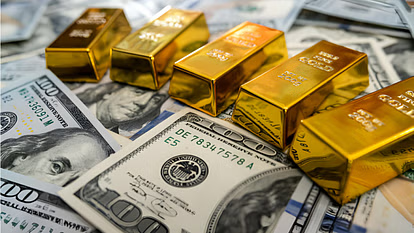
दिनांक 7 फरवरी 2025 को अंतरराष्ट्रीय बाजार में अमेरिकी डॉलर की तुलना में भारतीय रुपए की कीमत सबसे निचले स्तर अर्थात 87.44 रुपए प्रति अमेरिकी डॉलर पर पहुंच गई थी। इसके बाद धीरे धीरे इसमें सुधार होता हुआ दिखाई दिया है एवं अब दिनांक 30 अप्रेल 2025 को यह 84.50 रुपए प्रति डॉलर के स्तर पर पहुंच गई है। वहीं दिनांक 18 अप्रेल 2025 को भारत का विदेशी मुद्रा भंडार भी तेज गति से आगे बढ़ता हुआ 68,610 करोड़ अमेरिकी डॉलर के स्तर पर पहुंच गया है और यह दिनांक 27 सितम्बर 2024 के उच्चतम स्तर 70,489 करोड़ अमेरिकी डॉलर के स्तर के बहुत करीब है। भारतीय रुपए की मजबूती एवं विदेशी मुद्रा भंडार में वृद्धि ऐसे समय में हो रही है जब विश्व के समस्त देश अमेरिकी प्रशासन के टैरिफ युद्ध का सामना करते हुए संकट में दिखाई दे रहे हैं। परंतु, भारत पर टैरिफ युद्ध का असर लगभग नहीं के बराबर दिखाई दे रहा है। यह भी सही है कि हाल ही के समय में अंतरराष्ट्रीय बाजार में अमेरिकी डॉलर पर दबाव बढ़ा है और अमेरिकी डॉलर इंडेक्स लगभग 109 के स्तर से नीचे गिरकर दिनांक 30 अप्रेल 2025 को 99.43 के स्तर पर आ गया है। शायद अमेरिका भी अंतरराष्ट्रीय बाजार में अमेरिकी डॉलर की मजबूती को कम करना चाहता है ताकि अमेरिका में आयात महंगे हों एवं अमेरकी निर्यातकों को अधिक लाभ पहुंचे। परंतु, अंतरराष्ट्रीय बाजार में अमेरिकी डॉलर पर दबाव के बढ़ने से सोने की कीमतों में अतुलनीय वृद्धि दर्ज हुई है और यह दिनांक 22 अप्रेल 2025 को अपने उच्चतम स्तर 3500 अमेरिकी डॉलर प्रति आउन्स पर पहुंच गई थी। साथ ही, अमेरिकी शेयर बाजार भी धराशायी हुआ है और डाउ जोंस एवं अन्य इंडेक्स में भारी गिरावट दर्ज हुई है। अब ऐसा आभास हो रहा है कि ट्रम्प प्रशासन द्वारा विभिन्न देशों के विरुद्ध छेड़े गए टैरिफ युद्ध का विपरीत असर अमेरिकी अर्थव्यवस्था पर होता हुआ दिखाई दे रहा है।   

भारतीय रुपए के मजबूत होने के चलते भारतीय शेयर (पूंजी) बाजार में विदेशी संस्थागत निवेशक एक बार पुनः अपना निवेश बढ़ाने लगे हैं एवं पिछले लगातार 8 दिनों से इन विदेशी संस्थागत निवेशकों ने भारतीय शेयर बाजार में शेयरों की भारी मात्रा में खरीद की है। जबकि, सितम्बर 2024 के बाद से विदेशी संस्थागत निवेशक भारतीय शेयर बाजार से लगातार अपना निवेश निकाल रहे थे और इस बीच विदेशी संस्थागत निवेशकों ने लगभग 3 लाख करोड़ रुपए के शेयरों की बिक्री भारतीय शेयर बाजार में की है। जिसके चलते भारतीय शेयर बाजार के निफ्टी इंडेक्स में लगभग 3500 अंकों की भारी गिरावट दर्ज हुई थी। परंतु, भारतीय संस्थागत निवेशकों, भारतीय म्यूचअल फण्ड एवं खुदरा निवेशकों ने भारतीय शेयर बाजार में अपना निवेश बढ़ाकर भारतीय पूंजी बाजार को सम्हालने में मदद की है अन्यथा भारतीय शेयर बाजार क्रेश हो गया होता। परंतु, अब भारतीय शेयर बाजार में सुधार होता हुआ दिखाई दे रहा है एवं अब एक बार पुनः यह आगे बढ़ता हुआ दिखाई दे रहा है। हाल ही के समय में निफ्टी इंडेक्स में लगभग 1500 अंकों की वृद्धि दर्ज हुई है।   

वित्तीय वर्ष 2024-25 में भारत के विदेशी व्यापार में लगभग 6 प्रतिशत की वृद्धि दर्ज हुई है। विभिन्न देशों को भारत से निर्यात 5.50 प्रतिशत की वृद्धि दर्ज करते हुए 82,093 करोड़ अमेरिकी डॉलर के स्तर पर पहुंच गए  हैं वहीं अन्य देशों से भारत में होने वाले आयात 6.85 प्रतिशत की वृद्धि के साथ 91,519 करोड़ अमेरिकी डॉलर के स्तर पर पहुंच गए हैं। निर्यात की तुलना में आयात में वृद्धि दर अधिक रही है जिसके चलते भारत का व्यापार घाटा बढ़कर 9,426 करोड़ अमेरिकी डॉलर के स्तर पर पहुंच गया है। व्यापार घाटे के बढ़ने के कारण अंतरराष्ट्रीय बाजार में भारतीय रुपए पर दबाव बढ़ा और रुपया कमजोर हुआ। भारत में कच्चे तेल एवं स्वर्ण का आयात भारी मात्रा में होता है। मुख्य रूप से इन्हीं दो मदों की कीमतें भी अंतरराष्ट्रीय बाजार में बढ़ीं थी, जिसका प्रभाव भारत में अधिक आयात के रूप में दिखाई दिया है। परंतु, अब हर्ष की बात है कि कच्चे तेल की कीमतें अंतरराष्ट्रीय बाजार में 75 अमेरिकी डॉलर प्रति बेरल से घटकर लगभग 65 अमेरिकी डॉलर प्रति बेरल पर नीचे आ गई है और स्वर्ण के महंगे होने के चलते स्वर्ण का आयात भी कुछ कम हुआ है। उक्त दोनों घटनाओं के परिणाम स्वरूप अंतरराष्ट्रीय बाजार में भारतीय रुपए पर दबाव कुछ कम होता हुआ दिखाई दे रहा है। 

अंतरराष्ट्रीय स्तर पर विशेष रूप से आर्थिक क्षेत्र में भले स्थितियां ठीक नहीं दिखाई दे रहीं है, परंतु भारत में आंतरिक मजबूती के चलते भारतीय अर्थव्यवस्था अभी भी विश्व की सबसे बड़ी अर्थव्यवस्थाओं के बीच सबसे तेज गति से आगे बढ़ती हुई अर्थव्यवस्था बनी हुई है। भारतीय रिजर्व बैंक, विश्व बैंक, अंतरराष्ट्रीय मुद्रा कोष, एशियाई विकास बैंक, स्टैंडर्ड एवं पूअर आदि अंतरराष्ट्रीय रेटिंग संस्थानों ने भी वित्तीय वर्ष 2025-26 में, अंतरराष्ट्रीय स्तर पर आर्थिक क्षेत्र में विकसित हो रही विपरीत परिस्थितियों के बीच भी, भारतीय अर्थव्यवस्था के 6 प्रतिशत से अधिक की दर से आगे बढ़ने की सम्भावना व्यक्त की है। जबकि यूरोप के कुछ देशों यथा जर्मनी, कनाडा आदि एवं ब्रिटेन तथा अमेरिका में मंदी की सम्भावनाएं स्पष्ट तौर पर दिखाई दे रही हैं। अमेरिका में तो वर्ष 2025 की प्रथम तिमाही (जनवरी-मार्च 2025) में आर्थिक विकास दर में 0.3 प्रतिशत की गिरावट दर्ज हुई है। लगभग यही हाल यूरोप के कई देशों तथा जापान आदि का है। चीन की आर्थिक विकास दर में भी गिरावट आती हुई दिखाई दे रही है। यदि जापान एवं जर्मनी की अर्थव्यवस्थाओं में वर्ष 2025 एवं 2026 में गिरावट दर्ज होती है और भारतीय अर्थव्यवस्था 6 प्रतिशत की विकास दर हासिल कर लेती है तो बहुत सम्भव है कि वर्ष 2025 में जापान एवं वर्ष 2026 में जर्मनी को पीछे छोड़ते हुए भारत विश्व में अमेरिका एवं चीन के बाद तीसरे नम्बर की अर्थव्यवस्था बन जाएगा। 

अंतरराष्ट्रीय स्तर पर विपरीत परिस्थितियों के बीच भी भारतीय अर्थव्यवस्था के तेजी से आगे बढ़ने के पीछे भारत की आंतरिक मजबूती मुख्य भूमिका निभाती हुई दिखाई दे रही है। भारत में अभी हाल ही में महाकुम्भ मेला सम्पन्न हुआ है, इस महाकुम्भ में लगभग 66 करोड़ भारतीय मूल के नागरिकों ने पवित्र त्रिवेणी में आस्था की डुबकी लगाई। इतनी भारी मात्रा में नागरिकों के यहां पहुंचने से भारतीय अर्थव्यवस्था को बल ही मिला है। महाकुम्भ में भाग ले रहे प्रत्येक नागरिक ने औसत रूप से यदि 2000 रुपए भी प्रतिदिन खर्च किए हों और प्रत्येक नागरिक ने औसतन कुल तीन दिवस भी महाकुम्भ में बिताएं हों तो भारतीय अर्थव्यवस्था को 396,000 करोड़ रुपए का अतिरिक्त लाभ पहुंचा है। रोजगार के लाखों अवसर निर्मित हुए हैं, यह अलग लाभ रहा है। आधारभूत सुविधाओं को विकसित किया गया जिसका लाभ आने वाले कई वर्षों तक देश को मिलता रहेगा। देश में धार्मिक पर्यटन भी भारी मात्रा में बढ़ा है जिसका प्रभाव भारतीय अर्थव्यवस्था पर बहुत अच्छे रूप में दिखाई दे रहा है। धार्मिक पर्यटन एवं महाकुम्भ के चलते ही अब यह आंकलन हो रहा है कि वित्तीय वर्ष 2024-25 की चतुर्थ तिमाही (जनवरी-मार्च 2025) में भारत के सकल घरेलू उत्पाद में लगभग 7 प्रतिशत की वृद्धि दर्ज हो सकती है।        

Ravish Kumar’s YouTube Descent: A Shift in Journalism or a Departure from Its Values?

image.jpg

Ravish Kumar, once celebrated as a beacon of Indian television journalism during his tenure at NDTV, has become a cautionary tale of how a journalist can squander credibility. His resignation from NDTV in November 2022 and subsequent pivot to YouTube marked a stark departure from the principles of balanced reporting, replacing nuanced journalism with venomous monologues that brim with hatred, bias, and a disregard for logic. On his Ravish Kumar Official channel, now boasting over 10 million subscribers, Kumar’s rants have alienated many who once admired him, raising the question: has he abandoned journalism for propaganda?

The Fall from NDTV’s Pedestal

Kumar’s 27-year career at NDTV, where he hosted shows like Prime Time and Ravish Ki Report, earned him accolades, including the 2019 Ramon Magsaysay Award for amplifying marginalized voices. His reports on unemployment, education, and social inequality were lauded for their depth and empathy. Yet, his exit from NDTV, prompted by the channel’s changing ownership, coincided suspiciously with the Congress-led United Progressive Alliance’s (UPA) fading influence post-2014. Critics argue that Kumar’s journalism was never as impartial as claimed, pointing to his relatively lenient coverage of Congress-ruled states during his NDTV days. A 2018 Quora thread branded NDTV a “Congress PR team,” reflecting a perception—however anecdotal—that Kumar’s critiques sharpened only when the Bharatiya Janata Party (BJP) took power.

His resignation speech, dripping with melodrama, compared his departure to a “bride’s farewell.” This theatrical flourish set the tone for his YouTube era, where emotional manipulation would overshadow factual reporting. Kumar framed his exit as a stand against a stifling media environment, but detractors see it as a calculated move to reinvent himself as a martyr, free from the accountability of a newsroom.

YouTube Monologues: A Platform for Venom

On YouTube, Kumar has traded structured journalism for long-winded monologues that prioritize rhetoric over substance. Gone are the on-ground reports and balanced discussions of his NDTV days. Instead, his videos—delivered with his signature “Namaskar, Main Ravish Kumar”—are solo performances, often exceeding 20 minutes, where he rails against the government with unchecked vitriol. These monologues, produced with a skeletal team of eight, lack the rigor of his former work, relying on anecdotes, metaphors, and emotional appeals rather than data or diverse perspectives.

Posts on X paint a damning picture of Kumar’s content. Users have called his videos “propaganda” and “hate-filled,” accusing him of targeting the BJP with relentless malice. A February 2023 video, where Kumar sarcastically “searched” for the Hindenburg Research office near the Hindon River, was widely ridiculed as unhinged. Critics on X mocked his theatrics, with one user questioning his “mental stability” and another labeling it a “clown show.” Such stunts, far from journalistic inquiry, play to an audience hungry for anti-government spectacle, sacrificing credibility for views.

Kumar’s monologues are not just emotional—they’re accused of being deliberately divisive. His critiques focus almost exclusively on the BJP, rarely scrutinizing opposition parties like Congress or the Aam Aadmi Party with the same fervor. This selective outrage fuels allegations of bias, with detractors arguing that Kumar’s YouTube avatar is a mouthpiece for Congress sympathizers. His defenders might claim he’s holding power to account, but when criticism is so one-sided, it reeks of agenda-driven activism, not journalism.

Beyond Logic: The Erosion of Journalistic Standards

Journalism demands objectivity, evidence, and logical coherence—qualities Kumar’s YouTube content sorely lacks. His monologues often blend fact with hyperbole, obscuring truth in a haze of righteous indignation. For instance, his repeated use of the term “godi media” to dismiss mainstream outlets as government puppets is a catchy slogan, not a substantiated argument. While India’s press freedom ranking has slipped, as noted by Reporters Without Borders, Kumar’s blanket condemnation ignores the complexity of media dynamics, painting a simplistic narrative of good versus evil.

His reliance on emotional storytelling—once a strength—has become a liability. In one video, he likened the state of democracy to a “sinking ship,” a metaphor that resonates but offers no actionable insight. Such rhetoric, while gripping, prioritizes sentiment over analysis, alienating viewers who seek reasoned discourse. OpIndia, a right-leaning outlet, has accused Kumar of “mixing facts with emotions” to manipulate his audience, a charge that rings true when his videos lean on theatrics rather than evidence.

Kumar’s claim that “journalism is dead” might justify his approach to some, but it’s a cop-out. By abandoning the discipline of fact-checking, sourcing, and balanced reporting, he’s not reinventing journalism—he’s betraying it. His monologues lack the transparency of traditional news, with no visible effort to corroborate claims or engage opposing views. This isn’t independence; it’s indulgence.

The Myth of the Martyr

Kumar’s supporters paint him as a victim of a hostile media landscape, citing death threats and surveillance as proof of his courage. The documentary While We Watched portrays him as a “tired hero,” battling a crumbling industry. But this narrative conveniently sidesteps his own role in polarizing discourse. Kumar’s YouTube success—10 million subscribers and counting—shows he’s far from silenced. If anything, his platform amplifies his voice, yet he uses it to stoke division rather than foster dialogue.

His claim of living “in exile” in India, assuming his communications are monitored, reeks of self-aggrandizement. Many journalists face threats without resorting to Kumar’s brand of vitriolic monologue. His small team and limited resources are no excuse for shoddy journalism; independent reporters worldwide produce rigorous work under worse conditions. Kumar’s choice to prioritize emotional rants over substantive reporting is just that—a choice.

The Cost of Kumar’s Transformation

Kumar’s YouTube descent has consequences beyond his own reputation. By trading journalism for activism, he fuels a cycle of mistrust in media. His monologues, while rallying a loyal base, deepen India’s polarization, pitting “liberals” against “nationalists” in an endless culture war. His refusal to engage with opposing views—unlike his NDTV panels, which at least attempted balance—creates an echo chamber, no better than the “godi media” he decries.

Once a journalist who gave voice to the voiceless, Kumar now speaks mostly for himself, his monologues a mirror of his grievances. His 2019 Magsaysay Award feels like a distant memory, overshadowed by a present where clicks and claps trump truth. The tragedy is not that Kumar left NDTV; it’s that he left journalism behind, choosing hatred over inquiry, bias over balance, and monologues over meaning.

Ravish Kumar’s YouTube channel is not a bastion of independent journalism but a platform for propaganda dressed as principle. His monologues, steeped in hatred and unmoored from logic, betray the values he once championed. Far from holding power to account, Kumar has become a caricature, pandering to an audience that craves outrage over insight. Indian journalism deserves better than a fallen icon who mistakes rants for reporting.

scroll to top