भारत ने पॉक्सो के लंबित मामलों का बोझ किया कम: पहली बार दर्ज मामलों से ज्यादा मामलों का हुआ निपटारा

unnamed-11.jpg

दिल्ली । पहली बार भारत ने एक वर्ष में दर्ज होने वाले पॉक्सो मामलों से अधिक मामलों का निपटारा किया है। यह न्यायिक प्रणाली में वर्षों से चले आ रहे लंबित मामलों के खिलाफ एक ऐतिहासिक बदलाव है। सेंटर फॉर लीगल एक्शन एंड बिहेवियर चेंज (सी-लैब) फॉर चिल्ड्रन की रिपोर्ट ‘पेंडेंसी टू प्रोटेक्शन: अचीविंग द टिपिंग पॉइंट टू जस्टिस फॉर चाइल्ड विक्टिम्स ऑफ सेक्सुअल एब्यूज’ के अनुसार वर्ष 2025 में बच्चों के यौन शोषण से जुड़े 80,320 मामले दर्ज हुए, जबकि 87,754 मामलों का अदालती सुनवाई के बाद निपटारा किया गया। इससे निपटाने की दर 109 प्रतिशत तक पहुंच गई। खास बात यह है कि 24 राज्यों में भी पॉक्सो मामलों की निपटान दर 100 प्रतिशत से अधिक रही है। रिपोर्ट में प्रोटेक्शन ऑफ चिल्ड्रेन फ्रॉम सेक्सुअल ऑफेंसेस (पॉक्सो) के तहत सभी लंबित मामलों को चार वर्षों के भीतर खत्म करने के लिए 600 अतिरिक्त ई-पॉक्सो अदालतों की स्थापना करने की सिफारिश की गई है।

मुकदमों को लेकर अक्सर “तारीख पर तारीख” की छवि से बदनाम भारत में 2023 तक पॉक्सो के 2,62,089 मामले लंबित थे। लेकिन अब एक अहम बदलाव देखने को मिला है क्योंकि निपटाए गए मामलों की संख्या दर्ज किए गए मामलों से ज्यादा हो गई है। रिपोर्ट के अनुसार देश एक ऐसे मोड़ पर पहुंच गया है जहां न्यायिक व्यवस्था अब सिर्फ लंबित मामलों को संभालने के बजाय उन्हें सक्रिय रूप से कम करना शुरू कर रही है। साथ ही रिपोर्ट में सिफारिश की गई है कि लंबित पॉक्सो मामलों को पूरी तरह खत्म करने के लिए चार साल की अवधि में 600 अतिरिक्त ई-पॉक्सो अदालतें स्थापित की जाएं। इसके लिए लगभग 1,977 करोड़ रुपये का प्रावधान किया जाना चाहिए, जिसमें निर्भया फंड का भी उपयोग किया जा सकता है।

रिपोर्ट कुछ गंभीर चिंताओं की ओर भी ध्यान दिलाती है। लगभग आधे लंबित मामले दो साल से ज्यादा समय से लंबित हैं। दोषसिद्धि की दरों में भी लगातार उतार-चढ़ाव बना हुआ है और अलग-अलग राज्यों में मामलों की स्थिति में बड़ा अंतर दिखाई देता है। उदाहरण के तौर पर, पांच साल से ज्यादा समय से लंबित पॉक्सो के सभी मामलों में अकेले उत्तर प्रदेश की हिस्सेदारी 37 प्रतिशत के चलते सबसे बड़ी भागीदारी है। इसके बाद महाराष्ट्र (24 प्रतिशत) और पश्चिम बंगाल (11 प्रतिशत) का स्थान है। कुल मिलाकर देखा जाए तो पांच साल से अधिक समय से लंबित मामलों में लगभग तीन-चौथाई अकेले सिर्फ इन्हीं तीन राज्यों में है।

न्यायिक व्यवस्था के व्यापक संदर्भ में इन आंकड़ों के दूरगामी असर पर बात करते हुए इंडिया चाइल्ड प्रोटेक्शन के निदेशक (शोध) पुरुजीत प्रहराज ने कहा, “भारत आज बाल यौन शोषण के खिलाफ अपने संघर्ष में एक बेहद संवेदनशील और निर्णायक मोड़ पर खड़ा है। जब न्यायिक व्यवस्था दर्ज किए जाने वाले मामलों से अधिक पॉक्सो मामलों का निपटारा करने लगती है, तब यह सिर्फ आंकड़ों की उपलब्धि नहीं होती, बल्कि यह उस भरोसे की वापसी होती है, जो बच्चों ने व्यवस्था पर खो दिया था। हमारा शोध बार-बार यह दिखाता है कि न्याय में हर दिन की देरी, बच्चे के मानसिक आघात को और गहरा करती है। इसलिए इस गति को बनाए रखना केवल प्रशासनिक जरूरत नहीं, बल्कि नैतिक जिम्मेदारी है। ताकि हर बच्चे के लिए समय पर संवेदनशील और बाल-केंद्रित न्याय अपवाद नहीं, बल्कि हक़ीक़त बन सके।” इंडिया चाइल्ड प्रोटेक्शन, बाल अधिकारों की सुरक्षा व संरक्षण के लिए काम करने वाले नागरिक समाज संगठनों के देश के सबसे बड़े नेटवर्क जस्ट राइट्स फॉर चिल्ड्रेन (जेआरसी) का सहयोगी है। जेआरसी 250 से अधिक सहयोगी संगठनों के साथ देश के 451 जिलों में बाल अधिकारों के लिए काम कर रहा है।

राज्यों में देखें, तो सात राज्यों और केंद्र शासित प्रदेशों में पॉक्सो के मामलों के निपटान की दर 150 प्रतिशत से अधिक रही है। वहीं, अन्य सात राज्यों में यह निपटान दर 121 से 150 प्रतिशत के बीच रही, जबकि 10 राज्यों ने 100 से 120 प्रतिशत तक की निपटान दर हासिल की। इन 24 राज्यों ने न सिर्फ 2025 में दर्ज हुए मामलों का निपटारा किया, बल्कि पिछले वर्षों से लंबित मामलों को भी काफी हद तक समाप्त करने में सफलता पाई। ये आंकड़े उन मामलों को दिखाते हैं जो कई साल पहले न्याय प्रणाली में दर्ज हुए थे, लेकिन अब तक उनमें कोई ठोस प्रगति नहीं हो पाई है। रिपोर्ट बताती है, “किसी मामले की प्रक्रिया के शुरुआती दौर से ही लंबित रहने की समस्या शुरू हो जाती है और व्यवस्था को तय समय सीमा के भीतर मामलों को आगे बढ़ाने में चुनौतियों का सामना करना पड़ता है।”

रिपोर्ट में यह भी सिफारिश की गई है कि पॉक्सो के लंबित मामलों को शीघ्र निपटाने के मकसद से प्रत्येक राज्य और केंद्र शासित प्रदेश हर साल मामलों के निपटान की दर 100 प्रतिशत से अधिक बनाए रखें। इसके साथ ही जो राज्य न्यायिक प्रक्रिया में पीछे हैं, उन्हें तकनीकी और प्रशासनिक सहयोग दिया जाए। साथ ही दोषसिद्धि और बरी होने की दरों की नियमित और बारीकी से निगरानी की जाए। रिपोर्ट में यह भी सुझाव दिया गया है कि मामलों के बेहतर विश्लेषण और दस्तावेजों की त्वरित उपलब्धता के लिए एआई आधारित कानूनी शोध उपकरणों और दस्तावेज प्रबंधन प्रणालियों का उपयोग किया जाए, ताकि न्याय प्रक्रिया और अदालती कार्यवाही अधिक तेज व प्रभावी हो सके।
यह रिपोर्ट 2 दिसंबर 2025 तक उपलब्ध आंकड़ों के विश्लेषण पर आधारित है, जिन्हें नेशनल ज्यूडिशियल डेटा ग्रिड (एनजेडीजी), नेशनल क्राइम रिकॉर्ड ब्यूरो (एनसीआरबी) और लोकसभा में पूछे गए सवालों और उनके जवाबों से लिया गया है।

Gaurav Bhagat Academy: Empowering India’s Business Leaders

2-3-4.jpeg

Delhi: Founded in 2018 and headquartered in Noida, Gaurav Bhagat Academy (GBA) is India’s premier institution for sales training, business coaching, and growth acceleration. Led by visionary entrepreneur and Grant Cardone-certified trainer Mr. Gaurav Bhagat, GBA empowers individuals, startups, MSMEs, and corporate teams with practical, outcome-driven strategies to scale businesses, master sales techniques, enhance leadership skills, and achieve sustainable, exponential growth.Rewriting the Rules: Gaurav Bhagat Academy Successfully Hosts the 5th Edition of RULE 2026On a crisp winter morning of December 20, 2025, Gaurav Bhagat Academy triumphantly concluded the 5th edition of RULE 2026 — an exclusive, invite-only leadership summit — at the elegant Crowne Plaza in Okhla, New Delhi. This high-energy gathering united India’s top brand decision-makers, founders, CXOs, strategists, aspiring students, and ambitious professionals for a powerful strategic reset ahead of 2026.

Far more than a standard workshop, RULE 2026 delivered an immersive experience designed to unlock the true engines of business growth, leadership relevance, and career acceleration in the coming year.


The day kicked off with an insightful opener on “Why RULE 2026 Matters Now,” setting the stage for Founder Mr. Gaurav Bhagat’s compelling keynote, “Rewriting the Rules for 2026.” He boldly challenged conventional playbooks, delving into how relevance, authority, trust, and leadership presence are evolving rapidly across industries.

A standout session, “AI Unplugged: Beyond the Obvious,” offered hands-on insights into underrated AI tools, advanced prompting techniques, and intelligent automation to boost productivity, sharpen strategic thinking, and elevate decision-making. Attendees also enjoyed a curated networking lunch to foster meaningful connections.

Embodying GBA’s action-oriented ethos, participants received exclusive resources: a comprehensive workbook, the GB Scale and Goal Planner for 2026, and engaged in a guided Vision Board exercise. The event wrapped up with an inspiring certification ceremony, equipping everyone with crystal-clear vision, actionable tools, and a strong launchpad for dominating 2026.

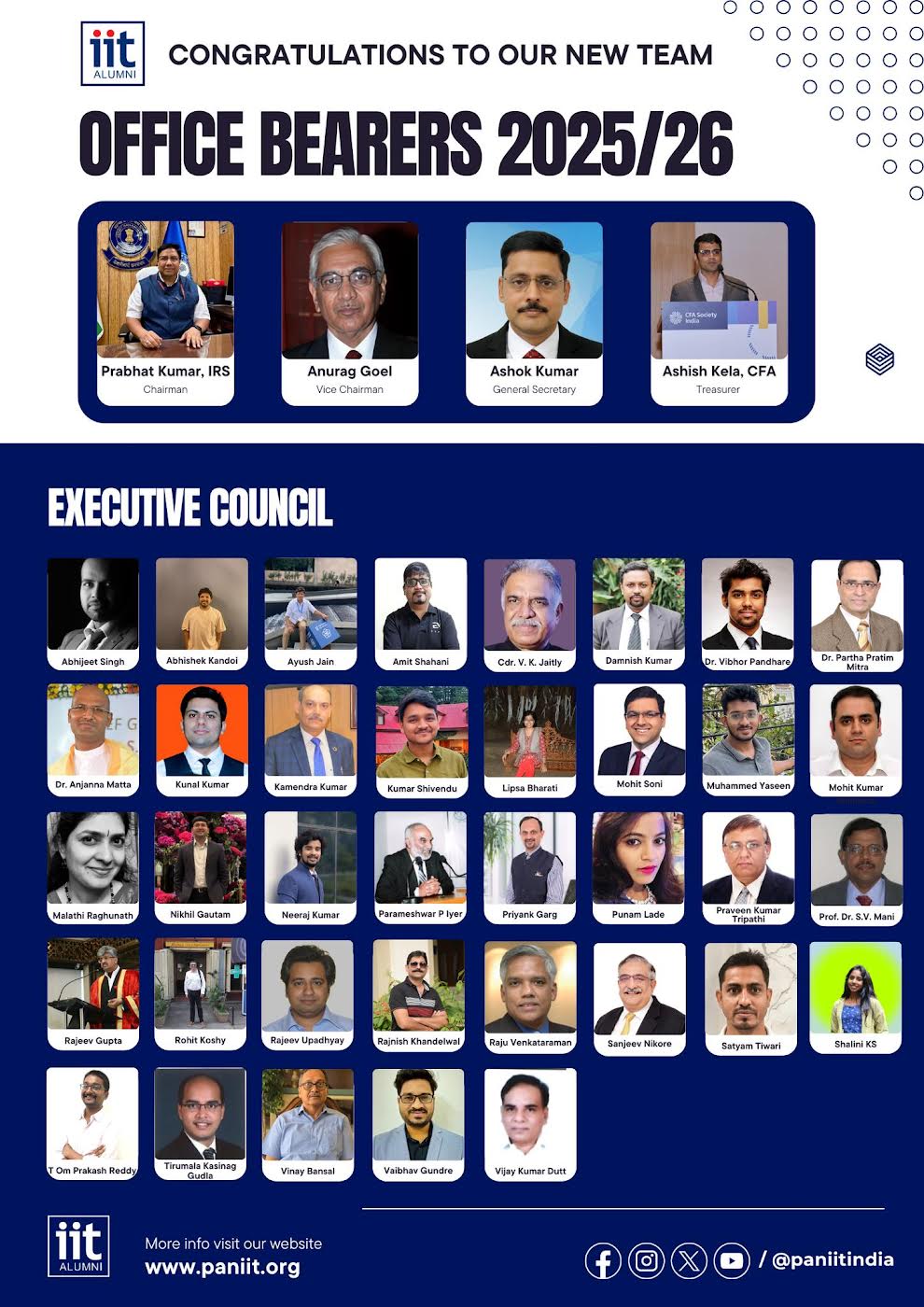
Pan IIT Announces Global Leadership Summit 2026 – Positioning India at the Center of Global Innovation

2-17.jpeg

New Delhi – In a momentous declaration, Pan IIT Alumni India, the apex body representing alumni of all Indian Institutes of Technology, unveiled the Pan IIT Global Leadership Summit 2026 (PAN IIT GLS 2026). Scheduled for June 20-21, 2026, at the state-of-the-art Yashobhoomi Convention Centre in New Delhi, the summit is envisioned as one of the world’s largest cross-sector leadership and venture platforms.

The two-day event will convene over 5,000 IITians and global leaders, including 500 CXOs and managing directors, 200 investors and venture capitalists, and more than 100 speakers and policymakers from over 100 countries. Aligned with Prime Minister Modi’s Vision 2047 for a developed India, the summit operates under the unifying theme: Technology, Investments, Governance, and Diplomacy.

Speaking at the announcement, Mr. Prabhat Kumar, Chairman of Pan IIT Alumni India, stated: “Hosted in Delhi, India’s hub for business and policy, the PAN IIT Global Leadership Summit 2026 will serve as a powerful gateway for global knowledge exchange, leadership excellence, and cross-border collaboration. With participation from over 100 countries, it is uniquely positioned as one of the world’s most influential platforms for leadership and venture engagement.”

The summit aims to catalyze high-level dialogues, strategic partnerships, and capital flows to bolster India’s global economic and innovation leadership. Key focus areas include artificial intelligence, semiconductor design, fintech, climate technology, and space engineering—sectors where India is setting international standards.
Attendees can expect global keynote addresses, high-impact panels, leadership labs, policy roundtables, venture funding forums, investor lounges, startup showcases, and curated networking sessions.

The event will be chaired by Mr. Gaurav Goyal (also referred to as Gourav Goel in some reports), an IIT Delhi alumnus, with Mr. Ashish Shandilya as co-chair. Their leadership promises to deliver tangible outcomes, reinforcing India’s role as a hub for technology-enabled governance and economic diplomacy.

As the world anticipates this groundbreaking gathering, PAN IIT GLS 2026 stands poised to set a new benchmark in global collaboration, driving sustainable growth and resilience in an interconnected era.

In the heart of India’s thriving innovation ecosystem stands PanIIT Alumni India, commonly known as Pan IIT—an umbrella organization that unites the alumni of all Indian Institutes of Technology (IITs). Registered as a not-for-profit society in 2006 under the Societies Registration Act, Pan IIT serves as the Indian legal entity for a global movement that has grown exponentially over the years.

With active chapters in the United States, Canada, the United Kingdom, Korea, Singapore, and Australia, it harnesses the collective potential of over 500,000 IIT alumni worldwide. The organization’s core purpose is to serve humanity through innovation, guided by values of collaboration, integrity, environmental responsibility, and relentless innovation. Its vision—”Think Innovation, Think PanIIT”—aims to position India as a source of cutting-edge technology solutions for the world, particularly developing nations. Missions include promoting IITs as global innovation hubs, aggregating research, contributing to policy-making, and establishing innovation centers focused on defense, water, climate action, and skilling.
At the helm of this transformative body is Mr. Prabhat Kumar, an IRS officer from the 1994 batch and an IIT Delhi alumnus (Batch of 1991). Prabhat Kumar embodies the rare blend of technical prowess and public service dedication that defines many IITians.

From humble beginnings, he discovered IITs late in his school years but persevered to join one of India’s premier institutions. IIT instilled in him resilience, frugality, systems thinking, and problem-solving—qualities he carried into civil services and now into leading Pan IIT. As Chairman, Kumar has championed initiatives like digitizing alumni elections for greater transparency, building a robust alumni database, expanding digital engagement, and fostering a funding ecosystem for IITian startups. His bold vision of shifting talent “From Silicon Valley to Indus Valley” seeks to repatriate innovation and entrepreneurship to India. Programs like MANTRA, the PanIIT Mentorship initiative, empower younger alumni, while global gatherings showcase the community’s spirit of networking and impact.

Under Kumar’s leadership, Pan IIT has evolved into a powerful think tank, mobilizing alumni to address national and global challenges in AI, sustainability, and governance.

This legacy of excellence culminated in a landmark announcement that sent ripples across the global IIT community and beyond.

India Breaks the Backlog: For the First Time, Clears More POCSO Cases Than It Files

unnamed-10.jpg

• India’s disposal rate of POCSO cases is now at 109 percent which means more cases disposed of than registered in a year_
• _A recent study suggests setting up 600 additional e-POCSO courts to end entire backlog in 4 years_
• _Study conducted by Centre for Legal Action and Behaviour Change for Children, an initiative of India Child Protection_

Delhi :For the first time, India has disposed of more POCSO cases in a year than were registered, marking a historic shift in the country’s long battle with judicial backlog. In 2025, 80,320 child sexual abuse cases were filed while 87,754 were disposed of, achieving a disposal rate of 109 percent, according to report “Pendency to Protection: Achieving the Tipping Point to Justice for Child Victims of Sexual Abuse” by Centre for Legal Action and Behaviour Change (C-LAB) for Children, an initiative by India Child Protection. Notably, 24 states also recorded disposal rates above 100 percent. The report recommends setting up 600 additional e-POCSO courts to end the entire backlog of Protection of Children from Sexual Offences (POCSO) cases within four years.

Often tarnished by the ‘tareek pe tareek’ image, India’s backlog of POCSO cases stood at 2,62,089 until 2023. But with this new shift when the disposals surpassed registrations, the report states that the country has reached the tipping point “where the justice system begins to move from managing backlog to actively reducing it.” The report recommends allocating INR 1977 crore for additional 600 e-POCSO courts for a period of four years to completely end pendency, for which Nirbhaya Fund can be utilized as well.

The report further highlights a few worrying gaps such as nearly half of pending cases remain unresolved for over two years, conviction rates continue to fluctuate, and there exist inter-state disparities. For instance, Uttar Pradesh alone accounts for 37 percent of all cases pending beyond five years, making it the single largest contributor to long-term pendency. This is followed by Maharashtra (24%), and West Bengal (11%). Together, these three states account for nearly three-fourths of all cases pending for more than five years.

Highlighting the broader implications of the data in a wider justice context, Purujit Praharaj, Director (Research), India Child Protection, said, “India is now at a tipping point in its response to child sexual abuse. When the system begins to dispose of more POCSO cases than it registers, it moves from intent to impact. Our research consistently shows that prolonged delays intensify trauma for child survivors. Sustaining this momentum is essential if timely, child-centred justice is to become the norm rather than the exception.” India Child Protection is partner of Just Rights for Children which is the largest network of NGOs with over 250 NGO partners working in 451 districts across the country for child protection and child rights.

Among states, seven states and Union Territories logged a disposal rate of over 150 percent, other seven have a disposal rate between 121-150 percent while 10 states achieved a disposal rate between 100-120 percent. These 24 states, therefore, are not only disposing of cases registered in 2025 but also managed to clear some of the previous years’ cases.

These figures reflect cases that entered the system several years ago but have not seen meaningful progress. “This suggests that pendency begins to accumulate early in the lifecycle of a case and that the system faces challenges in moving cases forward within the expected time frame,” the report said.

The report also recommends maintaining a year-on-year disposal rate of over 100 percent in every state/UT, providing technical and administrative support to state judiciaries lagging behind and meticulous monitoring of conviction and acquittal rates. The report also recommends the use of AI-powered legal research tools and document management systems to facilitate efficient case analysis and document retrieval.

The report is based on the data (as of 2nd December, 2025) drawn and analysed from National Judicial Data Grid (NJDG), National Crime Records Bureau (NCRB) and Lok Sabha questions and answers.

scroll to top