कोलकाता व्याख्यानमाला – 100 वर्ष की संघ यात्रा ‘नए क्षितिज’

mohan-bhagwat-kolkata-lecture-youth-hindutva-bangladesh.webp

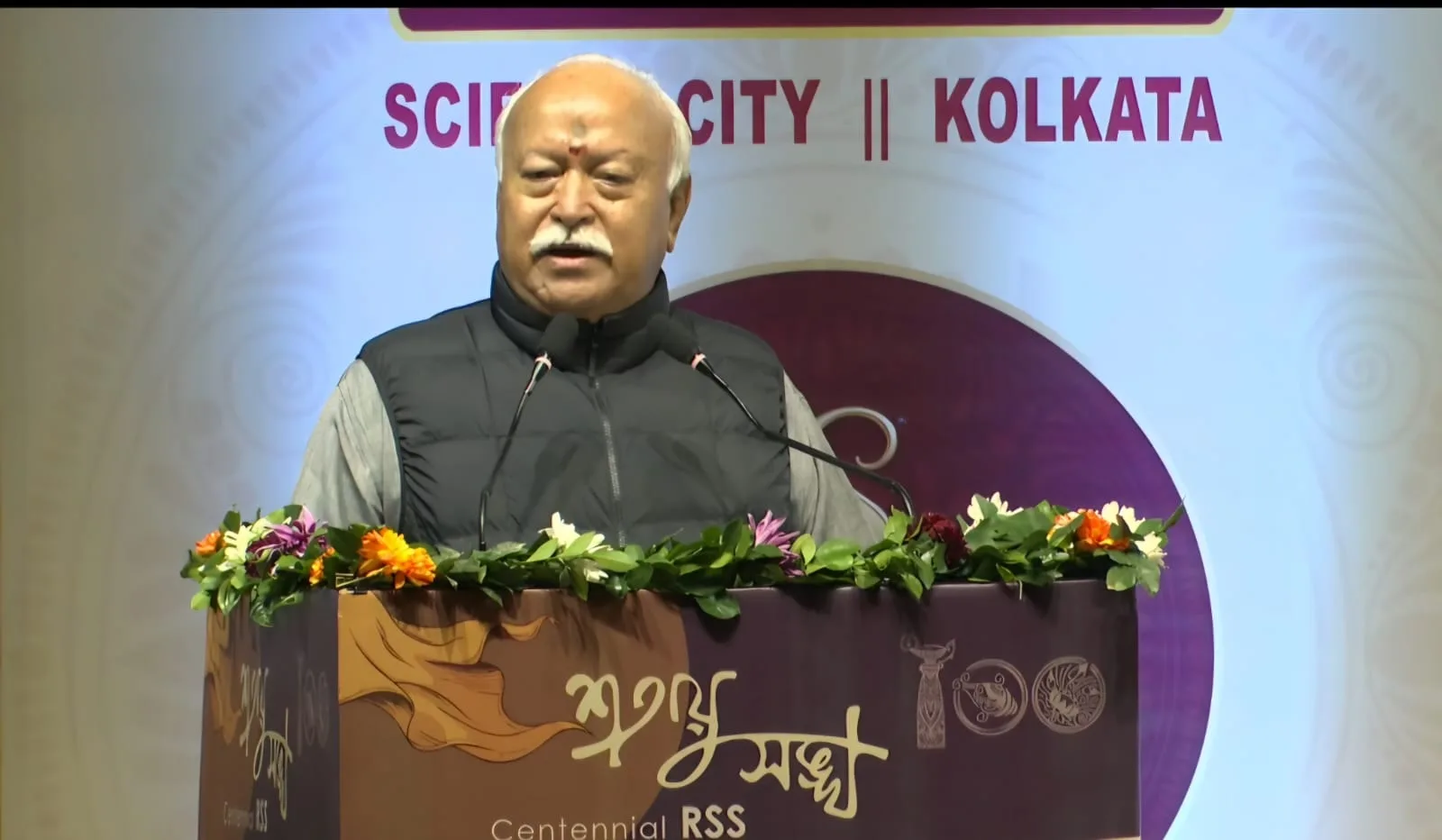
परमपूजनीय सरसंघचालक डॉ. मोहन भागवत जी के वक्तव्य के प्रमुख बिंदु

• संघ के स्वयंसेवक परेड़ करते हैं, यदि उसकी तुलना पैरामिलिट्री से करें तो गलत होगा। संघ के स्वयंसेवक देश-दुनिया में सेवा के कार्य करते हैं, इसलिए संघ को केवल सर्विस ऑर्गेनाइजेशन कहना उचित नहीं होगा। संघ के अनेक कार्यकर्ता राजनीतिक दल में भी कार्य करते हैं, इससे यह अर्थ लगाना कि संघ कोई पॉलिटिकल ऑर्गनाइजेशन है, गलत होगा।
• संघ का कोई शत्रु नहीं, पर संघ के बढ़ने से जिनके स्वार्थ की दुकान बंद हो सकती है, वे विरोध करते हैं, झूठ फैलाते हैं।
• हमारा प्रयास है कि संघ के बारे में जो लोगों की राय बने वह वस्तुस्थिति के आधार पर बने, किसी तीसरे सोर्स से फैलाए गए गलत नैरेटिव के आधार पर नहीं।
• संघ की स्थापना विश्व भर में भारत की जय जयकार हो, इसलिए हुईहै। विश्वगुरू बनने वाले भारत का समाज उस अनुरूप खड़ा हो, इसलिए हुई है।
• संघ किसी राजनीतिक उद्देश्य से नहीं चला, किसी प्रतिक्रिया में शुरू नहीं हुआ। संघ विशुद्ध रूप से हिन्दू समाज के संगठन हेतु शुरू हुआ है।
• हमारे देश में कुशल योद्धा, शासक, बुद्धिमान होते हुए भी मुठ्ठीभर अंग्रेजों ने हम पर शासन कैसे कर लिया, यह सोचने का विषय था। 1857 की क्रांति की असफलता से यह सवाल खड़ा हुआ।
• अन्तर्निहित एकता की बात हमारी संस्कृति में चलती आई है।
• संघ संस्थापक डॉ. हेडगेवार के जीवन में देश के काम के अलावा कोई दूसरा उद्देश्य नहीं था।
• ड़ॉ. हेडगेवार के माता-पिता का एक ही दिन एक घंटे के अंतराल पर निधन हो गया था। तब डॉक्टर जी की आयु मात्र 11 वर्ष थी। उनके माता-पिता प्लेग के रोगियों की सेवा करते थे और उसी की चपेट में आ गए। उनके निधन के बाद डॉ. हेडगेवार ने अत्यंत निर्धनता में जीवन बिताया। पर वे मेधावी थे और कक्षा में सबसे आगे रहते थे।
• स्वप्न में भी वन्देमातरम् को गलत कहने का विचार डॉ. हेडगेवार नहीं कर सकते थे।
• डॉ. हेडगेवार को कोलकाता के नेशनल मेडिकल कॉलेज में इसलिए नहीं भेजा गया क्योंकि वे डॉक्टर बनें। उनका काम अनुशीलन समिति से संपर्क कर पश्चिम भारत में क्रांतिकारी गतिविधियों का श्रीगणेश करना था।
• डॉ. हेडगेवार ने देश के लिए नौकरी नहीं की, विवाह नहीं किया और असहयोग आंदोलनों में गाँव-गाँव गए, तो उन पर राजद्रोह का केस चला।
• डॉ. हेडगेवार ने कभी अंग्रेज़ों की सरकार को स्वीकार नहीं किया, और उन्होंने न्यायाधीश के आगे कहा कि स्वतंत्र होना हमारा जन्मसिद्ध अधिकार है।
• डॉ. हेडगेवार की स्वतंत्रता आंदोलन के नेताओं और क्रांतिकारियों से चर्चा होती रहती थी।
• अंग्रेज़ हमें गुलाम बनाने वाले पहले नहीं थे। उससे पहले इस्लाम आया, उससे पहले शक थे, उससे पहले कुषाण थे, उससे पहले सिकंदर और हुण थे।
• स्वार्थ और भेदरहित तथा अनुशासन के आधार पर समाज बने, तो एक गुणवत्ता आएगी।
• दस साल के चिंतन के बाद 1925 में विजयादशमी के दिन डॉ.हेडगेवार ने संघ की स्थापना की।
• संघ का उद्देश्य किसी को नष्ट करना नहीं है।
• संघ का जन्म डॉ. हेडगेवार के मन की व्यथा और देश की दुर्दशा के आधार पर हुआ। इसलिए सम्पूर्ण हिन्दू समाज का संगठन करना उनका उद्देश्य था।
• व्यक्ति निर्माण के माध्यम से देशव्यापी कार्यकर्ताओंओं का संगठन खड़ाकर समाज जीवन में परिवर्तन करना संघ की कार्यपद्धित है।
• संघ का लक्ष्य सम्पूर्ण हिन्दू समाज का संगठन है, किसी का विरोध करना नहीं है।
• इस देश के लिए उत्तरदायी समाज हिन्दू समाज है।
• अंग्रेज़ों के आने के बाद हम एक राष्ट्र बने, यह गलत अवधारणा है। भारत सनातन काल से है।
• दुनिया में भारत के ही लोग सभी विविधताओं को स्वीकार करते हैं, सम्मान करते हैं। ये इस देश की विशेषता है।
• हिन्दू किसी एक पूजा पद्धित, एक खानपान का नाम नहीं है। हिन्दू कोई धर्म, मजहब भी नहीं है। हिन्दू एक स्वभाव का नाम है। भारत का कोई भी व्यक्ति जो इस स्वभाव को मानता है, वह हिन्दू है। देश के कारण हम ऐसे बने, इसलिए यह हिन्दू का देश है।
• हिन्दू सर्वसमावेशक और सबका कल्याण मानने वाले होते हैं।
• हिंदू नाम नहीं विशेषण है। उनकी पूजा या भाषा देशी हो अथवा विदेशी, लेकिन जो इस संस्कृति को मानता है, मातृभूमि को मानता है, वह हिंदू है।
• हमारी विविधता उसी एकता से निकली है। विविधता उसका श्रृंगार है।
• वैज्ञानिक भी मानते हैं कि इंडो ईरानियन प्लेट पर रहने वालों का 40 हजार वर्षों से डीएनए एक है।
• भारतवर्ष में सभी हिन्दू हैं। भारत में रहने वाले इस दृष्टि से हिन्दू हैं -कुछ गर्व से कहते हैं हम हिन्दू हैं। कुछ कहते हैं कि कहने की क्या जरूरत, कुछ कान में कहते हैं और कुछ भूल गए हैं कि वे हिन्दू थे।
• संपूर्ण हिन्दू समाज का संगठन करने की जो कार्यपद्धित है, वह संघ की अपनी है, अनोखी है।
• एक घंटा सब भूलकर देश के लिए चिंतन करना ही संघ की शाखा है।
• हमें समाज का संगठन करना है, समाज के भीतर कोई प्रभावी संगठन नहीं खड़ा करना है।
• अच्छे काम, निस्वार्थ बुद्धि से किए जाने वाले सभी कार्यों में हम सहयोग करते हैं।
• संघ से तैयार हुए स्वयंसेवक समाज के हर क्षेत्र में कार्य कर रहे हैं। अच्छे काम के लिए संघ सबको सहायता करता है।

Kolkata Lecture Series – 100 Years of the Sangh’s Journey: “New Horizons”

Rssflag.jpg

• The Sangh Swayamsevaks serve people across the country and the world in different fields; therefore, it would not be appropriate to describe it merely as a service organization.
• The Sangh has no enemies, but those whose selfish interests may be threatened by its growth oppose it and spread lies about it.
• There is no organisation like Sangh. It is wrong to compare the Sangh with other organisations in order to understand it. Sanchalan is conducted in Gana-vesh, and merely observing this and calling it a paramilitary organisation would be incorrect.
• Our effort is that people’s opinions about the Sangh should be formed on the basis of facts, not on the false narratives spread by any third source.
• It would be misleading to compare the RSS Swayamsevaks’ parade to a paramilitary organization.
• Dr Hedgewar was not sent to the National Medical College in Kolkata to become a doctor; but to establish contact with the AnushilanSamiti and initiate revolutionary activities in western Bharat.
• Dr. Hedgewar remained devoted to the service of Bharat Mata throughout his life, as a result of the pledge he took before Goddess Kali as a member of the Anushilan Samiti
• The British were not the first to enslave us. Before them came Islam, before that the Shakas, before them the Kushans, and before them Alexander and the Huns.
• Dr. Hedgewar wondered whether our freedom would endure, since there are divisions within our society. Before independence, our country had been ruled by eight invaders, including the British and the Mughals
• After ten years of contemplation, Dr. Hedgewarfounded the Sangh on the day of Vijayadashami in 1925.
• Sangh is not competition. Sangh is not reaction. Sangh is not opposition. Sangh is not working for achievement. Sangh has come to fulfil, not to destroy.
• Sangh was born out of Dr. Hedgewar’s deep anguish and concern for the plight of the nation. Therefore, his aim was to organise the entire Hindu society.
• The goal of the Sangh is the organisation of the entire Hindu society, but it is not aimed to oppose others.
• The idea that we became a nation only after the arrival of the British is incorrect. Bharat has existed since ancient times. Not only in Sri Aurobindo’s Uttarpara speech, but even the communist leader Rajani Palme Dutt wrote in his book that democracy and similar systems did not come because of the British. Even if they had not come, we could have governed ourselves based on the principles of the Vedas.
• The responsible society for this country is the Hindu society
• The destiny of a country is shaped by the character and quality of its society. To achieve this, we must work on ‘Vyakti Nirman’. And Sangh has taken up this mission to organise Hindu society
• Hindu is name of a way of being…Anyone in Bharat who follows or believes in this nature is a Hindu. It is because of this land that we have become like this — therefore, this is the land of the Hindus.
• We have to organise society; we do not have to create any separate organisation within society
• Hindu is not a name, but an attribute. Whether one’s worship or language is native or foreign, anyone who respects this culture and honours the motherland is a Hindu.
• A Hindu is inclusive, who, despite differences in food habits, worship methods, and attire, carries the spirit of Vasudhaiva Kutumbakam—the belief that the whole world is one family and wishes for the well-being of all. We looked within ourselves and found unity in diversity.
• Even scientists agree that the DNA of those living on the Indo-Iranian plate has been the same for 40,000 years. The people living on this motherland have shared the same DNA for 40,000 years. From this perspective, the people living in Bharat are Hindus. Some proudly say, “We are Hindus.” Some say, “What is the need to say it?” Some whisper it quietly, and some have forgotten that they were Hindus. This thought is not only of the Sangh; it is the Sanatan (eternal) idea.
• To forget everything else for an hour and contemplate for the nation, that is the essence of the Sangh Shakha.

The Deteriorating Condition of the Aravalli Hills: An Ecological Crisis in North India

2-1-7.jpeg

Delhi : The Aravalli Range, one of the world’s oldest mountain systems dating back over 670 million years, stretches approximately 692 kilometers across Gujarat, Rajasthan, Haryana, and Delhi. This ancient fold mountain chain serves as a critical ecological backbone for north-western India.

It acts as a natural barrier against the eastward advance of the Thar Desert, traps dust and pollutants, recharges groundwater aquifers, regulates local climate, and supports rich biodiversity, including over 200 bird species and mammals like leopards and hyenas. Often called the “green lungs” of the Delhi-NCR region, the Aravallis mitigate air pollution by filtering particulate matter (PM2.5 and PM10) and moderating wind-blown dust from arid zones.

However, decades of unchecked mining, urbanization, and deforestation have severely degraded this fragile ecosystem. Illegal and legal quarrying for minerals like limestone, marble, and sandstone has flattened hills, created breaches in the range, and led to soil erosion, loss of forest cover, and plummeting groundwater levels. In Haryana alone, natural forest cover is the lowest in India at 3.6%, with significant portions in low-elevation Aravalli systems. Reports from citizens’ groups, such as the People for Aravallis collective, document widespread devastation in districts like Gurugram, Nuh, and Mahendergarh, where groundwater depths reach 1,500-2,000 feet due to mining disruptions.

The range’s destruction has already opened over 12 gaps, allowing Thar Desert dust to infiltrate Delhi-NCR, exacerbating winter smog and pushing Air Quality Index (AQI) levels into severe categories.

This contributes to respiratory illnesses, cardiovascular diseases, and higher hospital admissions, particularly affecting children and the elderly. Without the Aravallis’ vegetation and topography to trap pollutants and retain moisture, regions like Delhi, Haryana, Punjab, and western Uttar Pradesh face intensified dust storms, erratic monsoons, prolonged heatwaves, and accelerated desertification.


A pivotal development occurred on November 20, 2025, when the Supreme Court accepted a uniform definition of the Aravalli Hills proposed by a Ministry of Environment, Forest and Climate Change (MoEFCC) committee. The ruling defines an “Aravalli Hill” as any landform in designated districts rising 100 meters or more above local relief, including its supporting slopes and enclosed base. An “Aravalli Range” comprises two or more such hills within 500 meters of each other. This elevation-based criterion aims to provide a scientifically verifiable standard, resolving inconsistencies across states.

However, critics, including ecologists like Ghazala Shahabuddin and groups like People for Aravallis, argue it excludes over 90% of the range—primarily low-lying ridges, scrub forests, and grasslands—that perform vital functions. Forest Survey of India assessments indicate only about 8.7% of mapped hillocks meet the 100-meter threshold. Environmentalists warn this could undo decades of protections, such as the 1992 MoEFCC notification and 2021 Natural Conservation Zones, opening vast tracts to mining and development. They predict irreversible damage: faster desert advancement, further groundwater depletion (with recharge potential of two million liters per hectare lost), biodiversity loss, and worsened public health crises from toxic air.

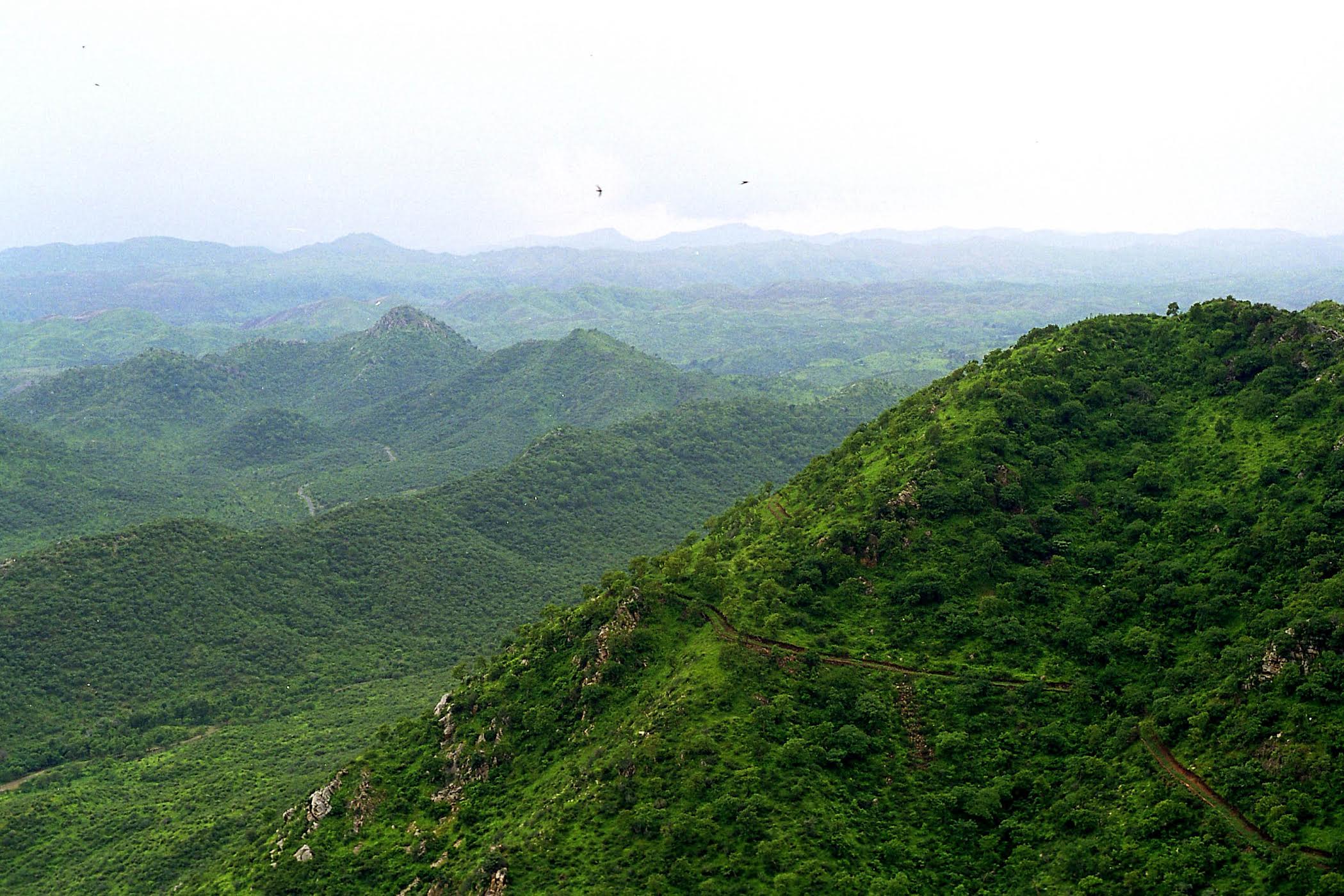
Intact Aravalli landscapes showcase dense forests and rolling hills that sustain ecosystems.

In contrast, mined areas reveal barren craters and dust-covered wastelands, highlighting irreversible flattening.

The government and some reports emphasize protective measures in the ruling. The Supreme Court paused all new mining leases until a Management Plan for Sustainable Mining (MPSM) is finalized by the Indian Council of Forestry Research and Education, including macro-level environmental impact assessments and identification of no-go zones (e.g., wildlife corridors, recharge areas). Existing mines must comply strictly with sustainability norms, and mining covers only 0.19% of the Aravalli region currently. Officials, including Environment Minister Bhupender Yadav, assert that over 90% remains protected, with prohibitions in eco-sensitive zones and a commitment to restoration via initiatives like the Aravalli Green Wall Project launched in June 2025.

Protests in Rajasthan and campaigns like #SaveAravalli reflect public alarm, with figures like former CM Ashok Gehlot calling it a potential “death warrant.” Political debates continue, with opposition accusing the redefinition of favoring mining interests, while the BJP defends it as enhancing conservation through clarity.

The Aravallis’ deterioration poses existential threats: permanent toxic air, water scarcity in stressed cities like Delhi and Gurugram, failing agriculture from dust-covered crops, extreme heat, and potential migration crises. Scientific evidence links mining to degraded land (8.2% in Haryana alone) and interconnected aquifer disruptions. As India’s shield against desertification—aligned with UN commitments—the range’s loss would amplify climate vulnerabilities for millions.

Urgent action is needed: stricter enforcement against illegal mining, holistic protections beyond elevation metrics, and accelerated afforestation. The Supreme Court’s interim safeguards offer a window, but long-term survival demands prioritizing ecological integrity over short-term extraction. Preserving the Aravallis is essential for breathable air, secure water, and resilient climates in north India.

The Hidden Screen: Unrestricted Mobile Access and Its Toll on India’s Teenagers

2-1-6.jpeg

New Delhi: In the bustling streets of Mumbai, 16-year-old Aryan spends hours scrolling through Instagram reels after school, often late into the night. His parents, proud of his new smartphone—a gift for good exam results—see it as a tool for learning and staying connected. But Aryan confesses to friends that the endless feed of perfect lives leaves him feeling inadequate, anxious, and restless. Across India, millions of teenagers like Aryan have near-unlimited access to mobile phones, with no national restrictions on usage for minors. Affordable data plans and widespread smartphone penetration have made devices ubiquitous, but experts warn this freedom comes at a steep cost: easy exposure to harmful content, including pornography and addictive social media, which can profoundly impact developing minds.

As of 2025, India has no blanket bans or age limits on mobile phone use for teenagers, unlike some countries experimenting with school smartphone restrictions or social media age gates. Smartphone ownership among rural teens aged 14-16 has surged, with over 84% of households owning one, according to recent surveys. While this digital boom empowers education and communication, it also opens floodgates to explicit material. Studies show that nine out of 10 boys in India are exposed to pornography before turning 18, often accidentally through pop-ups or shared links on social platforms.

Teenage years are a critical period of brain development, with heightened activity in reward centers and ongoing maturation of impulse control regions until the mid-20s. Neuroscientists explain that the adolescent brain is particularly vulnerable to hyper-stimulating content. Dopamine surges from viewing pornography or engaging with social media can rewire neural pathways, similar to substance addiction mechanisms. A Cambridge University study found younger viewers exhibit greater ventral striatum activity— the brain’s reward hub— in response to pornographic cues, potentially leading to compulsive behaviors.

Research from the Wave Clinic highlights how frequent pornography exposure promotes objectification, desensitization, and unrealistic expectations about sex and relationships. Adolescents may develop distorted views, seeing sex as primarily physical rather than emotional, which can strain real-life attachments. One longitudinal review notes associations with increased sexual aggression, though results are heterogeneous and causality remains debated. In India, a retrospective study of pornography users found younger individuals, often single and with early exposure, showing higher addiction severity, linked to poor coping and excessive digital engagement.

Social media amplifies these risks. Platforms like Instagram and TikTok, designed for endless scrolling, exploit dopamine loops to keep users hooked. Indian adolescents report averaging over three hours daily on social media, with problematic use rising from 7% in 2018 to 11% globally, trends mirrored here. A qualitative study of Indian teens revealed compulsive midnight scrolling disrupting sleep, fostering anxiety from likes/comments, cyberbullying, and social comparison. Excessive use correlates with depression, low self-esteem, body image issues, and loneliness.

The U.S. Surgeon General’s advisory notes teens spending over three hours daily on social media face double the risk of depression and anxiety symptoms— a threshold many Indian youth exceed. In urban India, academic pressures compound this: late-night feeds replace sleep, exacerbating mood disorders. Cyberbullying, often tied to social media, heightens isolation and suicidal ideation risks.

Experts cite neuroplasticity concerns. Pornography’s novelty triggers intense dopamine bursts, potentially eroding prefrontal cortex functions like impulse control and morality. Studies using fNIRS show hyperactive reward areas and inhibited regulatory zones in addicted viewers. For teens, this can stunt emotional growth, leading to erectile dysfunction in young men (14-35% report issues linked to porn habits) or dissatisfaction in relationships.

Positive aspects exist—social media offers connectivity, especially for marginalized youth, and some use pornography for sexual exploration. However, evidence leans toward net harms in unrestricted contexts. A Common Sense Media report found three-quarters of teens view pornography by 17, average first exposure at 12, often accidental.
In India, rising porn addiction among youth alarms behavioral experts. Clinics report increased cases of teens seeking help for compulsive viewing, impacting studies and relationships. The Madras High Court has advocated counseling over punishment for addicted minors, recognizing gadgets’ easy access to uncensored content.
Parents and educators grapple with monitoring. Many teens own smartphones privately, bypassing filters. Calls grow for digital literacy programs, comprehensive sex education, and potential regulations like social media age limits, debated globally.
Yet, blanket bans risk backlash—teens may seek alternatives, worsening distress. Balanced approaches are key: parental guidance, school awareness, and platform accountability.

Aryan recently confided in a counselor, reducing screen time and feeling better. Stories like his underscore urgency: while mobiles connect the world, unrestricted access can disconnect teens from healthy development.

Experts urge action. “Adolescents’ brains are learning machines,” notes one neurosurgeon. “Feed them positive inputs, or risk lasting distortions.”
As India hurtles toward greater digital integration, safeguarding young minds demands collective effort—from families fostering open talks to policymakers considering evidence-based safeguards.

The screen’s glow illuminates opportunities but casts long shadows. For India’s teenagers, the challenge is navigating both.

References and Key Studies Cited:

Wave Clinic (2025): Effects on teenage brain and social development.
Common Sense Media: Teen pornography exposure statistics.
PMC studies on Indian pornography addiction and social media impacts (2024-2025).
U.S. Surgeon General Advisory on Social Media and Youth Mental Health.
Various neuroimaging and longitudinal reviews on dopamine, desensitization, and mental health correlations.

scroll to top