India Breaks the Backlog: For the First Time, Clears More POCSO Cases Than It Files

pendency.jpeg.webp

• India’s disposal rate of POCSO cases is now at 109 percent which means more cases disposed of than registered in a year_
• _A recent study suggests setting up 600 additional e-POCSO courts to end entire backlog in 4 years_
• _Study conducted by Centre for Legal Action and Behaviour Change for Children, an initiative of India Child Protection_

Delhi :For the first time, India has disposed of more POCSO cases in a year than were registered, marking a historic shift in the country’s long battle with judicial backlog. In 2025, 80,320 child sexual abuse cases were filed while 87,754 were disposed of, achieving a disposal rate of 109 percent, according to report “Pendency to Protection: Achieving the Tipping Point to Justice for Child Victims of Sexual Abuse” by Centre for Legal Action and Behaviour Change (C-LAB) for Children, an initiative by India Child Protection. Notably, 24 states also recorded disposal rates above 100 percent. The report recommends setting up 600 additional e-POCSO courts to end the entire backlog of Protection of Children from Sexual Offences (POCSO) cases within four years.

Often tarnished by the ‘tareek pe tareek’ image, India’s backlog of POCSO cases stood at 2,62,089 until 2023. But with this new shift when the disposals surpassed registrations, the report states that the country has reached the tipping point “where the justice system begins to move from managing backlog to actively reducing it.” The report recommends allocating INR 1977 crore for additional 600 e-POCSO courts for a period of four years to completely end pendency, for which Nirbhaya Fund can be utilized as well.

The report further highlights a few worrying gaps such as nearly half of pending cases remain unresolved for over two years, conviction rates continue to fluctuate, and there exist inter-state disparities. For instance, Uttar Pradesh alone accounts for 37 percent of all cases pending beyond five years, making it the single largest contributor to long-term pendency. This is followed by Maharashtra (24%), and West Bengal (11%). Together, these three states account for nearly three-fourths of all cases pending for more than five years.

Highlighting the broader implications of the data in a wider justice context, Purujit Praharaj, Director (Research), India Child Protection, said, “India is now at a tipping point in its response to child sexual abuse. When the system begins to dispose of more POCSO cases than it registers, it moves from intent to impact. Our research consistently shows that prolonged delays intensify trauma for child survivors. Sustaining this momentum is essential if timely, child-centred justice is to become the norm rather than the exception.” India Child Protection is partner of Just Rights for Children which is the largest network of NGOs with over 250 NGO partners working in 451 districts across the country for child protection and child rights.

Among states, seven states and Union Territories logged a disposal rate of over 150 percent, other seven have a disposal rate between 121-150 percent while 10 states achieved a disposal rate between 100-120 percent. These 24 states, therefore, are not only disposing of cases registered in 2025 but also managed to clear some of the previous years’ cases.

These figures reflect cases that entered the system several years ago but have not seen meaningful progress. “This suggests that pendency begins to accumulate early in the lifecycle of a case and that the system faces challenges in moving cases forward within the expected time frame,” the report said.

The report also recommends maintaining a year-on-year disposal rate of over 100 percent in every state/UT, providing technical and administrative support to state judiciaries lagging behind and meticulous monitoring of conviction and acquittal rates. The report also recommends the use of AI-powered legal research tools and document management systems to facilitate efficient case analysis and document retrieval.

The report is based on the data (as of 2nd December, 2025) drawn and analysed from National Judicial Data Grid (NJDG), National Crime Records Bureau (NCRB) and Lok Sabha questions and answers.

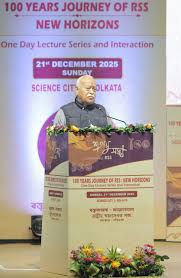
Kolkata Lecture Series – 100 Years of the Sangh Journey: “New Horizons”

images-6.jpeg

Date: December 21, 2025, Second Session

Salient points of the address by Poojya SarsanghchalakDr. Mohan Bhagwat ji

• Ideas can compete, but it is important that everyone’s hearts remain united. In America, Abraham Lincoln strengthened the bond of unity by appointing his opponent as the Secretary of Defence.
• The Sangh work is a pure and sattvic (virtuous) endeavour founded on friendship.
• You will truly understand the Sangh only when you come to the Sangh Shakha in person, see it, and understand it for yourself.
• Sangh has been functioning with a spirit of collectiveness since the day of its establishment.
• The work of the Sangh is divine work. Our effort is to become worthy of it. The affection of society has always been with us, and that is why the Sangh has progressed.
• As the RSS grew, some folks started getting uneasy. Pushback ramped up based on clashing ideas. No group in world history has faced such fierce, drawn-out opposition as the RSS. There have been attacks on its Swayamsevaks, even killings, yet the Sangh does not hold any bitterness towards its opponents, because they too are part of the same society.
• Sangh moved forward with simplicity, away from fame, with discipline and courteous language. It moved forward not through struggle, but through coordination and harmony.
• The Sangh is economically self-reliant. They account for every single penny and do not take anything from outside. The Swayamsevaks manage everything themselves. Because the Sangh is self-reliant, therefore it is self-respecting as well.
• We remained vigilant in an environment of opposition. Now, in an environment of favourability, we must rapidly expand our work. Strengthening the quality of our Swayamsevaks is the agenda for the years beyond thecentenary year.
• It is not about creating good people in society; rather, there are already a large number of good people in society. A large number of people are quietly serving society, spending their own money without seeking fame. We call this the Sajjan Shakti (noble force) of society. Sangh will help this noble force of society by connecting them, working together in a spirit of mutual cooperation, building a network among them, ensuring coordination with each other, and bringing complementarity into their work.
• The time has come to bring about a change in behaviour across society, based on a nationwide cadre of workers. The swayamsevaks should first bring about a change in their own conduct by adopting five key points; we have already begun this in the centenary year of the Sangh.
o Social Harmony (Samajik Samarasata): Ensure equal access for all Hindus to temples, water sources, and cremation grounds, eliminating caste-based discrimination.
o Family Awakening (Kutumb Prabodhan): Hold weekly family gatherings for shared meals, bhajans, dialogue, and discussions on traditions without criticism.
o Environmental Protection: Maintain clean homes and streets, save water, avoid single-use plastics, and plant trees on rooftops.
o Self-Awareness and Swadeshi (Swabodh): Prioritise indigenous goods, language, attire, and food for self-reliance and cultural identity.
o Civic Duties (Nagarik Kartavya): Read andimbibe the Constitution of India particularly its Preamble, Fundamental Duties, Directive Principles, and Rights to families and children.
• Bharat, Hindusthan and Hindu are all synonymous terms.
• The Sangh considers entire society as its own. On the basis of this sense of belonging, we all should be one. It is not necessary that everyone must come to the SanghShakha. Coming is certainly good, because there is no other system or mechanism that imparts training in selfless attitude and authenticity quite like the Sangh Shakha.
• The Sangh doesn’t work to take credit in its own name.

When Myanmar heads for an election with little credibility

unnamed-2-1.jpg

Nava Thakuria

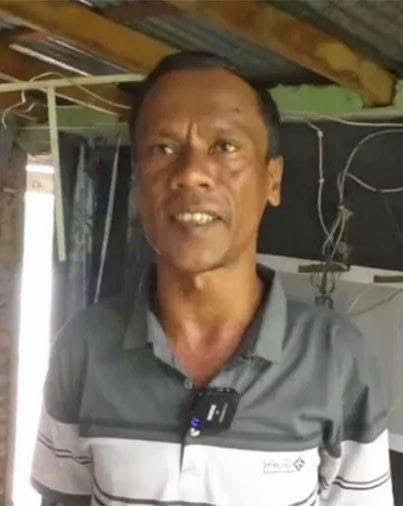
Naypyidaw: Trouble-torn Myanmar (also known as Burma or Brahmadesh) is heading for the next general elections after the military coup in 2021 that ousted a democratically elected government in Naypyitaw. The proposed three-phase polling, starting on 28 December 2025, will however prevent several important political parties including Aung San Suu Kyi-led National League for Democracy (NLD, which won the last general elections held in November 2020) from participating in the electoral exercise. The elections, where only the proxies of Burmese military junta are joining, will seemingly be one sided in their favour and results are expected by the end of January next year.

The Buddhist majority southeast Asian nation of nearly 55 million people is however witnessing a kind of civil war, where the Min Aung Hlaing-led Tatmadaw continue fighting the people’s militia, resulting in thousands being killed, hundred thousand detained and millions displaced across the poverty stricken country. In various battles under Operation 1027, which was launched in October 2024 by the anti-junta rebel groups, the government forces faced humiliating defeats and by now half of the Burmese territories comprising important towns and military bases had gone out of the military’s control. The voting in those localities will be either impossible or lowly participating and hence a free, fair and comprehensive election in the Land of Golden Pagodas still remains elusive.

The junta-appointed Union Election Commission (UEC) prepares for the second and third phases on 11 and 25 January 2026, where the exercise is supposed to cover around 274 out of 330 townships (loosely termed for constituencies). More precisely, millions of Myanmar nationals are now living abroad (some four million Myanmarese reportedly taking shelter in Thailand) legally and illegally. As the anti-junta people’s defence forces, ethnic armed groups and revolutionary organizations maintain significant influence across the international border localities, the voter registration as well as polling may be severely affected.

The UEC had already deregistered a number of political parties citing the reasons for not fulfilling necessary criteria including one to possess a certain number of members and functioning offices. Nearly 40 political parties, including the NLD, even did not re-register with the Burmese electoral authority as the crackdown against pro-democracy armed resistance units continue putting over 22,000 political prisoners (including President U Win Myint, facing over a decade sentence, Nobel peace laureate Suu Kyi, imprisoned for 27 years, and a number of elected representatives) under detention.

The state-run Global New Light of Myanmar recently reported that the State Administration Council (the military regime) enacted a new election law imposing harsh penalties up to seven years of imprisonment for any speech, incitement, protest, distribution of leaflets against the electoral process. The newly enacted repressive law also imposed heavy punishments for damaging ballot papers or vandalizing polling stations as well as intimidating candidates, election workers and voters in general. Many Myanmarese citizens, who criticized the electoral process on social media, were sentenced for many years in prison. The number of victims may even increase in the coming days.

“Civilian casualties exceed 7,500 and 3.6 million people have been displaced since 2021 as the government forces exercised indiscriminate crackdowns including air strikes on crowded places, hospitals and even schools. Many pro-democracy leaders have left for the neighbouring countries like Thailand, China, Bangladesh and India to escape the military atrocities. On the other hand, the country is reeling under a severe economic crisis because of financial mismanagements of the military rulers,” claimed a Yangon-based political activist, who wanted anonymity, adding that many wards and village-tracts under Sagaing, Magway, Mandalay, Ayeyarwady, Bago, Tanintharyi regions and Shan, Kachin, Kayah, Kayin, Mon, Rakhine, Chin states will avoid hosting the polls.

With only six political parties including the Tatmadaw-aligned Union Solidarity and Development Party, National Unity Party, People’s Pioneer Party, Myanmar Farmers Development Party, Shan & Nationalities Democratic Party and People’s Party been allowed to field candidates nationwide and nearly 50 other smaller political entities taking part in regional assemblies, the forthcoming elections will hardly enjoy due credibility. Nevertheless, military dictator Hlaing and his associates will try to showcase the exercise as a successful venture with an aim to get legitimacy for their unlawful power grabbing .
A recent editorial in Mizzima newspaper, assumed to be highly circulated and influential in Myanmar, stated that the junta after seizing power in 2021 was working ‘to consolidate its rule through a veneer of electoral legitimacy’. However, the crackdown on dissenting voices in the lead-up to polling continues and it uncovers the authoritarian foundation of the military regime. From the outset, the proposed election has been widely regarded as an attempt by the junta to legitimize its seizure of power through controlled and deeply compromised political processes, said the editorial, adding that even though dictator Hlaing promised a return to disciplined democracy, his ultimate goal will rest on enduring control over the country’s political system.

The critics and observers both within and outside Myanmar have argued that any election held under the current circumstances cannot be inclusive and credible. Since the last coup, thousands of political activists, journalists, and ordinary citizens have been arrested, and many have been tortured or killed. An exile regime, named National Unity Government (NUG, primarily formed by the elected representatives, who were not allowed to take charge) has urged the international community to denounce the junta’s sham election and prevent sending any poll-observers to Myanmar. The Association of Southeast Asian Nations (ASEAN) leaders, often criticized for their feeble voices against the Burmese junta, decided not to send election observers from the member-countries during the polls.

The Geneva-based global media safety and rights body Press Emblem Campaign (PEC), while urging the military regime to release all media professionals, demanded to abolish new election interference law that continues harassing scribes and social media users in the name of clean-up efforts as a prelude to the multi-phase elections. The PEC sources revealed that over 200 journalists were detained and imprisoned since the 2021 coup overthrowing the democratically elected Suu Kyi’s government and nearly 40 media professionals are still behind the bars across the politically disturbed country. The junta also cancelled permits of around 15 media outlets, compelling the scribed to work from hideouts, and the foreign media has largely been restricted.

Meanwhile, the ASEAN Parliamentarians for Human Rights (APHR) also urged the ASEAN 2026 leaders to reject the junta’s fraud elections. Welcoming a recent meeting between an APHR delegation and Philippine foreign affairs secretary Ma Theresa P Lazaro, who serves as ASEAN 2026 special envoy on Myanmar situation, the network of ASEAN lawmakers expressed concerns over the junta’s escalating violence and worsening humanitarian conditions in the country emphasizing on a principled, united, and justice-driven approach to end the suffering and also restoring the democratic aspirations of Myanmar people. Commending secretary Lazaro for her commitment to the cause of Myanmar and its people, the APHR stressed that ASEAN’s credibility and regional stability are at stake. The forum also offered possible support to help bridging the humanitarian, political and technical gaps.

Lately, the junta has granted mass amnesty to another group of 3,085 political prisoners and dropped charges against 5,580 individuals paving their releases from different jails ahead of voting. According to the state-run television channel MRTV, their release was sanctioned to help them exercise their franchises in elections and thus promoting goodwill among the electorates. The released prisoners were however asked not to repeat the offense (read opposing the military dictators and proposed elections). Till date, no report surfaced if ailing octogenarian Suu Kyi, the daughter of Burma’s independence hero Aung San, figures among them.

All the neighboring countries including India, which has a major investment in the under-construction Kaladan riverine project, expressed their concern over the continued instability on border localities and also influx of Myanmarese migrants. Political observers believe that the forthcoming elections will hardly help installing a civilian regime, guided by the Parliamentary rules, and the military dictators will continue enjoying absolute political power. The current military chief may emerge as the new President of Myanmar and he would appoint someone from trusted followers as the top military commander. At the same time, the lawmakers (under the military-drafted 2008 Constitution reserving space for 25% members in the Parliament and key ministries to the defence personnel) will probably function as mute spectators while dealing with any military-involved developments.

मुंबई प्रवास: आपद काल परिखिअहिं चारी… (अटल जी और भारती जी)

atal_7_1534477130_749x421.jpeg

डॉ संजय अनंत

दिल्ली । ये अंतिम कड़ी है , वो भी इसलिए लिख रहा हु क्यों कि ये महत्वपूर्ण विषय छूट गया था , धर्मवीर भारती जी के उस लेखन कक्ष में ये तस्वीर मुझे दिखाई दी, जिसे आप सब से साझा की, जब आप रोग शैय्या पर हो और पता चले आप का कोई अभिन्न मित्र मिलने आया है , तो आप के अंतर एक आत्मविश्वास जाग जाता है , रोग से लड़ने का आत्मबल बढ़ जाता है

एक ऐसी ही मित्रता थी ,डॉ धर्मवीर भारती और अटल बिहारी वाजपेयी जी की .
.
धीरज धर्म मित्र अरु नारी।

आपद काल परिखिअहिं चारी।।

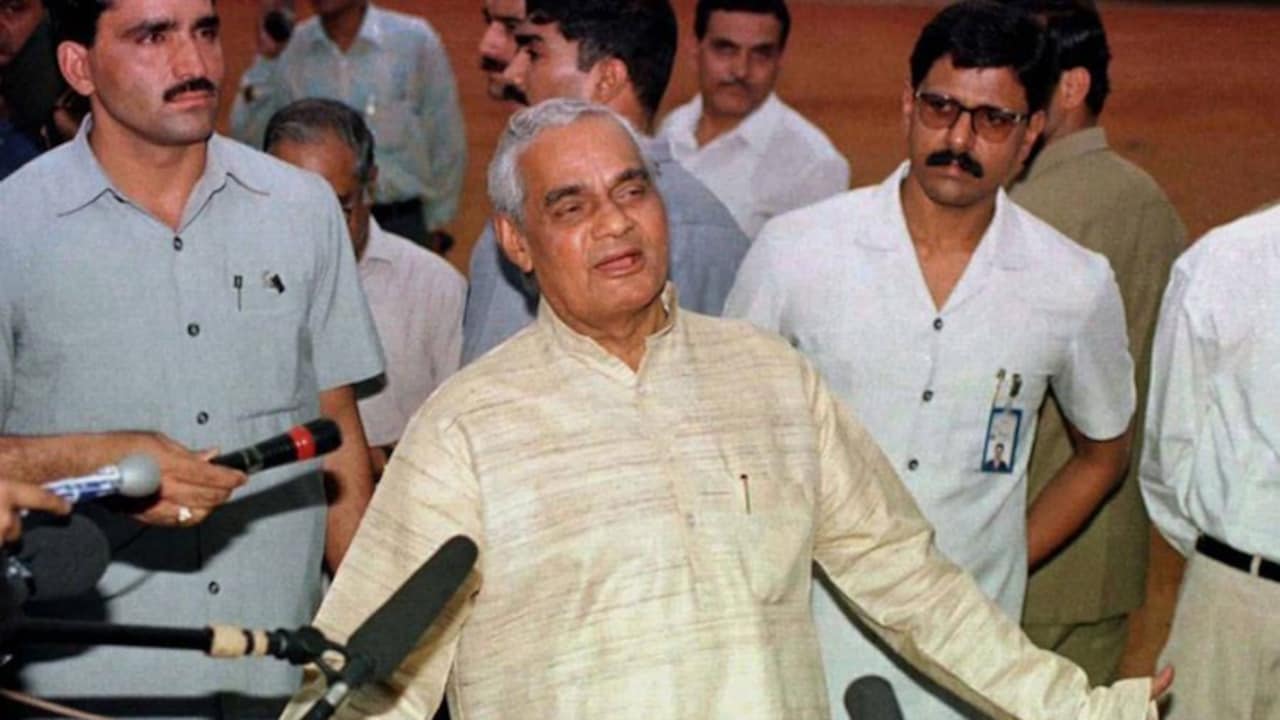
उनकी मित्रता पर बाद में विस्तार से बताता हु , आप पुनः इस चित्र को ध्यान से देखिए , अटल जी , भारती जी की शैय्या पर बिना किसी संकोच के पैताने बैठे है ( उनके पैरों की ओर)

चाहते तो दूर कुर्सी पर बैठ , उनका हालचाल पूछते , आजकल तो बड़े लोग इन्फेक्शन के डर से रोगी से दूर ही रहते है , इतने बड़े कद का नेता , जो भारत का प्रधानमंत्री बना , उसकी सरलता , शुचिता और अपने मित्र से लगाव देखिए

भारती जी के लिए कितना सुखद क्षण रहा होगा , अटल जी उनके मित्र उनके समीप बैठ, उनका हाल जान रहे है, कुशल क्षेम पूछ रहे है
अटल बिहारी वाजपेयी और भारती जी , दोनों का जन्म 25 दिसंबर को हुआ , अटल जी आयु में बड़े है , किन्तु पुष्पा जी को भाभी कहते है, ये किस्सा मुझे पुष्पा जी अपने लिखित संस्मरण में मुझ से साझा किया था, उनके ही शब्दों में

आज भारती का जन्मदिन है और आज ही भारत रत्न अटल बिहारी बाजपेयी जी का भी जन्मदिन है। एकदिन यों ही बात बात में मैने उन से पूछ लिया कि आप दोनो में बड़ा कौन है तो यह पता चला कि क्योंकि भारती जी का जन्म सुबह सुबह भोर में हुआ था और अटल जी सुबह नौ बजे के करीब।तो मैने हॅस कर कहा तब तो आप मेरे देवर हुए। और लो उन्होंने झट से मेरे पैर छू लिये।मैं तो एकदम सकपका गयी थी।पर रिश्ता हमेशा के लिये पक्का हो गया था। दोनो में घनिष्ठ मित्रता हो गयी थी।अटल जी को मेरी भाभी के हाथ के बने बेसन के लड्डू बहुत पसंद थे।एक दिन फ़ोन आ गया।शाम को पांच बजे लड्डू खाने आ रहा हूं।भाभी बेचारी ने तुरंत बनाना शुरू कर दिया बेसन भूनने में खासी मेहनत लगती है।खड़े खड़े थक गयीं तो उछल कर रसोई में जहां गैस रखी थी वहीं प्लेटफ़ार्म पर चढ़ कर बैठ गयीं और धीमी ऑंच पर बेसन भूनने लगीं।और लो नियत समय से पहले ही अटल जी आ गये और भाभी की वह मुद्रा देख कर जोर से ठहाका लगाया।भाभी तो मारे लाज के चेहरे पर घूंघट डाल कर गुड़ी मुड़ीं हो गयीं।अटल जी बोले भाभी जी घबराइये मत जल्दी आ गया हूं , पर लड्डू खा कर ही जाऊंगा।

इस प्रकार अटल जी उनके आजीवन देवर बने रहे

भारती जी नहीं रहे , इधर अटल जी भारत के प्रधानमंत्री बन गए , अटल जी को बधाई देते हुए पुष्पा जी ने पत्र लिखा , और उसके जवाब में अटल जी ने जो लिखा , वो आप सब को साझा कर रहा हु , भारती जी के जाने के बाद भी अटल जी ने उनके परिवार से अपना रिश्ता यथावत रखा
दिनांक 7 जनवरी 2002

अटल जी के शब्दों में
प्रिय भाभी जी
जन्मदिन पर आप का स्नेहपूर्ण पत्र मिला , मुझे देवर कहने वाली एक भाभी आप ही बची है
परमात्मा मुझे , इस स्नेह संबंध का अधिकारी बनाए रखे

आप का
अटल बिहारी बाजपेयी
तो मित्रों , मै इस यशस्वी मित्रता की कथा आप से कह , अपनी लेखनी को विराम देता हु
पर सोचिएगा
भारती जी और अटल जी जैसी मित्रता क्या आज के इस पूंजीवाद की अंधी दौड़ में दौड़ते भारत में देखने मिलेगी
शायद नहीं

scroll to top