Open Letter to The Hindu: Demand Transparency and Fact-Checking in Survey Reporting

2-1-30.jpeg

Dear Editors of The Hindu,
Please apologize to your readers. On the morning of August 17, you,

@the_hindu

, published survey findings from

@LoknitiCSDS

with a headline claiming that Indians are losing “trust” in the Election Commission. Interestingly, on the same day,

@RahulGandhi

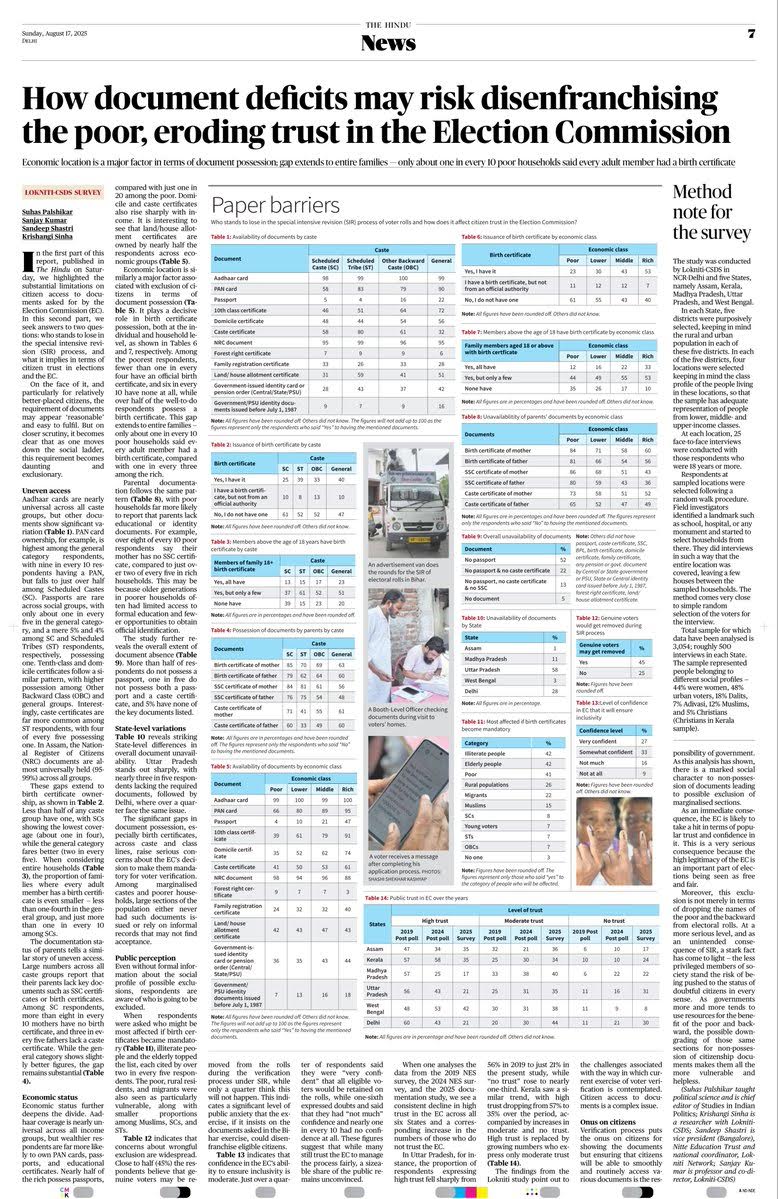
launched his Bihar Yatra, alleging so-called “vote chori.” However, you failed to cross-check even the most basic facts from the survey. The survey was not pan-India; it covered only six states: Assam, West Bengal, Kerala, Uttar Pradesh, Madhya Pradesh, and Delhi, with 500 respondents per state. This detail was buried in the fine print, which almost no one reads. Assam and Uttar Pradesh were given the same weightage in the survey—an obvious flaw in methodology. Yet, The Hindu amplified the conclusion as if it represented the entire country.

You did not question CSDS about why only these six states were selected or inform readers that four have high Muslim populations: Assam (40%), West Bengal (35%), Kerala (27%), and Uttar Pradesh (19%). Sanjay Kumar admitted the figures for Assam and West Bengal in his interview with Karan Thapar, but you overlooked this. Additionally, The Hindu ignored its own data tables. Table 10 shows that in Assam, 99%, and in West Bengal, 97%, of respondents already had the required 11 documents for the proposed SIR (this survey predates the Aadhaar judgment). However, Table 11 indicates that 45% still fear “Vote Kat Jayega!” Any reputable newspaper would investigate: if nearly everyone has the documents, why do almost half still fear their votes may be cut? That contradiction warranted scrutiny, but The Hindu printed the claim without investigation.
By failing to demand transparency from CSDS—no raw data, no explanation of sample design, no randomization—The Hindu transformed from a newspaper into something else. Readers were left with sensational headlines but lacked the context to judge credibility. This is not quality journalism. As one of the most trusted platforms, which I read every morning, The Hindu must:

  • Demand raw data from CSDS instead of blindly publishing.
  • Conduct its own fact-checking.
  • Avoid acting as a mere postman; stop serving what is spoon-fed.
  • Question contradictions, such as why ‘fear’ remains high if documentation is near-universal.
  • Correct the record for your readers.

Sincerely,
Dilip Mandal

Top Movies and Documentaries on Netflix for Learning About the Share Market

2-38.png

Based on various sources, here are some highly recommended movies and documentaries currently available on Netflix that can help you learn about the share market (also known as the stock market). These focus on real-world events, financial crises, trading practices, and investment strategies. I’ve prioritized those with strong educational value, including brief descriptions and key lessons. Note that while some are fictionalized, they are based on true stories and explain complex concepts like short-selling, market crashes, and fraud.

  1. The Big Short (2015) This film follows investors who predicted and profited from the 2008 financial crisis by betting against the housing market. It breaks down complex terms like CDOs (collateralized debt obligations) and short-selling in an entertaining way. Key Lessons: Understanding market bubbles, risk assessment, and how systemic failures impact stocks. Format: Movie (Comedy-Drama). Why Watch: Great for beginners to grasp how the stock market can crash.
  2. The Wolf of Wall Street (2013) Based on the true story of stockbroker Jordan Belfort, it depicts his rise through penny stock scams, pump-and-dump schemes, and lavish lifestyle, leading to his downfall due to fraud. Key Lessons: The dangers of unethical trading, regulatory oversight, and how greed drives market manipulation. Format: Movie (Black Comedy). Why Watch: Illustrates the high-stakes world of brokerage and stock fraud.

  1. Margin Call (2011) Set over 24 hours in an investment bank during the early stages of the 2008 crisis, it shows executives dealing with toxic assets and deciding to sell them off, triggering market panic. Key Lessons: Risk management, leverage, and the rapid decisions that can lead to market downturns. Format: Movie (Drama). Why Watch: A tense look at how one firm’s actions affect the broader stock market.

  1. Inside Job (2010) A documentary narrated by Matt Damon that dissects the causes of the 2008 global financial crisis, including deregulation, banking practices, and conflicts of interest. Key Lessons: How policy changes and corruption lead to stock market instability and recessions. Format:Documentary. Why Watch: Provides a factual analysis of systemic issues in finance and markets.
  2. Eat the Rich: The GameStop Saga (2022) This mini-series covers the 2021 GameStop stock frenzy, where retail investors on Reddit challenged hedge funds shorting the stock, causing massive price surges. Key Lessons: Short-selling, meme stocks, retail vs. institutional investing, and market volatility. Format: Documentary Mini-Series. Why Watch: Modern example of how social media influences share prices and democratizes trading.

If you’re open to TV series for deeper dives, check out Billions (about hedge fund trading and market manipulation) or Dirty Money (episodes on corporate fraud affecting markets). Availability can vary by region, so search directly on Netflix. For more personal finance basics, try Money, Explained.

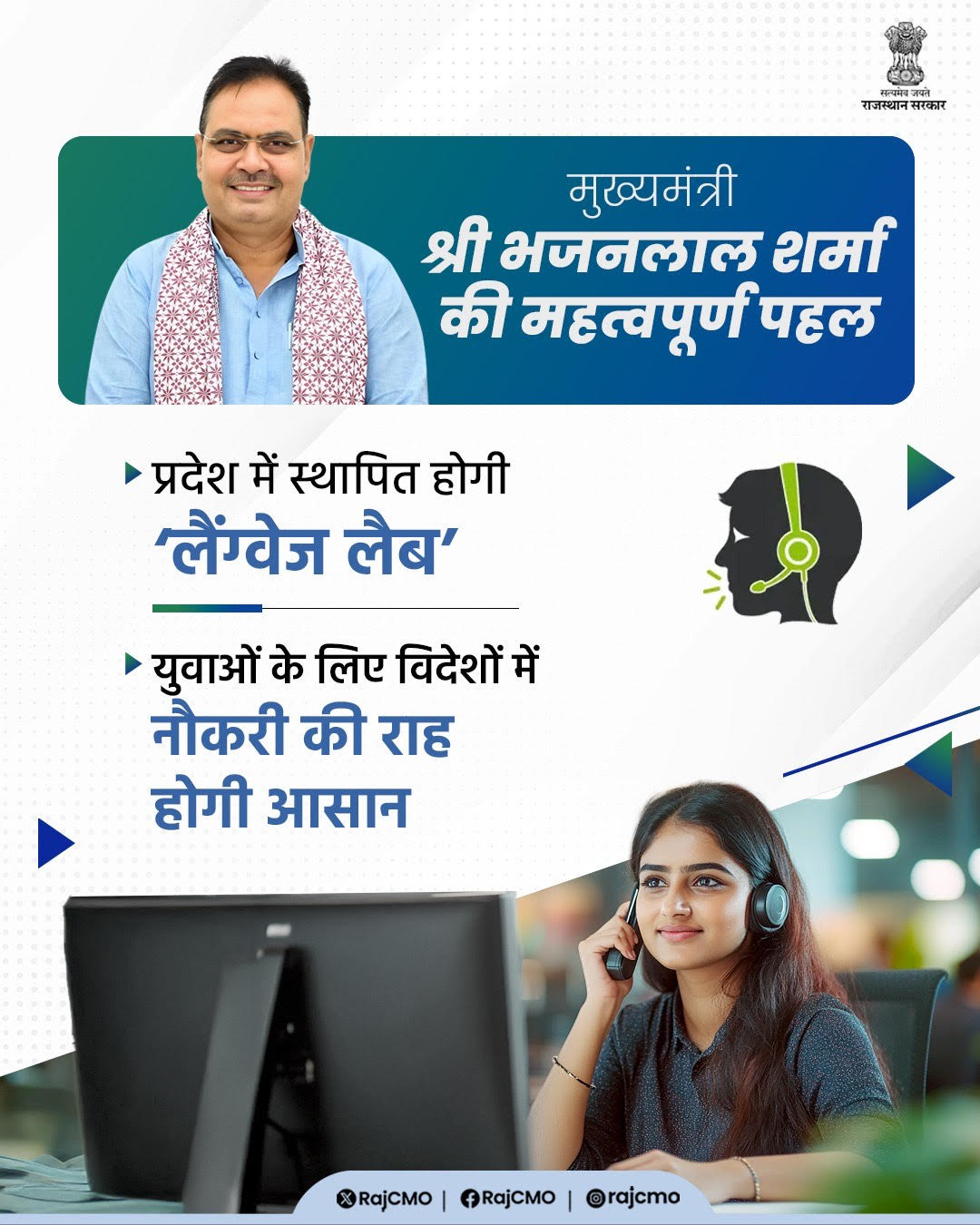
Rajasthan Govt to Set Up Language Labs for Students to Learn Foreign Languages: CM Sharma

unnamed-3.jpg

Jaipur: The Rajasthan government, in collaboration with the English and Foreign Language University (EFLU) and the Union Ministry of Human Resource Development, has unveiled plans to establish state-of-the-art language laboratories across the state. These facilities are poised to provide specialised training in key international languages, including English, French, Spanish and Japanese.

Chief Minister Bhajan Lal Sharma, in a post on X, described the initiative as a pivotal step toward equipping Rajasthan’s youth for success in an increasingly interconnected world.

He underscored that mastering global languages would empower young people—students, aspirants and professionals alike—to pursue overseas employment and higher education, while boosting their communication skills and employability in sectors such as tourism, business, IT, education and services.

The CM reaffirmed his vision of a “Developed Rajasthan”, asserting that it can only be realised by unlocking and nurturing the potential of the state’s younger generation through targeted skill development and international exposure.

The announcement follows a robust performance at last year’s Rising Rajasthan Global Investment Summit, where MoUs worth nearly Rs 35 lakh crore were signed, and multinational companies expressed strong interest in recruiting skilled Rajasthani youth.

बिहार ब्यूटी एक्सपो 2025: सौंदर्य और नवाचार का शानदार मंच

2-2-22.jpeg

पटना: बिहार की राजधानी पटना में आयोजित बिहार ब्यूटी एक्सपो 2025 ने सौंदर्य उद्योग के उत्साह को नई ऊंचाइयों तक पहुंचाया। यह तीन दिवसीय मेगा इवेंट, जो 20 अगस्त को गांधी मैदान के पास एक भव्य प्रदर्शनी हॉल में शुरू हुआ, सौंदर्य, फैशन और वेलनेस के क्षेत्र में नवीनतम रुझानों को प्रदर्शित करने का एक शानदार मंच साबित हुआ। इस आयोजन ने स्थानीय और राष्ट्रीय स्तर के सौंदर्य पेशेवरों, ब्रांड्स और उत्साही लोगों को एक छत के नीचे लाकर बिहार के सौंदर्य उद्योग को नई दिशा दी।

एक्सपो में 100 से अधिक स्टॉल्स लगाए गए, जहां कॉस्मेटिक्स, स्किनकेयर, हेयरकेयर, और वेलनेस प्रोडक्ट्स की विस्तृत रेंज प्रदर्शित की गई। प्रमुख ब्रांड्स जैसे लक्मे, मेबेलिन, और हिमालया ने अपने नवीनतम उत्पादों का प्रदर्शन किया, जबकि स्थानीय स्टार्टअप्स ने देसी और जैविक सौंदर्य उत्पादों को पेश कर दर्शकों का ध्यान खींचा। आयोजन में मेकअप आर्टिस्ट्स, हेयर स्टाइलिस्ट्स, और वेलनेस कोच द्वारा लाइव डेमो सेशन भी आयोजित किए गए, जिन्होंने नवीनतम तकनीकों और ट्रेंड्स को साझा किया।

एक्सपो का मुख्य आकर्षण रहा ब्यूटी पेजेंट 2025, जिसमें बिहार के विभिन्न जिलों से आए प्रतिभागियों ने अपनी प्रतिभा और आत्मविश्वास का प्रदर्शन किया। विजेताओं को नकद पुरस्कार और ब्रांड एंडोर्समेंट के अवसर प्रदान किए गए। इसके अलावा, विशेषज्ञों द्वारा आयोजित सेमिनार में स्किनकेयर रूटीन, सस्टेनेबल ब्यूटी, और डिजिटल मार्केटिंग जैसे विषयों पर चर्चा हुई।

आयोजकों के अनुसार, इस एक्सपो ने न केवल सौंदर्य उद्योग को बढ़ावा दिया, बल्कि बिहार में रोजगार और उद्यमिता के अवसरों को भी प्रोत्साहित किया। हजारों आगंतुकों ने इस आयोजन में हिस्सा लिया, जिससे बिहार में सौंदर्य और फैशन के क्षेत्र में बढ़ती रुचि का पता चलता है। यह आयोजन 22 अगस्त को समाप्त होगा, और इसके अगले संस्करण की प्रतीक्षा पहले से ही शुरू हो चुकी है।

Source: https://beautyexpo.in/

scroll to top