
एक घर का सपना है 3BHK

2-17.jpeg

ऋषभ कुमार

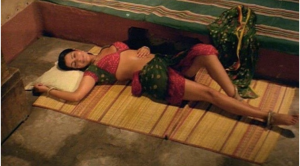
यदि यक्ष ने युधिष्ठिर से पूछा होता कि बताओ घर क्या है? तो जवाब शायद इस तरह आ सकता था कि जब आप दिनभर तमाम नाकामियों से जूझते हुए, चार दीवारी पर रखी एक छत के नीचे पहुंचते हो; जहां आपके अपने, हर शाम आपका इंतजार कर रहे होते हैं तो उस जगह पहुंचकर जो शुकून आपको मिलता है,उसे घर कहा जाता है। अपनों से ही तो घर बनता है, अपने न हों तो यही चारदीवारी जेल जैसी लगने लगे। तो घर सीमेंट, सरिया और ईट से बनी एक इमारत मात्र नहीं है बल्कि एक भावना है, जो हमारे हृदय को ठंडक प्रदान करती है। हां, अब जिसके पास खुद का घर नहीं है तो उसकी सबसे बड़ी चाह भी यही है कि एक अपना घर हो। ऐसे ही घर की चाह लिए एक प्यारी सी फिल्म आई है, 3BHK।

एक छोटा सा परिवार है, माता-पिता और सरकार के नारे ‘बच्चे दो ही अच्छे’ का अनुसरण करते हुए दो बच्चे, एक बेटा और एक बेटी ।चार जन का परिवार और एक छोटी सी चाहत कि कब तक किरायेदार बनकर रहा जाए अपना एक खुद का घर हो, पर हो, 3BHK। क्यों? क्योंकि मम्मी-पापा का एक कमरा, भाई का एक कमरा, बहन का एक कमरा। अब सपना है लेकिन दूसरी जिम्मेदारियां भी हैं, बेटा है, जिसे पढाना लिखाना है; अपने पैरों पर खड़ा भी करना है पर समस्या यह है कि खूब मेहनत करने पर भी भाई साहब जैसे-तैसे घिसट-पिसट कर ही पास हो पाते हैं, अब यह विद्यार्थी की समस्या है या शिक्षक की या शिक्षा व्यवस्था की यह सोचनीय विषय है। अब जो बेटी है जो खूब होशियार है, ‘होनहार बिरवान के होत चीकने पात’ टाइप। पर जैसा होता है कि बेटे को सुविधाएं मुहैया कराने के चक्कर में बेटी के सपनो की बलि चढ़ती है, यहां भी वही होता है तो बेटा अच्छी जगह पढ़ सके इसलिए वह सरकारी स्कूल में ही पढ़ती है। अब सरकारी स्कूल का मतलब अच्छा स्कूल नहीं है। यह देश की शिक्षा व्यवस्था पर एक करारा तंज है। तमाम नाकामियां भरे हुए इस जीवन में यह परिवार एक दूसरे के साथ बड़ी ही अडिगता के साथ खड़ा रहता है जो भारतीय पारिवारिक मूल्यों की महत्ता को दर्शाता है। जो यह संदेश देता है कि चाहें जीवन में जो भी समस्या आए अगर परिवार साथ है तो सब कुछ सह लेंगे। पिता जब हर बार समस्या आने पर यह बोलते हैं कि अभी सह लो ताकि भविष्य अच्छा हो सके तो लगता है कि यह सभी भारतीय पिताओं का प्रतिनिधित्व कर रहें हैं।

फिल्म में और भी बहुत कुछ है, पिता पुत्र में तकरार है, प्यार और करियर को लेकर मार है, और बेटी का टूटता परिवार है,कुल बात कहें तो इस फिल्म की कहानी बहुत ही अच्छी बन पड़ी है।

‌फिल्म की कहानी लिखने का काम किया है ‘श्री गणेश’ ने, लिखने के साथ-साथ उन्होंने फिल्म को डायरेक्ट भी किया है, जिसमें उनकी मेहनत को सराहा जा सकता है। फिल्म के मुख्य किरदार में पिता की भूमिका निभाई है ‘आर.सरथ कुमार’ ने, ‘देवायानी’ मां बनी हैं, बेटे के रूप में हमारे सामने आते हैं ‘सिद्धार्थ’, बेटी का किरदार निभाया है ‘मीथा रघुनाथ’, बहु बनी हैं ‘चैत्रा जे आचार्य’ ने, इन सब में मुझे चैत्रा जे आचार्य अपनी भूमिका में हल्की सी कमजोर नज़र आईं। घर की आवाज बने हैं ‘कार्थी’ बाकी मेकअप आर्टिस्ट ने जो एजिंग पर काम किया है, वह काबिले तारीफ है। इस फिल्म की डबिंग भी औसत से ऊपर की है, पर सुधार की गुंजाइश है और जहां पर गानों की डबिंग की बात करें वहां पर तो बहुत काम करने की आवश्यकता है। पर फिल्म हर तरह से बढ़िया बनी है, देखी जानी चाहिए वाली केटेगरी में आती है। अमेज़न प्राइम पर उपलब्ध है, हम तो यही कहेंगे की पहली फुरसत में देख डालिए, बिल्कुल अपनी सी कहानी कहती हुई फिल्म है।

(लेखक दिल्ली विश्वविद्यालय में हिन्दी विभाग शोधार्थी )

HINDUSTAN TIMES SHAMELESSLY PUBLISHES BLATANT CHINESE PROPAGANDA FOR MONEY. MY LETTER TO HT EDITOR:

2-16.jpeg

Dear Mr. Sukumar Ranganathan,

I am a journalist (75) and Tibetologist. Since my childhood and over 55 years of active journalism I’ve loved and respected Hindustan Times as aregular reader. But HT has given me a shock today which I don’t expect from such a respectable and financially stable organisation.

In today’s (10 Sep 2025) the HINDUSTAN TIMES has published a 2-page advertorial of CHINA- DAILY which is pure propaganda of the Chinese Communist Party. The most shameful part of this is a feature on TIBET which, you and I both know, is illegally occupied by China since 1951.

Through this feature the Chinese government is not only trying to tell that Tibetans are happy and enjoying ‘picnics’ under Chinese rule, but by using Tibet’s new Chinese name of XIZANG it is trying to wipe out from world’s memory that there was ever a country called TIBET.

During my 53 year long study of Tibet as a journalist I’ve quietly (legally every time) travelled at my own risk through all five Chinese provinces (where broken Tibet resides today) just to see and photograph how Tibetan people are coping with their colonial masters. In a sentence I will say that despite all restrictions and tortures the Tibetans have not accepted Chinese ownership of Tibet.

I did not not expect HINDUSTAN TIMES to sell its space to spread Chinese lies and manufactured narratives. This is immoral as well as unprofessional.

Sir, please ask your advertising and marketing teams not to stoop so low and offer HT’s sacred space to Chinese propaganda for some money.

With best wishes and regards

Vijay Kranti

Bhagwat proposes but will Muslims dispose?

RSS-Chief-Mohan-Bhagwat.jpg.webp

Vinod Kumar Shukla

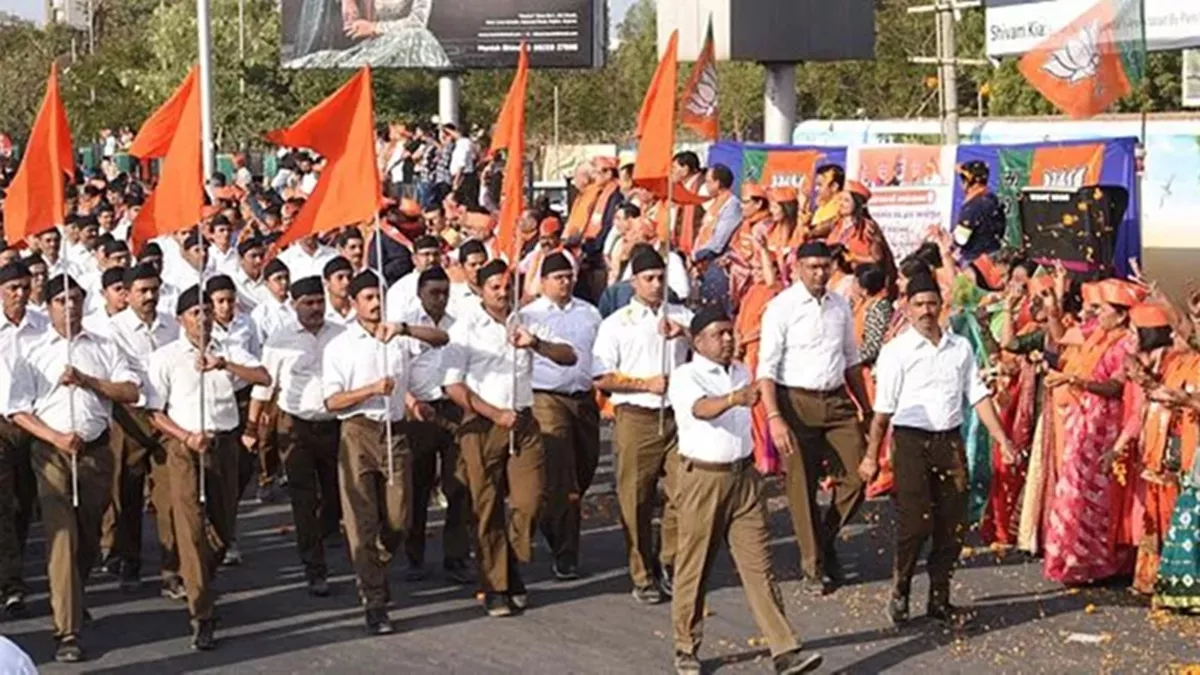
Delhi : Consistent attempts have been made to intimidate activists and supporters of the Rashtriya Swayamsevak Sangh (RSS), which is completing 100 years of its formation this Vijayadashami i.e. October 2, 2025, for its purported boycott of Quit India Movement in 1942. Second Sarsanghchalak of the RSS M S Golwalkar is questioned on the issue. People have started quoting present Sarsanghchalak Mohan Bhagwat for his comment that there is no need to search for Shivlinga everywhere. All such cases in point are simply to tell RSS Swayamsevakthat there is a moral threshold for them fixed by their chiefs that they are not supposed to cross which means what Bhagwat said on the issue of temples was the last word. The RSS workers abide by them too. In the case of Mohan Bhagwat, the message was that RSS workers must stop contesting cases of repurposed temples after the SC decision on Ram Temple.

Let’s try to analyse issues raised here one by one? Did the RSS stop its workers from joining the Quit India movement? No, on the contrary RSS participation in the Quit India movement proved to be the proverbial last straw for the British rulers. In August that year, in Chimur and Ashti, RSS cadre dominated processions led by the Congress. They faced severest repression and some of them were sentenced life term while some others were even hanged.

There are various confidential reports of intelligence agencies preserved in national archives naming several RSS activists who were arrested for participating in Quit India movement and were sentenced jail terms by the British. They were brutally tortured by the British police. Around a dozen Swayamsevak were shot dead by police. Nagar Pramukh of Ramtek near Nagpur, Ramakant Deshpande was sentenced to death for participating in Quit India movement, however, he was later released. Swayamsevak participated throughout the country in the freedom movement. They sustained injuries in police firing and lathi charge. The RSS made its presence felt throughout the country in such agitations. So, this is wrong to say that RSS Swayamsevak did not participate in the Quit India movement rather the instruction was that RSS as an organisation would not participate but its workers were allowed to join Quit India agitation. The then RSS chief Golwalkar did not allow the organisation to participate in the Quit India movement simply because he wanted to avoid giving the British government an excuse to ban the RSS. He wanted to remain focused for the cause that the RSS was formed for.

The second thing is after Bhagwat’s assertion that Hindus must not look for Shivlinga everywhere was portrayed as to shun their claim over repurposed sites like Kashi Vishwanath and Eidgah at Katra Keshavdev in Mathura. The RSS workers were sulking when they were reminded of Bhagwat’s statement. However, such statements are selectively used. The claim that there are many books suggesting the number of repurposed structures around 40000 in India. The idea of the RSS has always been clear that it would not join or initiate any movement as the case of Ram Janmabhoomi has been. Bhagwat’s recent assertion that the RSS workers can join Kashi and Mathura movement has two meanings: One the RSS is not going to start any movement for Kashi and Mathura as it did in the case of Ram Janmabhoomi in Ayodhya; Second its workers are free to participate in the liberation movement of Kashi and Mathura on personal capacity. Two meanings can also be drawn out of it that as the RSS is accused of boycotting Quit India by the Congress and others and by terming it pro-British, not participating in Kashi and Mathura movement may be termed as compromising the cause of Hindus for Muslims in future interpretations. This is an absolutely laughable argument by all counts. There is a parallel between Quit India assertion and Kashi and Mathura but since the RSS doesn’t respond to every criticism rather swallow everything down its throat and let go every onslaught on the organisation and moves on with its stated objective.

The other aspect of Mohan Bhagwat allowing Swayamsevak to participate in the liberation movement of Kashi and Mathura is that there are some plans to negotiate these issues with Muslims. Apparently, Mohan Bhagwat’s meetings with Imams in September 2022 and July 2025 from across the country may be seen as an attempt to reach some kind of amicable solutions on the vexed issue between Hindus and Muslims. However, his meetings with Jamiat Ulama e Hind chief Arshad Madni in 2019 and July 2025 did not break any ice with him towards reaching out a consensus rather his visceral hatred for the RSS and tirade continued when he held RSS responsible for the Assam government’s decision of evicting illegal encroachments in Assam. The RSS attempt to placate radical Sunni organisation proved futile and the organisation always wanted to solve the issue the way it wanted and negotiations always failed for forcing only Hindus to compromise. People can recall that Jamiat Ulama e Hind promised that it would accept Ram Temple decision but after the verdict they retracted and went up to filing review petition.

This is the same strategy that Muslims adopted in the pre-partition era to demand or negotiate for more than what they deserved. Here in this case the rigidity of Muslims and flexibility of Hindus making the RSS chief to come up with a proposal for Muslims to hand over just two sacred places belonging to the community – Kashi Vishwanath and Katra Keshavdev sunning their claim over around 40,000 other repurposed temples including Harihar Temple in Sambhal, Saraswati Temple in Dhar, Atala Devi temple in Jaunpur and 27 Hindu and Jain temples in the Qutub Minar premises besides many other across the country.

This may prove to be a watershed movement in Hindu-Muslim relations not only in India but globally as there is not a single example where any such compromise has been worked out. Moreover, Ram Temple is the only example where the other community has been able to reclaim its place of worship by legal means but the community and its leaders have still not accepted the Supreme Court judgment. Taking the matter even further when the demand for freeing Ram Janmabhoomi started, Hindu religious groups demanded for three temples – Ayodhya, Kashi and Mathura. So much so that BJP leader Lal Krishna Advani made an offer that if Muslims agree to the shifting of the Babri mosque in Ayodhya, he would persuade the VHP to renounce claims to the Krishna Janmabhoomi Temple at Mathura and the Vishvanatha Temple at Varanasi.

But the offer was not honoured by Muslims, so the Hindus started legal battles to claim all repurposed Hindu temples that Sita Ram Goyal lists in his book – ‘Hindu Temples What Happened to Them’ that claims to be around 2000. However, various other sources claim it to be as many as 40,000. Forget about handing over three Hindu temples, the community is not ready to let the character of these structures be ascertained on court orders. The case of Krishna Janmabhoomi is such that it doesn’t come under Places of Worship Act 1995 whose constitutionality is challenged. But the matter is unnecessarily taken to one court to another to linger the matter. For Hindu litigants this is certainly not a good example of peace and brotherhood. Attempts are being made to drag the matter as much as possible mocking the judicial system in India.

The way surveys allowed by the court on November 24, 2024 were deliberately disrupted by the mob which was assisted by outsiders as the judicial committee tells in its report. The only solution to the problem seems to be to accept the offer made by RSS chief because if the community misses the opportunity, it would only lead to tension, violence and enmity between Hindu-Muslim which in the past witnessed loss of lives as well. The RSS chief conceded that Swayamsevak wanted these three temples despite his statement that Hindus must stop looking for Shivling everywhere and he was forced to revisit his decision. If the matter goes to court and Hindus get any other temple with the help of court, no one will be able to stop them from claiming all disputed temples. Muslim will forfeit the right to negotiate later on. So, the ball is in the court of Muslims to let peace and fraternity be the order of the day in the country.

Nepal looks forward with interim premier Sushila Karki

0cd0cd3ba249b18890e2488a06959db1.webp

Nava Thakuria

Kathmandu: Nepal, sandwiched between India and Tibet (China), has returned to normalcy after two days of political unrest, where the young people hit the streets of Kathmandu and other important urban localities with various demands including accountability to the government. The Himalayan nation with over 30 million Nepali people remained under the control of the government armed forces and an interim regime got shaped in the evening hours of l2 September 2025. Nepal’s first woman chief justice of the Supreme Court, Sushila Karki was sworn in as the interim Prime Minister, where President Ramchandra Paudel administered the oath in the presence of many dignitaries. An alumna of Banaras Hindu University in India, Ms Sushila gets the primary responsibility to conduct national elections within six months.

Earlier, President Paudel and Nepali Army chief General Ashok Raj Sigdel appealed to the citizens to ignore all kinds of misleading and false information amid the turmoil. Announcing the acceptance of Prime Minister KP Sharma Oli’s resignation, the octogenarian head of the state expected everyone’s support to amicably resolve the crisis. Meanwhile, Rajyalaxmi Chitrakar, wife of ex-premier Jhalanath Khanal, who was widely rumoured as burnt alive, is currently recovering in the hospital. The media reports suggested that the protesters set their residence in Kathmandu on fire while she was inside. Rajyalaxmi was even reported succumbing to her burn injuries.

Many ministers in the Oli-government resigned and left the country fearing the heat of angry agitators. However, the ousted premier is understood to be inside Nepal. Nepal’s legendary Communist leader and former premier Puspa Kamal Dahal (Prachanda) also continues to be in Kathmandu. Meanwhile, the country’s interior minister Ramesh Lekhak resigned on 8 September accepting moral responsibility for 19 unarmed people, mostly youth agitators, killed in police firing. They came out against the government’s sweeping ban on a number of social media platforms like facebook, instagram, whatsapp, youtube, snapchat, pinterest, reddit, linkedin, twitter(x), etc.

Initially peaceful in nature, the demonstration soon turned violent, following which the police resorted to brutal crackdown leaving over one hundred injured. The police actions flared up the situation and the next day thousands hit the streets of Kathmandu along with Pokhara, Biratnagar, Bharatpur, Butwal, Birgunj, etc. Later the agitating young Nepalis added more demands to prevent corruption in high places and deliver better governance in the south Asian country. The unprecedented crisis broke out on 9 September as hundreds of thousands of demonstrators gathered in public places and started ransacking government buildings including the Parliament, Supreme Court, ministers’ office & residences as well as many political party offices.

Taking advantage of the situation, anti-social elements even helped a large number of jail-inmates to escape. Finally the Army was deployed and the situation came under control. The two-day violence snatched away the lives of over 50 people with over a thousand injured. The armed forces imposed nationwide restrictions on public movements particularly during the night hours. Some unpleasant visuals surfaced from the birthplace of Lord Buddha, where it was seen some angry dissenters physically abused a number of individuals including deputy premier Bishnu Prasad Paudel, foreign minister Arzu Rana Deuba, former premier Sher Bahadur Deuba along with his wife, etc.

The aggressive protesters even did not spare the media houses, as many targeted mainstream media groups like Kantipur (which publishes The Kathmandu Post, Nepalese daily Kantipur and nurtures Kantipur news channel) and Annapurna Media Network. Moreover, Kantipur television scribe Shyam Shrestha, Naya Patrika photojournalist Dipendra Dhungana, Nepal Press photographer Umesh Karki, Desh Sanchar photojournalist Barsha Shaha and independent media worker Shambhu Dangal were injured while covering the turmoil. Two visiting Indian journalists also faced intimidation, while reporting from the ground, during the turmoil.

Septuagenarian Oli, who led the Communist Party of Nepal (Unified Marxist-Leninist) government (with support from Nepali Congress), came to power for the fourth time upholding proximity to Beijing and very often he used to make anti-India statements. However, Indian Prime Minister Narendra Modi expressed his concern over turmoil in the northern neighbor with no delay. Terming the violence in Nepal as heart-rending, Modi condoled the demise of many young people in the conflict. Soon after Ms Sushila’s elevation, the saffron leader commented that India remains fully committed to the peace, progress, and prosperity of the people of Nepal.

scroll to top