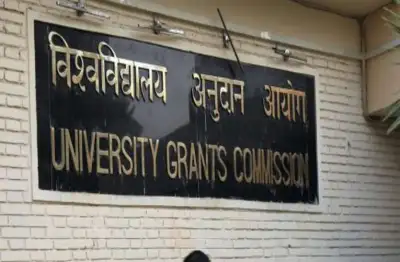
Shadow of Division Over Every Effort at Unity: The Recurring Pattern from the Ramayana to UGC Regulations

ugc_a.jpg.webp

The Magic of Ramayana and the Controversy over ‘Three Hundred Ramayanas’ (1987–2011)

In 1987, when Ramanand Sagar’s Ramayana aired on Doordarshan, the entire country was immersed in a unique spiritual enchantment. Sunday mornings echoed with the name of Ram, streets fell silent, and shops shut down. This wasn’t just a TV serial; it was a cultural awakening that united Hindus from north to south, east to west, binding them in a single thread. Lord Ram dominated every home and every tongue.

Around the same time, A.K. Ramanujan’s essay “Three Hundred Ramayanas: Five Examples and Three Thoughts on Translation” (later part of his book Many Ramayanas) came into the spotlight. It presented the Ram story not as one unified narrative but as hundreds of diverse versions—drawing from South Indian, Thai, Cambodian, and other traditions, highlighting interpretations that differed from the core Valmiki Ramayana. The same groups that had pushed for a ban on Salman Rushdie’s book over verses from the Quran were actively promoting Ramanujan’s work and its ideas about multiple Ramayanas during those days.

While the message of Ram’s unity was spreading on one side, this essay played its role in sowing division without holding back. The tipping point came in 2011 when Delhi University’s history syllabus included it, inevitably provoking opposition from an aware Indian society. It is no exaggeration to say that this was no mere coincidence but a deliberate, well-planned attempt to weaken Hindu unity.

The Ram Janmabhoomi Movement and Mandal vs. Kamandal (1990)

As the 1990s arrived, the Ram Janmabhoomi movement reached its peak. Under the leadership of the Vishva Hindu Parishad and BJP, the demand for a Ram temple intensified. L.K. Advani’s Rath Yatra created a massive wave of ‘kamandal’ (the saffron pitcher symbolizing Hindu identity). People from every class and caste united in the temple movement—this was a golden era of unprecedented Hindu solidarity.

But in August 1990, the V.P. Singh government implemented the Mandal Commission recommendations, providing 27% reservation for OBCs. Massive protests erupted across the country, with upper-caste students even resorting to self-immolation. The phrase “Mandal vs. Kamandal” became the dividing line. Many historians do not see this as coincidence: just as Hindus were coming together, igniting caste-based reservation fires seemed like an attempt to fracture society—echoing the old British “divide and rule” policy.

Integration and Challenges in the Modi Era (2014 to Present)

Over the past decade, under Prime Minister Narendra Modi’s leadership, the country has moved toward “Ek Bharat, Shreshtha Bharat” (One India, Great India). Connectivity from the Northeast to the South, patient decision-making—these are all proofs of integration efforts.

During the 2021 farmers’ protests, when some raised flags at the Red Fort, many demanded immediate strict action, but the government showed restraint. Later events in Bangladesh and Nepal—disorder in the name of “people’s movements”—suggested a larger conspiracy might have been at play behind the scenes. The three farm laws, which many farmers today acknowledge were in their favor, were repealed under political pressure.

Current Controversy: UGC Equity Regulations Amid Hindu Unity Efforts (2026)

Right now, preparations for Hindu conferences are underway nationwide, and society is once again organizing itself. Precisely at this moment, in January 2026, the UGC notified the Promotion of Equity in Higher Education Institutions Regulations, 2026. These rules aim to prevent caste-based discrimination in higher education—mandating equity committees, grievance redressal mechanisms, Equal Opportunity Centres, and more.

However, many organizations and analysts accuse these regulations of being biased against the general category. There are no strong safeguards against false complaints, and the presumption often leans toward guilt for general-category individuals. This feels inspired by the spirit of the old Communal Violence Bill. Social media campaigns like #RollbackUGC are gaining traction, with claims that these rules could turn campuses into battlegrounds for caste wars.

Looking at the Chronology, the Pattern Is Clear

1987: The enchantment of Ramayana → Controversy over Three Hundred Ramayanas
1990: Ram movement at its height → Implementation of Mandal Commission
2026: Efforts toward Hindu unity → Controversy over UGC equity regulations

Every time Hindu society tries to unite under one thread, some issue is raised to attempt division—whether it’s emphasizing diversity in the Ramayana, caste-based reservations, or now new rules in the name of equality.
This does not seem like coincidence. Society now needs to awaken and identify the forces seeking to weaken unity. Prime Minister Modi has thwarted many conspiracies through patience and foresight. Hindu society must also remain united, vigilant, and counter these efforts.
Unity is our greatest strength—and no one can break it if we stay alert.
जमीनी भावनाओं को समझे सरकार

images-1.png

पिछले पंद्रह दिनों से मैं पश्चिम बंगाल में रहा और उसके उपरांत बिहार के विभिन्न क्षेत्रों में निरंतर प्रवासरत हूँ। प्रातः 7 बजे से रात्रि 11 बजे तक प्रतिदिन औसतन 50 से 100 लोगों से संवाद हो रहा है। इनमें सर्वाधिक संख्या 20 से 25 वर्ष आयु वर्ग के युवाओं की है।

इन युवाओं के मन में उठ रही चिंताएँ, आशंकाएँ और प्रश्न यदि समय रहते संवेदनशीलता एवं गंभीरता के साथ संबोधित नहीं किए गए, तो इसका दुष्प्रभाव केवल वर्तमान तक सीमित नहीं रहेगा, बल्कि समाज के ताने-बाने और सामाजिक समरसता को दीर्घकाल तक क्षति पहुँचा सकता है।

मैं केवल नगरों तक सीमित नहीं हूँ, बल्कि संपर्कित गाँवों में जाकर हर वर्ग और हर समाज के लोगों से निरंतर संवाद कर रहा हूँ। सोशल मीडिया से उपजा यह विषय अब घर-परिवार के सामान्य विमर्श का हिस्सा बन चुका है। जिस वर्ग को लाभ पहुँचाने की मंशा से यह रेगुलेशन लाया गया, उसी वर्ग के अनेक लोग स्वयं कह रहे हैं कि उन्हें इसकी आवश्यकता नहीं थी। समाज धीरे-धीरे एक-दूसरे के निकट आ रहा था, दूरियाँ मिट रही थीं। इन दूरियों को पाटने में स्वयं भाजपा और संघ की कई पीढ़ियों का त्याग, परिश्रम और साधना लगी है; किंतु इस एक निर्णय ने समाज को गहराई से विभाजित कर दिया है और यह आशंका निरंतर प्रबल हो रही है कि यह विभाजन आगे और व्यापक होगा।

मेरा जलपान, दोपहर एवं रात्रि भोजन प्रतिदिन भिन्न-भिन्न परिवारों के यहाँ होता है। भोजन के दौरान 10 से 20 लोग सहज रूप से एकत्रित हो जाते हैं और लगभग हर बार यह प्रश्न उठता है, सरकार को ऐसा निर्णय लाने की आवश्यकता आखिर कहाँ थी? क्या इसकी कहीं से कोई ठोस, व्यापक और वास्तविक माँग थी? यह अत्यंत चिंताजनक है कि जो राजनीतिक दल दशकों तक सामाजिक समरसता और एकात्मता का संदेश देता रहा, वही आज ऐसी नीतियाँ लेकर सामने आ रहा है, जो सामाजिक ताने-बाने को कमजोर करती प्रतीत होती हैं। परिणामस्वरूप समाज में उसके प्रति भरोसा डगमगाया है। लोग इसे विश्वासघात के रूप में देखने लगे हैं ; न केवल वह वर्ग जो सीधे प्रभावित है, बल्कि सामान्य जनमानस के बीच भी यह धारणा बनती जा रही है कि जो दल अपने लिए जीवन अर्पित करने वालों, खून-पसीना बहाने वालों के हितों को भी दाँव पर लगा सकता है, वह अन्य वर्गों के हितों की रक्षा कैसे करेगा।

विभाजन की इस विषबेल को अब तक वामपंथी विचारधारा खाद-पानी देती रही है; किंतु भाजपा भी इसी राह पर चलेगी, इसकी किसी ने कल्पना नहीं की थी। वर्षों की साधना और निरंतर प्रयासों के पश्चात हिंदू समाज एक संगठित शक्ति के रूप में एकजुट हुआ था। सनातन संस्कृति से गहरे जुड़े लोगों का एक ऐसा मतदाता वर्ग विकसित हुआ था, जो जाति से ऊपर उठकर सांस्कृतिक और राष्ट्रीय सरोकारों के लिए जीता-मरता था और तन-मन-धन से समर्पित था। किंतु इस प्रकार के विभाजनकारी निर्णयों ने उस संगठित सामाजिक शक्ति को गहरा आघात पहुँचाया है।

आज आवश्यकता इस बात की है कि सरकार और नीति-निर्माता समाज की जमीनी भावनाओं को समझें, युवाओं की आशंकाओं को गंभीरता से सुनें और उन निर्णयों पर पुनर्विचार करें, जो सामाजिक एकता को कमजोर करते हों। सत्ता का धर्म समाज को जोड़ना है, बाँटना नहीं, और यही अपेक्षा आज देश का जागरूक, संवेदनशील और चिंतित नागरिक कर रहा है।

A Strong Stream of Nationalist Thought: Raipur Literature Festival 2026 Sets a New Benchmark

2-19.jpeg

A New Chapter in Nationalist Literary Gatherings

Delhi : A fresh chapter has been added to the series of literary events organized under the umbrella of nationalist thought. Following Lokmanthan, Narmada Sahitya Manthan, and Shabdotasav, the Raipur Sahitya Utsav has now firmly established its presence on the ideological front. These festivals have evolved beyond mere literary gatherings-they have become pillars strengthening the nation’s cultural and ideological consciousness. Until recently, people often said that India needed something like the Jaipur Literature Festival or Jashn-e-Rekhta. That discussion now feels outdated. The platforms rooted in nationalist thought have grown so influential that even left-leaning writers and intellectuals are experiencing FOMO (Fear of Missing Out). Their visible anxiety about the Raipur event—“Why aren’t our people being included?”—speaks volumes. Once, this very group controlled the literary establishment, sidelining senior figures like Prof. Ramdarash Mishra and Nirmal Verma. Awards depended more on cliquism than creativity. Rajendra Yadav himself admitted to securing an award for a writer’s daughter’s wedding. Prizes were distributed like welfare schemes rather than on merit.

Changing Times and Shifting Alliances

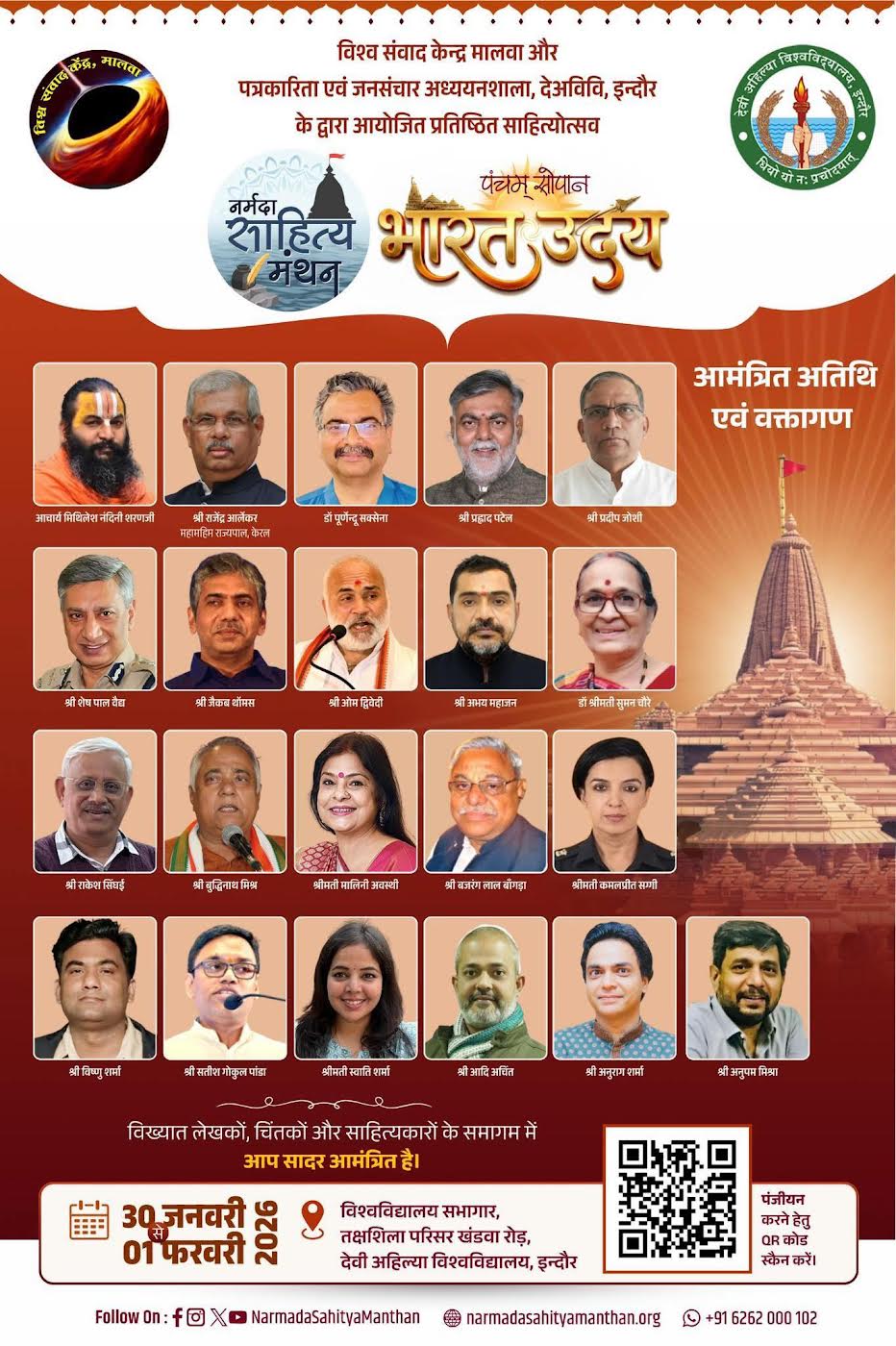
Times are changing. Both literature and its readers are transforming. Old monopolies are crumbling, and new nationalist strongholds are rising. Many writers are ready to abandon the sinking leftist boat and board the ship of nationalist thought. The success of Shabdotasav hadn’t even settled when Raipur Sahitya Utsav stole the spotlight. Now, the fifth edition of Narmada Sahitya Manthan is set to arrive in Indore from January 30 to February 1, 2026. These festivals are proof of the continuity and expansion of nationalist thought.

Raipur Sahitya Utsav 2026: Celebrating Chhattisgarh’s Silver Jubilee and Amrit Kaal

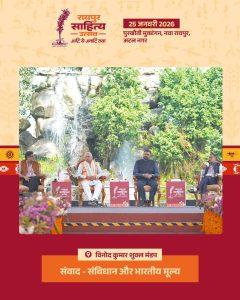
The Raipur Sahitya Utsav 2026 took place from January 23 to 25 at Purkhauti Muktangan in Nava Raipur, Chhattisgarh’s capital. Themed “From the Beginning to the Timeless” (आदि से अनादि तक), this three-day event was organized to mark Chhattisgarh’s silver jubilee year and the Amrit Kaal of the Republic. Under Chief Minister Vishnu Dev Sai’s leadership, the state government initiative successfully elevated Chhattisgarh’s literary heritage to national prominence. More than 120 renowned litterateurs participated, engaging in deep discussions across 42 sessions on contemporary social, cultural, and political issues.

Inauguration: Honoring Chhattisgarh’s Literary Legacy

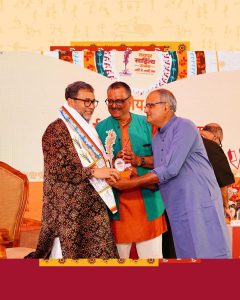
The festival opened on January 23 at the Vinod Kumar Shukla Mandap. Rajya Sabha Deputy Chairman Harivansh and Chief Minister Vishnu Dev Sai lit the ceremonial lamp as chief guests. Deputy Chief Minister Arun Sao, Dr. Kumud Sharma (Vice-Chancellor, Mahatma Gandhi International Hindi University, Wardha), actor Manoj Joshi, and other dignitaries were present. Paying tribute to the late great Chhattisgarhi writer Vinod Kumar Shukla, Harivansh highlighted the ancient tradition of Chhattisgarhi literature. He referenced Kabir’s connections to Kashi and Kawardha, and quoted Maithili Sharan Gupt to underscore literature’s role in guiding society. “A single book and a single writer possess the power to change the world,” he said, emphasizing literature’s contribution to India’s economic progress, self-reliance, and the vision of a developed India by 2047.

Chief Minister Vishnu Dev Sai described Chhattisgarh as Lord Shri Ram’s maternal homeland, declaring that this sacred land had transformed into a grand literary Kumbh. Comparing the freedom struggle to the churning of the ocean, he stressed the responsibility to preserve the memories of luminaries like Makhanlal Chaturvedi, Madhavrao Sapre, Pandit Lochan Prasad Pandey, Padumlal Punnalal Bakshi, and Gajanan Madhav Muktibodh. Quoting Atal Bihari Vajpayee’s poetry, he noted that poetry teaches resistance against injustice. Deputy Chief Minister Arun Sao called it a major step in strengthening Chhattisgarh’s literary identity.

Book Releases and Diverse Sessions

During the inauguration, J. Nandkumar’s coffee table book (on 25 years of Chhattisgarh), Prof. Anshu Joshi’s Lal Deewaren, Safed Jhooth, and Rajiv Ranjan Prasad’s Tera Raj Nahi Aayega Re were launched.
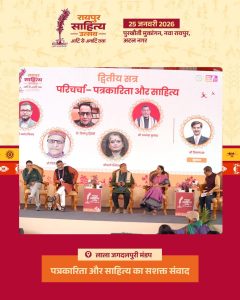
The festival featured 42 sessions—including 5 parallel, 4 group, and 3 dialogue formats. The final day covered topics like journalism and literature, travel blogging, Natyashastra, society and cinema, the Constitution and Indian values, and the interplay between governance and literature. A staging of the play Chanakya, folk dances, folk songs, Chhattisgarhi cultural performances, and a poets’ meet enchanted audiences. At Surendra Dubey Mandap, a grand painting exhibition showcased Chhattisgarh’s cultural heritage—featuring works like Chhattisgarh Mahtari (Sonal Sharma), Bastar Bazar (Awadh Kanwar), Rajim Kumbh (Divya Chandra), and scenes from Ramgarh hills as major attractions. Painting and cartoon workshops guided young participants.

A True Celebration of Roots and Traditions

Rather than Indo-Chinese stalls, the food focused on traditional Chhattisgarhi dishes like kodo rice, chapda chutney, farra, jimikand pickle, and khatti kadhi. Traditional sarees, tribal jewelry such as hasuli and bajuband, brought local customs to life. The confluence of four generations, litterateurs from north, south, northeast, and west, along with local artists’ performances, made it a genuine people’s festival.

Closing Ceremony: Words That Endure

At the valedictory, Governor Ramen Deka affirmed that literature’s importance remains undiminished even in the digital age. Citing Vande Mataram, he stressed the power of words and appealed to extend such festivals to villages and small towns. Finance Minister O.P. Choudhary and theatre personality Sachchidanand Joshi praised the event. Director Chandraprakash Dwivedi lauded the time discipline and attention to detail, suggesting similar events in places like Bastar.

Why Raipur Outshone Others

In many ways, Raipur Sahitya Utsav proved more impactful than Jaipur Literature Festival. First, it was fully centered on nationalist thought, prioritizing ideological clarity and cultural pride—unlike Jaipur, which often dilutes focus in a mix of diverse views. Second, its vibrant inclusion of local folk traditions, tribal culture, and Chhattisgarhi cuisine kept it deeply rooted—while Jaipur leans toward global-urban flavors. Third, it offered genuine public participation and a platform for young creators, which is rarer elsewhere.

Government’s Commitment to Culture

Over the past two years, the Sai government has treated literature and culture as a social responsibility. By emphasizing public involvement, local languages, and youth, the festival succeeded remarkably. The core organizing team—Chief Minister’s media advisor Pankaj Jha, R. Krishna Das, and Shashank Sharma—made it truly memorable.

More Than an Event-A Celebration of Chhattisgarh’s Soul

Raipur Sahitya Utsav 2026 was not just an event; it was a festival of Chhattisgarh’s soul. It will secure the state’s place on India’s literary map and inspire future generations. This stream of nationalist thought is now unstoppable.

जातीय उन्माद का चश्मा हटाकर भी देखिए

2-1-14.jpeg

रंगनाथ सिंह

बनारस। कुछ घनघोर जातिवादी लोगों को लग रहा है कि भारत के कॉलेजों में यूजीसी द्वारा कास्ट विजलांटे ग्रुप तैयार करने से उनकी जाति का झण्डा लहराने लगेगा! कुछ लोग ऐसा भी सोच रहे हैं कि ऐसे आरोप केवल सवर्णों पर लगेंगे! क्योंकि मोदी सरकार ने डिफाल्ट रूप से मान लिया है कि जनरल वर्ग (जीसी) जातियों के संग भेदभाव नहीं हो सकता वो अजर-अमर हैं भले ही सरकारी जेएनयू से लेकर प्राइवेट असोका यूनिवर्सिटी तक में ब्राह्मण-बनिया को जूते मारने और देश से निकालने वाले छात्र पढ़ते हों। मोदी जी को उनकी चिन्ता भला क्यों हो! वो वोटबैंक थोड़े ही हैं।

एनसीआरबी के डेटा के अनुसार एससी-एसटी एक्ट के मामलों में ओबीसी कही जाने वाली जातियाँ ज्यादा आरोपी हैं। यह प्रतिशत उनकी आबादी से ज्यादा है। बहुत से मोटी बुद्धि लोगों को इतनी सी बात नहीं समझ आ रही है कि जब किसी परिसर में छात्रों के बीच मनमुटाव में कास्ट एंगल को कानूनी तरजीह दी जाने लगेगी तो केवल सवर्ण छात्रों पर आरोप नहीं लगेगा बल्कि एससी ओबीसी पर भी ऐसा आरोप लगाएगा।

नए प्रावधान को जहाँ तक मैंने पढ़ा है ओबीसी भी अब एससी-एसटी पर ऐसा आरोप लगा सकता है! क्योंकि प्रावधान में यह नहीं कहा गया है कि एससी और एसटी पर ऐसा आरोप नहीं लगाया जा सकता। सरकार की नजर में केवल जीसी जातियों को जातिगत भेदभाव को मोदी जी का फरमान समझकर स्वीकार करना होगा। इस प्रावधान में यह भी स्पष्ट नहीं है कि “ब्राह्मण की बेटी” के लिए उन्मादी समूहों से इन बेटियों को बचाने के लिए क्या उपचार है। आईएएस अफसर तक ब्राह्मण की बेटी को ‘वार बाउंटी’ की तरह ट्रीट करते नजर आ चुके हैं।
चूँकि मोदी सरकार ने झूठे आरोप लगाने पर शिकायत-कर्ता पर कार्रवाई करने का विकल्प हटा दिया है तो फिर बेखौफ इसका दुरुपयोग किया जा सकता है। छात्र ही नहीं टीचरों की आपसी राजनीति में भी इसके दुरुपयोग की जमीन तैयार हो चुकी है।

मुझे लगता है कि जिस तरह कांग्रेसी सरकारों ने यूनिवर्सिटों-कॉलेजों को मुसलमान घोषित किया उसी तरह आगे जाकर मोदी सरकार उन्हें एससी-एसटी और ओबीसी ने घोषित कर सकती है! कुछ लोगों को यह दूर की कौड़ी लगेगी मगर 2005 में शायद ही किसी ने सोचा होगा कि 60-70 प्रतिशत मुस्लिम टीचर और छात्र वाली जामिया मिल्लिया इस्लामिया को 2011 में मुसलमान घोषत कर दिया जाएगा!

भारत विभाजन से पहले विभिन्न समुदायों ने अपने समाज में शिक्षा का विकास करने के लिए कॉलेज यूनिवर्सिटी बनाए क्योंकि तब देश में ब्रिटिश सरकार थी। मगर भारत के संविधान निर्माताओं ने कभी नहीं सोचा होगा कि भारत की सेकुलर सरकार यूनिवर्सिटियों को मुसलमान घोषित करेगी। उसी तरह आज लोगों को अजीब लगेगा मगर आगे जाकर कोई जातिवाद-विरोधी सरकार यूनिवर्सिटियों को दलित या पिछड़ा या अगड़ा घोषित करने लगे तो मुझे हैरत नहीं होगी।

scroll to top