Ensures responsible use of technology, strengthens consumer protection and national security

images-7.jpeg

Delhi : Over the past 11 years, digital technologies have brought a major change in our lives. Digital India, Digital Public Infrastructure, UPI payment system, 5G connectivity, and the semiconductor ecosystem have together given a new identity to our country.

Under the visionary leadership of Prime Minister Shri Narendra Modi, the use of technology across sectors has delivered immense benefits to citizens. At the same time, new risks have emerged, especially in the digital space.

It is therefore equally important to ensure that society is protected from potential harms of technology misuse. With this thought process, the Government has brought forward the Promotion and Regulation of Online Gaming Bill, 2025.

This Bill encourages e-sports and online social games while prohibiting harmful online money gaming services, advertisements, and financial transactions related to them. Bill also outlaws all online Betting and Gambling (Satta and Jua) activities – from Online Fantasy Sports to Online Gambling (like Poker, Rummy and other Card games) and Online Lotteries.This is to protect our youth from predatory online Real Money Gaming apps – that manipulate them through misleading ‘monetary return promises’ into compulsive and addictive playing, that leaves entire families in financial distress.

The Government believes that the harms of addiction, financial losses, and even extreme consequences such as suicides associated with online money gaming can be prevented by prohibition of such activities. Additionally, online money gaming platforms are often misused for financial fraud, money laundering, terror financing and messaging activities that compromise national security.

Furthermore, this aligns the national laws for thedigital domain with the existing lawsfor corresponding activities in the physical world, wherein betting and gambling are restricted or punishable– such as in the Bharatiya Nyaya Sanhita, 2023 as well as various State government legislations.

For the promotion of e-sports, the Ministry of Youth Affairs & Sportswill establish a dedicated framework. For online social games, the Ministry of Electronics & IT (MeitY) and the Ministry of Information & Broadcasting (MIB) will extend support to online games that foster educational &cultural values, skill development and social engagement.

Thus, the Bill seeks to encourage the positive aspects of technology while protecting society from the adverse impacts of online money games.

Key Provisions of the Promotion and Regulation of Online Gaming Bill, 2025

Promotion and Recognition of e-ports

e-sports recognised as a legitimate form of competitive sport in India.
Ministry of Sports to frame guidelines and standards for conduct of e-sports events.
Establishment of training academies, research centres, and technology platforms for advancement of e-sports.
Incentive schemes, awareness campaigns and integration of e-sports into broader sports policy initiatives.

Promotion of Social and Educational Games

Central Government empowered to recognise, categorise, and register online social games.
Facilitation of platforms for development and distribution of safe, age-appropriate social and educational games.
Awareness programmes on the positive role of social games in recreation, skill-development and digital literacy.
Support for cultural and educational gaming content aligned with Indian values.

Prohibition of Harmful Online Money Games

Complete ban on offering, operating, or facilitating online money games, irrespective of whether based on skill, chance, or both.
Ban on advertising and promotion of money games across all forms of media.
Ban on financial transactions linked to online money games; banks and payment systems barred from processing such payments.
Empowerment to block access to unlawful gaming platforms under the Information Technology Act, 2000.

Establishment of an Online Gaming Authority

Central Government to establish a national-level Authorityor designate any existing Authority or Authorities or any agencyfor oversight.
Functions include:
Categorisation and registration of online games.
Determination of whether a game qualifies as a money game.
Handling complaints and grievances related to online games.
Authority to issue guidelines, orders, and codes of practice to ensure compliance.

Offences and Penalties

Offering or facilitating online money gaming: Imprisonment up to 3 years and/or fine up to ₹1 crore.
Advertising money games: Imprisonment up to 2 years and/or fine up to ₹50 lakh.
Financial transactions related to money games: Imprisonment up to 3 years and/or fine up to ₹1 crore.
Repeat offences attract enhanced penalties, including imprisonment of 3–5 years and fines up to ₹2 crore.
Offences under key sections to be cognizable and non-bailable.

Corporate and Institutional Liability

Companies and their officers held liable for offences under the Act, unless they prove due diligence.
Independent directors or non-executive directors not involved in decision-making are protected.

Powers of Investigation and Enforcement

Central Government may authorise officers to investigate, search, and seize digital or physical property linked to offences.
Officers empowered to enter, search, and arrest without warrant in certain cases of suspected offences.
Provisions of the Bharatiya Nagarik Suraksha Sanhita, 2023 apply to investigations under the Act.

Rule-Making Powers and Delegated Legislation

Central Government empowered to make rules for:
Promotion of e-sports and social gaming.
Recognition, Categorisation and registration of online games.
Powers and functioning of the Authority.
any other matter required or permitted to be prescribed under this Act.

Positive Impacts of the Bill

Boost to Creative Economy: Enhances India’s role in global gaming exports, employment and innovation.
Empowering Youth: Encourages constructive participation through e-sports and skill-based digital games.
Safe Digital Environment: Protects families from predatory online money gaming practices.
Global Leadership: Positions India as a leader in responsible gaming innovation and digital policy-making.
The Promotion and Regulation of Online Gaming Bill, 2025 strikes a balanced path—encouraging innovation and youth engagement through safe and positive online gaming, while firmly prohibiting harmful online money games.

It reflects the Government’s commitment to a safe, secure, and innovation-driven Digital India that boosts creativity, safeguards citizens, and strengthens national security.

संजय सिंह की अमर्यादित भाषा पर विवाद, आम आदमी पार्टी की साख पर सवाल

2-32.jpeg

नई दिल्ली: आम आदमी पार्टी (आप) के नेता और राज्यसभा सांसद संजय सिंह एक बार फिर अपनी विवादास्पद टिप्पणियों को लेकर चर्चा में हैं। उन्होंने एक सार्वजनिक मंच पर चुनाव आयोग जैसी संवैधानिक संस्था के प्रति अपमानजनक रवैये को दर्शाया। संजय ने कहा कि मुख्य चुनाव आयुक्त का नाम ज्ञानेश नहीं अज्ञानेश कुमार होना चाहिए। संजय यहां रूके नहीं, उन्हें यह भी कहा कि ज्ञानेश कुमार मुर्ख हैं या वे जानबुझकर मुर्ख बन रहे हैं।

उनके संबंध में यह भी कहा जाता है कि शुरुआती दिनों में वे सिनेमा हॉल में टिकट ब्लैक करने जैसे कार्यों में लिप्त थे। आज एक संवैधानिक संस्था के बारे में ऐसे व्यक्ति से अमर्यादित भाषा सुनना देश के लिए दुर्भाग्यपूर्ण माना जा रहा है।

संजय सिंह को आम आदमी पार्टी की खोज के रूप में जाना जाता है, लेकिन उनके इस व्यवहार ने पार्टी की छवि को धूमिल करने का काम किया है। राजनीतिक विश्लेषकों का मानना है कि अगर पार्टी में ऐसे ही नेता बने रहे, तो धीरे-धीरे पार्टी का पतन निश्चित है। जिसकी शुरुबात दिल्ली से हो चुकी है।

राज्यसभा में संजय की स्थिति पहले से ही कमजोर मानी जा रही है, और आने वाले समय में उनके लिए अपनी सीट बचाना मुश्किल हो सकता है। कई लोग यह भी अनुमान लगा रहे हैं कि क्या संजय सिंह राहुल गांधी की चापलूसी करके किसी जुगाड़ से फिर राज्यसभा में जगह बनाने की कोशिश कर रहे हैं, क्योंकि चुनाव जीतना उनके लिए असंभव-सा प्रतीत होता है।

संजय सिंह की यह टिप्पणी उस समय सामने आई है, जब आप पहले ही कई आंतरिक और बाहरी चुनौतियों से जूझ रही है। पार्टी के समर्थकों का कहना है कि यह उनके व्यक्तिगत विचार हैं, लेकिन आलोचकों का तर्क है कि एक सांसद के रूप में उनकी जिम्मेदारी है कि वे अपनी भाषा पर नियंत्रण रखें।

इस घटना ने एक बार फिर यह सवाल खड़ा कर दिया है कि क्या आप जैसी पार्टी, जो स्वच्छ राजनीति का दावा करती है, अपने नेताओं के व्यवहार को नियंत्रित करने में नाकाम हो रही है।

संजय सिंह के समर्थक उनकी बेबाकी को उनकी ताकत बताते हैं, लेकिन विपक्षी दल इसे उनकी अराजकता और अपरिपक्वता का प्रतीक मान रहे हैं।

Congress Must Face Its Reckoning: A Stern Wake-Up Call Ahead of Bihar Elections 2025

667ec406d1f8c-rahul-gandhi-leader-of-opposition-280909564-16x9.jpg.webp

Patna – The political landscape of Bihar is simmering with tension as the Assembly Elections 2025 loom large, and the Congress party, led by its chief and Lok Sabha Opposition Leader Rahul Gandhi, finds itself at the epicenter of a self-inflicted crisis. Clinging to the Constitution as a prop while hurling baseless accusations against the Election Commission, the Congress has descended into a dangerous game of reckless rhetoric and undemocratic posturing. This is not a defense of democracy—it is a shameful assault on its sanctity. The party must confront its mistakes, abandon its misguided strategies, and restore its credibility, or face annihilation at the hands of an awakened electorate.

Rahul Gandhi’s recent statements have crossed every line of decorum and responsibility. In a brazen attack, he declared that once the Congress assumes power in Delhi and Bihar, the three election commissioners would face scrutiny, accusing them of acting as “agents of the BJP.” This direct assault on a constitutional institution is not just reckless—it is a blatant attempt to undermine the integrity of India’s electoral process. Waving the Constitution as a theatrical prop does not grant Gandhi immunity to spew venom against those tasked with upholding it. His language reveals a mindset that prioritizes power over principle, a mindset that the Congress must reject immediately.

The incident involving the brutal assault on the driver of MLA Vijay Kumar Singh alias W Singh from Nabinagar and a media journalist by an individual named Jaichand, allegedly linked to RJD ally Tejashwi Yadav, further exposes the hypocrisy of the opposition alliance. This shameful act of violence, which this report condemns in the strongest terms, underscores the lawlessness festering within the Congress-RJD ecosystem. Tejashwi Yadav must heed this warning: the “Jaichands” surrounding him threaten to drag his political career into irreparable ruin. There is still time to purge these elements, but inaction will lead to catastrophic electoral consequences.
The Congress and RJD’s joint narrative of “vote theft” during the Special Intensive Revision (SIR) of the voter list in Bihar is a desperate fabrication born of repeated electoral defeats. Rahul Gandhi’s 16-day “Voter Rights Yatra” across 23 districts, marketed as a crusade to “protect democracy and the Constitution,” is nothing but a smokescreen for his party’s frustration. His refusal to substantiate allegations with an affidavit, instead hiding behind an oath to the Constitution, is a cowardly evasion. The Election Commission, led by Chief Election Commissioner Gyanesh Kumar, has categorically dismissed these claims as baseless, emphasizing that the SIR aims to purify voter lists and that all parties were given ample opportunity to review them. The Commission’s call for formal complaints has been met with silence, exposing the opposition’s reliance on street chaos over legal recourse.

The behavior of RJD and Congress spokespersons has only deepened this disgrace. A young RJD spokesperson’s use of crude terms like “luckiness,” “shit,” and “impudence” against the Election Commission during a TV debate was a new low. The host’s rebuke of these “unnecessary” remarks was justified, yet it reflects a broader failure of leadership within these parties. The repeated labeling of the Commission as a “vote thief” by RJD and the disrespectful tone toward senior figures reveal a toxic culture that Congress has emboldened through its alliance. This is not political discourse—it is a deliberate attempt to erode public trust in democratic institutions.

The Congress must face a hard truth: its history of electoral malpractices, including booth capturing during the ballot paper era, haunts its credibility. Accusing the Election Commission of bias when the electoral process has become transparent and technologically robust is a projection of its own past sins. Bihar Minister Neeraj Singh Bablu’s assertion that Congress and RJD are defaming constitutional bodies to mask their failures hits the mark. Union Minister Prataprao Jadhav’s observation that Rahul Gandhi’s fear of defeat in Bihar drives these baseless allegations further exposes the opposition’s panic.

Tej Pratap Yadav’s recent statement, guiding his brother Tejashwi, adds fuel to this fire. While the specifics of his remarks remain unclear without direct access to the cited X post, the context suggests a continuation of the opposition’s confrontational stance. This sibling dynamic within RJD, coupled with Congress’s tacit support, paints a picture of a coalition more interested in anarchy than governance. The electorate will judge their intelligence in the upcoming polls, and the signs are ominous for the opposition.

The role of external actors, including certain YouTubers and NGOs, in amplifying the “vote theft” narrative is equally troubling. With foreign funding curtailed under the Foreign Contribution (Regulation) Act (FCRA), these groups appear to be aligning with Rahul Gandhi’s campaign, possibly eyeing the 2029 Lok Sabha elections as a “final battle.” Analysts suggest a strategy to divide Hindu society and consolidate Muslim-Christian votes, using allegations of electoral fraud as a tool to sow discord. This cynical manipulation must be called out, and Congress must distance itself from such machinations.

The media’s role in this controversy is another area of concern. Anchors and channels, often ignorant of the distinction between the Criminal Penal Code (CrPC) and election-related laws, are spreading misinformation. This negligence amplifies the opposition’s narrative, misleading the public and weakening democratic discourse. Congress, as a party claiming to uphold constitutional values, should lead by example and demand accountability from these platforms instead of exploiting their ignorance.
The Congress leadership must introspect deeply. Rahul Gandhi, now 55, faces a critical juncture. At 59 in 2029 and 64 in 2034, his political relevance hinges on a drastic course correction. The party’s reliance on outdated slogans—from “Chowkidar Chor” to “EVM tampering”—has failed, and the new “vote theft” cry is a sign of desperation. The Modi government’s strong governance and the Rashtriya Swayamsevak Sangh’s (RSS) organizational might have proven insurmountable, yet Congress persists in divisive tactics rather than offering a constructive vision.

The people of Bihar, weary of the “fodder theft” and “booth loot” scandals of the RJD-Congress past, are unlikely to be swayed by this rhetoric. The Election Commission’s transparent efforts, supported by booth-level officers and party workers, stand in stark contrast to the opposition’s unfounded tirades. The Commission’s impartiality is non-negotiable, and any attempt to undermine it is a direct threat to democracy.

Congress must act decisively. It should withdraw its inflammatory statements, present grievances through proper channels, and discipline its allies like RJD. The party’s leadership must purge the “Jaichands” within its ranks and recommit to democratic principles. Failure to do so will not only ensure defeat in Bihar 2025 but also seal its irrelevance in India’s political future. The voters hold the power to deliver this verdict, and they must exercise it with vigilance. The time for Congress to realize its mistakes is now—before it’s too late.

Congress Must Confront Its Blunders: A Stern Call to Reform Before Bihar 2025

congress_d.jpg.webp

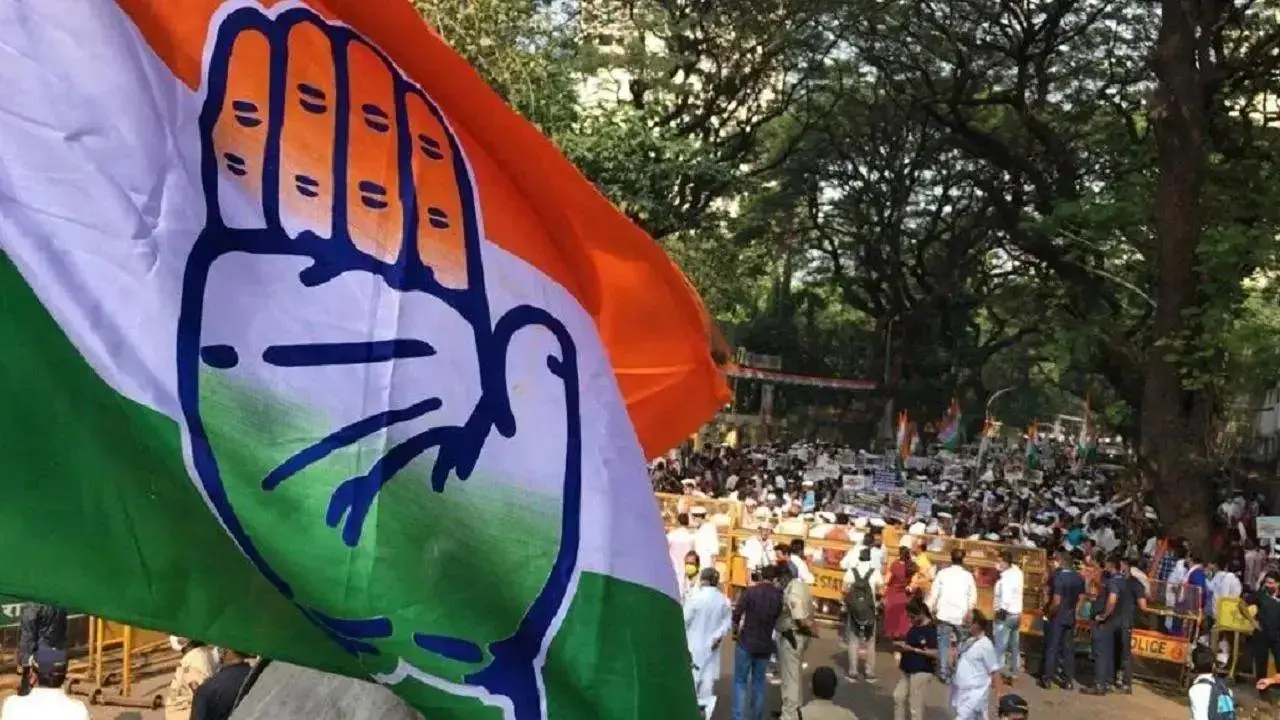
Patna – As the Bihar Assembly Elections 2025 approach, the Congress party, under Rahul Gandhi’s leadership, stands at a perilous crossroads. Its reckless attacks on the Election Commission and alignment with the Rashtriya Janata Dal’s (RJD) inflammatory tactics threaten to dismantle its credibility and undermine India’s democratic framework.

Undermining Democracy with Baseless Claims
Rahul Gandhi’s recent assault on the Election Commission, branding its commissioners as “agents of the BJP,” is a shameful low. Wielding the Constitution as a prop, he accused the Commission of conspiring to enable “vote theft” in Bihar’s Special Intensive Revision (SIR) of voter lists. His 16-day “Voter Rights Yatra” across 23 districts, billed as a defense of democracy, is a thinly veiled attempt to mask Congress’s frustration from repeated defeats. The Chief Election Commissioner, Gyanesh Kumar, on August 17, 2025, dismissed these allegations as baseless, affirming that the SIR aims to purify voter lists and that all parties had opportunities to review them. Gandhi’s refusal to submit an affidavit with evidence, hiding behind a vague “oath to the Constitution,” exposes his unwillingness to engage in good faith.

Derogatory Rhetoric and Lost Credibility
The opposition’s language has plummeted to new depths. An RJD spokesperson’s use of terms like “luckiness,” “shit,” and “impudence” against the Election Commission during a TV debate was rightly rebuked by the host as “unnecessary.” Such crassness, coupled with Congress’s silence, reflects a culture of disrespect that erodes public trust. The repeated cry of “vote theft” is a desperate tactic, echoing failed slogans like “Chowkidar Chor” and “EVM tampering.” Congress’s history of booth capturing during the ballot era makes its current accusations hypocritical. Bihar Minister Neeraj Singh Bablu rightly noted that these parties are defaming constitutional bodies to deflect their failures, while Union Minister Prataprao Jadhav attributed Gandhi’s attacks to fear of defeat.

The Role of External Agitators
Suspicion surrounds certain YouTubers and NGOs amplifying the “vote theft” narrative. With foreign funding restricted under the Foreign Contribution (Regulation) Act, these groups appear to be aligning with Gandhi’s campaign, possibly eyeing the 2029 Lok Sabha elections as a decisive battle. At 55, Gandhi faces a narrowing window—59 in 2029, 64 in 2034—to secure power. Analysts suggest a strategy to divide Hindu voters and consolidate Muslim-Christian support, using electoral controversies to sow chaos. Congress must disavow these divisive tactics and focus on constructive governance.

Media’s Role in Spreading Misinformation
The media’s complicity in this saga cannot be ignored. Many anchors, ignorant of the distinction between the Criminal Penal Code and election laws, amplify the opposition’s narrative through uninformed debates. This misinformation misleads the public and weakens democratic discourse. Congress, claiming to champion constitutional values, must demand accountability from these platforms instead of exploiting their ignorance.

A History of Electoral Malpractice
Congress and RJD’s accusations ring hollow given their past. The “fodder theft” and “booth loot” scandals of their era in Bihar remain fresh in public memory. The Election Commission’s transparent, technology-driven processes have rendered such malpractices obsolete, yet the opposition cannot accept defeat gracefully. The Commission’s call for formal complaints has been met with street protests, not evidence, revealing a strategy rooted in chaos, not democracy.

A Call for Urgent Reform
Congress stands at a precipice. Its leadership must retract its baseless allegations, discipline allies like RJD, and engage with the Election Commission through legal channels. The party’s failure to heed its ground-level workers, who collaborate with the Commission on voter list revisions, exposes a disconnect that must be bridged. Rahul Gandhi’s refusal to present evidence undermines his claim to protect the Constitution he so publicly venerates.

The voters of Bihar, aware of Congress and RJD’s tainted history, are unlikely to be swayed by this rhetoric. The Election Commission’s impartiality is sacrosanct, and attempts to tarnish it threaten the democratic fabric. Congress must act decisively: purge divisive elements, abandon inflammatory slogans, and offer a vision that respects India’s institutions. Failure to do so will cement its irrelevance in Bihar 2025 and beyond.

The Verdict Lies with the Electorate
The people of Bihar hold the power to reject this politics of desperation. They must remain vigilant against misleading narratives and uphold the sanctity of their vote. Congress has one last chance to reform—acknowledge its mistakes, restore dignity to its discourse, and realign with democratic principles. The clock is ticking, and the electorate will deliver its judgment. The time for reckoning is now.

scroll to top