Sports Minister Dr Mansukh Mandaviya To Join ‘Cycling with Teachers’ Event in Delhi

3-2-1.jpeg

Member of Parliament and actor-singer Manoj Tiwari along with mountaineer Narender Kumar to also grace event this Sunday* 

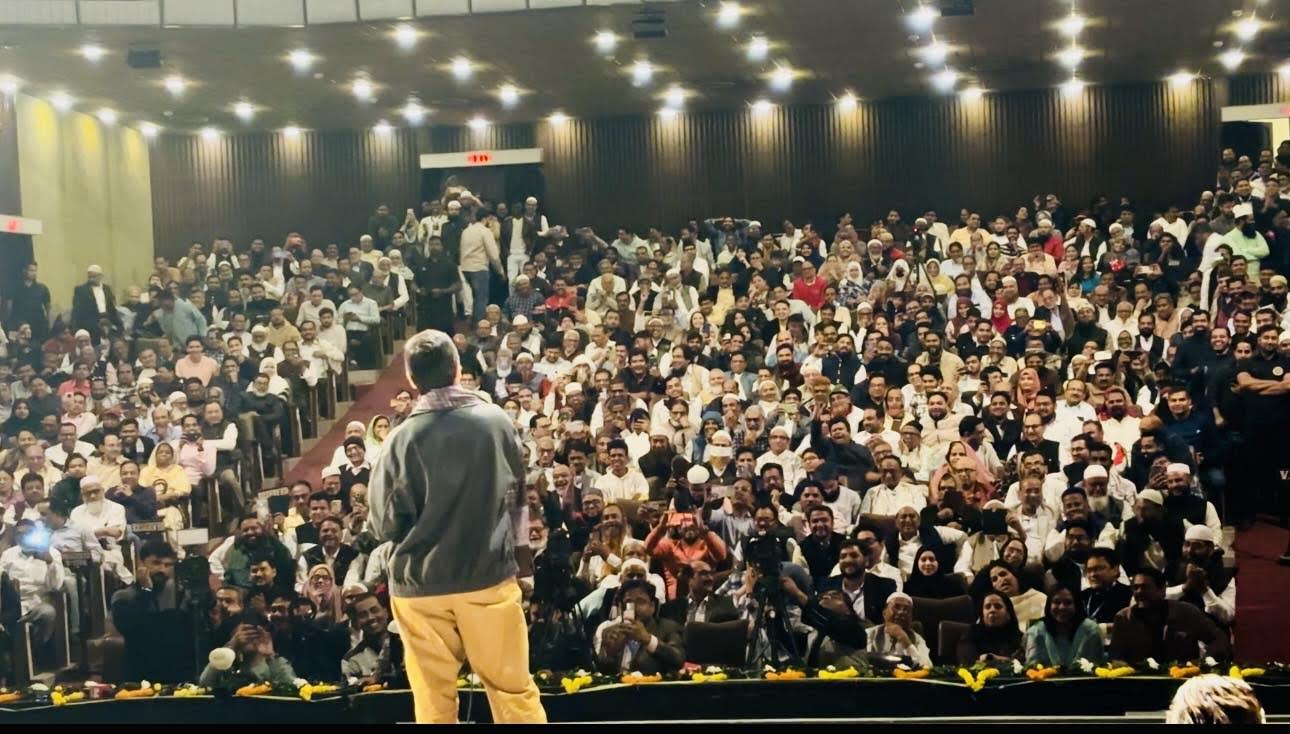
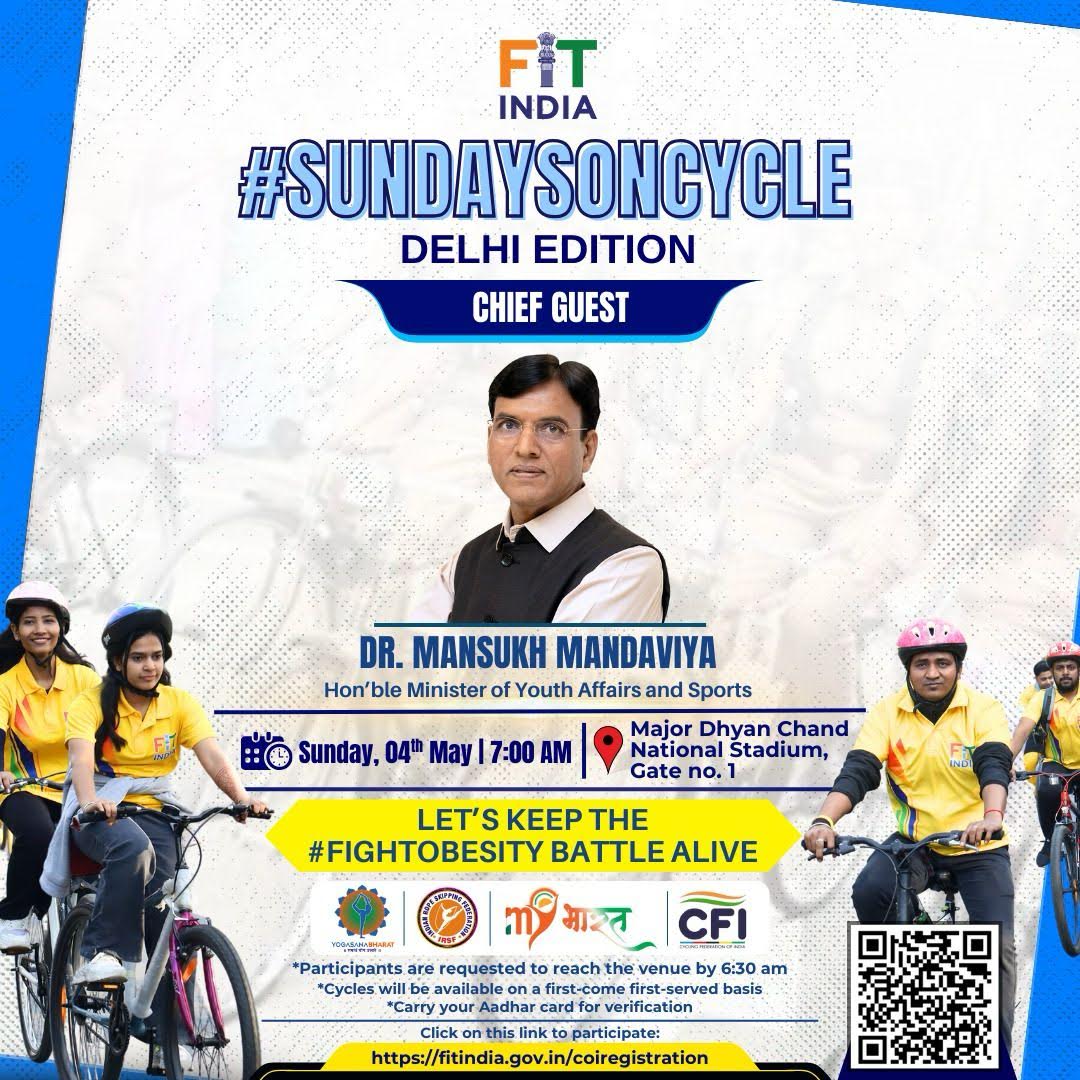
New Delhi: Union Minister for Youth Affairs and Sports, Dr. Mansukh Mandaviya, will participate in a special edition of the Fit India Sundays On Cycle initiative, titled ‘Cycling with Teachers,’ alongside teachers from across the country. The event is scheduled for May 4 at the Major Dhyan Chand National Stadium.

The Fit India Movement’s cycling event aims to further the “Fight Obesity” initiative by highlighting the role of educators—teachers, coaches, and academic mentors—who are key participants in this week’s program.

The nationwide cycling drive kicked off in December 2024 and has seen over 2 lakh participants of myriad ages across 5000 locations pan-India. Star badminton duo Satwiksairaj Rankireddy and Chirag Shetty, who physically received their Major Dhyan Chand Khel Ratna from Dr. Mandaviya this week, lauded the initiative. “Nowadays, people mostly use motorcycles, not cycles, so it’s great to have a movement like this. I recently went back home and took a kid’s cycle for a ride in Hyderabad!” Satwik told SAI Media, smiling.

“Cycling not only helps you stay fit but also benefits the environment. It’s a win-win to commute to work or enjoy leisure activities by cycle. Whether it’s once, twice, or every day, please use cycles and support this initiative,” mentioned Chirag. 

This week’s Fit India Sundays on Cycle event in the national capital will be flagged off at 7 AM at the Major Dhyan Chand National Stadium. The event will also be attended by Member of Parliament and popular Bhojpuri actor-singer Manoj Tiwari and mountaineer Narender Kumar, who summited Mount Annapurna (8,091m), the 10th highest peak in the world, in April 2025; completing the entire expedition in just 12 days.

Truth Behind Neha Singh Rathore’s Decline

3-2.jpeg

The Rise: A Fleeting Voice of the People

Neha Singh Rathore burst onto the scene in 2020 with Bihar Mein Ka Ba, a Bhojpuri folk song that resonated with millions by highlighting Bihar’s struggles—unemployment, corruption, and neglect. Its raw authenticity, rooted in Bhojpuri tradition, made Neha a folk hero, her modest Jharkhand roots amplifying her appeal. The song’s viral success on YouTube, garnering millions of views, earned her a YouTube Silver Creator Award and a following of over 1.2 million by 2023. But the adulation came with a price: Neha tasted fame, and it reshaped her. Beneath her folk singer facade, a hunger for relevance took hold, tinged with resentment toward systems and traditions she perceived as barriers to her ascent.

The Descent: From Art to Hustle

By 2023, Neha’s music had shifted. Songs like UP Mein Ka Ba and MP Mein Ka Ba traded nuance for provocation, targeting the BJP with simplistic rhymes that pandered to anti-establishment audiences. Her performances, once grassroots gatherings, became commercial spectacles. Reports suggest her stage shows now command ticket prices in the thousands of rupees, catering to urban elites rather than the rural poor she once championed. These events, backed by event organizers capitalizing on her notoriety, feature polished production—lighting, sound, and paid promoters—indicating a lucrative enterprise. Her social media, littered with sponsored posts, further betrays her commercial pivot, with each controversy conveniently boosting her visibility and booking fees.

Yet, in April 2025, Neha claimed financial distress, posting on X that she had only ₹519 in her ICICI bank account, unable to afford lawyer fees for a sedition case tied to her Pahalgam attack posts. She appealed for free legal aid, stating she needed ₹500 for a tabla player to record a new song. This claim, reported by outlets like Navbharat Times and Jansatta, sparked skepticism, given her high-profile performances and estimated net worth of 1-2 crores. The contradiction is stark: how can a singer charging thousands per ticket lack funds for legal defense?

Reconciling the Contradiction: A Calculated Facade

Neha’s financial narrative appears to be a strategic ploy, blending truth with manipulation. Her claim of having only ₹519 in her bank account may reflect a temporary cash flow issue—common for artists with irregular income and high legal expenses. Sedition cases, like the one filed in Lucknow for her Pahalgam posts, can incur significant costs, potentially draining liquid assets. Her husband’s reported job loss, mentioned in X posts, may exacerbate this. However, her failure to mention her broader financial portfolio—earnings from YouTube, performances, and sponsorships—suggests selective transparency. By publicizing her bank balance, Neha crafts a victim persona, rallying supporters who see her as a persecuted artist fighting a powerful state.

The high ticket prices, meanwhile, are consistent with her commercialized career. Urban venues, where her shows are now staged, charge premium rates to cover production costs and profit margins. These events, priced at thousands, target a niche audience—activists, liberals, and youth—willing to pay for her brand of political satire. Neha’s participation in these shows, even while claiming poverty, points to a disconnect between her public image and private dealings. She leverages her “folk singer” identity to maintain authenticity, but her actions—prioritizing paid gigs over grassroots outreach—reveal a profit-driven core.

This duality fuels her resentment. Neha’s hatred, initially aimed at systemic injustices, has curdled into a personal vendetta against critics, traditions, and cultural icons who overshadow her. Her 2025 mockery of Veer Rasa poets—questioning whether figures like Ramdhari Singh Dinkar or Bhushan would fight in wars—was not satire but spite. Ignorant of Veer Rasa’s emotional depth, as outlined in Bharatmuni’s Natyashastra, she reduced a revered tradition to a cheap jab, resenting its enduring legacy. Retired IAS officer Manoj Srivastava’s rebuke, invoking Dinkar’s Parashuram ki Pratiksha and Western poets like John McCrae, highlighted her shallow provocation. Neha’s hatred isn’t ideological; it’s ego-driven, lashing out at anything that challenges her relevance.

The Pahalgam Fallout: Controversy as Currency

Neha’s April 2025 posts on the Pahalgam terror attack, which killed 26 people, exemplify her strategy. She accused the Modi government of security failures and vote-bank politics, claims that went viral when reposted by a Pakistani journalists’ group. The Lucknow FIR, filed under Bharatiya Nyaya Sanhita for sedition and inciting religious animosity, cited her posts as “anti-national.” Neha’s response—claiming persecution and financial ruin—was textbook deflection. Her X post about having ₹519 and needing legal aid was less a plea than a performance, designed to galvanize supporters and deflect scrutiny. The timing—recording a new song amid a legal crisis—suggests she views controversy as a marketing tool, each FIR a chance to trend.

Critics on social media have called her out, with former fans accusing her of chasing “NGO money” and “liberal clout.” Her selective outrage—silent on issues that don’t fit her narrative—undermines her credibility. The Veer Rasa controversy, coupled with her Pahalgam posts, paints a picture of a singer who thrives on division, her hatred cloaked in satire but rooted in a need for validation.

The Truth: Profit Over Principle

Neha’s story is one of squandered potential. Her Bihar Mein Ka Ba was a genuine cry for change, but fame warped her. The high ticket prices reflect a career built on monetizing outrage, not uplifting the marginalized. Her claim of poverty, while possibly true in a narrow sense, is a calculated narrative to mask her commercial success. Legal battles may strain her finances, but her continued performances and social media hustle suggest resilience, not ruin. Her hatred—against tradition, critics, and revered poets—drives her rhymes, each one emptier than the last, crafted for applause and profit.

Neha’s defenders argue she’s a victim of patriarchy or political vendettas, but this ignores her agency. Neha leans on sloganeering, alienating even her base. Her legacy is a warning: talent alone doesn’t sustain impact. By trading authenticity for greed and resentment, Neha has become a hustler in folk singer’s clothing, her art a hollow echo of what it once promised.

ऐतिहासिक निर्णय है जातिगत जनगणना

p8tov24o_narendra-modi-ndtv-file_625x300_20_April_19.avif

जम्मू कश्मीर के पहलगाम में आतंकवादियों द्वारा धर्म पूछकर किये गये हिन्दू नरसंहार के बाद जनमानस में उपजे आक्रोष और पाकिस्तान पर कार्यवाही की प्रतीक्षा कर रहा आम जनमानस तथा राजनैतिक दल उस समय हैरान रह गए जब केंद्र सरकार ने जातिगत जनगणना कराने का बड़ा निर्णय सुनाया। केंद्र सरकार का यह निर्णय आते ही देश का राजनैतिक विमर्श जातिगत जनगणना पर केन्द्रित हो गया। आमजन यद्यपि यह सोच रहा है कि इस समय जब हम आतंकवादियों के शवों की प्रतीक्षा कर रहे हैं उस समय प्रधानमंत्री जी को ये क्या सूझ पड़ी, किन्तु आश्वस्त है कि प्रधानमंत्री जी ने ऐसा किया है तो अवश्य इसके पीछे कुछ रणनीति होगी। उधर कांग्रेस के नेतृत्व में इंडी गठबंधन इसे अपनी विजय बताकर प्रसन्नता व्यक्त कर रहा है। कांग्रेस तो इतनी आतुर हो गई कि उसने सोशल मीडिया पर, “सरकार उनकी, सिस्टम हमारा” कैप्शन के साथ राहुल का प्रचार आरम्भ कर दिया, फिर उनको याद दिलाना पड़ा कि ये फिल्म में एक खलनायिका द्वारा कहे गए शब्द हैं जो आतंकवादियों के साथ है।

पहलगाम आतंकी हमले के पश्चात प्रधानमंत्री जी ने कदा रुख अपनाया है और कहा है, हम आतंकवादियों तथा उनके पीछे छुपे लोगों का धरती के अंत तक पीछा करेंगे और सजा देंगे। प्रधानमंत्री ने इस बार पाकिस्तान को कल्पना से अधिक दंड मिलने की बात भी कही है। संभव है, इस प्रक्रिया में समय लगे और लम्बे समय तक युद्ध की परिस्थितियां बनी रहें। उस समय में विपक्ष अपना राजनैतिक अस्तित्व बचाए रखने के लिए क्या – क्या कर सकता है? स्वाभाविक रूप से जाती जनगणना जैसे मुद्दों को हवा देगा। भारत की अवश्यम्भावी विजय के उपरांत विपक्ष के पास क्या मुद्दा होगा? स्वाभाविक है वो पुनः अत्यंत आक्रामक रूप से जातिगत जनगणना के मुद्दे को उठाएगा यही कारण है कि केंद्र सरकार ने पहले ही जातिगत जनगणना का निर्णय लेकर उन वर्गों की चिंताओं को दूर कर दिया है जो मानती है कि जातिगत जनगणना उनके पक्ष में होगी और जिनको विश्वास में लेकर राहुल गाँधी तथा उनके मित्र देश और समाज का वातावरण बिगाड़ सकते हैं। राष्ट्रीय स्वयंसेवक संघ के सामाजिक समरसता के विचारों को आत्मसात करते हुए तथा संघ को अपने निर्णय में साथ लेकर केंद्र सरकार ने यह निर्णय लिया है।

कांग्रेस ने जातिगत जनगणना को एक राजनतिक हथियार के रूप में उपयोग करके 2024 के लोकसभा चुनाव में भाजपा के मिशन 400 को पूरा होने से रोक दिया यद्यपि उसके बाद हरियाणा, दिल्ली और महाराष्ट्र में भाजपा के नए नारों “एक रहेंगे नेक रहेंगे“ और “बटेंगे तो कटेंगे“ ने परिस्थितियाँ पूरी तरह बदल दीं। वर्तमान में भारत -पाक के मध्य चल रहे तनाव के समय सरकार द्वारा लिया गया जातिगत जनगणना का निर्णय विपक्ष के लिए तनाव पैदा करने है भले ही इस समय वो इस फैसले को अपनी जीत मानकर जश्न मना रहा है। वास्तविकता यह है कि प्रधानमंत्री नरेंद्र मोदी ने अपने सहयोगियों व राष्ट्रीय स्वयंसेवक संघ के साथ मिलकर विरोधी दलों के खतरनाक राजनीतिक एजेंडे पर पॉलटिकिल सर्जिकल स्ट्राइक कर दी है और एक बड़ा मुद्दा उनके हाथों से छीन लिया है।

नेता प्रतिपक्ष राहुल गांधी सदन और सदन के बाहर हमेशा यही कहते थे कि जब भी हमें मौका मिलेगा हम संसद से जातिगत जनगणना का प्रस्ताव पारित करवाकर रहेंगे। प्रधानमंत्री मोदी जी ने उनके इस कथन का पटाक्षेप कर दिया है और यह भी स्पष्ट कर दिया है कि कांग्रेस जातिगत जनगणना पर केवल राजनीति ही करती रही है।
वर्ष 1931 में जब देश में अंग्रेजों की सरकार थी तब जातिगत जनगणना हुई थी, स्वतंत्रता प्राप्ति के बाद भारत में अधिकांश समय कांग्रेस की सरकारें ही रहीं किंतु कांग्रेस ने कभी भी जातिगत जनगणना करवाने का साहस नहीं किया अपितु पूर्व प्रधानमंत्री जवाहर लाल नेहरू से लेकर मनमोहन सिंह सरकार के गृहमंत्री पी चिदम्बरम तक ने सदन मे खड़े होकर 16 बिन्दुओं को आधार मानकर जातिगत जनगणना का कड़ा विरोध किया था और इसे देशहित के खिलाफ बताया था। यह एक कटु सत्य है किआज जिस कांग्रेस के नेता राहुल गाँधी जातिगत जनगणना के नाम पर देश को अराजकता की आग में झोकने का प्रयास कर रहे हैं उस कांग्रेस ने जातिगत जनगणना का हमेशा विरोध किया और इसे लागू नहीं होने दिया।

पत्रकार वार्ता में जातिगत जनगणना के निर्णय की जानकारी देते हुए केंद्रीय मंत्री अश्विनी वैष्णव ने कहा कि जातिगत जनगणना कराना समता, समरसता, सुशासन और सामाजिक न्याय के एक नये युग का आरंभ है। अब जातिगत जनगणना का मुद्दा पूरी तरह से बीजेपी के पाले में है। भाजपा ने कभी भी जातिगत जनगणना का विरोध नहीं किया। स्मरणीय है कि जब बिहार के वर्तमान मुख्यमंत्री नीतिश कुमार इंडी गठबंधन में शामिल थे और उन्होंने जातिगत जनगणना को लेकर सर्वदलीय बैठक बुलाई थी तब बीजेपी ने भी उस बैठक में भाग लिया था और जातिगत जनगणना का समर्थन किया था यद्यपि बीजेपी को विपक्ष के तौर तरीकों पर आपत्ति थी क्योंकि जनगणना मूलतः केंद सरकार का विषय है और इसमें राज्य सरकारों की कोई भूमिका नहीं है। अभी तक जिन राज्यों में यह जनगणना हुई है वह राजनीति से प्रेरित तथा सामाजिक तनाव बढ़ाने वाली रही है।

केंद्र सरकार की जातिगत जनगणना से पहली बार वास्तविक आंकड़े सामने आयेंगे।इस जनगणना के माध्यम से कई चीजे स्पष्ट हो सकेंगी जिसमें एक यह बड़ा मुददा भी है कि हर जाति के दंबग लोग ही आरक्षण का लाभ उठाते चले आ रहे हैं जबकि उन्हीं जातियों और समाज के अन्य लोग पिछड़ते ही चले जा रहे हैं, उन्हें आरक्षण व सरकार की अन्य सुविधाओं का प्रत्यक्ष लाभ नहीं मिल पा रहा है अर्थात क्रीमिलेयर का भी वास्तविक वर्गीकरण हो सकेगा।

विपक्ष की जातिगत जनगणना केवल हिंदू समाज को जातियों में विभाजित करने की नीयत से थी जबकि मोदी सरकार अब संपूर्णता के आधार पर जातिगत जनगणना कराने जा रही हैं देश के इतिहास में पहली बार मुस्लिम समाज की जातियों की भी जनगणना होने जा रही है। इस जनगणना के माध्यम से धर्मांतरण करने वालों का आंकड़ा भी जुटाया जायेगा। धर्म परिवर्तन करने के कारण देश के कई हिस्सों की जनसंख्या और भौगोलिक संरचना में तेजी से बदलाव देखा गया है ।ऐसे में सरकार के यह भी पता करने का इरादा है कि किन धर्मों और जाति विशेष के लोगों में धर्मांतरण हुआ और किस हिस्से में इसका प्रभाव अधिक है। जातिगत जनगणना का परिणाम सामने आने के बाद सामाजिक आर्थिक स्थिति का सटीक डेटा मिल सकेगा। वंचित समूहों के लिए नीतियां बनाने में मदद मिल सकेगी संसाधनों और अवसरो का समान वितरण हो सकेगा तथा समाजिक असमानता को कम करने में मदद मिलने के साथ जाति व्यवस्था के कारण होने वाले भेदभाव की समस्या का भी समाधान हो सकेगा।

जातिगत जनगणना पर संघ का दृष्टिकोण भी स्पष्ट है कि यदि जातिगत जनगणना का उद्देश्य न्याय ओैर कल्याण है तो समर्थन योग्य है और यदि उसका उद्देश्य राजनीति और समाज को बांटना है तो उसका सदैव विरोध है। राष्ट्रीय स्वयंसेवक संघ ने इस निर्णय का समर्थन किया है। संघ का विचार है कि “जाति का अंत आांकड़ों से नहीं, आत्मीयता से होगा लेकिन आंकड़ो के बिना न तो नीति बनेगी न्याय मिलेगा।“ वैसे भी संघ का मूल कार्य सामाजिक समरसता ही है और वह आगामी समय में सामाजिक समरसता का एक महा अभियान चलाने वाला है। वर्तमान जातिगत जनगणना का स्वरूप संघ के दृष्टिकोण से मेल खाता है।

जातिगत जनगणना की बात सामने आने पर कई विचारक इसमें सनातनी “गोत्र” को भी जोड़े जाने की मांग कर रहे हैं क्योंकि हिन्दू समाज की रचना में गोत्र, किसी भी समाज के सनातन ऋषि परम्परा से जुडाव को स्थापित करता है। हिन्दू जीवन के सभी सोलह संस्कारों तथा पूजा एवं दान के संकल्प में गोत्र का नाम लिया जाना अनिवार्य होता है।

Monitored on One Hand, Mentored on the Other: India’s Baffling BBC Paradox


bbc_logo.jpeg

I remember reading the headline late one night: “MEA’s XP Division to Monitor BBC Coverage.” My immediate thought was—here we go again. The BBC, long the target of governmental unease in India, was back in the crosshairs. This time, it was over semantics—referring to armed terrorists in Pahalgam as “militants.” The outrage was swift, coordinated, and quietly confirmed by high-level whispers to The Times of India, India Today, Hindustan Times, and others. No official press release, no open rebuke—just off-the-record confirmations that a “notice” had been issued and that the Ministry of External Affairs was now officially watching.


But here’s where the story veers into territory almost too ironic to be true.


Around the same time this backlash was building steam, I came across another announcement. A curious name showed up on the WAVEX 2025 Startup Booth Allocation list—Collective Newsroom Pvt. Ltd. A relatively unknown company was granted a coveted investment pitch opportunity under an initiative backed by the Ministry of Information and Broadcasting , Govt. of India. I rubbed my eyes and read the line again. The very ecosystem that’s supposedly clamping down on BBC narratives was simultaneously funding and showcasing its Indian proxy?


And here’s the real kicker: while millions of Indians go gung-ho over BBC’s content—sharing it, quoting it, swearing by it—how many of them actually know who produces all that content for BBC in India today?


The answer: Collective Newsroom, a company that is now the sole content provider for BBC News in six Indian languages—Hindi, Marathi, Gujarati, Punjabi, Tamil, Telugu—as well as English videos for BBC News India’s YouTube channel. But the company’s journey is as murky as it is meteoric.


Let’s rewind. Collective Newsroom Private Limited was incorporated on 27 October 2023, with two individuals—Prabhkirtan Singh Sehgal and Rashi Sehgal—as its directors. Yet strangely, when CEO Rupa Jha introduces herself online—including in her LinkedIn bio—she refers to herself as the “co-founder” of the company. The public records tell a different story. The Sehgals are the actual founders.No official filings (like Form DIR-12) exist, on the public database of Ministry of Corporate affairs at the time of writing this story, to document how or when the BBC’s ex-editors, including Jha, were inducted as directors


On 10 November 2023, a new entity—Connected Newsroom Holdings Private Limited—was incorporated. Barely a month later, on 11 December 2023, this holding company acquired 100% ownership of Collective Newsroom. Then, on 23 December 2023, four former BBC editors—Rupa Jha, Mukesh Sharma, Sanjoy Majumder, and Sara Hasan—were appointed as directors. Again, there’s been no legally mandated ROC disclosure of this transfer.


The most astonishing detail? On 20 March 2024, when Collective Newsroom was just five months old, it bought the BBC World Service Language Business of BBC World Service India Private Limited via a Business Transfer Agreement. The deal’s financial terms were never disclosed publicly. 

What raises further eyebrows is that the paid-up capital of Collective Newsroom Private Limited is only ₹50,00,000. It is curious how a company with such limited capitalization could acquire a major segment of BBC’s operations in India—without any public record of the transaction’s value or an updated disclosure of the company’s asset base post-acquisition. This opacity raises serious questions of financial propriety and regulatory transparency.


Three weeks later, on 10 April 2024, the company was launched to the public as BBC’s exclusive Indian partner for content creation.


Their CEO, Rupa Jha, has tried to position the venture as an extension of the BBC’s editorial legacy, stating:
“We will keep the BBC Editorial Guidelines in mind when producing content for them, such as the kind of journalism the BBC practices. Upholding the trust in the BBC brand is our responsibility to carry forward.”


The BBC, when contacted for comment, offered this official statement:
“Collective Newsroom is responsible for producing and publishing content in six Indian languages from India, and we are delighted to be working with them. The BBC has a unique position in India and we are committed to serving audiences across the country and around the world with independent and impartial journalism.” — BBC Spokesperson

But here’s the uncomfortable contradiction: this entire restructuring came after the BBC’s offices in India were raided by the Enforcement Directorate (ED) in early 2023. The raids followed income tax surveys and were linked to alleged violations of India’s Foreign Direct Investment (FDI) rules—regulations that the BBC, ironically, seemed either unwilling or unable to fully comply with.

This isn’t just about technical compliance. It’s about transparency, a value the BBC claims to champion. And yet, there has been no public disclosure of the terms under which the BBC offloaded its language services to a six-month-old Indian company—one that had never before handled editorial operations at this scale. For a global media house that often lectures others on openness and accountability, the BBC’s silence on the nature of this transaction is staggeringly hypocritical.


Even as the Indian government allegedly watches BBC’s editorial tone with hawk eyes, it enables Collective Newsroom, its surrogate, to flourish under a taxpayer-supported initiative like WAVEX. As of now the BBC has already submitted its application for ownership to the government.


No Startup Pitch results were ever declared with official announcement of selected startups except only a list of booth allotment details were published on the website of waves bazaar . Yet this newly rechristened media outfit secured a booth and investment pitch opportunity under WAVEX 2025—a platform funded and endorsed by the Ministry of Information and Broadcasting, Govt. of India.


So I ask again—how can one wing of the Indian government surveil an international media brand for its reporting practices while another simultaneously promotes, funds, and legitimizes its rebranded Indian outpost?


As a citizen, I’m left bewildered. The messaging is muddled. Either BBC is a problematic influence in India—or it’s a trusted content partner deserving of institutional support. But surely, it can’t be both.


In today’s India, where trust in media is either weaponized or subsidized, perhaps this paradox is the only consistency left.


( This story has been updated with comments from BBC after it was initially published on 02.05.2025, however no response has been received yet from Collective Newsroom or Govt. of India yet.)

scroll to top