
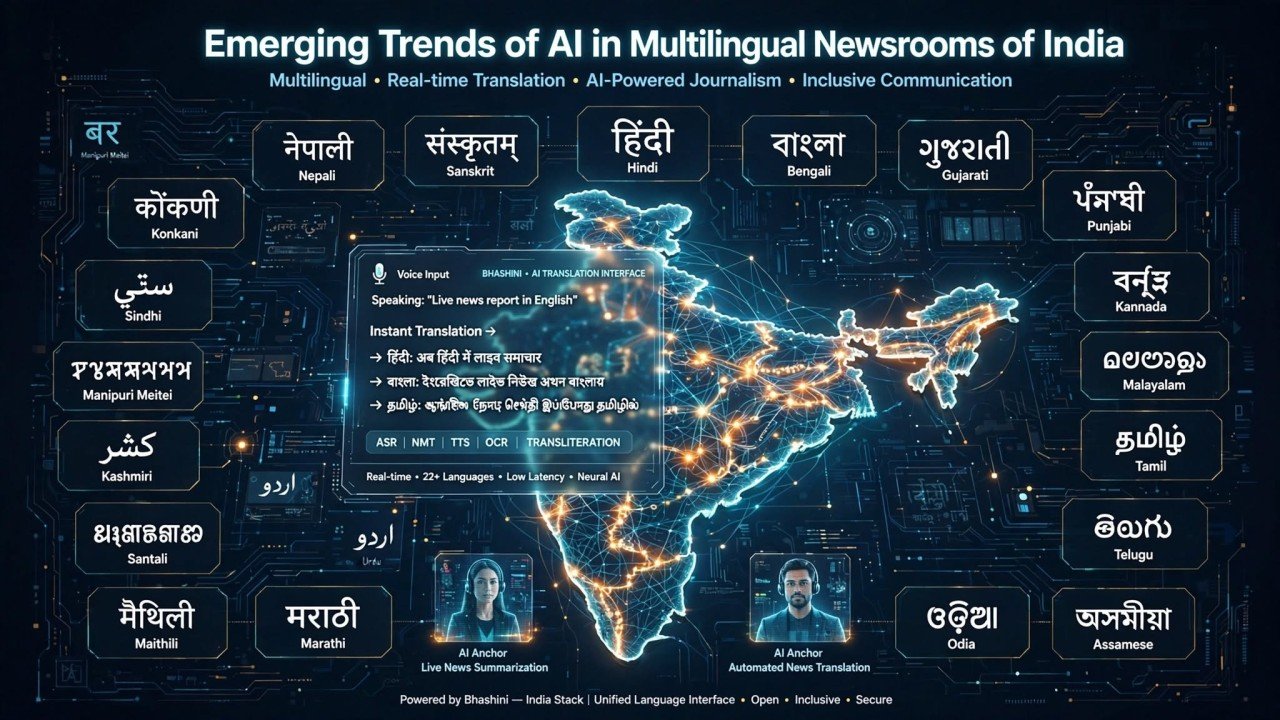
Lucknow: Artificial Intelligence is changing how news is made and shared in many Indian languages. According to reports published by the Ministry of Electronics and Information Technology, India has 22 official languages and hundreds of dialects. According to data released by the Internet and Mobile Association of India, more than 500 million Indians consume news in languages other than English. AI is helping newsrooms reach these audiences faster. This article explains the emerging trends in simple language, with sources for every fact.
AI Translation is Becoming Normal: The biggest trend is AI translation. According to information released by the Press Information Bureau about the Bhashini mission, Bhashini is an AI-led language platform launched by MeitY to enable translation between Indian languages. According to updates shared by Bhashini team, the platform supports translation in more than 22 Indian languages. Many newsrooms are using this. According to case studies published by Google News Initiative India, Dainik Jagran and Dailyhunt use AI translation tools to convert Hindi and English stories into Tamil, Telugu, Marathi and other languages in minutes. This helps local readers get national news in their own language, as explained in Bhashini project documents.
Automatic Transcription of Speeches and Interviews: Journalists spend hours typing interviews. According to product features published by AI4Bharat initiative of IIT Madras, automatic speech recognition models like Whisper and AI4Bharat’s Indic ASR can transcribe Indian languages. According to workflow reports published by NDTV and The Indian Express labs, reporters now use AI transcription to convert long political speeches and press conferences into text within minutes. This trend saves time, as reported by Reuters Institute for the Study of Journalism in its annual Digital News Report.
AI Summarisation for Short News: People like short news. According to user behaviour studies published by Inshorts and Dailyhunt, many Indians prefer 60-word summaries. According to technical blogs published by OpenAI and Google, large language models can summarise long articles accurately. According to experiments reported by Hindustan Times and The Hindu digital desks, AI is used to create quick summaries, bullet points and explainers of long court judgments or budget documents. This makes complex news easy to understand, as noted in UNESCO guidelines on AI and media accessibility.
Rise of AI Anchors and Voice Cloning: AI anchors are a new trend. According to news coverage published by India Today Group and News18 network, several Indian channels have launched AI news anchors for language bulletins. For example, according to official announcements made by India Today Group, Sana is an AI anchor used for multilingual updates. According to technology explainers published by Microsoft and ElevenLabs, AI text-to-speech can clone voices in different Indian languages. According to reports published by Asian News International, regional channels use AI voices to read news in Bhojpuri, Haryanvi and other dialects without hiring separate presenters for each shift.
Personalised News Feeds and Recommendations: AI recommends what you like to read. According to policy papers published by NITI Aayog on responsible AI, recommendation systems are widely used in media platforms. According to product information shared by Dailyhunt and Way2News, their apps use AI to show news based on language preference, location and reading history. According to research published by the Reuters Institute, personalised recommendation increases user engagement. In multilingual India, as explained in reports by KPMG and Google on Indian languages internet users, personalisation helps a Tamil speaker in Chennai and a Hindi speaker in Lucknow get relevant local news.
AI for Fact-Checking and Deepfake Detection: Fake news spreads fast in many languages. According to fact-checking methodology published by BOOM Live and Alt News, AI tools help detect manipulated images and videos. According to advisories issued by the Ministry of Electronics and Information Technology under IT Rules, detection of synthetic media is a priority. According to tool descriptions published by Google Fact Check Tools and Microsoft】 Video Authenticator project, AI can check if a video is altered. Newsrooms like The Quint and BBC India, according to their editorial blogs, use these AI tools to verify viral videos before publishing in multiple languages.
Automated Data Journalism and Graphics:AI helps with data. According to training materials published by Google News Initiative, AI tools can clean large datasets and make charts automatically. According to examples shared by Indian Express Data Intelligence Unit, AI is used to analyse election data, weather data and census data to create stories in Hindi, Marathi and English at the same time. According to documentation published by Flourish and Datawrapper platforms, their AI features are used by many Indian newsrooms to create multilingual infographics quickly.
Voice Search and Conversational News: Many Indians search by voice. According to internet trend reports published by Google India, voice searches in Indian languages are growing rapidly. According to product updates released by Jio News and Dailyhunt, they have launched voice-based news where users can ask for news in their language. According to technical papers published by AI4Bharat, Indic language voice assistants are being trained to understand mixed language, like Hinglish. This trend makes news accessible for people who cannot read easily, as noted in reports by UNESCO on digital inclusion.
Human-in-the-Loop is Still Important: Even with all trends, human checking remains necessary. According to ethical guidelines issued by the Press Council of India, accuracy and fairness are core duties of journalism. According to OECD AI Principles on accountability, AI systems must have human oversight. According to editorial policies published by Press Trust of India, AI-generated content must be verified by an editor before publication. According to observations made in the India AI Mission discussion papers released by MeitY, human review is recommended for high-risk uses like translation of legal or medical news.
AI trends in multilingual newsrooms show a clear shift from English-only to language-first journalism. According to official statements issued by the Ministry of Information and Broadcasting, the future of Indian media is multilingual and digital. According to assessments reported by Bhashini and AI4Bharat teams, AI quality for Indian languages is improving but still needs improvement. According to suggestions made by the Editors Guild of India, newsrooms must adopt ethical policies for AI use. If used responsibly, as stated in the National Strategy for Artificial Intelligence released by NITI Aayog, AI can help every Indian get trusted news in their own mother tongue.
