The Deteriorating Condition of the Aravalli Hills: An Ecological Crisis in North India

2-1-7.jpeg

Delhi : The Aravalli Range, one of the world’s oldest mountain systems dating back over 670 million years, stretches approximately 692 kilometers across Gujarat, Rajasthan, Haryana, and Delhi. This ancient fold mountain chain serves as a critical ecological backbone for north-western India.

It acts as a natural barrier against the eastward advance of the Thar Desert, traps dust and pollutants, recharges groundwater aquifers, regulates local climate, and supports rich biodiversity, including over 200 bird species and mammals like leopards and hyenas. Often called the “green lungs” of the Delhi-NCR region, the Aravallis mitigate air pollution by filtering particulate matter (PM2.5 and PM10) and moderating wind-blown dust from arid zones.

However, decades of unchecked mining, urbanization, and deforestation have severely degraded this fragile ecosystem. Illegal and legal quarrying for minerals like limestone, marble, and sandstone has flattened hills, created breaches in the range, and led to soil erosion, loss of forest cover, and plummeting groundwater levels. In Haryana alone, natural forest cover is the lowest in India at 3.6%, with significant portions in low-elevation Aravalli systems. Reports from citizens’ groups, such as the People for Aravallis collective, document widespread devastation in districts like Gurugram, Nuh, and Mahendergarh, where groundwater depths reach 1,500-2,000 feet due to mining disruptions.

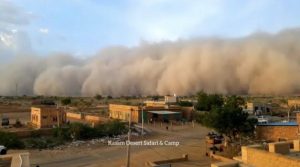
The range’s destruction has already opened over 12 gaps, allowing Thar Desert dust to infiltrate Delhi-NCR, exacerbating winter smog and pushing Air Quality Index (AQI) levels into severe categories.

This contributes to respiratory illnesses, cardiovascular diseases, and higher hospital admissions, particularly affecting children and the elderly. Without the Aravallis’ vegetation and topography to trap pollutants and retain moisture, regions like Delhi, Haryana, Punjab, and western Uttar Pradesh face intensified dust storms, erratic monsoons, prolonged heatwaves, and accelerated desertification.

A pivotal development occurred on November 20, 2025, when the Supreme Court accepted a uniform definition of the Aravalli Hills proposed by a Ministry of Environment, Forest and Climate Change (MoEFCC) committee. The ruling defines an “Aravalli Hill” as any landform in designated districts rising 100 meters or more above local relief, including its supporting slopes and enclosed base. An “Aravalli Range” comprises two or more such hills within 500 meters of each other. This elevation-based criterion aims to provide a scientifically verifiable standard, resolving inconsistencies across states.

However, critics, including ecologists like Ghazala Shahabuddin and groups like People for Aravallis, argue it excludes over 90% of the range—primarily low-lying ridges, scrub forests, and grasslands—that perform vital functions. Forest Survey of India assessments indicate only about 8.7% of mapped hillocks meet the 100-meter threshold. Environmentalists warn this could undo decades of protections, such as the 1992 MoEFCC notification and 2021 Natural Conservation Zones, opening vast tracts to mining and development. They predict irreversible damage: faster desert advancement, further groundwater depletion (with recharge potential of two million liters per hectare lost), biodiversity loss, and worsened public health crises from toxic air.

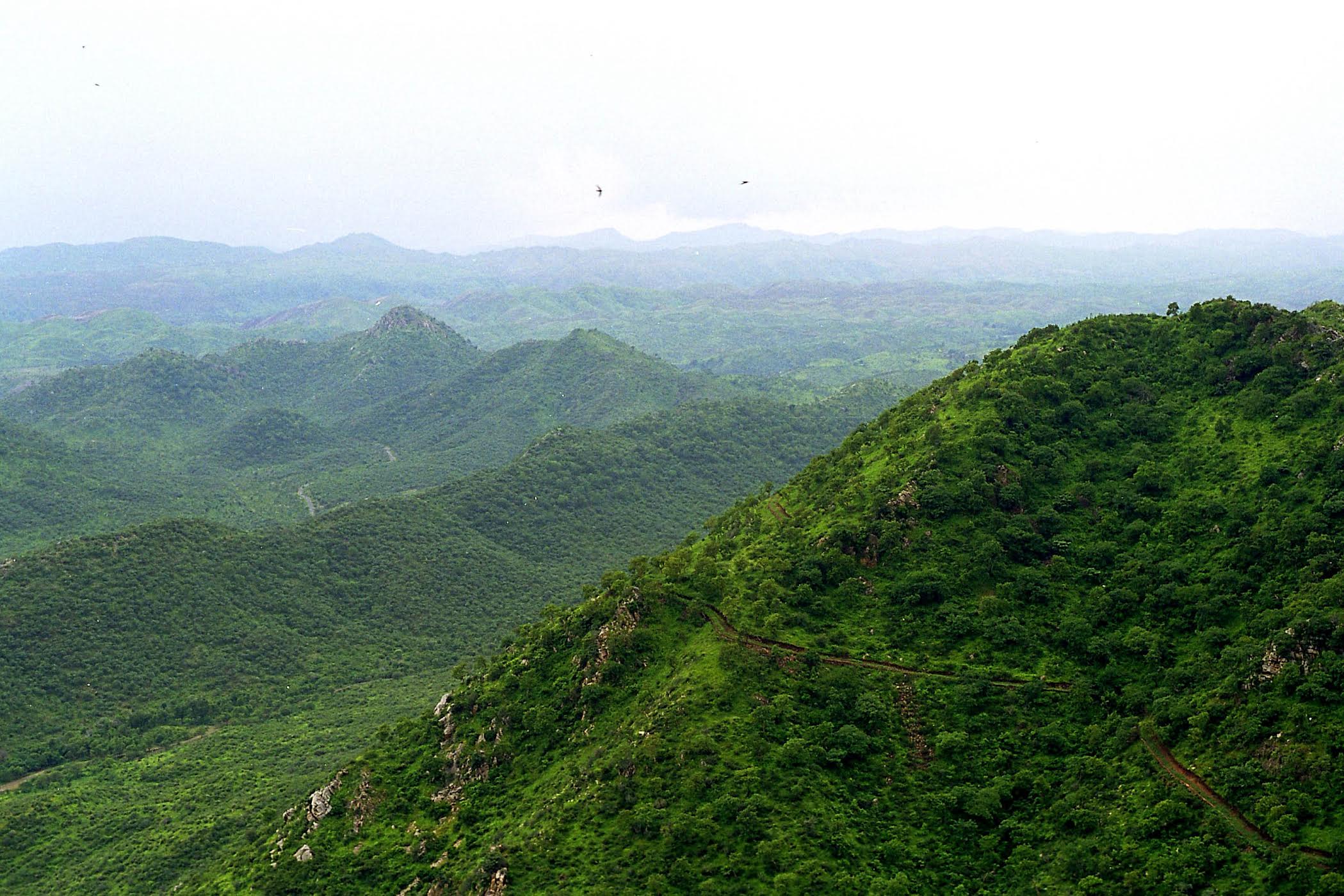
Intact Aravalli landscapes showcase dense forests and rolling hills that sustain ecosystems.

In contrast, mined areas reveal barren craters and dust-covered wastelands, highlighting irreversible flattening.

The government and some reports emphasize protective measures in the ruling. The Supreme Court paused all new mining leases until a Management Plan for Sustainable Mining (MPSM) is finalized by the Indian Council of Forestry Research and Education, including macro-level environmental impact assessments and identification of no-go zones (e.g., wildlife corridors, recharge areas). Existing mines must comply strictly with sustainability norms, and mining covers only 0.19% of the Aravalli region currently. Officials, including Environment Minister Bhupender Yadav, assert that over 90% remains protected, with prohibitions in eco-sensitive zones and a commitment to restoration via initiatives like the Aravalli Green Wall Project launched in June 2025.

Protests in Rajasthan and campaigns like #SaveAravalli reflect public alarm, with figures like former CM Ashok Gehlot calling it a potential “death warrant.” Political debates continue, with opposition accusing the redefinition of favoring mining interests, while the BJP defends it as enhancing conservation through clarity.

The Aravallis’ deterioration poses existential threats: permanent toxic air, water scarcity in stressed cities like Delhi and Gurugram, failing agriculture from dust-covered crops, extreme heat, and potential migration crises. Scientific evidence links mining to degraded land (8.2% in Haryana alone) and interconnected aquifer disruptions. As India’s shield against desertification—aligned with UN commitments—the range’s loss would amplify climate vulnerabilities for millions.

Urgent action is needed: stricter enforcement against illegal mining, holistic protections beyond elevation metrics, and accelerated afforestation. The Supreme Court’s interim safeguards offer a window, but long-term survival demands prioritizing ecological integrity over short-term extraction. Preserving the Aravallis is essential for breathable air, secure water, and resilient climates in north India.


The Hidden Screen: Unrestricted Mobile Access and Its Toll on India’s Teenagers

2-1-6.jpeg

New Delhi: In the bustling streets of Mumbai, 16-year-old Aryan spends hours scrolling through Instagram reels after school, often late into the night. His parents, proud of his new smartphone—a gift for good exam results—see it as a tool for learning and staying connected. But Aryan confesses to friends that the endless feed of perfect lives leaves him feeling inadequate, anxious, and restless. Across India, millions of teenagers like Aryan have near-unlimited access to mobile phones, with no national restrictions on usage for minors. Affordable data plans and widespread smartphone penetration have made devices ubiquitous, but experts warn this freedom comes at a steep cost: easy exposure to harmful content, including pornography and addictive social media, which can profoundly impact developing minds.

As of 2025, India has no blanket bans or age limits on mobile phone use for teenagers, unlike some countries experimenting with school smartphone restrictions or social media age gates. Smartphone ownership among rural teens aged 14-16 has surged, with over 84% of households owning one, according to recent surveys. While this digital boom empowers education and communication, it also opens floodgates to explicit material. Studies show that nine out of 10 boys in India are exposed to pornography before turning 18, often accidentally through pop-ups or shared links on social platforms.

Teenage years are a critical period of brain development, with heightened activity in reward centers and ongoing maturation of impulse control regions until the mid-20s. Neuroscientists explain that the adolescent brain is particularly vulnerable to hyper-stimulating content. Dopamine surges from viewing pornography or engaging with social media can rewire neural pathways, similar to substance addiction mechanisms. A Cambridge University study found younger viewers exhibit greater ventral striatum activity— the brain’s reward hub— in response to pornographic cues, potentially leading to compulsive behaviors.

Research from the Wave Clinic highlights how frequent pornography exposure promotes objectification, desensitization, and unrealistic expectations about sex and relationships. Adolescents may develop distorted views, seeing sex as primarily physical rather than emotional, which can strain real-life attachments. One longitudinal review notes associations with increased sexual aggression, though results are heterogeneous and causality remains debated. In India, a retrospective study of pornography users found younger individuals, often single and with early exposure, showing higher addiction severity, linked to poor coping and excessive digital engagement.

Social media amplifies these risks. Platforms like Instagram and TikTok, designed for endless scrolling, exploit dopamine loops to keep users hooked. Indian adolescents report averaging over three hours daily on social media, with problematic use rising from 7% in 2018 to 11% globally, trends mirrored here. A qualitative study of Indian teens revealed compulsive midnight scrolling disrupting sleep, fostering anxiety from likes/comments, cyberbullying, and social comparison. Excessive use correlates with depression, low self-esteem, body image issues, and loneliness.

The U.S. Surgeon General’s advisory notes teens spending over three hours daily on social media face double the risk of depression and anxiety symptoms— a threshold many Indian youth exceed. In urban India, academic pressures compound this: late-night feeds replace sleep, exacerbating mood disorders. Cyberbullying, often tied to social media, heightens isolation and suicidal ideation risks.

Experts cite neuroplasticity concerns. Pornography’s novelty triggers intense dopamine bursts, potentially eroding prefrontal cortex functions like impulse control and morality. Studies using fNIRS show hyperactive reward areas and inhibited regulatory zones in addicted viewers. For teens, this can stunt emotional growth, leading to erectile dysfunction in young men (14-35% report issues linked to porn habits) or dissatisfaction in relationships.

Positive aspects exist—social media offers connectivity, especially for marginalized youth, and some use pornography for sexual exploration. However, evidence leans toward net harms in unrestricted contexts. A Common Sense Media report found three-quarters of teens view pornography by 17, average first exposure at 12, often accidental.
In India, rising porn addiction among youth alarms behavioral experts. Clinics report increased cases of teens seeking help for compulsive viewing, impacting studies and relationships. The Madras High Court has advocated counseling over punishment for addicted minors, recognizing gadgets’ easy access to uncensored content.
Parents and educators grapple with monitoring. Many teens own smartphones privately, bypassing filters. Calls grow for digital literacy programs, comprehensive sex education, and potential regulations like social media age limits, debated globally.
Yet, blanket bans risk backlash—teens may seek alternatives, worsening distress. Balanced approaches are key: parental guidance, school awareness, and platform accountability.

Aryan recently confided in a counselor, reducing screen time and feeling better. Stories like his underscore urgency: while mobiles connect the world, unrestricted access can disconnect teens from healthy development.

Experts urge action. “Adolescents’ brains are learning machines,” notes one neurosurgeon. “Feed them positive inputs, or risk lasting distortions.”
As India hurtles toward greater digital integration, safeguarding young minds demands collective effort—from families fostering open talks to policymakers considering evidence-based safeguards.

The screen’s glow illuminates opportunities but casts long shadows. For India’s teenagers, the challenge is navigating both.

References and Key Studies Cited:

Wave Clinic (2025): Effects on teenage brain and social development.
Common Sense Media: Teen pornography exposure statistics.
PMC studies on Indian pornography addiction and social media impacts (2024-2025).
U.S. Surgeon General Advisory on Social Media and Youth Mental Health.
Various neuroimaging and longitudinal reviews on dopamine, desensitization, and mental health correlations.

SAMBAR STAG SAFELY RESCUED AND RELOCATED BY FOREST DEPARTMENT AND WILDLIFE SOS IN MATHURA!

2-1-5.jpeg

Shreshtha

Mathura : Collaborative response ensures prompt rescue and relocation of vulnerable sambar deer in Mathura

A swift and coordinated operation led to the safe rescue and relocation of a male sambar deer from Loriha Patti village in Goverdhan range of Mathura. The adult sambar was spotted wandering inside the village, prompting concerned residents to immediately alert the nearby forest department about the situation.

Upon seeing the large deer wandering in the village, terrified people rushed to inform the nearby forest department officials from where the Wildlife SOS rapid response unit was alerted through its 24×7 emergency helpline (+91 9917109666). Responding without delay, a six-member Wildlife SOS team comprising a veterinary doctor and trained rescuers rushed to the location.

After carefully securing the animal, the team conducted a thorough on-site medical examination and observed that the sambar was exhausted and had superficial injuries on the hind region. Immediate first aid and necessary treatment was administered to stabilise his condition. Following this, the stag was safely relocated to a suitable natural habitat, ensuring both the animal’s well-being and the safety of local residents.

*Venkata Sreekar Patel IFS, Divisional Forest Officer, Mathura, said*, “The prompt action taken by villagers ensured that both the forest department and Wildlife SOS teams responded seamlessly to the situation. Such cooperation plays a crucial role in mitigating human-wildlife conflict. We are committed to ensuring that injured wildlife receives timely assistance and the best possible care.”

*Kartick Satyanarayan, Co-founder and CEO of Wildlife SOS, said*, “Timely information from the local community and the Forest Department allowed our team to respond quickly and provide the necessary medical care to the deer. This rescue highlights the role of people’s awareness and importance of acting quickly in wildlife conservation efforts.”

*Dr. Ilayaraja S, Deputy Director of Veterinary services at Wildlife SOS, stated*, “Upon examination, the sambar was found exhausted and had superficial injuries on its hind region, which might have been caused while navigating through the village environment. Immediate on-site treatment was administered to address the injuries and minimise stress to the animal.”

*Baiju Raj M.V, Director of Conservation Projects at Wildlife SOS, added*, “Sambar deer often enter human-dominated landscapes due to habitat fragmentation and search for food or water. Relocating the animal to a safer environment was essential to prevent further stress or injury and to ensure its long-term survival.”

The sambar deer (Rusa unicolor) is one of the largest deer species found in India and is protected under the Wildlife (Protection) Act, 1972. Listed as ‘Vulnerable’ on the IUCN Red List, they primarily inhabit forests and grasslands. However, habitat loss and increasing human encroachment often force them into human settlements.

अरब के स्वर्ग लेबनान की विध्वंस कहानी

images-1-4.jpeg

आचार्य श्रीहरि

दिल्ली । के दशक में लेबनान अरब का एक ऐसा मुल्क था । जिसे *’अरब का स्वर्ग’ कहा जाता था । और इसकी राजधानी *बेरूत* को *’अरब का पेरिस’*। लेबनान एक progressive, tolerant और multi-cultural society थी, ठीक वैसे ही जैसे *भारत* है।

लेबनान में दुनिया की बेहतरीन Universities थीं । जहाँ पूरे अरब से बच्चे पढ़ने आते थे । और फिर वहीं रह जाते थे, काम करते थे, मेहनत करते थे। लेबनान की banking दुनिया की श्रेष्ठ banking व्यवस्थाओं में शुमार थी। Oil न होने के बावजूद लेबनान एक शानदार economy थी।

लेबनान का समाज कैसा था । इसका अंदाज़ा इस बात से लगाया जा सकता है । कि 60 के दशक में बहुचर्चित हिंदी फिल्म *An Evening in Paris* दरअसल Paris में नहीं बल्कि लेबनान में shoot की गई थी।

60 के दशक के उत्तरार्ध में वहाँ *जेहादी ताकतों* ने सिर उठाना शुरू किया। 70 में जब *Jordan* में अशांति हुई , तो लेबनान ने *फिलिस्तीनी शरणार्थियों* के लिए दरवाज़े खोल दिए – _आइये, स्वागत है!_ 1980 आते-आते लेबनान की ठीक वही हालत हो गयी जो आज *सीरिया* की है।

लेबनान की *Christian आबादी* को शरणार्थी बनकर घुसे जिहादियों ने ठीक उसी तरह मारा जैसे सीरिया के ISIS ने मारा। *पूरे के पूरे शहर में पूरी Christian आबादी को क़त्ल कर दिया गया।* कोई बचाने नहीं आया।

किसी समाज का एक छोटा-सा हिस्सा भी उन्मादी जिहादी हो जाए । तो फिर शेष peace loving society का कोई महत्त्व नहीं रहता। वो irrelevant हो जाते हैं। लेबनान की कहानी ज़्यादा पुरानी नहीं सिर्फ 25-30 साल पुरानी है।

लेबनान के इतिहास से बहुत कुछ सीखने की ज़रूरत है। और कोई सीखे न सीखे भारत को लेबनान के इतिहास से सीखने की ज़रूरत है। रोहिंग्याओं, बाँग्लादेशी घुसपैठियों और सीमान्त प्रदेशों में पल रहे जेहादियों से सतर्क रहने की ज़रूरत है।

ऐसी ताकतों के विरूद्ध एकजुट होइये । जो जेहादियों की समर्थक हैं । और इनका समर्थन दे रही पार्टियों , संस्थाओ, औऱ इनसे जुड़े लोगों का बहिष्कार करिये।
चुप मत बैठिये।
पढ़िए, समझिये और दूसरों को
भी समझाइए।

scroll to top