
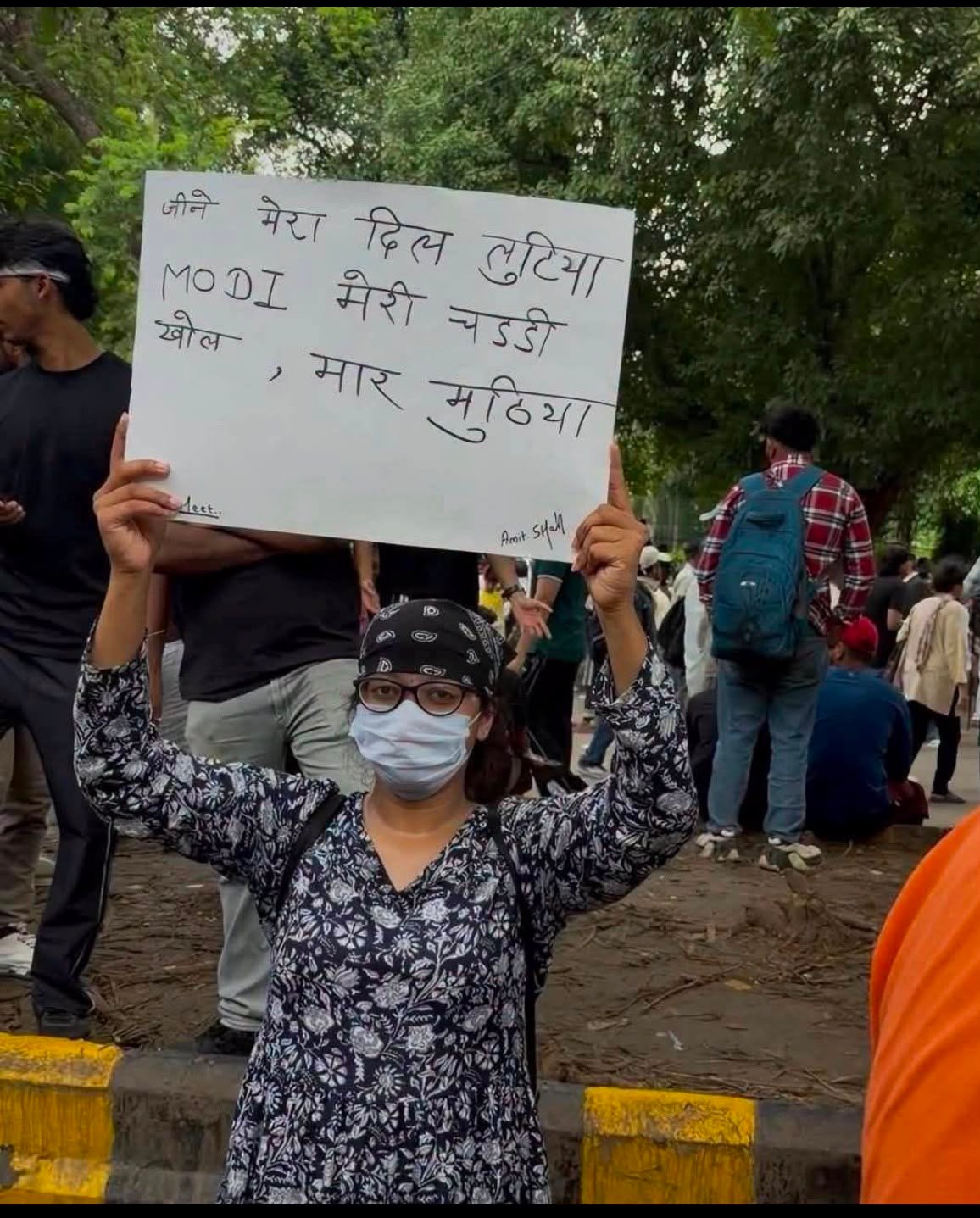
Delhi : At the heart of the ongoing Gen Z-led protests at Delhi’s Jantar Mantar, shocking placards have surfaced that cross every boundary of public decency. One widely circulated image shows a young girl holding a board that boldly declares: “Open my underwear and jerk off.” Such genitalia-focused abuses, scrawled on play cards by protesters often the age of granddaughters to many observers, have ignited fierce debate. Yet instead of condemnation, two veteran Hindi journalists-Rahul Dev and Sanjeev Paliwal—have stepped forward with open support, raising uncomfortable questions about their motivations.
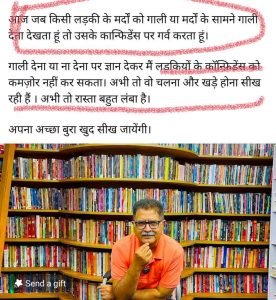
Sanjeev Paliwal, in a public post, wrote: “Today, whenever I see a girl abusing men or abusing in front of men, I feel proud of her confidence. I cannot weaken girls’ confidence by lecturing them on whether to abuse or not. Right now they are only learning to walk and stand. The road ahead is still very long. They will figure out for themselves what is good and what is bad.” His words frame crude sexual insults as empowerment, dismissing any concern over the content.
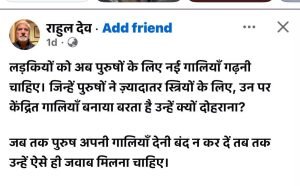
Rahul Dev went further: “Girls should now invent new abuses specifically for men. Why should they keep repeating the same abuses that men have mostly created and used, focused on women? Until men stop using their own abuses, they deserve to get exactly the same kind of replies.” He mocked those distressed by the “uncultured” language of the new generation, challenging critics to first condemn abuses from their own circles, politicians, and street rowdies while pointing to selective silences on other social issues.
These justifications have prompted sharp scrutiny. Hindi journalists Rahul Dev Ji and Sanjeev Paliwal Ji, by repeatedly thinking of their own names in the placards held up and the abuses hurled by paid influencers at Jantar Mantar, are not deriving any sexual pleasure in this old age, are they? Isn’t this simply the frustration of old age that leads them to justify genitalia-focused abuses coming from girls the age of their granddaughters?
Are these two senior journalists beginning to feel some kind of arousal just by hearing and thinking about all this? If so, it is a matter of concern for both their families. Nurturing such sexual frustration is not good. Both of them should seek treatment from a good psychiatrist.
While the broader Jantar Mantar gatherings have focused on educational accountability and other youth demands, the insertion of explicit sexual language has shifted attention to questions of cultural erosion and the responsibility of public figures.
Supporters of the journalists argue their stance champions women’s confidence against historical double standards. Critics, however, see an older generation projecting personal unresolved issues onto the street protests of the young. The images of teenage and college-age girls brandishing such slogans, paired with glowing endorsements from men decades their senior, continue to disturb many who believe protest can remain forceful without descending into the language of the bedroom.
As the debate rages, the central fact remains: the abuses are real, the placards are public, and the senior voices defending them have chosen not silence, but celebration. Whether this reflects progressive solidarity or something far more personal and troubling is a question their families-and the public-must now confront.