

Delhi : The Indian Women’s Press Corps (IWPC) and the Press Club of India (PCI), located in Delhi’s Lutyens’ Zone, were allotted land by the government at concessional rates for the convenience of journalists. The purpose was clear: reporting, dialogue, and professional exchange. There was no permission to turn these spaces into strongholds of any particular ideology, nor to make them the ground for regime-change plans. In recent years, however, both institutions have increasingly become centres of one-sided activism and open political conspiracies. The question is: is this not a clear violation of the conditions of allotment? A journalists’ club cannot discriminate among journalists. When dozens of journalists associated with nationalist views—Arnab Goswami, Aman Chopra, Ashok Srivastava, Prakhar Srivastava, Rachit Kaushik and others—were attacked, faced police action, or were surrounded by mobs, both clubs remained silent. Institutions that issue statements on minor issues stayed mute in these cases. Open discussions on “regime change” on the lines of Bangladesh have taken place on their premises, yet there has been no official condemnation so far. This bias signals that journalism is being used as a tool for an anti-government campaign.
Allotment Conditions and Their Violation
IWPC was given a prime location on Windsor Road. Close to India Gate, Janpath, Connaught Place and major political offices, the space was meant for women journalists so that they would not face difficulties. When Anurag Thakur was Minister of Information and Broadcasting, the lease was cancelled because the place was becoming a hub of anti-government activities. Later, through the mediation of Urban Development Minister Hardeep Puri, representatives of women journalists assured that the club would remain purely for journalism and would not become a political den. The lease was renewed.
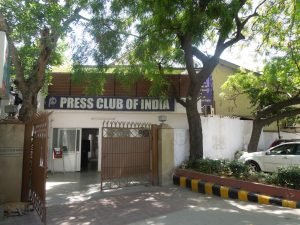
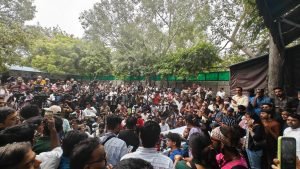

A lease of government land is not an ownership right. Under the Land and Development Office (L&DO), these properties are given subject to specific conditions, time limits and purpose. The conditions clearly state that the allotment is for the convenience of journalists, not for commercial, political or conspiratorial activities. In cases such as the Delhi Gymkhana Club or the Race Club, courts and the government have repeatedly clarified that the property can be taken back if the lease period expires, dues remain unpaid, or conditions are violated. When “regime change” is openly discussed in the premises of IWPC or PCI, when male guests occupy the IWPC for hours without a female member, and when the IWPC is used as a base camp for a male-dominated ongoing movement, this is a clear violation. The government gave the space as a goodwill gesture. The conditions of cooperation do not permit commitment to one ideology or turning the place into ground for regime change.
A Women Journalists’ Club Turning into a Political Den
The original purpose of IWPC was to provide a safe and convenient place for women journalists. But the situation reversed during the “Cockroach Movement.” Congress supporters and some YouTubers used it as a shield. It is alleged that Ajit Anjum opened his office in the club in his wife’s name. His wife was often not present, but the male team occupied everything from the lawn to the dining space. Tired women journalists would arrive and get irritated seeing men occupying the chairs. According to one woman journalist, it seemed the entire movement was being run from IWPC itself.
Six male guests sat for hours in the club in the name of one woman journalist. All of them were building the narrative for the Cockroach Movement. When inquiry was made about the woman in whose name they were sitting, it was found that she had not come, but staff who had come with her male associates arrived with expensive equipment and paraphernalia for a live show. The question of where so many staff and equipment were coming from remains unanswered. When senior journalists objected, attempts were made to silence them by calling them “BJP-ites” and “Sanghis.”
The same people who were calling their senior woman journalist colleagues “Sanghis”—when Pranjay Guha Thakurta, Rahul Dev, Abhisar Sharma or Ajit Anjum’s timelines show content in only one direction for twenty-four hours—why do they not call them Congress supporters? The double standard is clear. A place given for the convenience of women journalists became the centre of a male-dominated political operation. This is not only injustice to women but also an insult to the original spirit of the allotment.
One-Sided Statements and Discrimination Against Journalists
Both the Press Club of India and IWPC have long been under the leadership of people who treat hatred of the BJP and RSS as their identity. This is not a new allegation. These journalists’ clubs issue statements on small issues, but when journalists associated with nationalist views were attacked, their clothes were torn, they were hooted or faced police action, both clubs remained silent. Not once did they stand with them. Is this discrimination proper?
Senior journalist Anita Chaudhary was on the panel of the Press Club of India. Her experience shows that a slight inclination towards the government made the entire panel her enemy, and she stopped going to the club in disappointment. People like Ajit Anjum have worked for Rajiv Shukla and still remain active for Rajiv Gandhi’s son, yet the Press Club does not call them “Congress courtiers.” The entire ecosystem is tilted in one direction. When it comes to calling the affected journalists, why are those journalists not invited who were surrounded by protesters and prevented from speaking? They are not in the club’s priority. This discrimination weakens the moral foundation of journalism. A journalists’ club should be for all journalists, not a refuge for any ideology.
Open Discussion of Regime Change and Silence
Recently, a public declaration of “regime change” on the lines of Bangladesh took place in the premises of the Press Club. This was not a private conversation. What does the silence of the club management say in such a situation? There has been no condemnation of that statement so far. When an institution runs on a lease from the government and open talk of changing the regime takes place in its premises, it no longer remains merely freedom of speech. It becomes a violation of the conditions of allotment. Those who ask difficult questions are ignored or thrown out. Those who can express as much hatred as possible towards the BJP and the Sangh have the doors opened for them immediately.
This tendency is not limited to speech. During movements, these places become safe hideouts because the police avoid routine questioning due to them being journalists’ clubs. The result is that a base camp for propaganda is prepared in the name of protest. If the club were truly a neutral space, journalists of every ideology would get equal place and every attack would receive equal response. Silence itself is a statement.
Government’s Responsibility and the Solution
The government has given facilities to these institutions, not rights. Being registered bodies, they are availing the benefit of a goodwill gesture. When conditions are broken-whether lease period, dues or purpose—action is possible under legal provisions. The Public Premises (Eviction of Unauthorised Occupants) Act and L&DO rules give the government the right to issue notice and take back possession. Action can be taken citing public interest or violation of conditions.
The Central Government should seek a clear answer from both clubs: Have they turned themselves into shelters for those who hate the BJP and RSS? Did the discussion of regime change take place with their approval? The management should ensure that journalists of all ideologies are included in panels and programmes. Review and transparency of the allotment conditions are necessary. If any institution becomes a centre of activism and conspiracy instead of journalism, it becomes the government’s duty to protect the real interests of journalists and public property.
No kind of conspiratorial activity under the cover of journalism can be acceptable. The purpose of the clubs is dialogue and professional cooperation, not to become a tool of regime change. As long as this discrimination and misuse continue, the question will keep arising whether these institutions still stand true to their original purpose or are misusing government cooperation. Both the clubs and the government must answer.