
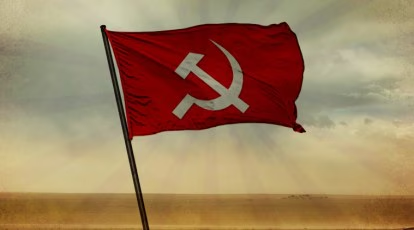
Bhopal : Beyond slogans, political movements and ideological claims, what has Marxism delivered to Bharat over the past hundred years? Over nearly a century, what lasting contributions have Marxist ideology and its associated organisations made to healthcare, education, skill development, employment, self-reliance, social service and national integration—beyond political mobilisation, electoral influence and ideological conflict?
These questions deserve a serious and evidence-based examination.
1. Stated Ideals versus Actual Outcomes
Marxist ideology has traditionally sought to eliminate class-based exploitation, reduce economic inequality, protect workers’ rights and establish social control over the means of production.
However, the worth of any ideology cannot be judged solely by its stated ideals, promises or slogans. It must also be assessed by its actual performance, the institutions it creates, the opportunities it provides and the consequences of its actions.
The central question, therefore, is not merely what Marxist organisations have promised, but what they have actually delivered to Indian society—and where their policies or methods have caused harm.
2. Violence, Insurgency and Democracy
One of the most serious criticisms of the communist movement in India applies to those factions that advocate armed violence, wage war against the state or seek to overthrow the democratic system through violent means.
According to India’s Ministry of Home Affairs, the Communist Party of India (Maoist) pursues the objective of capturing political power through armed insurgency and is included in the list of terrorist organisations under the Unlawful Activities (Prevention) Act.
Ministry figures record 8,956 deaths associated with Left-Wing Extremism between 2004 and 30 November 2025.
These figures raise a fundamental moral question: How can the killing of the very people whose liberation an ideology claims to champion be justified in the name of that ideology?
The distinction between democratic movements for workers’ rights and armed insurgency must, however, remain clear. They are not the same, and they should not be judged as though they were.
3. Political Agitation versus Employment and Development
Organising workers to defend their rights is not inherently wrong. Trade unions and collective bargaining can play a legitimate and important role in protecting workers from exploitation.
The problem arises when persistent industrial confrontation, uncertainty or disruptive practices adversely affect investment, productivity and employment. In such cases, the actual consequences must be examined through evidence rather than ideological assumptions.
Likewise, the closure of an industry cannot automatically be attributed to Marxist ideology or trade union activity. Such conclusions require a careful examination of labour policies, market conditions, management decisions, government actions and the circumstances of the particular industry.
A country cannot be built through slogans, demonstrations and protests alone. The real test of a movement is whether its actions produce lasting improvements in the lives of workers and society.
4. Measuring the Contribution to Society
The more meaningful question is this: How many people has an ideology helped become more capable, self-reliant and prosperous?
An assessment of nearly a century of communist and Marxist activity in India cannot be limited to political movements, electoral influence or ideological struggles. It must also examine measurable contributions to healthcare, education, vocational training, employment, entrepreneurship, cooperatives and social welfare.
Organisations that claim to represent the poor, the exploited, workers and disadvantaged communities should be willing to answer some straightforward questions:
• How many hospitals, healthcare centres and public-service institutions have they established?
• How many schools, vocational training centres and skill-development institutions have they created?
• How many young people have gained sustainable employment or opportunities for self-employment through their initiatives?
• How many successful cooperative enterprises and models of economic self-reliance have they developed?
• How many institutions continue to serve society effectively even after the organisation’s political influence has declined?
These questions cannot be answered through rhetoric. They require verifiable data, documented institutional performance and evidence of long-term social impact.
The purpose is not to suggest that political movements must replace the state or that every social contribution must take the form of a hospital or training centre. Rather, organisations that make claims about social transformation should demonstrate the tangible outcomes of their work.
5. The Same Standards for Every Ideological Organisation
This assessment must not be restricted to Marxist organisations.
The Rashtriya Swayamsevak Sangh (RSS), Seva Bharati, farmers’ organisations, trade unions, religious and social institutions, and other ideological organisations should also be evaluated against the same standards.
How effectively have they expanded access to healthcare and education? What have they contributed to employment and skill development? Have they helped communities become more self-reliant? Have they established institutions that continue to serve people without depending on political power? Can their claims be independently verified?
The contribution of an organisation to society should be measured by its demonstrable work and outcomes, not merely by its ideology, declarations or public image.
Applying consistent standards makes the assessment more credible. It also prevents criticism from becoming partisan and ensures that genuine contributions are acknowledged wherever they occur.
6. Historical Evidence and the Need for Balanced Assessment
A fair assessment of Marxism in India must distinguish among three elements: its stated ideals, the activities of its different political and militant factions, and its actual social and economic outcomes.
Historical evidence provides a legitimate basis for criticism. Where violence has occurred, its causes, consequences and responsibility must be examined. Where organisations have contributed to workers’ rights, education, healthcare or social reform, those contributions must also be recognised and evaluated on the basis of evidence.
It would be equally misleading to treat every communist organisation as identical or to assume that every industrial failure, economic setback or political conflict was caused by Marxist ideology. Historical conclusions must rest on specific evidence, reliable comparisons and a clear understanding of context.
The same intellectual honesty must apply when assessing organisations with different ideological foundations.
Conclusion: Beyond Ideology, Towards Measurable Social Progress
The ultimate measure of any ideology is not the intensity of its slogans, the number of demonstrations it organises or the political influence it acquires. It is the extent to which it advances justice, human dignity, freedom, prosperity and self-reliance.
A movement that claims to represent the exploited must demonstrate how it has improved their lives. A political organisation that promises equality must explain the outcomes of its policies. And an institution that claims to serve society must show that its service is sustained, effective and verifiable.
Nations are not built by speeches, slogans and protests alone. They are built through institutions, productive work, meaningful opportunities and sustained efforts that improve people’s lives and strengthen society for generations to come.That is the standard by which Marxism—and every other ideology claiming to serve the public good—should ultimately be judged.
( Kshetra Prachaar Pramukh, Rss, Madhya Kshetra)