
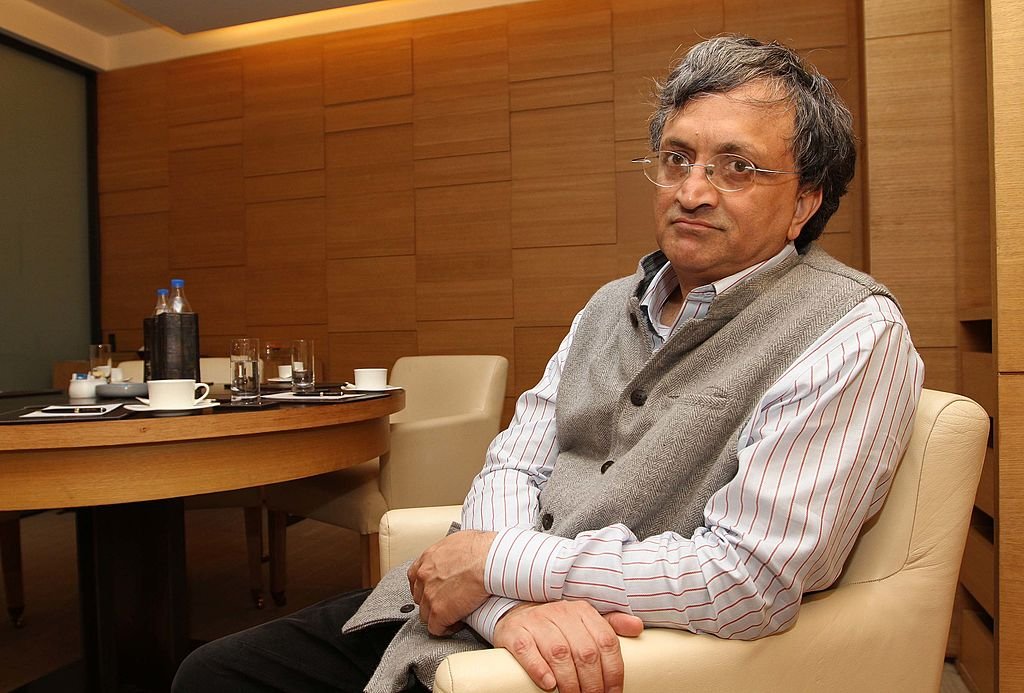
Dear Dr. Ramachandra Guha,
Your column “Control Freaks!” published in The Daily Telegraph on 13 June 2026 presents a familiar narrative of despair about India’s economy and governance under Prime Minister Narendra Modi. While you frame it as constructive criticism rooted in concern for the nation, a closer examination reveals selective facts, exaggerated gloom, and deep ideological bias. This open letter offers a fact-based counter-narrative. India is not in decline but advancing as the world’s fastest-growing major economy despite global headwinds.
You claim the Indian economy ‘is not doing well’ – rupee weak, capital fleeing, private investment laggard, consumption sluggish, manufacturing stagnant. Reality tells a different story. In FY26, India recorded robust GDP growth of approximately 7.6%, accelerating from 7.1% in FY25, according to World Bank assessments. India remains the fastest-growing major economy globally, with strong domestic demand, manufacturing gains in automobiles and consumer goods, and resilient services. IMF projections for 2026 hover around 6.5%, still far ahead of most peers amid Middle East tensions.
Stock markets have not stagnated at levels from two years ago. The BSE Sensex has hovered near or above 74,000–84,000 in recent sessions, reflecting investor confidence despite volatility. IT firms face AI disruption, yet the broader economy adapts through digital innovation and policy support. FDI inflows reached record levels, with FY25-26 seeing around $58–94 billion in gross inflows, boosted by manufacturing and infrastructure. Private investment has strengthened via PLI schemes, which have catalyzed electronics, semiconductors, and auto sectors. Consumption remains supported by urban demand, rural recovery, and formal job creation.
You cite economists urging reforms on tax bureaucracy, health-education spending, labour-intensive manufacturing, level playing field, and subsidy rationalisation. Many of these are already in motion. GST simplified taxation, IBC reformed insolvency, and labour codes modernised regulations. Public expenditure on infrastructure has been unprecedented — roads, railways, airports, and digital public goods like UPI have transformed delivery. Ayushman Bharat expanded health coverage, while NEP 2020 targets education quality. Direct Benefit Transfers have made fertiliser and power subsidies more targeted and less leaky. Discrimination against non-BJP states is a myth; central schemes benefit citizens nationwide, with special focus on Northeast and aspirational districts.
The external shocks from the US-Iran conflict and oil prices are real, yet India has managed reserves, diversified energy sources, and maintained buffers. Remittances and exports show underlying strength. Your portrayal ignores this resilience.You dissect Modi’s “three principal ambitions”: clinging to power, personality cult, and creating a Hindu Rashtra. This reduces complex leadership to caricature. Modi has consistently emphasised “Sabka Saath, Sabka Vikas, Sabka Vishwas.” Over 25 crore people have exited multidimensional poverty since 2014, with 13.5 crore lifted between 2015-16 and 2019-21 alone per NITI Aayog-UNDP data. Schemes like PM-KISAN, Ujjwala, Jan Dhan, and PMAY have delivered tangible inclusion across castes, genders, and regions.
Visible presence of the Prime Minister on public assets symbolises accountability and ownership of national projects, not vanity. Cultural initiatives like the Ayodhya Ram Temple and Somnath represent civilisational reclamation and national heritage for all Indians, fostering unity rather than division. Article 370’s abrogation, CAA, and pushes for UCC advance equality and integration. “Hindu majoritarianism” is a convenient label for restoring cultural self-confidence in a nation long subjected to selective secularism that often appeased minorities at the expense of the majority.Amit Shah’s organisational acumen has strengthened federalism through electoral victories, not authoritarianism. BJP/NDA now governs or allies in around 20+ states, up from a handful in 2014. This reflects voter mandate for governance, not manipulation alone. Congress’s decline stems from its dynastic inertia, corruption scandals (2G, coal, CWG), and policy paralysis that left the economy scarred in 2014. Your four pillars of BJP power — Hindu vote bank via fear, handouts, captured institutions, and crony capitalism — distort reality. BJP’s support rests on delivery: toilets, electricity, bank accounts, LPG connections, highways, and digital empowerment. ED and CBI actions target corruption across parties; many cases predate Modi. Election Commission has conducted free, fair polls with record turnout. “Crony capitalism” accusations against a few names ignore Ease of Doing Business reforms, startup boom (over 1 lakh recognised), MSME support, and broader corporate participation. Adani and Ambani have invested massively in ports, airports, green energy, and defence — creating jobs and infrastructure. Oligarchy claims overlook competitive markets and rising unicorns.
Press freedom thrives in a vibrant, noisy democracy. Critical voices like yours appear regularly. “Godi media” is a tired trope; diverse TV debates and digital platforms amplify opposition views daily.
You admire economists’ reform calls but predict deaf ears. Yet reforms continue: fiscal consolidation, renewable energy leadership (International Solar Alliance), Swachh Bharat, and skill development. Environmental concerns you raise are addressed through afforestation, pollution control, and net-zero commitments, even as challenges persist.
Dr. Guha, your pessimism echoes pre-2014 Lutyens cynicism that failed to anticipate India’s rise. Modi-Shah’s focus remains long-term economic health, Viksit Bharat by 2047, and inclusive growth. Challenges like global oil shocks exist, but leadership has navigated worse. Abandoning “cronyism” for competition? PLI, Atmanirbhar, and open FDI precisely enable that. Impartial institutions and rule of law strengthen daily.India’s trajectory — from fragile 5% growth under UPA to sustained 6.5-7.5%+ — speaks louder than columns. Millions of aspirational Indians reject defeatism. They embrace development, cultural pride, and strong governance. Your duty as a public intellectual deserves facts over narrative. India is rising. History will judge policies by outcomes, not ideological lenses.
The nation deserves optimism grounded in achievement, not despair manufactured from prejudice.
Sincerely,
Sincerely,
A Concerned Observer of India’s Progress