
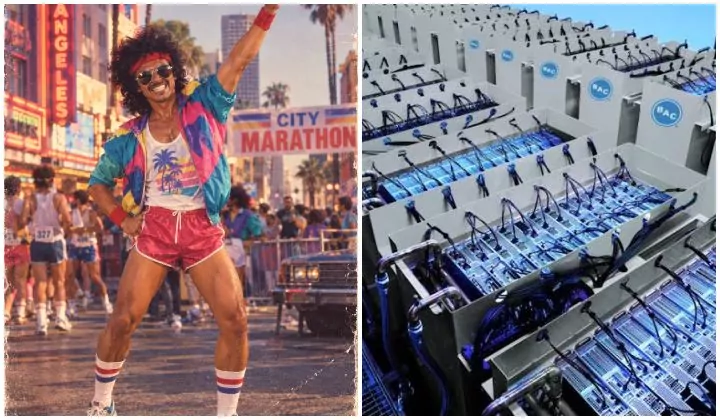
That retro selfie may take seconds to create, but the technology behind it uses electricity, water and powerful computer systems.
By Preety Chaudhary
Delhi : If your social media feed suddenly looks like an old family photo album from the 1980s, you are not alone. AI-generated retro portraits are trending, turning modern selfies into vintage pictures with big hairstyles, classic outfits and film-like effects. They may look fun and nostalgic, but creating them requires powerful computers, electricity, cooling and other natural resources.
So, how much does your 1980s-style AI photo really cost the environment?
Creating one image needs more than a prompt
An AI image may appear within seconds, but it is generated in data centres using powerful processors. These machines consume electricity and produce heat, requiring cooling systems. A 2025 study of 17 AI image-generation models found that energy use could vary by up to 46 times between models. Higher-resolution images can also require more energy.
How much electricity does an AI picture use?
According to the United Nations University, a typical AI-generated image uses roughly the same electricity as a 10-watt LED bulb running for about 17 minutes. One image may not seem significant, but viral trends encourage people to generate multiple versions. When millions of users do the same, the overall energy demand can become substantial. The UN estimates that a typical AI-generated image can use around 1,450 times the energy of a basic text-classification task.
Water is another hidden cost
AI data centres also need cooling, which can involve significant water use. The exact amount varies depending on the technology, location and electricity source, so fixed claims about water use per image should be treated cautiously. A 2026 study published in Water Research estimated that AI’s global water footprint could reach 4.2–6.6 billion cubic metres annually by 2027. This includes water used for cooling, electricity generation and chip manufacturing. The United Nations University estimates the electricity-related water footprint of a typical AI-generated image at roughly two tablespoons of water.
Is one AI selfie really a problem?
A single AI-generated photo is unlikely to make a noticeable difference. The real concern is the combined impact of billions of AI requests happening every day. As AI becomes part of social media, search, work and other everyday services, the demand for computing power continues to grow. The UN estimates that data centres supporting AI could use up to 945 terawatt-hours of electricity a year by 2030, almost three times the current combined electricity consumption of Pakistan, Bangladesh and Nigeria.
The takeaway
There is no need to feel guilty about creating one AI photo. But the trend is a reminder that “digital” does not mean resource-free. Every AI image is backed by physical infrastructure from data centres and computer chips to electricity, cooling systems and water.
So, enjoy your retro makeover. Just remember: the image may look like the 1980s, but creating it is part of a very modern environmental challenge.