Unveiling a Potential Conspiracy: Yogendra Yadav, CSDS, and the Bangladesh Connection

yogendra.jpeg.avif

New Delhi – A web of intrigue is emerging around Yogendra Yadav, a prominent Indian activist and psephologist, and his alleged ties to a broader conspiracy involving foreign-funded NGOs, the opposition INDIA alliance, and Bangladesh’s interim leader Muhammad Yunus. Speculation is rife that Yadav’s long-standing association with the Centre for the Study of Developing Societies (CSDS) and his recent statements about reshaping India along the lines of Bangladesh signal a coordinated effort to destabilize the nation’s political landscape.

Yadav, a Senior Fellow at CSDS from 2004 to 2016 and founder of its Lokniti program, has been vocal about political reforms in India. His recent remarks, hinting at a Bangladesh-style transformation for India, have raised eyebrows, especially given the timing of Bangladesh’s political upheaval under Muhammad Yunus, the Nobel laureate who heads the interim government following Sheikh Hasina’s ouster in August 2024. Yunus, founder of Grameen Bank and the Grameen Foundation, has faced accusations of leveraging his organizations for political influence, with critics pointing to his rapid consolidation of power in Bangladesh as evidence of external backing.

Sources allege that Yadav’s rhetoric aligns suspiciously with the interests of certain NGOs, some of which are reportedly linked to the Grameen Foundation and funded by Western donor agencies. These NGOs, critics claim, have a history of influencing political narratives in India, as seen during the anti-Vajpayee campaigns of the early 2000s, where Yadav was a key figure in the World Social Forum alongside other activists like Aruna Roy. The Forum, backed by foreign funds, aimed to oppose economic liberalization and was accused of undermining the NDA government, paving the way for the UPA’s rise in 2004.

The INDIA alliance, a coalition of opposition parties, is now under scrutiny for allegedly collaborating with such NGOs to destabilize the current government. Yadav’s past association with the Aam Aadmi Party (AAP) and his expulsion in 2015 for “anti-party activities” suggest a pattern of aligning with anti-establishment forces. His recent involvement in the Bharat Jodo Yatra and his advocacy for regional languages over English in education hint at a broader agenda to reshape India’s socio-political fabric.

Meanwhile, Yunus’s Grameen Foundation, established in 1997, has been criticized for securing permits and tax exemptions for its affiliates since Yunus assumed power, raising conflict-of-interest concerns. Some speculate that these moves mirror strategies employed by NGOs in India to influence policy and public opinion. While no concrete evidence ties Yadav directly to Yunus, their shared history of NGO-driven activism and foreign funding raises questions about a coordinated effort.

As India heads toward crucial elections, the alleged nexus between Yadav, CSDS, the INDIA alliance, and Yunus’s Grameen network demands investigation. Are these mere coincidences, or is a larger conspiracy afoot to mirror Bangladesh’s unrest in India? The nation watches closely as these questions unfold
निष्पक्षता का महाकुंभ

2-2-23.jpeg

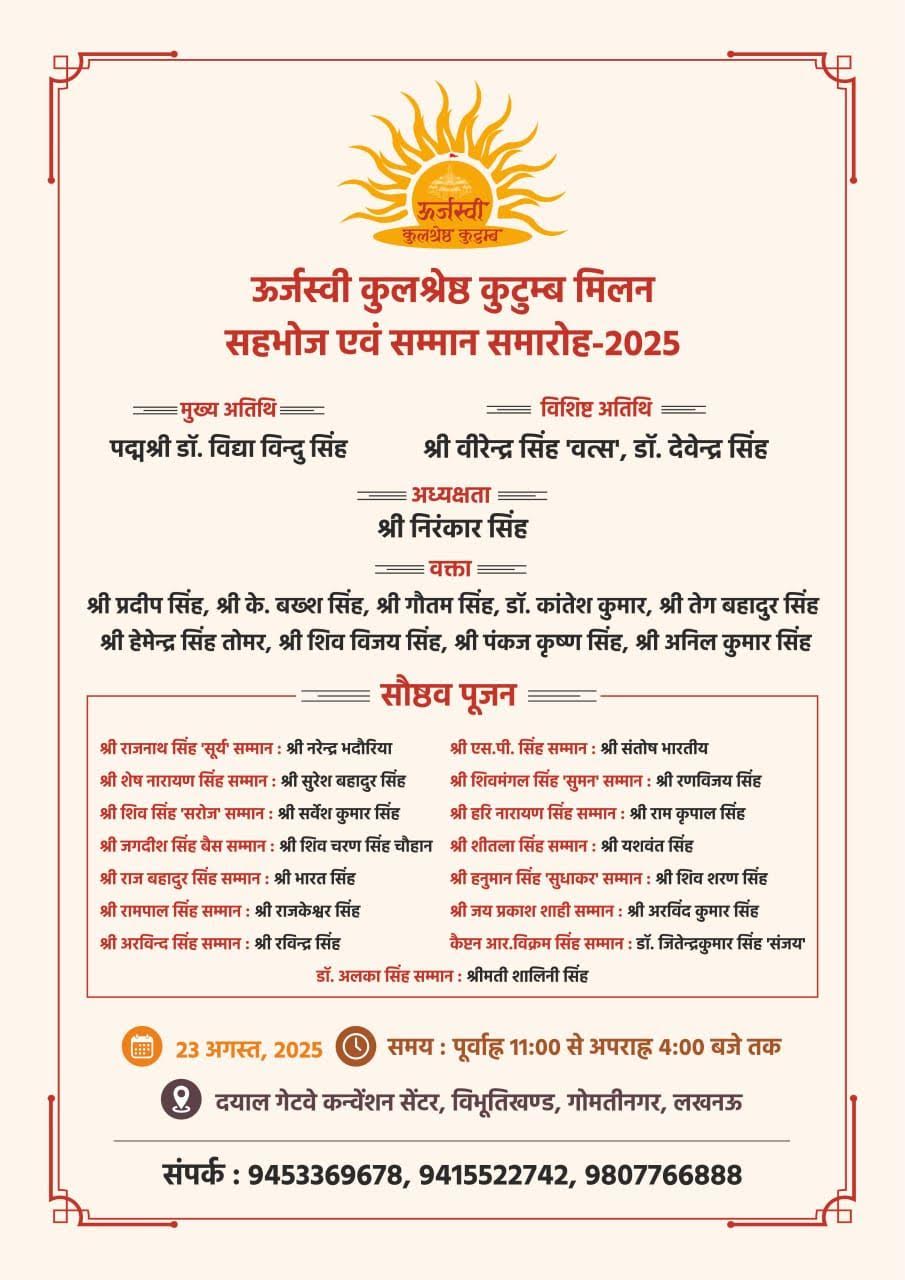
लखनऊ। ग्यारह अगस्त को एक अनोखा नजारा देखने को मिला, जब देश के तमाम “निष्पक्ष” पत्रकार एक मंच पर जुटे। ये वो महारथी हैं, जो हमेशा दावा करते हैं कि ना जाति, ना धर्म, ना पंथ—बस सत्य की सैर! लेकिन इस बार, एक खास जाति के पत्रकारों का जमावड़ा देखकर मन में एक सवाल उठा—क्या निष्पक्षता भी अब जातिगत रंग में रंग गई है?

ये पत्रकार, जो हर रोज टेलीविजन और ट्विटर पर “सबका साथ, सबका विश्वास” का झंडा बुलंद करते हैं, उस दिन एक खास समुदाय के गौरव में डूबे नजर आए। बिना अनुमति के नाम तो नहीं छपे होंगे, पर मंच पर चेहरों की चमक बता रही थी—यहां “निष्पक्षता” की परिभाषा कुछ अलग ही लिखी जा रही है।

कहते हैं पत्रकारिता का धर्म है बिना पक्षपात के सच दिखाना। लेकिन जब “निष्पक्ष” लोग एक खास बैनर तले इकट्ठा हों, तो क्या समझा जाए? क्या ये नया “निष्पक्षता का सिद्धांत” है, जहां एकजुटता का आधार जाति हो? खैर, इस महाकुंभ को बधाई! आखिर, निष्पक्षता का तमगा लिए अपनी जड़ों का गौरव गाना भी तो कला है।

बस एक सुझाव—अगली बार ऐसे आयोजन में सभी जातियों के पत्रकारों को बुलाएं। तब शायद निष्पक्षता का असली रंग दिखे। कार्यक्रम की सफलता के लिए शुभकामनाएं, पर सच का दर्पण थोड़ा और साफ हो, तो बेहतर!

Open Letter to The Hindu: Demand Transparency and Fact-Checking in Survey Reporting

2-1-30.jpeg

Dear Editors of The Hindu,
Please apologize to your readers. On the morning of August 17, you,

@the_hindu

, published survey findings from

@LoknitiCSDS

with a headline claiming that Indians are losing “trust” in the Election Commission. Interestingly, on the same day,

@RahulGandhi

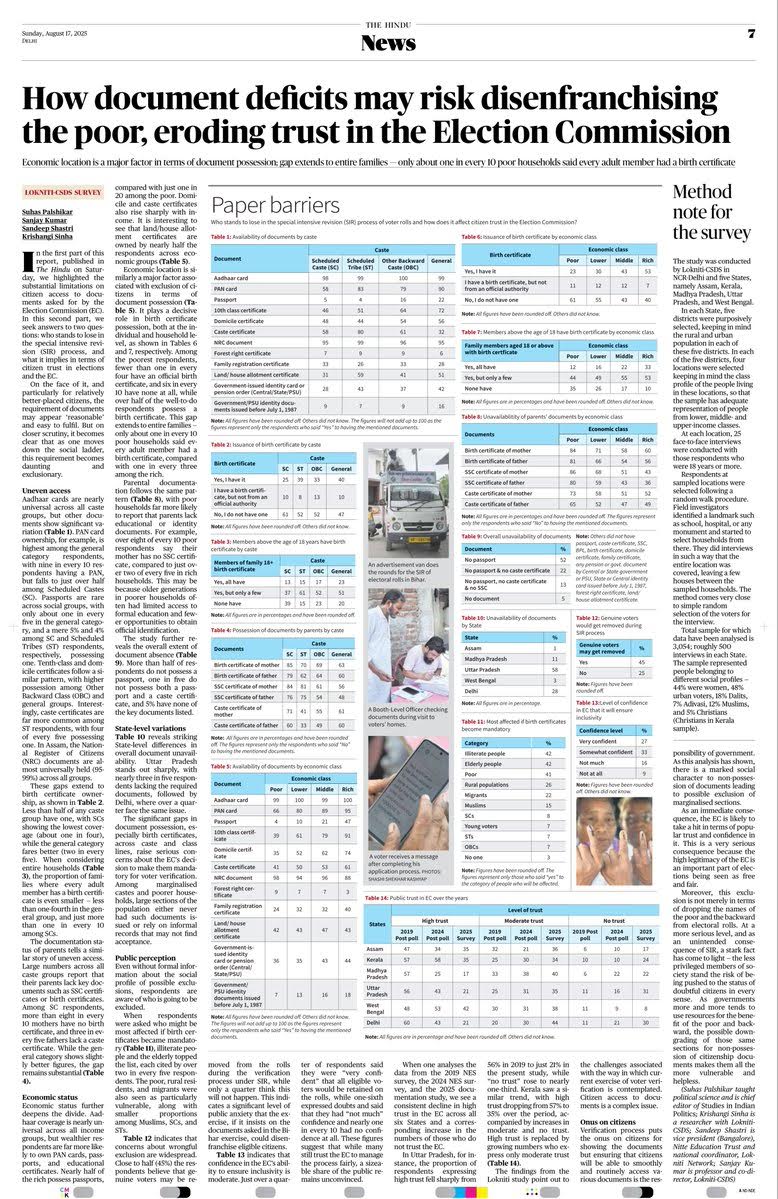
launched his Bihar Yatra, alleging so-called “vote chori.” However, you failed to cross-check even the most basic facts from the survey. The survey was not pan-India; it covered only six states: Assam, West Bengal, Kerala, Uttar Pradesh, Madhya Pradesh, and Delhi, with 500 respondents per state. This detail was buried in the fine print, which almost no one reads. Assam and Uttar Pradesh were given the same weightage in the survey—an obvious flaw in methodology. Yet, The Hindu amplified the conclusion as if it represented the entire country.

You did not question CSDS about why only these six states were selected or inform readers that four have high Muslim populations: Assam (40%), West Bengal (35%), Kerala (27%), and Uttar Pradesh (19%). Sanjay Kumar admitted the figures for Assam and West Bengal in his interview with Karan Thapar, but you overlooked this. Additionally, The Hindu ignored its own data tables. Table 10 shows that in Assam, 99%, and in West Bengal, 97%, of respondents already had the required 11 documents for the proposed SIR (this survey predates the Aadhaar judgment). However, Table 11 indicates that 45% still fear “Vote Kat Jayega!” Any reputable newspaper would investigate: if nearly everyone has the documents, why do almost half still fear their votes may be cut? That contradiction warranted scrutiny, but The Hindu printed the claim without investigation.
By failing to demand transparency from CSDS—no raw data, no explanation of sample design, no randomization—The Hindu transformed from a newspaper into something else. Readers were left with sensational headlines but lacked the context to judge credibility. This is not quality journalism. As one of the most trusted platforms, which I read every morning, The Hindu must:

  • Demand raw data from CSDS instead of blindly publishing.
  • Conduct its own fact-checking.
  • Avoid acting as a mere postman; stop serving what is spoon-fed.
  • Question contradictions, such as why ‘fear’ remains high if documentation is near-universal.
  • Correct the record for your readers.

Sincerely,
Dilip Mandal

Top Movies and Documentaries on Netflix for Learning About the Share Market

2-38.png

Based on various sources, here are some highly recommended movies and documentaries currently available on Netflix that can help you learn about the share market (also known as the stock market). These focus on real-world events, financial crises, trading practices, and investment strategies. I’ve prioritized those with strong educational value, including brief descriptions and key lessons. Note that while some are fictionalized, they are based on true stories and explain complex concepts like short-selling, market crashes, and fraud.

  1. The Big Short (2015) This film follows investors who predicted and profited from the 2008 financial crisis by betting against the housing market. It breaks down complex terms like CDOs (collateralized debt obligations) and short-selling in an entertaining way. Key Lessons: Understanding market bubbles, risk assessment, and how systemic failures impact stocks. Format: Movie (Comedy-Drama). Why Watch: Great for beginners to grasp how the stock market can crash.
  2. The Wolf of Wall Street (2013) Based on the true story of stockbroker Jordan Belfort, it depicts his rise through penny stock scams, pump-and-dump schemes, and lavish lifestyle, leading to his downfall due to fraud. Key Lessons: The dangers of unethical trading, regulatory oversight, and how greed drives market manipulation. Format: Movie (Black Comedy). Why Watch: Illustrates the high-stakes world of brokerage and stock fraud.

  1. Margin Call (2011) Set over 24 hours in an investment bank during the early stages of the 2008 crisis, it shows executives dealing with toxic assets and deciding to sell them off, triggering market panic. Key Lessons: Risk management, leverage, and the rapid decisions that can lead to market downturns. Format: Movie (Drama). Why Watch: A tense look at how one firm’s actions affect the broader stock market.

  1. Inside Job (2010) A documentary narrated by Matt Damon that dissects the causes of the 2008 global financial crisis, including deregulation, banking practices, and conflicts of interest. Key Lessons: How policy changes and corruption lead to stock market instability and recessions. Format:Documentary. Why Watch: Provides a factual analysis of systemic issues in finance and markets.
  2. Eat the Rich: The GameStop Saga (2022) This mini-series covers the 2021 GameStop stock frenzy, where retail investors on Reddit challenged hedge funds shorting the stock, causing massive price surges. Key Lessons: Short-selling, meme stocks, retail vs. institutional investing, and market volatility. Format: Documentary Mini-Series. Why Watch: Modern example of how social media influences share prices and democratizes trading.

If you’re open to TV series for deeper dives, check out Billions (about hedge fund trading and market manipulation) or Dirty Money (episodes on corporate fraud affecting markets). Availability can vary by region, so search directly on Netflix. For more personal finance basics, try Money, Explained.

scroll to top